2027 MLIS Programs for Intellectual Freedom Programming

Co-Founder and Chief Data Scientist
Choosing an MLIS for intellectual freedom work means looking beyond a course title. You need preparation to design public programs, defend equitable access, and respond when materials or events are challenged.
The U.S. Bureau of Labor Statistics reports a May 2025 median annual wage of $68,270 for librarians and media collections specialists, but that figure cannot tell you which degree is worth its cost. This guide shows prospective students and working library staff how to compare coursework, applied experience, credentials, and expenses before enrolling.
Key Things You Should Know
- Look for an ALA-accredited master's program with documented coursework in intellectual freedom, programming, and policy; a related elective is not necessarily a formal specialization.
- Ask when relevant electives run and whether you can complete a supervised challenge-response or event-planning project. A catalog listing alone does not establish access to either opportunity.
- BLS projects 2.6% employment growth for librarians and media collections specialists from 2025 to 2035; weigh that broad outlook against local openings and your total degree cost.
What are MLIS programs for intellectual freedom programming?
These are library and information science master's programs through which students can prepare to uphold the freedom to seek and receive information while planning library events, displays, discussions, and outreach.
Preparation may combine collection development, information policy, community engagement, and program evaluation. It can be especially useful for public librarians, but academic and school librarians also encounter questions about access and contested materials.
"Intellectual freedom programming" is usually a career goal, not a degree title. A school might document a formal concentration, offer relevant electives without a concentration, or allow an independent project. Those are different levels of preparation.
Compare the actual degree and curriculum rather than assuming that every MLIS, MLS, Master of Information, or similarly named credential offers the same pathway. A guide to different librarian degrees explained can help you sort out degree names before comparing individual programs.
Which MLIS programs offer coursework in intellectual freedom and library programming?
No named program should be treated as a current match without checking its graduate catalog, course schedule, and accreditation status. Course titles and offerings can change, and a course appearing in a catalog may not run during your enrollment. Rather than relying on an unverified shortlist, use the evidence levels below to compare programs consistently.
This table distinguishes what a program publishes from what a prospective student still needs to confirm. It helps prevent a relevant elective from being mistaken for a guaranteed specialization:
| Evidence in program materials | What it establishes | What remains uncertain |
| Named concentration or track | The institution formally documents a pathway. | Whether its courses will fit your schedule. |
| Courses in intellectual freedom, information policy, or library programming | Relevant coursework is listed. | Whether each course will run before you graduate. |
| Practicum, capstone, or independent-study option | An applied-learning route is documented. | Whether a relevant placement or project can be approved. |
| Only broad LIS core courses | General preparation may support the work. | Whether specialized preparation is available at all. |
Request recent syllabi and projected course schedules from programs that interest you. Ask whether you could build a portfolio project around an event plan, a materials-reconsideration procedure, or an accessibility review. If speed and cost are priorities, an affordable short librarian degree is worth comparing - but a faster schedule is less useful if it leaves no room for the courses or applied work you need.
Why is ALA accreditation important for intellectual freedom-focused MLIS programs?
American Library Association (ALA) accreditation evaluates a library and information studies master's program against professional standards. Employers may specify or prefer an ALA-accredited degree for professional librarian positions.
Accreditation of the university itself is a separate matter, so check the specific master's program in the current ALA directory rather than relying on institutional accreditation or a school's general description.
ALA accreditation does not certify that a program has an intellectual freedom concentration, a particular elective, or a suitable internship. Check those features separately with the department.
If you plan to work in a school library, also consult the education authority in the state where you intend to work: state licensure or endorsement requirements are distinct from graduate-program accreditation, and an online MLIS does not automatically meet them.
What do students learn in intellectual freedom programming courses?
The most useful curriculum connects principles to decisions a librarian must make before, during, and after a public program. Intellectual freedom coursework can address access, viewpoint neutrality, privacy, and policies for reviewing objections to materials.
Programming coursework can address audience needs, partnerships, budgets, accessibility, facilitation, and evaluation. Collection development and information policy provide further context for explaining decisions to colleagues and community members.
Look for assignments that produce work you could show an employer: an event proposal with an accessibility plan, a draft response to a hypothetical materials challenge, or an evaluation of a library's existing policy.
A strong project explains the governing policy, documents the decision process, and distinguishes a patron's right to object from a demand that others lose access. Ask instructors whether projects can be based on a real workplace without exposing patron information.
Should you choose an online or campus-based MLIS program?
Choose the format that lets you complete the relevant courses and applied work, not simply the format advertised as most convenient. An online program may suit someone already working in a library, especially if classes are asynchronous.
But scheduled meetings, group projects, fieldwork, or courses offered only occasionally can still limit flexibility. Campus study may make local placements and in-person events easier to access, though commuting and fixed meeting times carry costs.
Before accepting an offer, ask whether required classes meet live, whether you must visit campus, and whether a practicum can be completed at your workplace.
Confirm who finds and approves placements; remote coursework does not mean remote fieldwork. If you expect to keep your job, compare the actual course sequence with the demands of an online MLIS while working full time.
What are the admission requirements for intellectual freedom-focused MLIS programs?
Requirements depend on the institution. Applicants commonly need a bachelor's degree and must submit transcripts, a statement of purpose, and recommendations; individual programs may request additional materials.
An undergraduate library science major is not necessarily required. Relevant work in libraries, teaching, community organizing, or public events can strengthen an application, but experience does not automatically replace a published academic requirement.
Use your statement to explain the work you hope to do and what you need to learn - not just your position on a contested book. For example, describe an interest in designing accessible discussions and applying a fair review process.
If you have an unusual academic record or international transcripts, ask admissions staff how that program evaluates your documents before paying an application fee.
Admission and affordability are separate decisions. Ask the financial aid office which scholarships or assistantships you may apply for and when decisions are made. Resources on affordable library masters scholarships can help frame your search, but do not subtract an award from your budget until it is confirmed.
How long do MLIS programs take and how much do they cost?
Completion time depends on required credits, enrollment pace, course sequencing, and whether a practicum or capstone has prerequisites. A published accelerated option may not leave room for a specialized elective offered infrequently. When comparing a one year library science program comparison, check whether its sample schedule includes the intellectual freedom and programming work you want.
For each school, calculate tuition using the published per-credit rate that applies to you multiplied by required credits. Then add mandatory fees, materials, and any travel or placement expenses.
Ask whether taking an extra term to reach a desired elective changes those costs. Published tuition is not the full cost of attendance, and online enrollment does not automatically qualify a student for in-state pricing.
Compare three amounts separately: the program's gross cost, what you expect to pay out of pocket after confirmed support, and what you would need to borrow.
Check current loan terms and eligibility with the school's financial aid office before committing. A lower-cost program with a workable course sequence may be a better fit than a faster option that cannot accommodate your goals.
What careers involve intellectual freedom programming after an MLIS?
Public library roles offer the clearest connection: librarians plan events and displays, develop collections, engage community partners, and help apply policies when decisions are challenged.
Academic librarians may coordinate discussions about access to information and support information literacy. School librarians can teach inquiry and reading choice while working within district policy and state requirements.
Job descriptions, not a program's marketing language, show how much of a particular role involves this work. These examples connect positions with experience worth gaining before graduation. Titles and degree requirements vary by employer:
| Potential role | Relevant work | Useful preparation |
| Public services or adult services librarian | Events, community partnerships, reference, and patron access | Program plan, facilitation experience, and policy analysis |
| Youth services librarian | Age-appropriate programs, family engagement, and collection access | Youth programming and experience communicating with caregivers |
| Academic librarian | Information literacy, campus events, and access-related discussions | Teaching practice and collaboration with campus partners |
| School librarian | Instruction, reading support, and library services | Preparation that meets the intended state's credential rules |
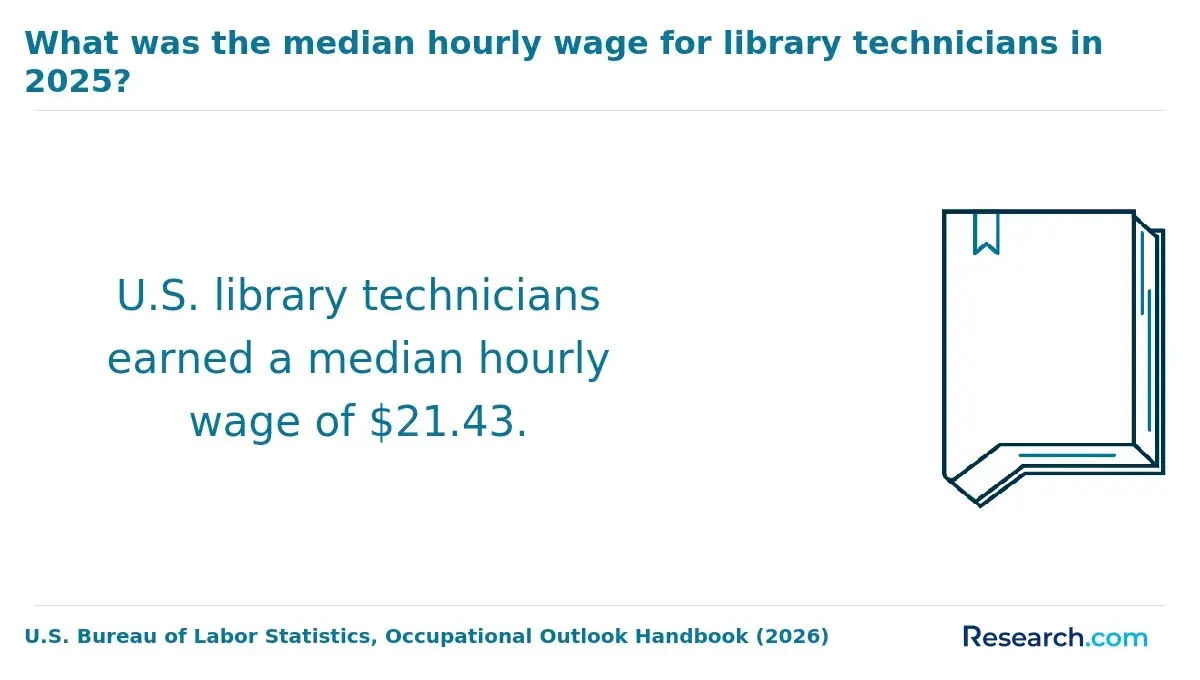
A library assistant or technician role can provide experience, but it is not identical to a professional librarian position. If your primary goal is community event management rather than librarian employment, relevant work experience or another qualification may be a more direct path than an MLIS.
How much can intellectual freedom-focused librarians earn?
There is no separate national wage category for intellectual freedom programming. The closest broad benchmark is the BLS category for librarians and media collections specialists, with a May 2025 median annual wage of $68,270.
That median describes an occupation across settings and experience levels; it is not a starting salary, an MLIS graduate outcome, or a prediction for a programming-focused job.
Use local job postings to assess the salaries and qualifications of positions you would actually pursue. Compare those opportunities with your current earnings, expected borrowing, and any costs associated with changing jobs or locations.
A degree is easier to evaluate financially when you have identified plausible openings rather than assuming the national median will apply to you.
What professional standards and certifications support intellectual freedom programming?
ALA's Library Bill of Rights and related interpretations offer a professional framework for access and intellectual freedom. A library's adopted collection, programming, and reconsideration policies translate principles into local procedures.
Students should learn to read both: a professional statement can guide judgment, while the employer's approved policy determines who makes a decision and how it is documented.
There is no universal intellectual freedom programming certification required for librarian jobs. For school librarian positions, state-issued certification, licensure, or endorsement may be required; verify the rules with the relevant state education authority.
In other settings, employers may value experience handling sensitive discussions or drafting clear policies more than an optional certificate. Before paying for additional training, compare its content with the skills requested in jobs you want.
Other Things You Should Know About Library Science
Usually, if the assignment permits it and the student follows workplace confidentiality rules. Remove patron-identifying details and seek permission before sharing internal documents.
No. A program can provide access to ideas without endorsing them. Clear event descriptions and consistently applied policies help communicate that distinction.
Collect only registration information needed to run the event, explain how it will be used, and follow the library's retention and photography policies. Avoid making an attendee list public.
Yes. Partners may bring subject expertise or reach new audiences, but the library should clarify responsibilities and apply its policies consistently when selecting speakers and activities.
References
- Pathways for Students and Graduates | Student Internships and Jobs | Working at CDC | Careers at CDC https://jobs.cdc.gov/working-at-cdc/student-intern-jobs/pathways.html
- Practical Training, Internships and Experiential Learning Opportunities | Pomona College Catalog https://catalog.pomona.edu/specialprogramsandopportunities/practicaltraining
- Teaching Intellectual Freedom | illinois.edu https://iopn.library.illinois.edu/journals/aliseacp/article/view/2053
- Internships in Global Health | princeton.edu https://globalhealth.princeton.edu/internships
- Can I Go To School and Work Full Time? - Whitworth Online https://online.whitworth.edu/news-articles/can-i-go-to-school-and-work-full-time/
- What Can You Do With a Library Science Degree? | Syracuse University Online Master's Programs https://onlinegrad.syracuse.edu/information-science/mslis/library-science-careers/
- Freedom to Read: Book Challenges and Bans in the U.S.: Home | LibGuides at Wichita State University https://libraries.wichita.edu/freedomtoread
- Master of Library and Information Science | Dominican University https://www.dom.edu/academics/grad-phd/library-and-information-science/mlis
- Intellectual Freedom | jstor.org https://www.jstor.org/stable/25637201