
2027 MLIS Programs for College Library First-Year Experience Services

Co-Founder and Chief Data Scientist
Choosing an MLIS for college library first-year experience work means looking beyond a program's name. New students need help navigating research assignments, library spaces, and unfamiliar information tools, but programs differ in how well they prepare librarians to teach and assess those services.
The U.S. Bureau of Labor Statistics projects 2.6% growth for librarians and media collections specialists from 2025 to 2035, making relevant experience important in a modest-growth field. This guide helps prospective students identify useful coursework, compare learning formats and costs, and build evidence of readiness for academic library jobs.
Key Things You Should Know
- Seek an ALA-accredited master's program with information literacy coursework and opportunities to work with college students; a course title alone does not establish a formal specialization.
- The May 2025 median annual pay for U.S. librarians and media collections specialists was $68,270, but that occupation-wide figure is not a first-year experience librarian salary.
- Compare the full degree cost, elective scheduling, and access to supervised teaching experience, not just advertised tuition or online availability.
What are MLIS programs for college library first-year experience services?
These are library and information science master's programs that can prepare graduates to support students entering college. A first-year experience librarian might teach introductory research sessions, help students evaluate sources, create accessible guides, staff research consultations, and partner with instructors or student-success offices. The job is a function within academic librarianship, not necessarily a named MLIS concentration.
Relevant degrees may be called an MLIS, MLS, Master of Science in Library Science, or Master of Information. What matters is the specific program's accreditation and curriculum, not the degree abbreviation. When comparing types of MLIS programs, distinguish an officially documented track from electives a student assembles independently.
For this goal, favor programs that let you connect information literacy and reference work to undergraduate learning, then apply those skills with actual students. A general academic-library pathway can be an excellent fit even if no "first-year experience" track appears in the catalog.
Which accreditation should an MLIS program for academic librarians have?
For U.S. academic librarian positions, an American Library Association (ALA)-accredited master's program is the safest default to investigate: employers may specify or prefer it in job postings. Confirm the specific master's program in the current ALA directory before applying. Accreditation of the university is a separate matter and does not establish ALA accreditation of its LIS degree.
ALA accreditation evaluates a program, not a proposed career focus. It does not verify that a first-year services elective, internship placement, or online format will be available when you need it. Check the current catalog and ask the program about course rotation and placement arrangements. If a particular employer accepts other degrees, use that employer's stated requirements rather than assuming every academic library uses the same standard.
How do you become a first-year experience librarian?
A typical route combines graduate LIS study with supervised teaching or student-facing academic library work. Job titles differ, so search for instruction librarian, undergraduate engagement librarian, student success librarian, and first-year experience librarian rather than relying on one title.
The following sequence helps turn a broad degree into credible preparation for this work:
- Review current academic library job descriptions in the region where you hope to work and note their degree, teaching, and experience requirements.
- Choose an appropriate master's program and plan courses in reference, information literacy, instructional design, and assessment.
- Seek a campus library job, assistantship, practicum, or supervised project involving undergraduates; confirm whether a remote placement is permitted if studying online.
- Build a small portfolio with a lesson plan, accessible research guide, and assessment reflection, removing student-identifying information.
- Apply across related entry-level academic library titles and tailor your materials to each library's students and teaching model.
If you are new to the field, a campus library position can help you test your interest before committing to a master's. For a broader look at how to earn a library science degree, compare degree routes against the qualifications in the jobs you actually want.
What do MLIS programs teach about first-year student services?
Strong preparation links library instruction to the assignments and transitions first-year students face. The table shows useful curriculum areas and the work each can support; these are selection criteria, not a claim that every program offers each course.
| Curriculum area | Application to first-year services |
| Reference and research support | Guiding students from an initial question to suitable discovery tools and sources. |
| Information literacy and instruction | Designing lessons on searching, evaluating evidence, and using information responsibly. |
| Instructional design and accessibility | Creating usable workshops, online tutorials, and guides for varied learners. |
| Assessment and research methods | Checking what students learned and improving services without unnecessary data collection. |
| Academic library services | Understanding course-integrated teaching and collaboration with faculty and campus partners. |
A catalog listing is only a starting point: determine whether a course is required or elective, how often it has recently run, and whether you can complete a relevant applied project. For example, designing a short lesson around an actual introductory assignment and revising it after feedback demonstrates more than merely listing "instruction" on a transcript. Responsible use of AI-assisted search tools can fit that lesson, provided students also learn to check sources and understand privacy implications.
Are online or campus-based MLIS programs better for academic library careers?
Neither format is inherently better preparation. The stronger choice is the one that lets you complete relevant courses and obtain meaningful student-facing experience without an unsustainable schedule or cost. Compare formats on the same practical criteria:
| Factor | Online program | Campus-based program |
| Class schedule | May include asynchronous work or required live meetings; verify each course. | May offer regular in-person contact but require travel around fixed class times. |
| Applied experience | May allow a local placement, subject to program and host approval. | May make nearby campus opportunities easier to pursue, but placement is not assured. |
| Professional connections | Can support remote collaboration and local networking if pursued deliberately. | Can support face-to-face connections within the campus and surrounding area. |
Ask whether instruction electives meet live, whether required visits exist, and who arranges practicum sites. Online delivery does not guarantee self-paced study; students seeking a self directed online library masters should verify deadlines, course sequencing, and the program's actual approach to independent work.
What are the admission requirements for academic-library MLIS programs?
Requirements vary by institution, but applicants should expect a completed bachelor's degree and an application that may request transcripts, a statement of purpose, recommendations, and a résumé. Check each program's current admissions page for its GPA policy, test policy, deadlines, and any additional requirements rather than assuming one school's rules apply elsewhere.
You generally do not need an undergraduate library science major. Teaching, tutoring, peer mentoring, library employment, and work with college students can all give you useful examples for a statement of purpose, though they do not replace published eligibility requirements. Explain the specific service you want to provide and how the program's verified coursework or applied options would help you prepare.
If your record is unusual or you hope to transfer graduate credit, request an individual review before enrolling. Admission and transfer-credit decisions are institution-specific; neither prior experience nor acceptance into a program guarantees that earlier courses will count toward the degree.
How long and how much do MLIS programs for academic librarians take?
Completion time depends on required credits, course load, elective rotation, and any practicum or capstone. A published fastest-possible timeline may not fit a working student who needs a particular instruction elective or must arrange a local placement. When evaluating the shortest path to an MLIS, ask for a term-by-term plan that includes the courses relevant to academic library work.
Without a specific school and tuition schedule, no reliable program price can be quoted. Calculate tuition from the applicable per-credit rate and required credits, then add mandatory fees, materials, and any travel or placement costs. Check whether your residency changes the online rate. The comparison below separates costs that are often conflated:
| Cost measure | What it includes |
| Published tuition | The applicable rate multiplied by credits required, subject to the school's billing rules. |
| Estimated degree cost | Tuition plus required fees and expected materials, travel, and placement expenses. |
| Personal out-of-pocket cost | Estimated degree cost after confirmed grants, employer support, or other non-loan funding. |
| Amount borrowed | The portion financed through loans, which may create additional repayment costs. |
What jobs can you get with an MLIS focused on first-year experience services?
Potential roles include first-year experience librarian, instruction librarian, undergraduate engagement librarian, reference and instruction librarian, and student success librarian. Depending on the institution, the work may center on introductory courses, a broader undergraduate teaching program, research consultations, or outreach with campus partners. Read the duties, not just the title.
An MLIS with relevant experience can also support applications for other academic library positions, but specialized roles may call for additional subject knowledge or demonstrated work. A library assistant or technician job can provide an entry point before or during graduate study; it is not the same as a professional librarian appointment. If you mainly want to teach undergraduates outside a library, compare education or student-affairs pathways before assuming an MLIS is necessary.
For applicants, a portfolio is most useful when it shows both an artifact and a decision: what students needed, why you designed the lesson or guide as you did, and what you would change after feedback. A practicum can provide that evidence, but no placement or degree guarantees a job.
For a fuller comparison of library science tuition and completion time, use the same cost categories and scheduling assumptions for every school. Confirm aid eligibility and current loan terms with the financial aid office for your enrollment period; do not count a scholarship or employer reimbursement until its conditions are clear.
How much do first-year experience and academic librarians earn?
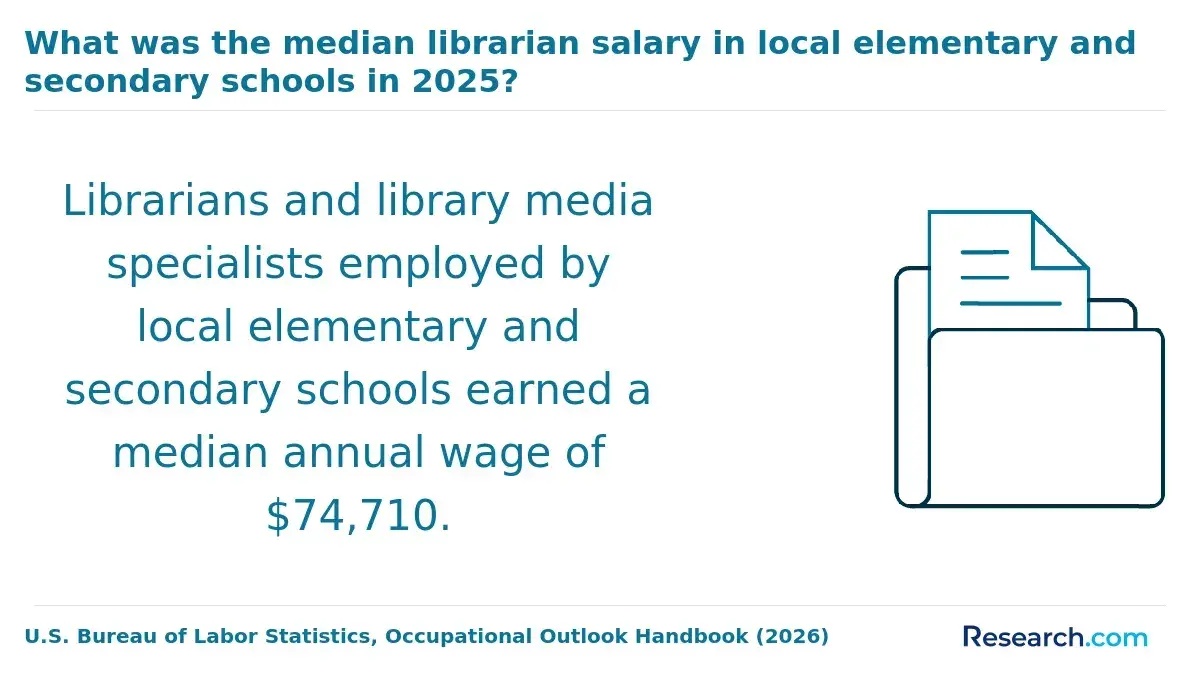
The U.S. Bureau of Labor Statistics reports a May 2025 median annual salary of $68,270 for librarians and media collections specialists. This is a nationwide figure across library settings, not a median specifically for first-year experience librarians or MLIS graduates. Use it as occupational context, then examine posted salary ranges for the institutions and locations where you intend to apply.
When weighing an MLIS financially, compare likely job requirements and local openings with your present earnings, total degree cost, and expected borrowing. The occupational median cannot establish what a new graduate will earn or how quickly the degree might pay for itself.
What skills and certifications do first-year experience librarians need?
The central skills are approachable reference interviewing, clear teaching, lesson planning, source evaluation, accessible content creation, and collaboration with faculty and student-support staff. Librarians also need to assess whether instruction works while respecting student privacy. Familiarity with discovery tools and responsible discussion of AI-generated information matters when those tools shape students' research habits.
There is no universal first-year experience librarian certification. Employers may value teaching development or relevant certificates, but check individual postings before paying for an optional credential. More persuasive evidence may be a supervised workshop, a tested guide, or an assessment project you can explain in an interview. School librarian licensure is a separate, state-specific issue and should not be confused with qualifications for a college library position.
Other Things You Should Know About Library Science
They can. Libraries may design separate support for transfer students because their prior college experience does not necessarily mean they know a new institution's tools, policies, or assignments.
Yes, under appropriate supervision. Peer staff may help visitors navigate spaces or tools, while librarians remain responsible for training them and defining when to refer research questions.
It can use brief anonymous feedback or review whether students can complete a learning task. Collect only information needed for the assessment and follow campus privacy rules.
That depends on local responsibilities. A librarian may maintain the guide while coordinating with the instructor when assignments, recommended sources, or course learning goals change.
References
- Initial efforts to improve medical student information-seeking behavior with embedded library instruction - PMC https://pmc.ncbi.nlm.nih.gov/articles/PMC10621726/
- Master of Library and Information Science (MLIS) | du.edu https://morgridge.du.edu/academics-advising/programs-gr/mlis-library-and-information-science
- MLIS Tuition & Financial Aid - University of Denver | DEN-EDU https://morgridgeonline.du.edu/online-mlis-program/tuition-financial-aid/
- Master of Science in Library & Information Science Program | Chicago State University https://www.csu.edu/cimst/infostudies/lib_info_science_ms.htm
- Opportunities for Library Experience - Resources for MSLS Students - Research Guides at University of Kentucky https://libguides.uky.edu/lisresources/experience
- Information Literacy: First Year Guidelines - Subject Guides https://libguides.library.umaine.edu/infolit
- University Library Removes Barriers to Knowledge for First Gen Students | SSU News at Sonoma State University https://news.sonoma.edu/article/university-library-removes-barriers-knowledge-first-gen-students
- MLIS Curriculum, Specialties & Courses | University of Arizona College of Information Science https://infosci.arizona.edu/ma-library-information-science/curriculum-specialties-courses
- Information Literacy Instruction in Asynchronous Online Courses | acrl.org https://crl.acrl.org/index.php/crl/article/view/25343/33227
- ALA-Accredited Programs https://www.ala.org/educationcareers/accreditedprograms/directory


