2027 MLIS Applications With Writing Samples From a Nonacademic Career

Co-Founder and Chief Data Scientist
Applying to an MLIS program after years outside academia can make a writing-sample requirement feel like a request for a paper you no longer have. The stronger approach is to show how your professional writing demonstrates research, judgment, and clear communication.
The U.S. Bureau of Labor Statistics reports a May 2025 median annual wage of $68,270 for librarians and media collections specialists, making degree cost and career fit worth examining alongside admission requirements. This guide helps career changers select or prepare a sample, build a credible application, and decide which programs merit their time and money.
Key Things You Should Know
- A professional report, policy brief, training guide, or other substantial document may be a suitable MLIS writing sample if the program accepts it and your contribution is clear.
- Admissions requirements vary by program: a personal statement is not automatically a substitute for a separately requested writing sample.
- BLS projects 2.6% employment growth for librarians and media collections specialists from 2025 to 2035; compare degree costs with the requirements of the specific jobs you want, not just the occupation-wide outlook.
What Is an MLIS Application Writing Sample for Career Changers?
An MLIS application writing sample is a piece of work an admissions committee can use to assess how you develop an idea, evaluate information, organize evidence, and communicate with a reader. A personal statement serves a different purpose: it explains your goals and fit with the program. When an application asks for both, submit distinct documents unless its instructions say otherwise.
For someone from business, government, healthcare, technology, or another nonacademic field, a sample need not resemble a recent college essay unless the program specifically requires academic writing. Its value lies in making your reasoning visible. A document that simply announces a decision may reveal less than one that explains the evidence, alternatives, and implications behind it.
How Can Applicants From Nonacademic Careers Meet MLIS Admission Requirements?
Start with each program's published requirements rather than a general MLIS checklist. Programs commonly request a bachelor's degree record, transcripts, a statement, and references, but writing-sample rules, prerequisites, minimum academic standards, and review practices differ. Professional experience can strengthen an application; it should not be assumed to replace a required degree or document.
Use the application instructions to resolve these questions before asking anyone to prepare a reference or release a work document:
- Confirm whether a writing sample is required, its length and format, and whether professional work is eligible.
- Check whether references may come from supervisors or colleagues and ask people who can describe your analytical and communication skills.
- If your academic record is old or unusual, ask admissions whether an explanation, additional coursework, or an individual review is appropriate.
- Where relevant, check whether previous graduate coursework may qualify as transfer credits toward online MLIS study; eligibility depends on the receiving program's graduate-credit policy.
Keep an inquiry specific: describe the document you could submit, its purpose, your role in producing it, and any confidentiality restrictions. Ask whether it meets the requirement before substantially rewriting it. A favorable answer about sample format is not an admission decision.
How Do You Write a Strong MLIS Personal Statement After a Career Change?
Explain the connection between your previous work and the information work you hope to do, without suggesting that all library jobs are interchangeable. A former compliance analyst might connect records-retention work to information governance; a trainer might connect teaching and audience assessment to information literacy. Then identify the skills you still need to develop through graduate study.
A useful statement moves from specific experience to career objective to program fit. For example, an applicant could explain how improving access to internal procedures prompted an interest in knowledge organization, then discuss why relevant coursework or applied projects matter to that goal. Name a course or opportunity only after checking that the program currently documents it; a catalog listing does not establish that an elective runs every term.
Do not use the statement to narrate every job you have held or apologize at length for leaving academia. If an academic setback needs context, address it briefly and show what later work demonstrates. Your résumé can establish chronology; the statement should explain direction and readiness.
What Should a Nonacademic Applicant Include in an MLIS Writing Sample?
Choose work that lets a reader follow a substantive argument or analysis. Depending on the program's rules, that might be a policy memo comparing options, a research-informed briefing, a grant narrative, an evaluation report, or a guide that explains a complex process for a defined audience. Favor a piece you can discuss honestly over one with impressive branding but little writing of your own.
Before submitting, make the document legible to someone outside your industry. Briefly identify its audience and purpose if the application permits a note; define essential internal terms; preserve the reasoning and evidence that make it persuasive. Remove confidential information only with permission and without obscuring the analysis. If the work was collaborative, state which portions you wrote and check whether the program accepts jointly produced material.
If no existing piece meets the rules, ask whether you may submit newly written work. A focused analysis of an information-access problem can show research and judgment more effectively than an unrelated, lightly edited workplace announcement. Follow the program's instructions on length, citations, and whether unpublished work is allowed.
Do MLIS Programs Require Academic Research Papers or Professional Writing Samples?
There is no single writing-sample rule across MLIS admissions. Some programs do not request a separate sample; others specify one, and the acceptable form must be determined from that program's current instructions. This distinction matters more than whether your last academic paper is recent.
The table separates common application documents so you can identify what a program is actually asking you to demonstrate. It describes their purposes, not a universal admission policy.
| Document | What it principally shows | Key distinction |
| Personal statement | Motivation, goals, and program fit | Usually written for the application |
| Academic paper | Sustained inquiry and use of scholarly evidence | Suitable when required or expressly accepted |
| Professional writing sample | Analysis and communication for a workplace audience | Suitable only if the program permits its format and authorship |
If instructions say "research paper," do not assume a workplace memo qualifies. If they say "writing sample" without defining it, request clarification and retain the reply. The safest choice is the strongest document that meets the stated rule, not the document that looks most academic.
How Do ALA-Accredited MLIS Programs Evaluate Applicants From Different Careers?
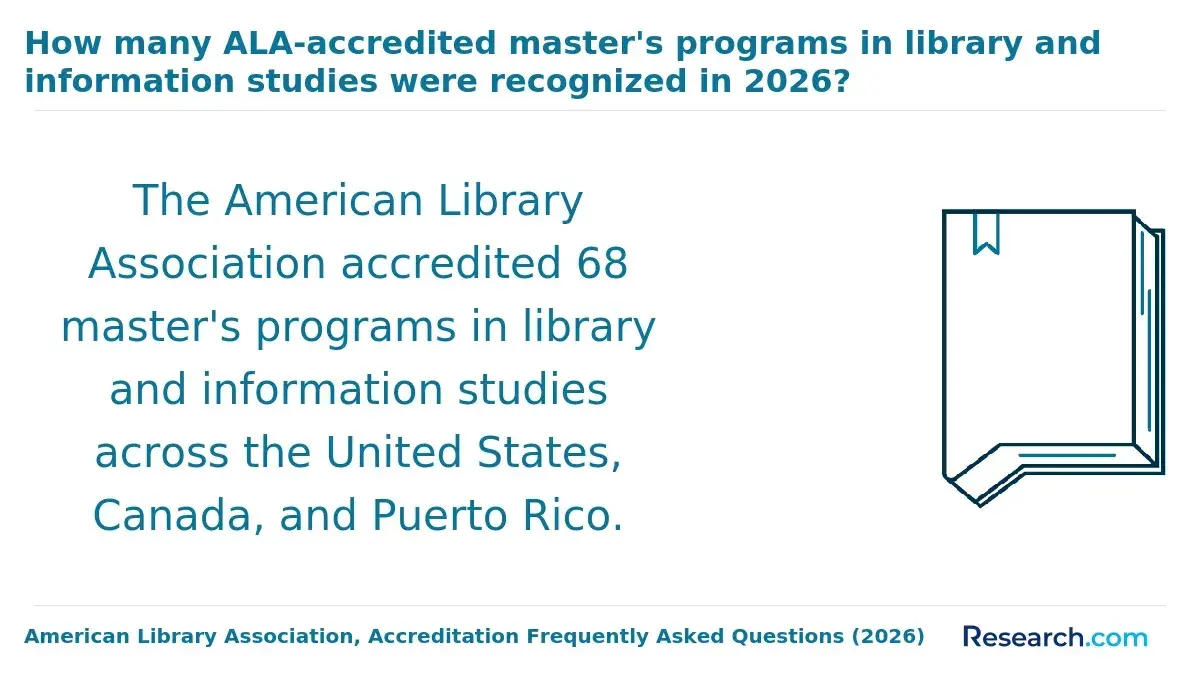
An American Library Association (ALA)-accredited master's program can offer an established library and information studies credential, but ALA accreditation does not prescribe one admissions rubric or guarantee that professional writing will be accepted. Committees may consider academic preparation, the clarity of career goals, writing, references, and relevant experience according to their own published policies. Applicants should not infer a particular policy from accreditation alone.
Check the specific master's program in the current ALA accreditation directory; a university's institutional accreditation is a separate matter. Degree names also vary: an MLIS, MLS, Master of Science in Library Science, or Master of Information should be evaluated by its actual program accreditation, curriculum, and fit, rather than its abbreviation alone.
Career changers can make experience understandable by translating it into evidence: who used the information they organized, what problem they investigated, and how they judged whether the result worked. That account gives reviewers more to assess than an unsupported claim that a previous career "transfers well."
What Are the Main Online and Campus-Based MLIS Program Options?
Online, campus-based, and hybrid study can all serve career changers, but delivery format does not determine accreditation, admission rules, or access to an internship. The comparison below highlights scheduling differences to investigate alongside writing-sample requirements.
| Format | Potential advantage | Constraint to confirm |
| Online | Study without relocating | Live meetings, time zones, and any required in-person activities |
| Campus-based | Regular in-person access to classes and local opportunities | Commute, course timetable, and availability of relevant placements |
| Hybrid | Mix of remote and in-person learning | Frequency and location of required visits |
Use an online library master's program guide as a starting point, then verify each candidate's current admissions page, ALA status, course schedule, and placement arrangements directly. "Online" does not necessarily mean asynchronous, and a listed elective or practicum may not fit your planned schedule or location.
How Long Do MLIS Programs Take and How Much Do They Cost?
Time to completion depends on required credits, full- or part-time enrollment, course sequencing, and any applied-learning requirement. An accelerated one-year information science degree may suit someone who can sustain a demanding schedule, while part-time study may better protect current earnings. Ask when required courses run and whether an internship can be completed near you; the advertised shortest timeline may not match your circumstances.
To compare costs, calculate required credits multiplied by the tuition rate that applies to you, then add mandatory fees, materials, and any travel or placement expenses. Confirm whether tuition differs by residency or delivery format. Published tuition is not the same as total attendance cost, and a longer schedule can change the amount spent on fees or commuting.
Finally, distinguish the program's gross cost from your out-of-pocket cost after confirmed employer support or aid, and from any amount you would borrow. Ask the financial aid office about eligibility and loan terms for your enrollment period rather than assuming funding offered to another student will apply to you. Compare that commitment with both your current earnings and realistic openings in your target field.
What Careers and Salaries Can You Expect With an MLIS Degree?
An MLIS can prepare graduates for public and academic librarianship, as well as work involving archives, metadata, digital collections, or information management. Duties and hiring criteria differ: a public services librarian may teach and assist patrons, while a metadata specialist describes resources so people and systems can find them. Some adjacent jobs accept other degrees or substantial experience, so inspect actual job postings before deciding that an MLIS is necessary.
The BLS reports a May 2025 median annual wage of $44,580 for library technicians. That occupation is distinct from professional librarian roles and illustrates why comparing job titles matters: neither this figure nor the librarian median in the introduction predicts an individual graduate's pay. Location, employer, responsibilities, and prior experience affect opportunities.
If your goal involves digital collections or knowledge organization, examine whether a program offers relevant coursework and a way to build demonstrable work, such as a documented project or practicum. Explore library roles requiring technical skills against job descriptions, and assess whether you need graduate study, targeted technical training, or experience first. A sample from your former career can begin that portfolio, but it should show the skills the target role values.
Do Librarians Need Certification or Licensure After Completing an MLIS?
There is no single post-MLIS license covering every U.S. librarian job. Requirements depend on the role and jurisdiction. School librarian positions can require state educator licensure, certification, or an endorsement, with preparation and testing rules set by the state. ALA accreditation alone does not establish eligibility for school library positions in every state.
For public, academic, and specialized libraries, distinguish an employer's preferred credential from a legal requirement. A medical, law, or archives employer may value subject knowledge or additional preparation, but those preferences are not universal licensing rules. If you are exploring a particular state, a guide to becoming a librarian in Illinois without experience can help frame your questions; verify any applicable credential requirement with the state authority and prospective employers before enrolling.
Other Things You Should Know About Library Science
Unless the program asks to see revisions, submit a clean, readable final version. Keep any permitted explanation of your revisions separate and brief.
Follow the application instructions. If an explanatory note is allowed, a short note can identify the document's audience, purpose, date, and your contribution without replacing the sample itself.
Some institutions offer waivers under specific conditions. Check the graduate admissions policy and request approval before paying; availability is not universal.
Often, but check that program's reapplication rules. Before resubmitting, identify what has materially improved - such as clearer goals, stronger writing, or additional relevant experience.
References
- Writing Samples - Penn Career Services | University of Pennsylvania https://careerservices.upenn.edu/writing-samples/
- MLIS Admissions Frequently Asked Questions | missouri.edu https://cehd.missouri.edu/information-science-learning-technologies/mlis-admissions-frequently-asked-questions/
- Writing Sample Guide - Duke Career Hub https://careerhub.students.duke.edu/resources/writing-sample-guide/
- Writing Samples - Washington, DC | American University https://www.american.edu/careercenter/writing-samples.cfm
- Can Your Letters of Recommendation Come From Outside of Academia? - Graduate Programs https://blogs.umflint.edu/graduateprograms/2026/04/13/can-your-letters-of-recommendation-come-from-outside-of-academia/
- MLIS Admissions FAQ - UW Information School https://ischool.uw.edu/programs/mlis/admissions/resources/faq
- Writing Sample | uchicago.edu https://socialsciences.uchicago.edu/admissions/application-materials/writing-sample
- Online MLIS with No GRE Requirement for Admissions | Library Science Degrees https://www.librarysciencedegrees.org/programs/online/masters-mlis-no-gre-required
- Best Online Master's in Library Science Degrees | bestcolleges.com https://www.bestcolleges.com/education/masters/library-science/
- Accreditation Frequently Asked Questions | ALA https://www.ala.org/educationcareers/accreditedprograms/faq