
2027 MLIS Programs With Capstones Based on Employer Projects

Co-Founder and Chief Data Scientist
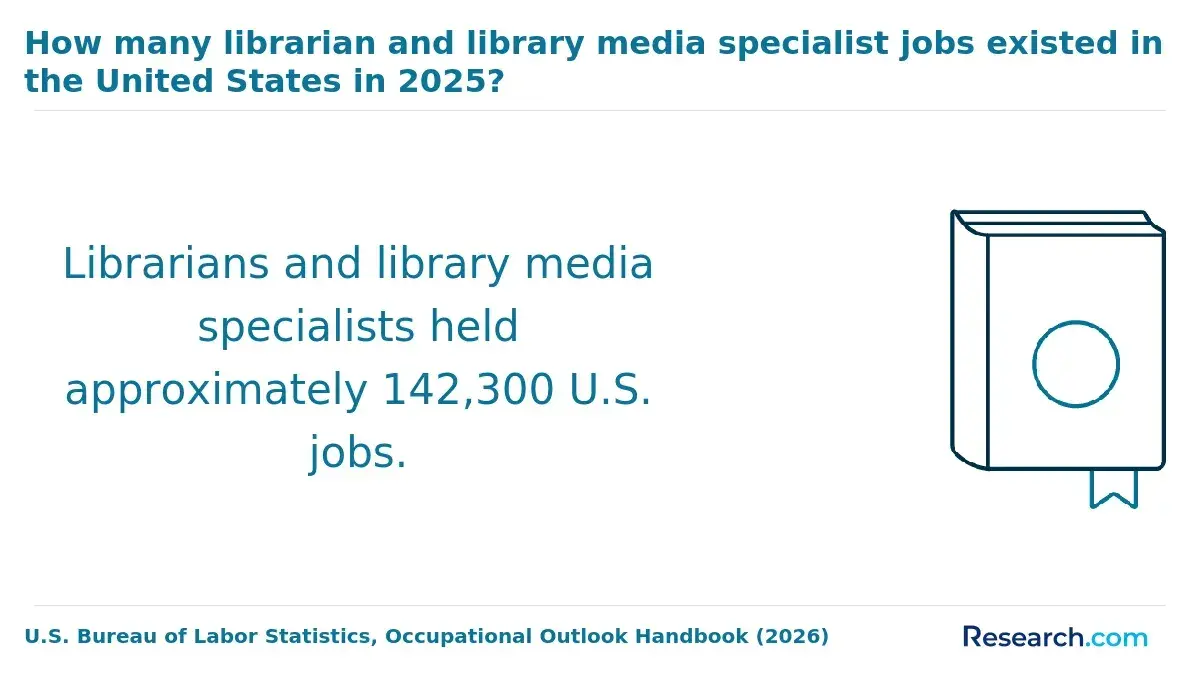
An MLIS capstone can give you a work sample for librarian or information-management roles - but only if the project you want is actually available and fits your schedule. The U.S. Bureau of Labor Statistics projects 2.6% employment growth for librarians and media collections specialists from 2025 to 2035, making practical experience worth evaluating alongside the degree.
This guide explains what counts as an employer-based project, how to verify a program's offering, and how to weigh its career value against time and cost.
Key Things You Should Know
- An ALA-accredited MLIS does not necessarily include an employer-sponsored capstone; confirm the specific project option, sponsor arrangements, and eligibility with the program.
- The strongest projects produce an assessable deliverable - such as a metadata workflow or accessibility review - and permit a portfolio description that respects the sponsor's confidentiality rules.
- The May 2025 U.S. median pay for librarians and media collections specialists was $68,270; that occupational figure is not an earnings forecast for capstone graduates.
What are MLIS capstone programs based on employer projects?
An employer-project capstone is a supervised, credit-bearing culminating assignment built around a real problem posed by a library, archive, agency, nonprofit, or other organization. A student might assess a digital collection's metadata, design an information-literacy resource, or evaluate a records workflow. Faculty assess the academic work; the organization supplies the practical setting and, ideally, feedback on the result.
The label capstone does not establish that an outside sponsor is involved. Some programs require a research paper or portfolio instead; others offer an applied project only as an option. An internship emphasizes time spent working in a placement, while a capstone typically emphasizes a defined question, method, and final deliverable. One experience can fulfill both purposes, but only if the program approves it.
Which accredited MLIS programs offer employer-sponsored capstone projects?
A trustworthy list must establish two separate facts for each school: the specific master's program is currently accredited by the American Library Association (ALA), and its current curriculum permits a capstone with an external organization. ALA accreditation does not verify a capstone, sponsor placement, or project availability. Without current, program-specific confirmation of both facts, naming a school as a guaranteed employer-project option would be misleading.
These descriptions are often treated as interchangeable, although they provide different levels of evidence. The distinction helps narrow a search without mistaking a promising catalog entry for an available sponsor.
| Published description | What it establishes | What remains uncertain |
| ALA-accredited master's program | The named graduate program meets ALA accreditation standards | Whether it offers any employer project |
| Applied capstone or independent project | A route to supervised project work may exist | Whether an external sponsor is permitted or available |
| Internship or practicum | Some form of field experience is documented | Whether it culminates in a capstone deliverable |
| Documented external-client capstone option | Employer-based work is part of the published option | Whether your proposed sponsor, format, and term will be approved |
Check the current ALA directory for the specific degree, then compare the school's current catalog and capstone handbook. Ask the program coordinator whether students secure their own clients, whether faculty match students with sponsors, and whether recent projects were completed in your intended career area. If no employer-client route is confirmed, a specialized library science masters with a relevant practicum may be a better fit than an unverified capstone promise.
How do employer-project capstones prepare MLIS students for careers?
A well-scoped project lets a student practice translating an organization's need into work that can be evaluated: agreeing on requirements, choosing an appropriate method, documenting decisions, and explaining recommendations to non-specialists. For a digital collections role, that might mean testing descriptive metadata for consistency; for public services, it might mean assessing whether a research guide is accessible and useful to its intended audience.
The result can strengthen interviews when the student can explain the problem, their individual contribution, the evidence behind their choices, and what the organization could realistically implement. It does not substitute for every employer's experience requirements or guarantee a job. If you are considering fast online masters for librarians, check whether a compressed schedule leaves enough time for sponsor approval, feedback, and revision; speed can undermine the very experience you hope to gain.
What do students do in an employer-based MLIS capstone?
Most projects move from a sponsor's problem to an agreed deliverable, with faculty oversight throughout. The scope should fit the academic term and identify who can access source materials, give feedback, and approve the final handoff.
A workable project usually has the following stages. Confirm which are required by the program before treating a proposed client assignment as capstone credit.
- Define the sponsor's problem, intended users, individual responsibilities, and a deliverable small enough to finish.
- Agree on methods and permissions, including any privacy, accessibility, or confidential-records restrictions.
- Produce and test the work - for example, a metadata mapping, finding aid, service assessment, or training resource.
- Submit the academic reflection or presentation and deliver usable documentation to the sponsor.
Ask early what may appear in a public portfolio. A project involving patron data or internal records may still be valuable, but the shareable work sample might need to be an anonymized process description rather than the deliverable itself.
Are online MLIS programs with employer projects as effective as campus programs?
Either format can support a strong project. The decisive factors are supervision, access to the organization's systems and people, a realistic schedule, and timely feedback - not whether lectures occur online or on campus. Remote work may suit a metadata audit or research guide; processing physical archival materials may require on-site access even in an online degree.
Online delivery also does not mean every project meeting is asynchronous. Before enrolling in an online MLIS while working full time, ask when faculty consultations and sponsor meetings occur, whether a local sponsor is acceptable, and who arranges access to any required site or software. A campus program may offer easier access to nearby partners, while an online student may be better placed to work with an organization in their own community. Neither advantage should be assumed for every school.
What courses and skills support an MLIS employer-project capstone?
Choose courses that match the deliverable rather than relying on a concentration's name. A metadata project benefits from knowledge organization, metadata schemas, and quality assessment; a community-service project may draw on reference, information literacy, user research, and accessibility. Archives projects can require arrangement and description, while records projects may require retention and privacy concepts. These are different kinds of work, so a single elective will not prepare students equally for all of them.
Project management matters across settings: students need to define scope, document decisions, communicate with stakeholders, and revise work after feedback. Check whether relevant electives actually run before your intended capstone term and whether the program requires prerequisites. A published course title is evidence of a curricular option, not a promise that it will be offered on your schedule.
What are the admission requirements for MLIS capstone programs?
Admission to an MLIS and approval for its capstone are separate decisions. Schools commonly ask for a bachelor's degree, transcripts, and application materials describing the applicant's goals; exact GPA rules, references, tests, and deadlines vary. A program may also require core coursework or faculty permission before a student can begin an external project. Relevant work experience can help shape a proposal but should not be assumed to replace a published admission requirement.
Applicants with prior graduate study should distinguish admission from credit transfer and capstone eligibility. Ask whether transferred courses can satisfy prerequisites without displacing the credits needed for the project. A best transfer friendly MLIS option is useful only if its accepted credits also support your planned course sequence and completion timeline.
How long do MLIS programs with employer capstones take and cost?
There is no reliable single price or completion time for this feature. Compare each program's required credits, applicable tuition rate, mandatory fees, and course sequence. Then check whether the capstone requires a separate enrollment term or creates travel, equipment, or unpaid-work costs. Published tuition alone is not the total cost of attendance, and online students should not assume they receive an in-state rate.
For a usable estimate, multiply required credits by the tuition rate that applies to you, add required fees and expected project expenses, and account for any extra term caused by course scheduling. Keep that gross cost separate from what an employer might reimburse, what you can pay out of pocket, and what you would borrow. When comparing a budget accelerated library information science option, ask whether the sponsor-selection and project-approval process fits its shorter calendar. Confirm current aid eligibility and loan terms with the school's financial aid office before making a borrowing decision.
What jobs and salaries can MLIS graduates earn after completing capstones?
The project's subject can help a graduate make a case for roles in public or academic libraries, archives, digital collections, or records and information work. Job titles and degree requirements vary: professional librarian positions often seek an ALA-accredited master's degree, while some adjacent information roles accept other degrees or substantial experience.
These U.S. Bureau of Labor Statistics figures describe whole occupations, not outcomes for MLIS graduates or students who completed capstones. They are useful for comparing broad career paths, but local openings and employer requirements matter more when assessing a specific project's value.
| Occupation | Median annual pay, May 2025 | Projected employment change, 2025-2035 |
| Librarians and media collections specialists | $68,270 | +2.6% |
| Archivists | $64,550 | +3.4% |
| Library technicians | $44,580 | −6.4% |
For applications, pair the capstone with a clear account of its scope and your contribution. A library technician role is generally a different, often paraprofessional pathway; its pay figure should not be treated as the expected starting salary for an MLIS-qualified librarian. Likewise, an archives capstone can demonstrate relevant work without replacing any additional experience an archivist employer requests.
Do MLIS graduates need licensing or professional certification?
There is no single U.S. license required for every librarian or information professional. Employers may specify an ALA-accredited master's degree for particular roles, but accreditation is a program credential, not an individual license. Optional professional certifications and position-specific qualifications should be evaluated against the jobs you actually want.
School librarianship is the important exception to investigate early: public-school positions commonly involve state certification, licensure, or an endorsement, and requirements differ by state. An online MLIS or employer capstone does not automatically satisfy them. Check the education agency in the state where you intend to work, and ask the university whether its preparation pathway meets that state's requirements before choosing a project or enrolling.
Other Things You Should Know About Library Science
Possibly, if the program permits it and approves a distinct, supervised project. Ask how it separates academic assessment from your ordinary job duties and who will serve as the workplace contact.
Do not assume so. Compensation depends on the organization and the school's rules. Confirm any pay, credit requirements, and expected hours before accepting a project.
Ownership and permission to share work depend on university policies and any sponsor agreement. Clarify these terms before using employer records or promising a deliverable.
Ask the capstone coordinator about contingency arrangements before the term begins. A change of sponsor may require a revised proposal or timeline, and the available remedy will depend on program policy.
References
- Partnering with Students to Develop a Capstone for a... - PMC https://pmc.ncbi.nlm.nih.gov/articles/PMC11732519/
- Writing a Project Scope That Works for Project Success | National Training https://nationaltraining.edu.au/writing-a-project-scope-that-works/
- Library & Information Science, M.S. | St. John's University https://www.stjohns.edu/academics/programs/library-and-information-science-master-science
- online Master of Library and Information Science | DEN-EDU https://morgridgeonline.du.edu/online-mlis-program/
- What Is a Capstone Project? - Boston University Questrom https://www.bu.edu/questrom/blog/what-is-a-capstone-project/
- How to Build Strong Employer Partnerships to Support Student Success - UPCEA https://upcea.edu/how-to-build-strong-employer-partnerships-student-success/
- Thesis/Capstone Requirements | Sarah Lawrence College https://www.sarahlawrence.edu/student-life/student-handbook/2026-2027/graduate/academic-policies-and-procedures/thesis-capstone-requirements.html


