2027 MLIS Programs for Information Referral and Navigation Services

Co-Founder and Chief Data Scientist
Choosing an MLIS for information referral work means looking beyond a program's name. You need preparation to identify what a person needs, evaluate reliable resources, and connect them with an appropriate service without compromising privacy. The stakes are practical: the U.S. Bureau of Labor Statistics reports a May 2025 median annual salary of $68,270 for librarians and media collections specialists, but that figure does not describe every referral role. This guide helps prospective students compare curricula, applied experience, costs, and career requirements before committing to a degree.
Key Things You Should Know
- Look for reference interviewing, community information, accessibility, and supervised service experience; a relevant course is not necessarily a formal specialization.
- Check the specific master's program in the ALA accreditation directory; institutional accreditation alone does not establish ALA accreditation.
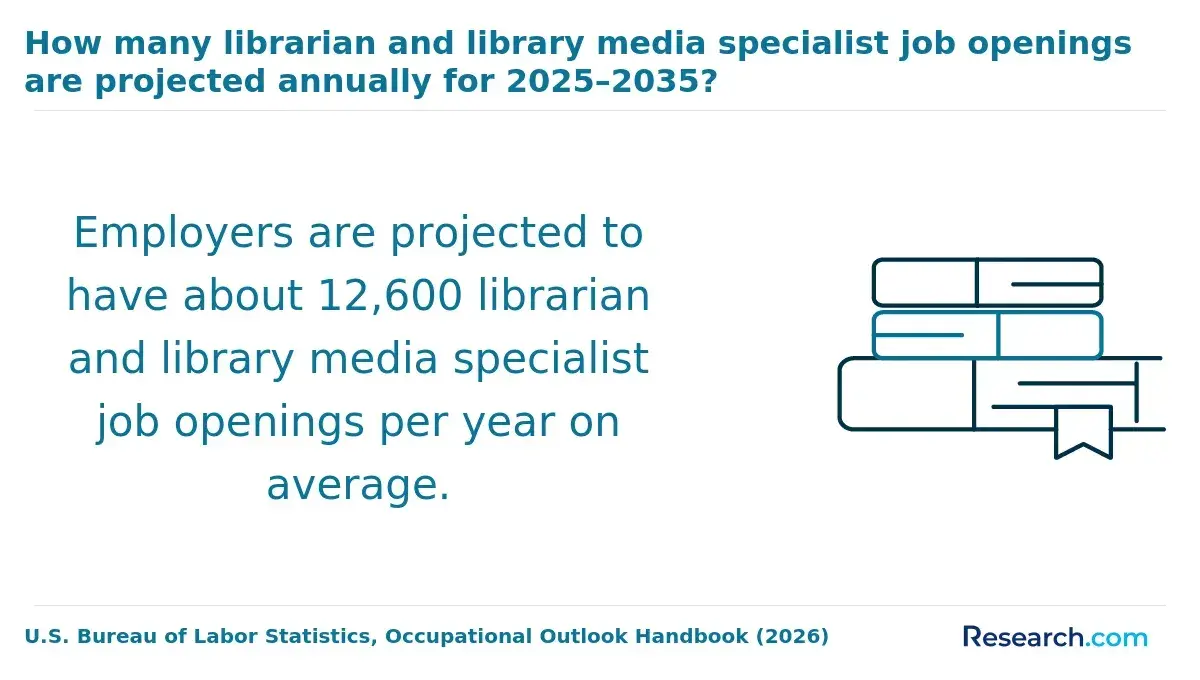
- BLS projects 2.6% employment growth for librarians and media collections specialists from 2025 to 2035; compare that broad outlook with requirements for the jobs you actually want.
What are MLIS programs for information referral and navigation services?
These are library and information science master's programs that can prepare students to help people find, assess, and reach information or services. The work may involve a reference interview to clarify a request, research in trusted sources, a referral to a community organization, or help navigating an unfamiliar application or information system.
"Information referral and navigation services" describes a professional function, not a standard name for an MLIS concentration. A program may support this goal through general reference coursework, community information electives, and fieldwork without offering a formally named track. Check the catalog before treating a course, certificate, or informal pathway as a specialization.
The setting shapes the preparation needed. Public libraries may connect patrons with local services and help them use digital forms; academic libraries may guide students to research and campus support; medical and law libraries may handle specialized information requests. In each setting, the professional helps people find and evaluate information rather than acting as a clinician, attorney, or caseworker.
Which accreditation should an MLIS program for information services have?
For U.S. professional librarian positions, an American Library Association (ALA)-accredited master's program is a strong default to consider because some employers specify it. Accreditation applies to the particular graduate program, which may be called an MLIS, MLS, Master of Science in Library Science, Master of Information, or another institution-specific LIS degree. The degree title alone does not establish its status.
Check the current ALA directory for the exact program and its status, then confirm the university's institutional accreditation separately. Neither form of accreditation proves that a referral-services elective, online option, or internship is available. If you hope to work as a school librarian, also check the applicable state education authority's certification or endorsement rules; an online or ALA-accredited degree does not automatically satisfy every state's requirements.
What degree and training pathways lead to information referral careers?
An MLIS is a common pathway to professional public, academic, and special-library reference positions, especially when a posting requires an ALA-accredited degree. It combines information organization and evaluation with service design, instruction, and ethical practice. The degree is not a universal requirement for every job involving referrals.
The right pathway depends on the position you intend to seek. These distinctions can prevent you from buying more education than the role requires:
- Professional librarian: Compare accredited LIS master's programs and build direct reference or outreach experience.
- Library assistant or technician: Check local postings first; relevant work experience or an associate-level credential may be a more direct entry point than a master's.
- Community navigator or resource specialist: Employers may value human-services experience, language skills, and knowledge of local systems more than an MLIS.
- Specialized information role: A health, legal, social-work, or public-administration background may be useful or preferred, depending on the duties and employer.
If you are new to the field, how to earn a library science degree can help you place the master's within the broader education pathway. Before enrolling, compare a few target job descriptions: note which credentials are required, which are preferred, and which skills you could gain through work or volunteering.
How do online and campus-based MLIS programs compare?
Either format can support referral-service preparation if it offers relevant courses and meaningful practice with patrons or realistic service scenarios. Format alone does not establish course quality, accreditation, or access to a local placement.
The comparison below highlights scheduling and practical-training differences to verify with each program, rather than assuming all online or campus degrees work alike.
| Consideration | Online program | Campus-based program |
| Class schedule | May use live sessions, self-paced weekly work, or both | Usually ties attendance to scheduled campus meetings |
| Service practice | May use virtual reference exercises or an approved local placement | May offer nearby library partnerships and in-person practice |
| Location and expenses | Can reduce relocation needs; placement or visit requirements need checking | May require commuting or relocation |
Ask whether required classes meet live, what time zone applies, and who arranges practica. An online course does not automatically fit a rotating work schedule, and a remote degree does not guarantee a remote internship. Compare leading online information science degrees using those questions, not delivery format alone.
What courses do MLIS programs teach for information referral services?
The most useful curriculum teaches students to move from a person's stated question to a trustworthy, usable answer or referral. Course titles vary, so examine descriptions and assignments rather than searching only for the phrase "information referral."
A strong course plan may combine reference and information services, information-seeking behavior, community information, information literacy instruction, collection development, and accessible service design. Reference interviewing helps clarify the underlying need; evaluation assignments help students test a resource's accuracy, currency, eligibility rules, and accessibility before recommending it. Privacy and professional ethics matter when requests involve sensitive circumstances.
Applied work can make those skills visible to employers. A portfolio might include an annotated local-resource guide, an accessible instructional handout, or a documented referral workflow with a plan for checking links and service details. If a catalog lists a promising elective, ask when it was last taught, whether it is planned during your enrollment, and whether you can complete a relevant practicum or project. A listed course is not a scheduling guarantee.
What are the admission requirements for MLIS programs?
Applicants generally need a bachelor's degree and must meet the individual program's graduate admission rules. Schools may request transcripts, a statement of purpose, recommendations, a résumé, or other materials; testing policies and GPA expectations vary. An undergraduate library-science major is not necessarily required.
Use the statement of purpose to connect your goals to specific training: perhaps you have helped patrons search for information, supported a community organization, taught digital skills, or maintained a resource directory. Relevant experience can strengthen an application, but it does not automatically replace a published degree requirement. If your academic history is unusual or you hope to transfer prior graduate credit, request an individual review and the program's written policy before applying.
How long do MLIS programs take, and how much do they cost?
Time to completion depends on required credits, course load, the frequency of required classes, and any fieldwork or culminating project. A student who must wait for a required elective or placement may take longer than the advertised minimum. For a scheduling benchmark, read about the shortest path to an MLIS, then check whether that pace works with the referral-focused courses you want.
Do not compare programs by per-credit tuition alone. Calculate required credits multiplied by your applicable tuition rate, then add mandatory fees and likely costs for materials, equipment, travel, and placement. Confirm whether online students qualify for a different rate and whether additional terms create additional fees.
That calculation gives a gross estimated cost, not what you will personally pay or borrow. Ask about scholarships, assistantships, employer reimbursement, and aid eligibility without assuming any will be awarded. For return on investment, compare the resulting out-of-pocket cost and possible debt with your current earnings, target employers' degree requirements, and the salary range in relevant local postings. A national occupational median cannot supply a reliable personal payback period.
What jobs can graduates pursue in information referral and navigation?
Potential titles include reference librarian, public services librarian, outreach librarian, community information librarian, and academic research services librarian. Duties vary: one position may emphasize live questions at a service desk, another instruction and research consultations, and another partnerships with community providers. Search job descriptions by duties as well as titles.
For applicants comparing pathways, the distinction is between positions that typically seek a professional LIS degree and adjacent roles with different entry requirements. An MLIS graduate may also pursue resource-navigation or information-specialist jobs, but those employers may prefer direct human-services experience or subject expertise. The guide to library career options by degree provides broader career context; verify the requirements in current postings for your location.
To become competitive, seek experience conducting interviews, explaining sources clearly, making appropriate referrals, and maintaining accurate resource information. Keep work samples that show how you evaluated a source and made it usable for a particular audience, while removing any patron-identifying details. Advancement may involve coordinating services, training staff, managing partnerships, or supervising a public-service team rather than handling more referrals individually.
What salaries and job outlook can MLIS graduates expect?
BLS reports a May 2025 median annual salary of $68,270 for librarians and media collections specialists and projects 2.6% employment growth from 2025 to 2035. Those figures describe a broad U.S. occupation, not graduates of a particular MLIS program or a dedicated referral-services job category.
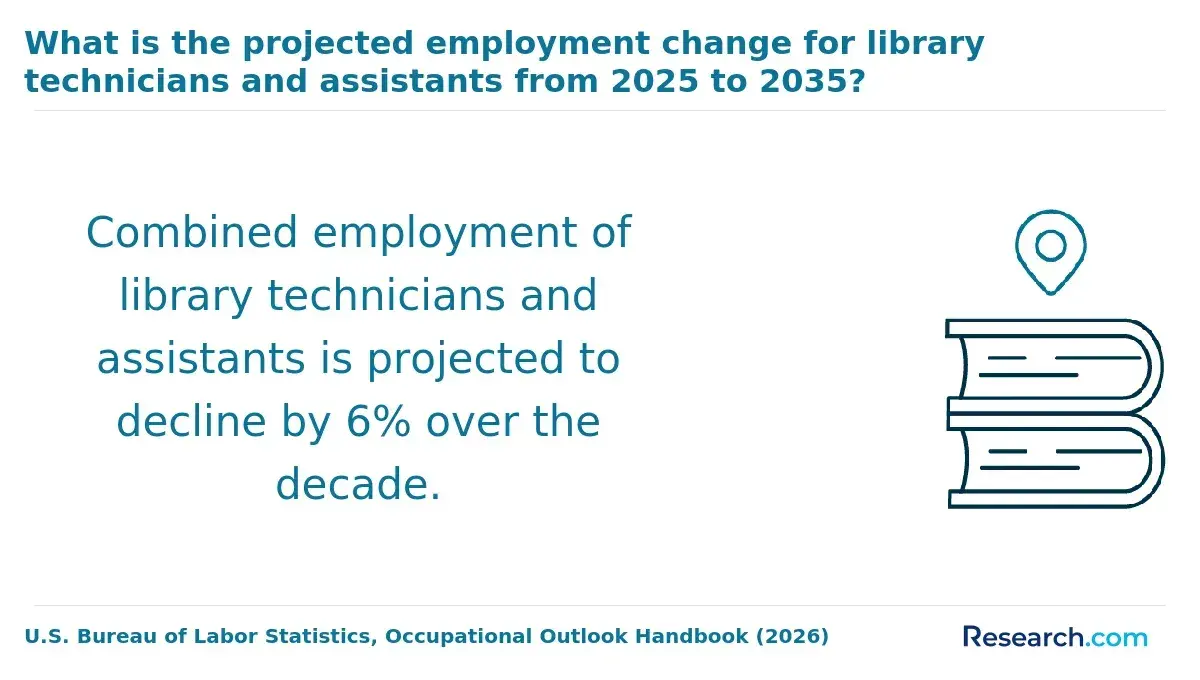
Library technician roles provide a useful comparison when deciding whether to pursue a professional librarian position. BLS reports a May 2025 median of $44,580 and projected 2025-2035 employment change of −6.4% for library technicians. These occupational differences do not mean that an individual will receive either median salary or that an MLIS will secure a librarian job. Compare local postings for pay, experience requirements, hours, and credential expectations before estimating your own prospects.
How can you choose a reputable MLIS program for information services?
Start with your intended setting and two or three representative job postings. Then build a short list of programs whose accreditation, coursework, practice opportunities, schedule, and full cost fit those jobs and your circumstances. A prestigious-sounding track matters less than access to the training you can actually complete.
Use these questions with program staff and current catalog materials to test whether a promising option is workable:
- Is this exact master's program currently ALA-accredited, and are the relevant courses required or elective?
- When are reference, community information, accessibility, and instruction courses expected to run?
- Can I arrange relevant supervised work near home, and who approves and supports the placement?
- What will tuition and mandatory fees total for my residency and enrollment pattern?
- What projects or portfolio pieces can I complete, and what career support is available for my target setting?
Programs that assess demonstrated skills can also be worth examining; competency based MLIS programs offer another lens for comparing how learning is documented. Verify the actual assessment model and course availability rather than assuming that label means faster completion. Choose the option that meets your likely employers' requirements and lets you graduate with credible service experience at a manageable cost.
Other Things You Should Know About Library Science
A librarian can help someone find and assess information or locate an appropriate professional. They should not present a diagnosis or legal interpretation as professional advice unless independently qualified and acting within that role.
It is a referral that does more than hand someone a name: with the person's consent, staff may help identify the right contact or explain the next step. The appropriate level of assistance depends on library policy and the person's preferences.
Staff should follow their institution's privacy and records policies and avoid collecting more personal information than the service needs. Prospective employees can ask how a library handles sensitive requests and retains service records.
Check the provider's current information for eligibility, hours, contact methods, and service area, then note when the listing was verified. For consequential referrals, confirm details directly rather than relying on an old directory entry.
References
- Resources for Public Libraries | NNLM https://www.nnlm.gov/resources/resources-for-public-libraries
- Master of Library and Information Science - College of Information and Communications | University of South Carolina https://sc.edu/study/colleges_schools/cic/academic_programs/masters/master_of_library_and_information_science/
- MLIS Admissions & Cost | College of Information Science https://infosci.arizona.edu/ma-library-information-science/admissions-cost
- MLIS Tuition & Financial Aid - University of Denver | DEN-EDU https://morgridgeonline.du.edu/online-mlis-program/tuition-financial-aid/
- The Master of Library and Information Science (MLIS) Program | Southern Connecticut State University https://inside.southernct.edu/information-and-library-science/mlis
- Career path: Reference and information services | Wayne State University https://sis.wayne.edu/mlis/pathway/reference-information
- Medical Librarianship - SJSU - School of Information https://ischool.sjsu.edu/post/medical-librarianship
- Master of Library and Information Studies - URI Online https://web.uri.edu/online/programs/graduate/master-of-library-and-information-studies/
- Identify Needs and Resources in Your Community | RAND https://www.rand.org/pubs/tools/TL114/manual/step1.html
- ALA-Accredited Programs https://www.ala.org/educationcareers/accreditedprograms/directory