
2027 MLIS Programs for Public Library Circulation and Access Services Leaders

Co-Founder and Chief Data Scientist
Moving from a public library service desk into leadership requires more than knowing how to process loans and returns. Supervisors shape access policies, coach staff, resolve patron concerns, and manage the systems behind everyday service. The U.S. Bureau of Labor Statistics reports a May 2025 median annual salary of $68,270 for librarians and media collections specialists, but that broad figure cannot predict an individual promotion.
This guide helps circulation staff, career changers, and prospective MLIS students judge whether a degree fits their goals - and which program features are worth paying for.
Key Things You Should Know
- Choose an ALA-accredited master's program, then verify public-library management coursework and applied opportunities separately; accreditation does not establish that a circulation specialization exists.
- The BLS projects 2.6% employment growth for librarians and media collections specialists from 2025 to 2035. An MLIS can support advancement, but relevant supervisory experience remains important.
- Compare the full cost of required credits, fees, and any travel against local job requirements; a lower published tuition rate is not necessarily the less expensive route.
What Are MLIS Programs for Public Library Circulation and Access Services Leaders?
These are library and information science master's programs that students can shape toward managing how people use a public library. Circulation covers lending, returns, renewals, holds, accounts, and related policies. Access services is broader: it can include patron registration, resource sharing, accessible service, and the systems and staff that make collections usable.
An MLIS, MLS, Master of Science in Library Science, or institution-specific Master of Information may be relevant, depending on the program and employer. The degree name alone does not establish its accreditation or curriculum. Nor should an applicant assume that "circulation leadership" is a formally named concentration. Often, the best fit is a general LIS degree combined with public-library electives, management study, and an applied project in a library.
This path is most relevant to someone seeking a professional librarian or management position whose employer requires or prefers a library science master's degree. Someone aiming to supervise a circulation desk should first inspect local job postings: some systems promote experienced staff into supervisory roles without an MLIS, while others require the degree for librarian classifications.
Why Does ALA Accreditation Matter for Public Library Leadership Careers?
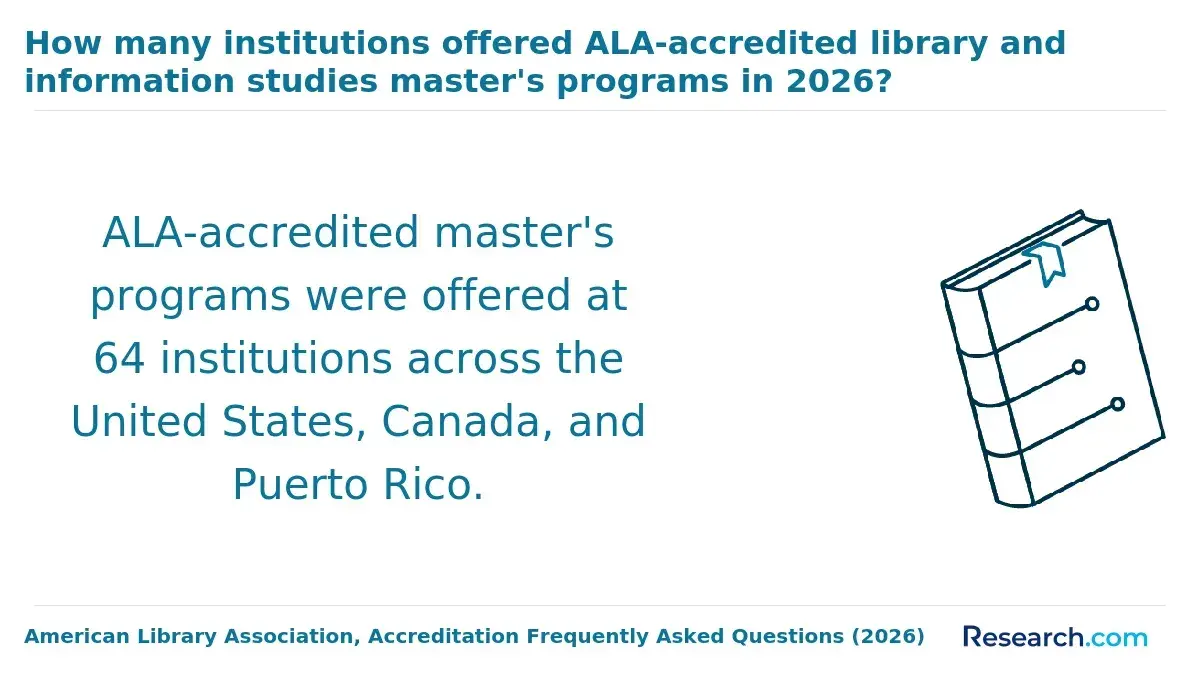
American Library Association (ALA) accreditation evaluates a specific graduate library and information studies program - not every degree at its university. Many professional librarian job postings specify an ALA-accredited master's degree, so choosing an accredited program can preserve eligibility for more positions. Check the current ALA directory for the exact program and degree before applying; institutional accreditation is a separate matter.
Accreditation is a starting filter, not a verdict on career fit. It does not confirm that a school offers a public-library concentration, a circulation elective, an online option, or a local internship. After confirming status, compare the current catalog and course schedule, then ask whether the experiences you need will be available during your intended enrollment period.
How Can an MLIS Degree Prepare You for Circulation and Access Services Leadership?
A useful MLIS connects service principles to operational decisions. A leader may need to explain borrowing rules fairly, improve a confusing holds process, oversee a library management system, protect borrowing records, and respond when an access policy has unintended effects on patrons. Management coursework can help with budgeting, staff development, assessment, and change management; work experience tests those skills under real service constraints.
Look for a way to produce evidence of your judgment, not just completed credits. A supervised project might evaluate barriers in card registration, map a multilingual service workflow, or propose an accessible pickup process. Use aggregated or fictionalized information in a public portfolio unless the library explicitly authorizes disclosure. If you already supervise staff, ask whether a project can address a genuine workplace need; if you are changing careers, seek a placement with direct patron-service responsibilities.
What Coursework Do MLIS Programs Offer for Circulation and Access Services?
Course titles differ, and a catalog listing does not mean an elective runs every term. The table connects common areas of study to circulation leadership tasks so you can evaluate a program's actual curriculum rather than search for one particular concentration name.
| Area of study | Relevance to access services | What to verify |
| Public library services and policy | Patron needs, equitable access, and community-facing decisions | Whether public libraries receive sustained attention |
| Management and supervision | Staff coaching, scheduling, budgets, and service changes | Whether courses address people management, not only organizational theory |
| Information systems and user experience | Catalogs, account interfaces, discovery, and service workflows | Whether students evaluate systems or complete applied work |
| Privacy, accessibility, and assessment | Protection of patron information and evaluation of service barriers | Whether relevant electives are offered within your study timeline |
Core LIS courses in reference, information organization, and collection development also provide context: circulation decisions affect how patrons discover and use materials, even when another department selects or catalogs them. Ask an adviser which courses are required, which are electives, and what substitutes are available if a preferred elective is not scheduled.
Are Online MLIS Programs as Effective as Campus-Based Programs?
An online MLIS can be a sound choice if the specific program meets your accreditation and learning needs. Delivery format alone does not determine educational quality or employer acceptance. For a working circulation employee, online study may make it easier to keep a job while applying lessons immediately; campus study may offer more convenient access to local placements or in-person collaboration.
Compare scheduling rather than relying on the word "online." Ask whether courses meet live, when required classes run, whether group work has fixed times, and whether a practicum can be completed at your current library. Also check for campus visits and accessibility arrangements instead of assuming they are required - or absent. An online information science degree comparison can help organize initial options, but confirm each program's current terms directly.
What Are the Admission Requirements for Public Library MLIS Programs?
Applicants generally need a bachelor's degree and must meet the graduate program's published application requirements. Depending on the institution, those may include transcripts, a statement of purpose, recommendations, a résumé, or additional documentation. An undergraduate LIS major is not necessarily required, and circulation experience can strengthen an application, but experience should not be assumed to replace a formal degree requirement.
In your statement, connect a specific access problem you have encountered - or want to work on - to the program's documented courses and applied opportunities. If you have an unusual academic history or want to transfer graduate credits, request an individual review of the relevant policy before counting on an exception. Applicants weighing affordability can investigate online librarian degree scholarship options, while confirming eligibility, deadlines, and whether an award can be renewed.
How Long Do MLIS Programs Take and What Do They Cost?
Time to completion depends on required credits, course sequencing, enrollment pace, and any applied-learning requirement. A part-time plan can preserve income but may extend the period over which you pay fees or wait for a required course. Request a term-by-term plan based on your intended start date, especially if you cannot take courses during certain work seasons.
Published tuition is not the complete price. To compare programs on equal terms, collect these cost categories for the same enrollment plan:
- Tuition based on the credits your degree requires and the rate that applies to you
- Mandatory program, university, and technology fees
- Books, equipment, and any travel or placement-related expenses
- Potential additional terms if required courses are not available when needed
Then distinguish gross cost from your likely out-of-pocket cost after confirmed aid or employer support, and from any amount you would borrow. Do not assume online enrollment qualifies you for an in-state rate or that a scholarship is guaranteed. A comparison of affordable online librarian degree outcomes can help frame the trade-off, but use each university's current tuition schedule and your own employment prospects for a final decision.
What Jobs Can You Get After an MLIS in Public Library Access Services?
Relevant titles vary by library system. A circulation supervisor may manage desk operations and staff without holding a professional librarian classification. An access services manager may oversee lending policy, accounts, and resource sharing across locations. A public services librarian or branch manager may combine circulation oversight with reference, programming, outreach, and broader management.
Review postings for the duties and required qualifications, not just the title. Build a résumé around improvements you can substantiate: staff training delivered, a workflow documented, an accessibility issue resolved, or a policy evaluated. The MLIS can help meet requirements for professional roles, but it does not replace demonstrated judgment with patrons and colleagues. For an example of how location-specific requirements shape a search, see guidance on Illinois library jobs with an MLIS; verify each employer's current posting.
If your target role is an internal operations promotion that does not require the degree, compare the MLIS with employer training, supervised management experience, or shorter professional development first. That can be a better immediate investment, particularly when tuition would require substantial borrowing.
How Much Do Circulation and Access Services Leaders Earn?
The BLS reports a May 2025 median annual salary of $68,270 for librarians and media collections specialists. That is a national occupational benchmark, not a circulation-manager salary or an MLIS graduate outcome. A supervisor classified in another occupation, working part time, or employed by a particular library system may earn substantially differently.
For context, the BLS median for library technicians was $44,580 in May 2025. The difference between these broad occupations illustrates why job classification matters, but it is not the raise an individual should expect from earning an MLIS. Compare local salary schedules, promotion rules, and postings against your current pay before estimating a financial return. Broader information on library science specializations and pay may provide context, but should not substitute for local public-library figures.
What Certifications and Professional Standards Apply to Public Library Leaders?
ALA accreditation applies to the graduate program; it is not an individual professional license. Requirements for public librarian positions, including any state or local certification, vary by jurisdiction and employer. Check the relevant state library agency's rules and the job posting before treating a credential as mandatory. School librarian licensure is a separate pathway and should not be inferred from an online MLIS or a public-library-focused degree.
For daily leadership, standards and policies concerning patron privacy, intellectual freedom, accessibility, and fair service are more immediately useful than collecting optional credentials. Ask prospective programs how students practice applying these principles when a policy, technology, or staff decision creates a barrier to access.
Other Things You Should Know About Library Science
Use aggregated, de-identified, or fictionalized examples unless your library explicitly authorizes another approach. Borrowing histories and account details require careful handling even when a project has educational value.
A hold usually reserves an item through a library's own lending system or network. Interlibrary loan obtains material through a resource-sharing arrangement with another library and may involve different delivery times and borrowing rules.
In a floating collection, an item can remain at the branch where it is returned instead of automatically going back to a designated home branch. Circulation leaders may need to monitor how that practice affects availability across locations.
Staff should test whether patrons with different accessibility needs can use it, how clearly it handles account problems, and whether a staffed alternative remains available. Convenience for some users should not become a new barrier for others.
References
- Internships @ WCPL | Wake County Government https://www.wake.gov/departments-government/libraries/about-wcpl/jobs-volunteering/internships-wcpl
- Types of Financial Aid: Grants, Work-Study, and Loans | studentaid.gov https://studentaid.gov/understand-aid/types
- California Public Library Staff Education Program | California State Library https://www.library.ca.gov/services/to-libraries/public-library-staff-education-program/
- Library Program Manager I/II | cityofwoodland.gov https://www.cityofwoodland.gov/DocumentCenter/View/10527/Library-Program-Manager-I--II-PDF
- Employer-offered educational assistance programs can help pay for college | Internal Revenue Service https://www.irs.gov/newsroom/employer-offered-educational-assistance-programs-can-help-pay-for-college
- Position Title | grafton-ma.gov https://www.grafton-ma.gov/DocumentCenter/View/17010
- Faculty and Staff Tuition Assistance | osu.edu https://hr.osu.edu/benefits/tuition-assistance/faculty-staff/
- Admissions - Master of Library and Information Science (MLIS) https://info.umd.edu/academics/masters-programs/master-of-library-and-information-science/admissions/
- Apply for MLIS Admission | Library and Information Science at Mizzou https://online.missouri.edu/degrees-programs/mu/education/library-and-information-science/mlis/admissions
- Internships, Capstones, and Practicums | uncg.edu https://library.uncg.edu/about-us/library-departments/special-collections-university-archives/scua-internships-capstones-and-practicums/


