
2027 MLIS Programs for Children's Collection Development

Co-Founder and Chief Data Scientist
Choosing an MLIS for children's collection development means looking beyond a program's name. You need coursework and hands-on experience that prepare you to select, evaluate, and manage materials for young readers - and, if you want to work in a school, a path that meets state credential rules.
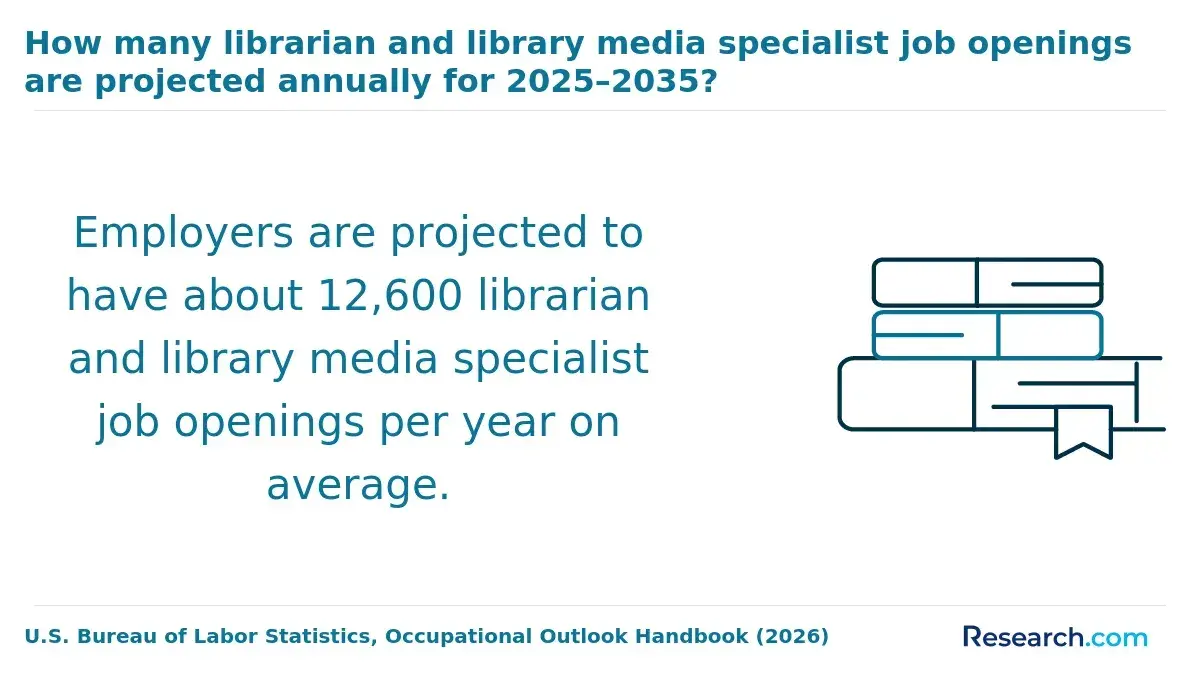
The U.S. Bureau of Labor Statistics projects 2.6% employment growth for librarians and media collections specialists from 2025 to 2035. That modest outlook makes relevant experience and program fit especially important. This guide shows prospective students and career changers what to compare before committing time and money.
Key Things You Should Know
- Look for an ALA-accredited master's program with documented children's literature and collection-development coursework; a related elective is not necessarily a formal concentration.
- School library jobs may require a state credential beyond the MLIS. Confirm the requirements in the state where you intend to work before enrolling.
- The May 2025 median annual pay for librarians and media collections specialists was $68,270, but that broad occupational figure is not a children's librarian salary or a program outcome.
What are MLIS programs for children's collection development?
These are library and information science master's programs that students can use to prepare for selecting and managing materials for children. The degree may be called an MLIS, MLS, Master of Science in Library Science, or another institution-specific name. Children's collection development is usually a career focus, not a degree title. A program might document a formal youth services track, offer relevant electives without a track, or provide only general collection-management preparation. Those are different levels of specialization.
The work extends beyond choosing appealing books. Children's collection specialists consider developmental needs, community languages, accessible formats, reviews, circulation patterns, budgets, replacement needs, and how easily families can discover materials. They may select print books, ebooks, audiobooks, and other resources while applying a library's collection policy. Programs are most useful when students can connect selection decisions to actual community needs rather than treating a recommended reading list as a complete collection plan.
Which MLIS accreditation should children's collection specialists look for?
For U.S. professional librarian positions, ALA accreditation of the specific master's program is an important criterion. Check the current American Library Association directory for the exact program and degree you are considering. A university's institutional accreditation serves a different purpose and does not establish that its LIS master's program is ALA-accredited.
ALA accreditation evaluates a program, not a proposed children's collection pathway. It does not confirm that a particular elective runs regularly, that an internship is available nearby, or that an online student can complete a school librarian credential. Ask the program to identify its current children's literature courses, their recent scheduling, and any documented youth services track. If school libraries are your goal, separately verify the preparation and licensure requirements with the education authority in your intended state.
What degree pathways prepare students for children's collection development?
An ALA-accredited LIS master's with relevant electives is a common route into public library children's services. A documented youth services concentration may offer a more structured course sequence, but a well-chosen elective pathway and applied project can also provide focused preparation. School library work adds a separate state-credential decision. The distinctions below help prevent a program label from standing in for evidence about what you will study.
This table compares pathways by their documented structure and likely use, rather than treating them as interchangeable credentials.
| Pathway | What it establishes | Best fit to investigate |
| Named youth services concentration | A formally documented set of requirements within a degree | Students who want a structured route and can confirm course availability |
| MLIS or equivalent with relevant electives | Targeted coursework without necessarily having a formal concentration | Public library applicants who can build a coherent course and experience plan |
| School library preparation pathway | Graduate study that may be designed to support state credential requirements | Applicants who have verified eligibility in their intended state |
| Individual project or practicum | Applied experience, if the program permits and documents it | Students seeking evidence of selection and evaluation skills |
Degree names alone do not settle these choices; different librarian degrees explained can help you compare the credential terminology. If you primarily want experience leading storytimes or supporting literacy activities, ask local employers whether an MLIS is needed for the positions you seek. Some support roles have different qualification requirements.
Are online MLIS programs effective for children's collection development?
Online study can prepare students effectively when the curriculum includes relevant instruction and opportunities to apply it. Students can practice evaluating titles, drafting selection rationales, analyzing a community profile, and planning an accessible children's collection remotely. However, online courses do not make fieldwork automatically remote. A practicum may require an approved library site, a qualified supervisor, or scheduled hours with children's services staff.
Compare the actual course schedule, not just the "online" label. Synchronous meetings, limited elective offerings, and prerequisite sequences may affect working students more than the delivery format itself. Ask whether a children's literature course has been offered recently, whether online students can enroll in it, and how placements are arranged where you live. An MLIS completion plan is useful only if it accounts for those course and fieldwork constraints.
Which courses cover children's literature and collection development?
Start with the catalog, then check the current schedule. Course titles to investigate include children's literature, materials for children, youth services, collection development or management, and cataloging or metadata. A children's literature course may emphasize evaluation and reader appeal; a collection course should address selection policies, budgets, evaluation, and decisions about retaining or replacing materials. Neither title alone proves that the course covers both.
Supporting study can be just as useful. Community needs assessment helps students match purchases to local families. Cataloging and metadata - information that describes and organizes resources - affect whether children and caregivers can find them. Accessibility coursework can inform format and discovery decisions. Where a program permits applied work, a strong project might evaluate a defined age range in an existing collection, identify documented gaps, and propose selections within a stated budget. Ask an adviser whether the courses needed for that project will run during your expected enrollment.
What are the admission requirements for children's collection MLIS programs?
Applicants generally need a bachelor's degree and must meet the admitting university's graduate requirements. Programs may request transcripts, a statement of purpose, recommendations, a résumé, or other materials; requirements and deadlines vary. A library job, classroom experience, or volunteer work can strengthen an application, but it does not automatically replace a stated degree requirement.
Use the statement of purpose to connect your experience to a specific goal: for example, evaluating multilingual materials for a public library or developing an age-appropriate school collection. If you are changing careers, ask admissions how the program assesses transferable experience and whether relevant placements are open to new entrants. Discuss financing early as well; career changer library degree funding is worth exploring, but eligibility and award availability must be confirmed with each institution.
How long do children's collection MLIS programs take and cost?
Completion time depends on required credits, enrollment pace, course sequencing, and any field placement. Without a verified program and attendance plan, a single duration or tuition figure would be misleading. A student who needs a children's literature elective offered infrequently may take longer than the published minimum, while a practicum can add scheduling constraints even when it adds no extra course term.
Calculate gross program cost from the credits you must take at your applicable tuition rate, then add mandatory fees, books and materials, and any travel or placement expenses. Next, distinguish that total from your out-of-pocket cost after confirmed aid or employer support and from the amount you would borrow. Do not assume online tuition is the same for residents and nonresidents. When comparing low tuition library science graduate programs, check each school's current tuition schedule, required credits, fees, and relevant elective availability; the lowest per-credit price may not produce the lowest workable total.
What careers can children's collection development graduates pursue?
Public library children's librarians may select and evaluate materials alongside reference, programming, and family outreach. Some larger systems have collection-development librarians or selectors with more dedicated purchasing responsibilities. School librarians or library media specialists build collections for a school community, often while teaching and supporting educators; state credential rules may govern those roles. Job titles and the share of time spent on selection vary by employer, so read the duties in each posting.
Entry-level applicants can demonstrate readiness through supervised library experience and a portfolio that explains their decisions. Useful samples include a collection assessment, an annotated selection list tied to community needs, or an accessible-format purchasing proposal. Remove patron information and obtain permission before using workplace documents. An MLIS is commonly sought for professional librarian roles, but library assistant and technician positions may offer a way to gain experience without one; they are not necessarily substitutes for a credential required by a particular employer.
How much do children's librarians and collection specialists earn?
The U.S. Bureau of Labor Statistics reports a May 2025 median annual salary of $68,270 for librarians and media collections specialists. That occupation includes work beyond children's services, so its median is a benchmark, not an expected offer for a children's librarian or a measure of any MLIS program's results. Pay depends on employer, location, responsibilities, and experience; a dedicated selection role may also have a different pay scale from a general children's services job.
For a realistic education decision, compare local job postings and their stated qualifications with your current earnings, likely borrowing, and the roles you would actually pursue. If you need to remain employed while studying, cheapest library science programs for working adults can be a starting point, but affordability still depends on your applicable tuition, schedule, fees, and access to the courses you need. Neither the national median nor a low advertised price establishes a personal return on investment.
What certifications and professional standards apply to children's librarians?
Public library children's librarians generally do not have a single nationwide children's-services license. Employers set their own education and experience requirements, often considering an ALA-accredited master's for professional librarian positions. School librarians are different: states may require educator licensure, a school library endorsement, approved preparation, examinations, or other conditions. Check the relevant state education authority before assuming that an MLIS - online or on campus - qualifies you.
Professional guidance also shapes daily collection decisions without functioning as a license. The American Library Association's intellectual freedom and collection-development guidance can inform written selection and reconsideration policies. The Association for Library Service to Children offers professional resources relevant to serving young readers. Learn how a prospective employer applies its own policies: a sound selection rationale connects community needs, credible reviews, accessibility, and the library's stated criteria rather than relying solely on personal preference.
Other Things You Should Know About Library Science
No. They can use professional reviews, publisher information, sample content, community requests, and collection data to evaluate potential purchases. The library's selection policy should guide the decision.
Not universally. Some employers require or prefer particular language skills to serve their communities. Check each posting and consider how you would assess materials in languages you do not read.
It can show evaluation and writing skills if reviews explain audience fit and selection criteria. For collection-focused roles, pair reviews with evidence that you can assess community needs and make choices within a budget.
No. Libraries typically assess donations against their collection policies, condition standards, and available space. A donated title may be declined even if it is popular or recently published.
References
- Cost of Attendance (Budget) | 2025-2026 Federal Student Aid Handbook https://fsapartners.ed.gov/knowledge-center/fsa-handbook/2025-2026/vol3/ch2-cost-attendance-budget
- Junior Fellows Program | loc.gov https://www.loc.gov/item/internships/junior-fellows-program/
- Career path: Children and youth services | Wayne State University https://sis.wayne.edu/mlis/pathway/children-youth
- Youth Services (MLIS) | missouri.edu https://cehd.missouri.edu/degree/youth-services-mlis/
- M.S. in Library and Information Science: Youth Services Specialization | St. John's University Programs https://online.stjohns.edu/online-programs/mslis/youth-services-specialization
- How to Become a School Librarian: Your Complete Career Guide | Syracuse University https://ischool.syracuse.edu/how-to-become-a-school-librarian/
- YA Services at Library Schools | American Library Association https://www.ala.org/yalsa/getinvolved/recruitment/libraryschools


