
2027 MLIS Programs for Digital Preservation Project Coordinators

Co-Founder and Chief Data Scientist
Choosing an MLIS for digital preservation means looking beyond a program's archives label. Project coordinators must keep digital collections usable while managing people, deadlines, rights, and technical workflows. The U.S. Bureau of Labor Statistics projects 3.4% employment growth for archivists from 2025 to 2035, but that broad occupation does not describe every preservation job.
This guide shows prospective students and career changers how to assess accreditation, coursework, applied experience, cost, and career fit - so they can choose training for the work they want to do.
Key Things You Should Know
- Prioritize an ALA-accredited master's program with documented preservation coursework and applied projects; a relevant elective is not necessarily a formal concentration.
- Coordinators need workflow, metadata, rights, and project-management skills - not just experience scanning collections or using repository software.
- The May 2025 median pay for librarians and media collections specialists was $68,270, but it is not a salary estimate for digital preservation project coordinators.
What is an MLIS degree for digital preservation project coordinators?
An MLIS is a graduate degree in library and information science. For this career, the strongest preparation combines information organization and stewardship with the ability to plan and deliver digital preservation work. A coordinator might oversee the transfer of files into a repository, document their origins and rights, organize quality checks, track risks, and keep archivists, IT staff, vendors, and collection owners working toward the same milestones.
There is no universal degree title or required concentration called "digital preservation project coordination." An MLS, Master of Science in Library Science, or institution-specific Master of Information may also be relevant. What matters is the documented curriculum and experience available within the particular degree. A course on digitization, for example, may teach how to create digital files without covering their long-term management.
Look for opportunities to work with born-digital materials - files created digitally - as well as digitized collections. An applied project that produces an inventory, documented ingest workflow, rights assessment, or preservation plan is more informative to an employer than a specialization name alone.
Which accreditation should MLIS programs for digital preservation have?
For U.S. professional librarian positions, an ALA-accredited master's program is often the safest choice because employers may specify that credential. Check the specific degree program in the current American Library Association accreditation directory before applying. Accreditation of the university itself is a separate matter and does not establish ALA accreditation for its LIS master's degree.
ALA accreditation evaluates a program; it does not certify that the school offers a digital preservation concentration, a particular elective this term, an internship placement, or an online option. Verify each of those features in the current catalog and with the program. Archives and technology employers may also accept other graduate degrees or substantial relevant experience, so compare credential requirements in jobs you would realistically pursue.
What degree and training prepare you for digital preservation coordination?
An MLIS can be a strong route for someone who wants professional library or archives roles alongside preservation coordination. It is not the only route: archival studies, information management, records management, or computing education may fit positions centered on those fields. Applicants with an existing graduate degree or repository experience may need targeted coursework or supervised practice rather than another full degree.
Useful training spans both collections and delivery. Learn how to describe and appraise materials, assess copyright and access restrictions, document file transfers, test whether files have changed, and set responsibilities and deadlines. Practice explaining technical risks to colleagues who do not work with preservation systems. Basic scripting can help with repetitive file tasks, but a coordinator also needs to know when to involve IT or a preservation specialist.
Before committing to a degree, compare the duties in several local or remote job postings with your existing skills. If geography shapes your options, a library science tuition South region comparison can help start a cost shortlist; confirm each program's current curriculum, accreditation, and applicable tuition rate separately.
Are online MLIS programs effective for digital preservation careers?
Online study can work well when courses require students to produce preservation documentation, evaluate digital objects, collaborate on workflows, and receive feedback. The format alone does not provide hands-on experience with an institution's collections or systems. Ask whether projects use realistic materials, whether students can arrange local placements, and who helps secure supervision.
"Online" also does not necessarily mean self-paced. Live sessions, group projects, scheduled electives, and placement hours may constrain a working student. Check whether required courses are asynchronous, how often preservation electives run, and whether an internship can be completed near home or remotely. Students considering a library science degree one year timeline should check the actual course sequence: faster completion may leave less room for a substantial placement or portfolio project.
What coursework do digital preservation-focused MLIS programs include?
A useful curriculum connects preservation decisions to the collections, people, and systems affected by them. Course titles differ, so inspect descriptions and assignments rather than relying on a concentration label. The following areas show what each subject should help you do.
| Coursework area | Value for coordination work |
| Digital preservation and repositories | Plan file ingest, storage, monitoring, and access across a collection's life cycle. |
| Archives, appraisal, and records management | Decide what should be retained and document its context and disposition. |
| Metadata and information organization | Describe objects and record technical, rights, and preservation information consistently. |
| Information technology and data management | Communicate requirements to IT staff and evaluate systems and file-processing workflows. |
| Project management and policy | Set scope, responsibilities, budgets, milestones, and sustainable procedures. |
For a closer fit, look for assignments involving preservation metadata - information about a file's history and actions taken to protect it - and fixity, a way to check whether a file has changed. A strong applied assignment should also address access and rights, not merely demonstrate a tool. Confirm whether promising courses are required or optional and when students can actually take them.
What are the admission requirements for digital preservation MLIS programs?
Requirements are set by each graduate program, not by the digital preservation career path. Applicants should expect to document a bachelor's degree and review the school's current rules for transcripts, statements, recommendations, prerequisite skills, and any tests or portfolio materials. Previous archives, library, records, or IT work can strengthen an application, but it should not be assumed to replace a published academic requirement.
Use the statement of purpose to connect a specific preservation problem you want to address with the program's verified courses and projects. If you have prior graduate study, ask how many credits, if any, may transfer into the particular degree and whether required courses must still be taken. An online library masters advanced standing comparison may identify programs to investigate, but transfer decisions depend on current institutional policy and an individual evaluation.
How long do MLIS programs cost and take to complete?
Completion time depends on required credits, course sequencing, enrollment pace, and any practicum or capstone. Full-time study may take roughly two academic years, while part-time study generally takes longer; check the published plan for the degree you would enter. A catalog listing does not guarantee that a needed elective will be offered when your schedule requires it.
There is no responsible single price for a digital preservation-focused MLIS. Compare the costs below using each school's current tuition schedule and your actual residency and enrollment status. This separates the advertised tuition rate from what you may have to spend or borrow.
| Cost component | What to verify |
| Program tuition | Applicable rate multiplied by required credits; check residency and online-student rules. |
| Mandatory fees | University, program, and technology charges across all expected terms. |
| Materials and equipment | Books, software requirements, and any computer or storage needs. |
| Applied experience | Possible travel, unpaid placement hours, and any campus attendance. |
| Financing | Confirmed grants or employer support, plus borrowing costs if loans are needed. |
Shorter does not automatically mean cheaper: a lower per-credit rate can still produce a higher total when more credits or fees are required. An affordable rapid library degree search is a starting point, not a substitute for a personalized total-cost estimate. Ask financial aid staff about aid eligibility for your enrollment period and distinguish total program cost from your out-of-pocket cost and the amount you would finance.
What jobs can you get with a digital preservation-focused MLIS?
Possible titles include digital preservation coordinator, digital archivist, digital collections librarian, repository specialist, and digital asset manager. Titles are inconsistent: one "coordinator" may manage a grant and vendors, while another performs daily ingest and metadata work. Academic libraries, archives, museums, government offices, and other organizations with digital records may divide these responsibilities differently.
An MLIS may be required for a professional librarian opening, preferred for an archives role, or one of several accepted qualifications for repository and information-management work. Read the required qualifications and duties together. Entry points can include a supervised digitization or repository project, archives work, records management, or a technician role; none guarantees advancement to a coordinator position.
A useful portfolio shows both a result and your decisions: for example, a documented file inventory, an ingest checklist, sample preservation metadata, a rights decision log, and a short account of how you handled errors. Remove restricted information and identify your own contribution to group work. For broader context on adjacent roles, compare library science degree career earnings while checking the qualifications and pay for the particular positions you seek.
How much do digital preservation project coordinators earn?
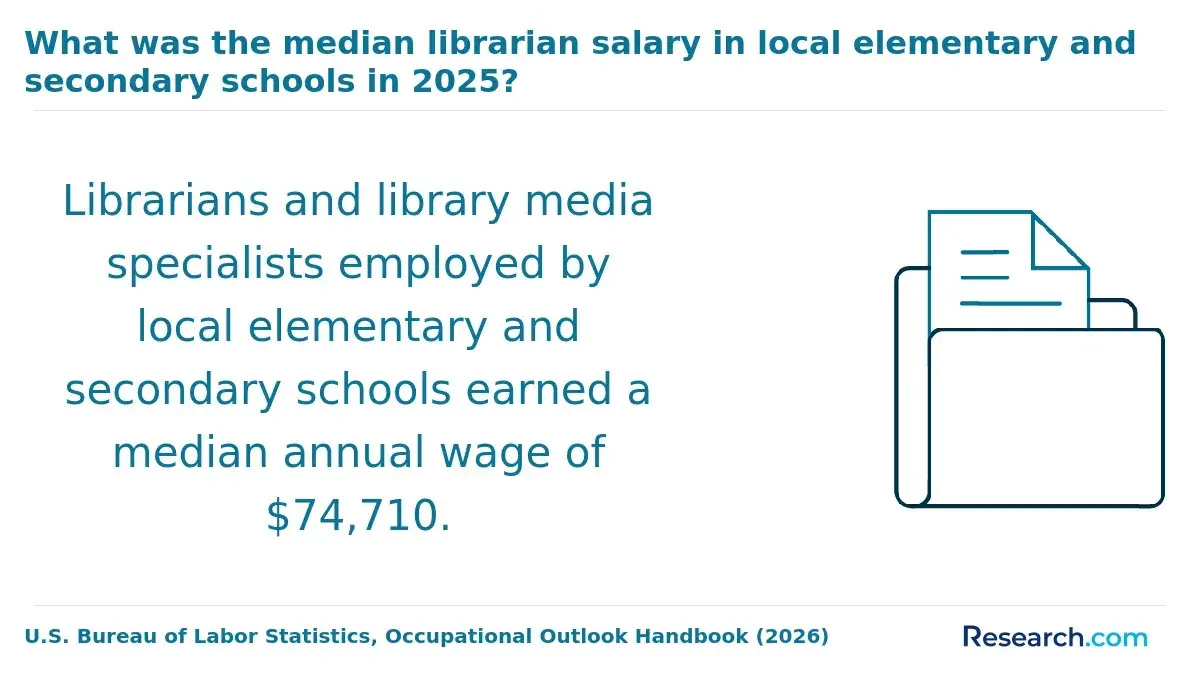
There is no single Bureau of Labor Statistics occupation or national median specifically for digital preservation project coordinators. For context, the May 2025 median annual pay was $64,550 for archivists and $68,270 for librarians and media collections specialists. These are medians for broad occupations - not starting salaries, preservation-specific salaries, or outcomes for MLIS graduates.
Pay for a prospective coordinator job will depend on its classification, employer, location, scope, and required experience. A grant-funded project appointment may also differ from an ongoing staff position in benefits and job security. Compare actual postings by duties and compensation, then weigh the likely career benefit against tuition, forgone work time, and any borrowing rather than using an occupational median as a personal return-on-investment forecast.
What certifications and standards support digital preservation careers?
Standards and professional development help coordinators make consistent decisions, but no single optional certificate substitutes for experience or serves as a universal license for this work. The OAIS reference model provides a shared framework for preserving information over time. PREMIS supports recording preservation information, including actions performed on digital objects. The NDSA Levels of Digital Preservation can help teams assess practices and identify improvements.
Choose training that fills a demonstrated gap - such as preservation metadata, digital forensics, repository administration, or project management - rather than collecting credentials by name. Ask prospective employers which standards and systems their teams use. As collections and access systems change, the durable skill is being able to document a decision, test a workflow, and explain its risks, including privacy and accessibility risks.
Other Things You Should Know About Library Science
No. Backups help restore files after loss or failure. Preservation also involves documenting what files are, monitoring their condition, managing formats and rights, and maintaining access over time.
Yes. Retention and public access are separate decisions. An institution may restrict access while it reviews donor agreements, copyright, privacy, or sensitive information.
It should define the collections in scope, who is responsible for them, how files are received and monitored, how risks are handled, and when the policy will be reviewed.
Not without the host institution's explicit permission. Use its approved storage and transfer procedures, especially when materials contain personal information or access restrictions.
References
- Types of Financial Aid: Grants, Work-Study, and Loans | studentaid.gov https://studentaid.gov/understand-aid/types
- MLIS Curriculum, Specialties & Courses | University of Arizona College of Information Science https://infosci.arizona.edu/ma-library-information-science/curriculum-specialties-courses
- online Master of Library and Information Science | DEN-EDU https://morgridgeonline.du.edu/online-mlis-program/
- Digital Preservation Framework | UTSA Libraries https://lib.utsa.edu/about/policies/digital-preservation-framework
- Digital Curation -- MLIS Career Pathway | SJSU https://ischool.sjsu.edu/digital-curation
- Library Science Master's Online - UW Information School https://ischool.uw.edu/programs/mlis/degree-options/online
- Master of Library and Information Science (MLIS) | umd.edu https://info.umd.edu/academics/masters-programs/master-of-library-and-information-science/
- Applying to Grad School - The City University of New York https://www.cuny.edu/admissions/graduate-studies/prepare/
- Admissions: Graduate Students | General Information https://catalog.nyit.edu/general_information/admissions_graduate/
- Archivist Jobs, Salary & Career Path Guide | EWU https://online.ewu.edu/degrees/education/master-arts-history/archivist-jobs-salary/


