2027 MLIS Programs for Archives Exhibitions and Public Programming

Co-Founder and Chief Data Scientist
Choosing an MLIS for archives exhibitions takes more than finding a course labeled "archives." You need preparation to preserve collections, interpret them for the public, and gain experience that employers can evaluate. The U.S. Bureau of Labor Statistics projects archivist employment to grow 3.4% from 2025 to 2035 - a reason to assess opportunities realistically, not assume a degree guarantees a job. This guide helps prospective students compare accreditation, coursework, hands-on training, cost, and career fit before applying.
Key Things You Should Know
- Choose an ALA-accredited master's program with verifiable archival coursework and opportunities to produce exhibition or public-programming work; a course title alone does not establish a specialization.
- Check whether you can complete collection-based fieldwork where you live. Online classes do not necessarily make internships or exhibition projects remote.
- Archivists had a median annual wage of $64,550 in May 2025, according to the U.S. Bureau of Labor Statistics; that occupational figure is not a starting salary or a program outcome.
What are MLIS programs for archives, exhibitions, and public programming?
These are library and information science master's programs that students use to prepare for work with archival collections and public audiences. The degree may be called an MLIS, MLS, Master of Science in Library Science, or another institution-specific name. The important distinction is between a documented archival concentration and a general LIS degree in which students assemble relevant electives and projects.
Archival work includes deciding what records to retain, arranging and describing collections, preserving them, and helping people use them. Exhibitions and public programming add interpretation: selecting materials, writing accurate and accessible text, planning events, and working with communities. A student seeking all three should look for evidence of each in the curriculum rather than treating "archives" as shorthand for exhibition training. For a broader comparison of degree names and purposes, see library science credentials explained.
Which accreditation should archives-focused MLIS programs have?
For a U.S. archives-focused LIS degree, check whether the specific master's program appears as accredited in the current American Library Association directory. Institutional accreditation applies to the university; it does not establish that its LIS master's program is ALA-accredited. Some archives employers accept degrees in history, public history, or related fields, but ALA accreditation can matter when an applicant also wants access to librarian positions.
Accreditation does not verify an archives concentration, guarantee that an exhibition elective will run, or establish eligibility for a state-regulated school librarian role. Check those separately in the current catalog and with program staff. State credential rules are a different question, as illustrated by guidance on an Illinois library science degree and licensure; consult the relevant state education authority if school libraries are part of your career plan.
What careers can an archives and public programming MLIS prepare you for?
The strongest match is a position combining collection stewardship with access and interpretation. Titles differ by employer, and the same title can describe substantially different duties. This table separates likely work from qualifications to investigate in actual job postings.
| Role | Typical work | Qualification to check |
| Archivist or digital archivist | Appraises, describes, preserves, and provides access to records; may create collection-based exhibits. | Employers may seek an MLIS, a history-related master's, and relevant collection experience. |
| Special collections librarian | Supports research using rare or distinctive materials and may teach, exhibit, or host events. | Check for an ALA-accredited master's requirement and subject expertise. |
| Exhibitions or public programs coordinator | Develops displays, events, partnerships, and audience-facing interpretation. | An MLIS may help, but museum studies, public history, and programming experience can also fit. |
| Curatorial or collections assistant | Researches objects, assists with displays, or supports collection care. | Entry requirements vary; some positions do not require an MLIS. |
Archives and special collections exist in universities, public libraries, museums, historical societies, governments, and other organizations. If you mainly want to organize records and improve access, prioritize archival training. If your goal is primarily to design museum exhibitions, compare public history or museum studies degrees as well; an MLIS is not the default qualification for every curatorial role.
What coursework do MLIS archives and exhibitions programs include?
Start with the archival sequence, then examine how the program connects collection work to an audience. Relevant courses may cover appraisal, arrangement and description, preservation, digital collections, reference, outreach, and exhibit development. Finding aids - guides that describe archival collections - are a particularly useful product to learn to create.
Catalog listings show possibilities, not a promise that every elective will be offered during your enrollment. To assess how much preparation a program can actually provide, ask about these connected opportunities:
- Whether archival courses are required for a named track or must be assembled as electives, and how often those electives are scheduled.
- Whether students can create a finding aid, digital exhibit, exhibit proposal, or public-program plan for a portfolio.
- Whether a practicum permits work with real collections and an audience, and who arranges the placement.
Digital preservation and descriptive metadata matter because an exhibition increasingly draws on both physical and digitized material. An applied project should show not just an attractive display, but also accurate collection context and sound decisions about access.
Are online or campus-based MLIS programs better for archival careers?
Neither format is automatically better. An online program can work well if it offers the courses you need and permits a supervised placement near home. Campus study may make it easier to work directly with a university's special collections or local cultural institutions, but proximity alone does not guarantee access to those opportunities.
Compare formats on course scheduling, required live sessions, placement approval, access to collections, and any campus visits - not simply on whether lectures are online. Ask whether a local archive can supervise your work and whether an exhibition project can be completed through that placement. An online information science degree comparison can help establish a shortlist, but confirm current archival electives and fieldwork rules directly with each program.
What are the admission requirements for archives-focused MLIS programs?
Applicants generally need a bachelor's degree and must follow each graduate program's published application requirements. Programs may request transcripts, a statement of purpose, recommendations, and a résumé; prerequisite and test policies vary. Archival experience can strengthen an application, but do not assume it is required - or that it replaces a stated degree requirement.
Use the statement of purpose to connect your intended work to specific, documented opportunities: for example, archival description coursework plus a collection-based practicum. If you have not worked in a library or archive, explain transferable experience in research, writing for audiences, organizing information, or planning events. Guidance on how to apply to MLIS without library experience can help you frame that background without overstating it.
How long do MLIS programs for archives and exhibitions take?
Completion time depends on the program's required credits, your course load, and when specialized electives and placements are available. A published accelerated timeline may be achievable for the general degree yet leave little room for an exhibition elective or a substantial archives practicum.
Before selecting a schedule, map the required courses, archival sequence, fieldwork eligibility, and term-by-term elective offerings against your intended graduation date. Ask what happens if a needed course is not offered when expected. A fast librarian certification degree comparison is a starting point for investigating pace, not evidence that a particular accelerated route provides the archival experience you want.
How much do archives and public programming MLIS programs cost?
There is no reliable single price for this pathway: tuition rates, required credits, residency rules, and fees differ by program and enrollment period. Calculate published tuition × credits required, then add mandatory fees, materials, and any travel or placement costs. If an elective is delayed, consider whether an extra term would add costs. Do not assume an online student receives an in-state rate.
Compare the resulting gross cost with any funding for which you are actually eligible. Scholarships, assistantships, employer support, and federal aid can change out-of-pocket cost, while loans change how much you finance rather than reducing the program's price. Confirm current aid terms with the financial aid office before borrowing. For a career decision, weigh that cost against jobs you would pursue with the degree and your existing qualifications; occupational median wages cannot establish your personal return.
What salaries and job outlook can MLIS archives graduates expect?
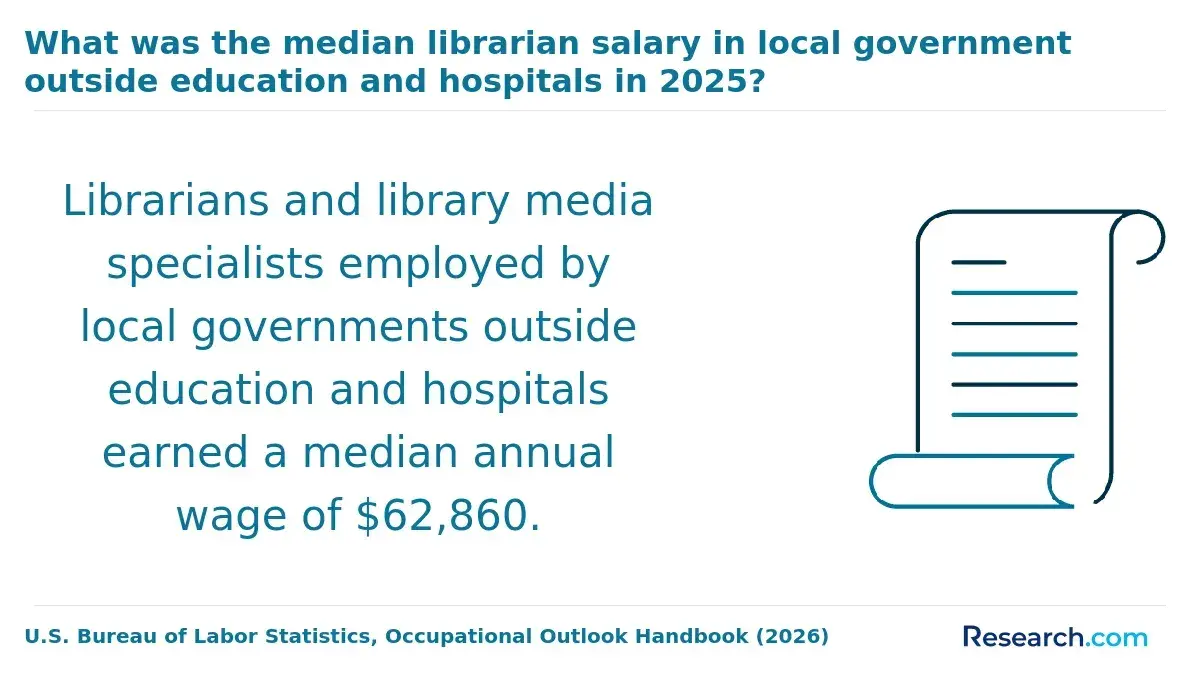
The U.S. Bureau of Labor Statistics reports occupational figures, not earnings or placement rates for graduates of a particular MLIS. The figures below show how related roles differ; use them to evaluate possible career directions, not to predict an offer.
| U.S. occupation | Median annual wage, May 2025 | Projected employment change, 2025-2035 |
| Archivists | $64,550 | +3.4% |
| Curators | $63,420 | +4.9% |
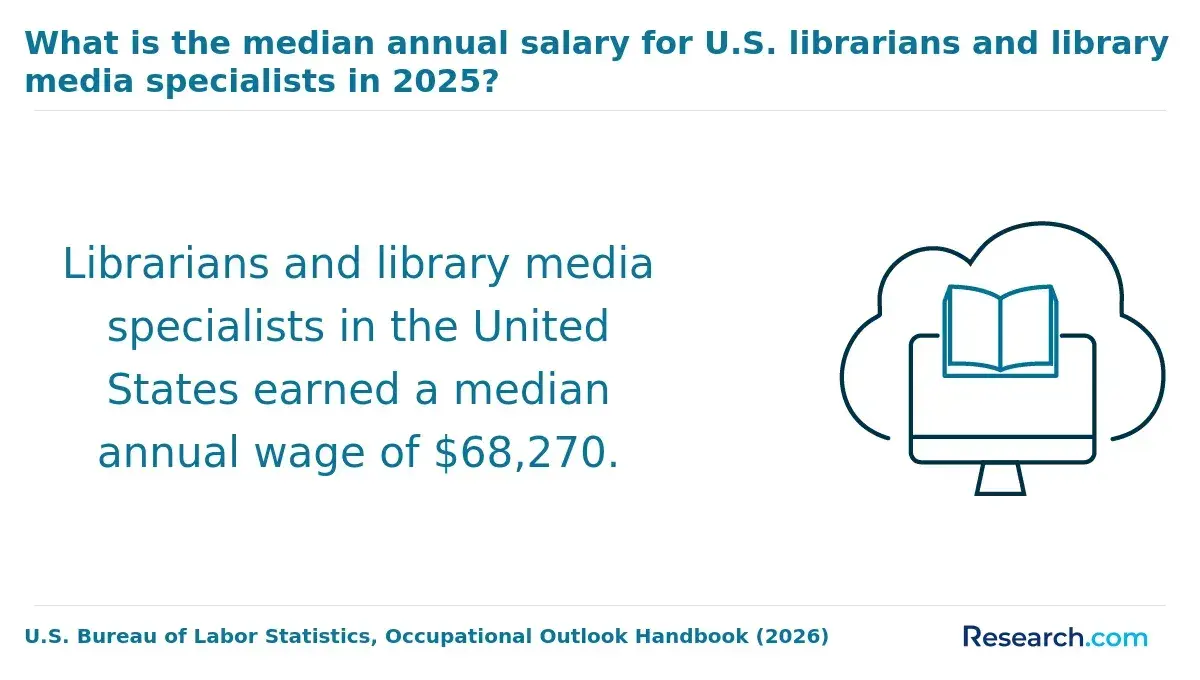
| Librarians and media collections specialists | $68,270 | +2.6% |
| Museum technicians and conservators | $51,440 | +3.6% |
The archivist median includes workers at different career stages and across employers. Exhibition-heavy jobs may instead fall under curatorial or museum occupations with different qualification requirements. Review local job postings for degree preferences, duties, and pay before deciding whether an MLIS is the most suitable investment.
Do archivists need certification or a professional license?
Archivists generally do not need a professional license to practice in the United States. Voluntary professional certification may be useful for some roles, but it is not a universal legal requirement or a substitute for experience. Employers set their own education and skills requirements.
Keep adjacent careers separate: a school librarian position may require a state-issued credential, and preservation or conservation work may call for different specialist training. If a posting mentions certification, identify the exact credential and whether it is required or preferred before choosing a degree to pursue it.
Other Things You Should Know About Library Science
Basic handling and preservation are part of archival work, but complex treatment belongs with a qualified conservator. Ask a placement supervisor what handling and display tasks students may perform.
Not necessarily. Ownership of an item, copyright, donor agreements, and privacy concerns are separate considerations. Review the collection's documentation and the proposed use before publishing an image.
Set an audience goal before the event, then collect appropriate evidence such as attendance, participant feedback, and whether the program reached its intended community. Interpret those measures alongside the program's purpose rather than treating attendance alone as success.
It means involving people connected to the materials in decisions about interpretation, language, or presentation - not merely asking them to promote a finished exhibit. Clarify roles, review opportunities, and how contributions will be credited at the outset.
References
- Types of Employment Positions at the National Archives https://www.archives.gov/careers/jobs/positions.html
- Cost of Attendance (Budget) | 2025-2026 Federal Student Aid Handbook https://fsapartners.ed.gov/knowledge-center/fsa-handbook/2025-2026/vol3/ch2-cost-attendance-budget
- Workshops - Inclusive Public Engagement Guide | City of San Diego Official Website https://www.sandiego.gov/engagement/inclusive-engagement-techniques-approaches/workshops
- How to Become an Archivist - Arizona Online https://online.arizona.edu/news/how-become-archivist-step-step-guide-launching-your-career
- Special Collections & University Archives Best Practices Manual | jhu.edu https://guides.library.jhu.edu/c.php
- Teaching with Digital Exhibits - LibGuides - Utah State University https://libguides.usu.edu/digital-exhibits
- Chapter 5, Description in ArchivesSpace | si.edu https://www.aaa.si.edu/documentation/processing-collections-with-audiovisual-material-chapter-5-description-ead-using
- Public Programs | newschool.edu https://www.newschool.edu/campus-community/public-programs/
- Graduate Certificate in Public History | Virginia Commonwealth University https://history.vcu.edu/academics/graduate-certificate-in-public-history/
- Public History Program - College of Liberal Arts and Sciences | Communication https://clas.ucdenver.edu/history/public-history-program