2027 MLIS Programs for Medical Evidence Synthesis Support

Co-Founder and Chief Data Scientist
Choosing an MLIS for medical evidence synthesis means looking beyond a program's healthcare label. You need training that helps you design reproducible searches, work with clinical research teams, and document methods for systematic reviews.
The U.S. Bureau of Labor Statistics projects 2.6% employment growth for librarians and media collections specialists from 2025 to 2035, a broad outlook, not a forecast for evidence synthesis jobs specifically. This guide explains which program features matter, how to compare formats and costs, and what experience can help you compete for specialized roles.
Key Things You Should Know
- Choose an ALA-accredited LIS master's program with documented opportunities to study biomedical searching and complete an applied review project; a health-related course alone is not a formal specialization.
- Compare required credits, fees, elective availability, and access to a review team before choosing the fastest or cheapest format.
- The May 2025 U.S. median salary for librarians and media collections specialists was $68,270, but that figure is not specific to medical librarians or new graduates.
What are MLIS programs for medical evidence synthesis support?
These are library and information science master's programs that can prepare students to support systematic reviews, scoping reviews, clinical guidelines, and related research.
The degree may be called an MLIS, MLS, Master of Science in Library Science, or another institution-specific LIS title. The relevant question is what the particular program teaches and lets you practice, not whether its title contains "medical."
Evidence synthesis librarians help research teams turn a review question into a searchable plan, search appropriate databases and other sources, record the methods, manage results, and update searches when needed. Researchers retain responsibility for clinical judgments and the review's conclusions.
An MLIS supplies a foundation in information retrieval and research support; biomedical subject knowledge and review-specific methods require deliberate course and experience choices.
Which MLIS programs prepare students for medical evidence synthesis careers?
No single program label establishes that a graduate is ready for this work. A useful shortlist starts with the current ALA directory of accredited programs, then narrows to programs whose official catalogs document relevant courses and applied opportunities.
Without checking each school's current catalog and schedule, naming a program as a confirmed evidence synthesis pathway would risk overstating what it offers.
Give the strongest consideration to programs that document health sciences information coursework, advanced searching or research methods, and a practicum or project that could produce a review-search portfolio sample.
Distinguish a formally named concentration from an elective pathway: neither a course title nor a faculty research interest proves that a concentration exists.
Ask whether the relevant electives have run recently, whether you can join a review team, and who would supervise the work. A broadly focused accredited program may be the better choice if it offers dependable applied access while a specialized elective elsewhere is rarely available.
Is an ALA-accredited MLIS required for medical librarianship?
There is no universal legal requirement that every medical librarian hold an ALA-accredited MLIS. Employers set position-specific qualifications; professional librarian postings may require or prefer a master's degree from an ALA-accredited LIS program, while evidence synthesis and research-support positions may accept other combinations of degrees and experience. Read actual postings for the jobs you want before deciding what credential to pursue.
ALA accreditation applies to a specific LIS master's program, not automatically to every graduate program at an institution. Confirm the exact degree in the current ALA directory.
Accreditation also does not certify that a program offers a biomedical elective, remote practicum, or evidence synthesis concentration. If your goal is a professional librarian position, an accredited LIS degree may keep more options open; if your goal is a research-methods role outside libraries, compare it with training in epidemiology or public health.
What coursework covers systematic reviews and biomedical research?
Look for a combination of information retrieval, research methods, and health sciences coursework. The table connects curricular areas to work a graduate could demonstrate; course names and whether they are required vary by program:
| Curricular area | Evidence synthesis skill | Potential portfolio evidence |
| Advanced information retrieval | Combine subject headings, keywords, and search operators across databases | An annotated, reproducible search strategy |
| Health sciences information | Navigate biomedical sources and clinical terminology | A source-selection rationale for a review question |
| Research methods | Understand review designs, bias, and methodological limits | A written explanation of search-method decisions |
| Applied project or practicum | Collaborate with a team and document search revisions | A de-identified search log and final methods description |
Practice matters as much as the catalog description. A useful project takes a defined review question through database selection, search construction, translation between platforms, result management, and documented revisions.
If a program advertises a short completion path, check whether the electives you need fit its sequence; an online MLIS accelerated schedule is less useful if it leaves no room for the relevant project.
How do online and campus-based MLIS programs compare?
Both formats can teach searching and review methods. Online study may make enrollment possible while you keep a job, but "online" does not tell you whether sessions are live, group work occurs at fixed times, or a practicum can be completed near home. Campus study may make it easier to meet potential collaborators, yet proximity alone does not secure a placement.
Compare the actual timetable, not just the delivery label. Ask whether advanced electives are available remotely, whether database access extends to distance students, and whether a local hospital or research center can host approved applied work.
For people balancing employment and study, a comparison of the best MLIS programs for working adults is a starting point; verify the schedule and placement rules directly before enrolling.
What are the admission requirements for health sciences MLIS programs?
Requirements vary by institution. Review the specific program's published policy for prior-degree eligibility, transcripts, statements, references, and any additional materials.
A clinical or science background may help you frame your interests, but do not assume it is required - or that work experience replaces a stated degree requirement.
In your statement, connect your experience to tasks such as literature searching, research collaboration, or careful documentation. If you have prior graduate study, ask admissions whether any credits can apply to the LIS degree; an undergraduate degree does not automatically reduce graduate requirements.
Guidance on how to transfer college credits to library degree programs can help you prepare questions, but only the receiving institution can decide whether particular graduate credits qualify.
How long do MLIS programs take and what do they cost?
Time to completion depends on required credits, your course load, and when essential electives or placements are available. A published fastest-completion time may assume continuous enrollment and a course sequence that does not include your preferred health sciences work. Ask for a term-by-term plan showing when you could take each relevant course.
For a comparable cost estimate, multiply each program's required credits by the tuition rate that applies to you, then add mandatory fees and likely expenses for materials, technology, and any placement travel. Check whether online students pay a different rate and whether extra terms change the estimate.
Published tuition is not total attendance cost, and aid or employer reimbursement should not be counted until eligibility is confirmed. An online library masters value comparison can help identify candidates, but your decision should rest on current school-issued prices and a realistic course plan.
Separate the program's gross cost from what you would pay yourself and what you would borrow. Before accepting an offer, request a written estimate from the school and confirm financial-aid terms for your expected enrollment period. Weigh that cost against jobs you could realistically pursue, rather than assuming a specialized role or salary will follow from enrollment.
What careers can graduates pursue in medical evidence synthesis?
Relevant titles include health sciences librarian, clinical librarian, systematic review librarian, evidence synthesis librarian, and research services librarian. Jobs may sit in academic health centers, hospitals, research institutes, or government settings.
Duties differ: one position may focus on review searches, while another combines them with teaching, reference service, or collection work.
To become competitive, build a portfolio that shows the review question, source choices, complete search strings, revision history, and a clear explanation of your contribution.
Follow employer privacy rules and obtain permission before sharing work created with a research team. A reference or library technician role can provide exposure, but it is not the same as a professional librarian appointment.
Research coordinators and other methods specialists may also support reviews without an MLIS; compare the hardest librarian jobs to enter with adjacent roles before choosing a degree path.
What salaries and job outlook apply to medical evidence synthesis librarians?
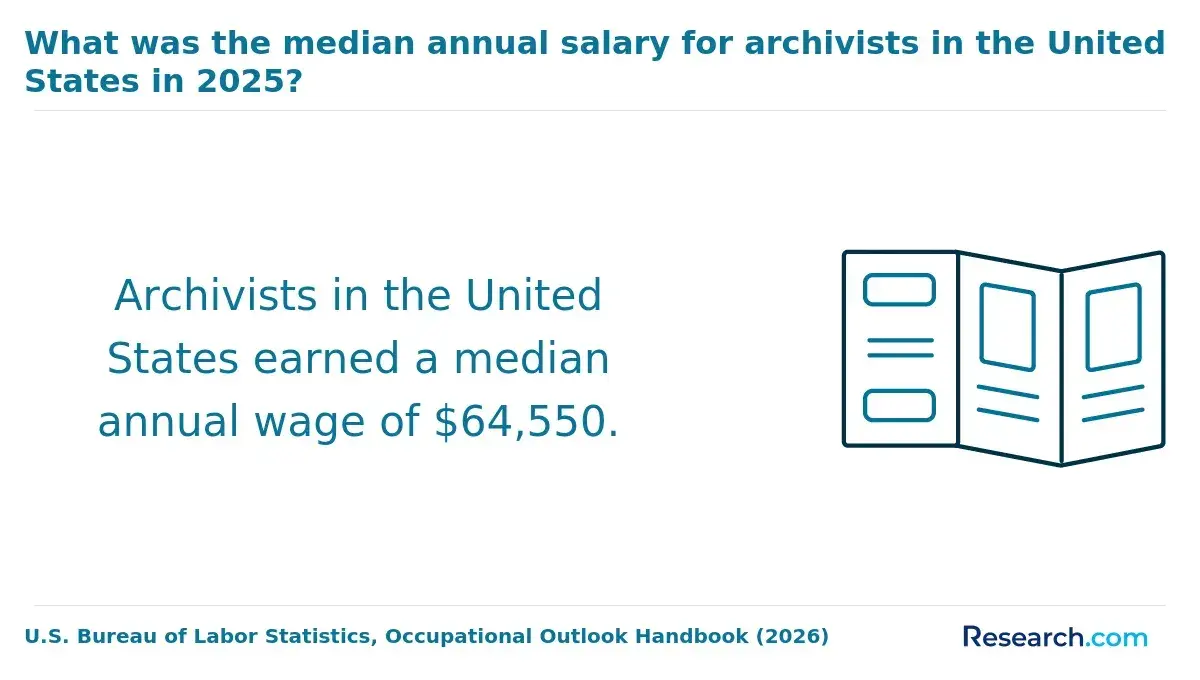
The U.S. Bureau of Labor Statistics reports a May 2025 median annual salary of $68,270 for librarians and media collections specialists and projects 2.6% employment growth from 2025 to 2035.
These broad occupational figures do not isolate medical librarians, evidence synthesis duties, particular employers, or entry-level pay. Use them as context, then examine current postings in your target location for the qualifications, salary ranges, and proportion of time devoted to review support.
Specialized positions may be especially sensitive to an employer's research funding and staffing priorities. A prospective student should therefore compare the cost of training with several plausible roles - not only a narrowly titled evidence synthesis position.
Which certifications and professional standards support medical librarianship?
The Medical Library Association's Academy of Health Information Professionals offers a professional recognition pathway, but it is not a universal license to practice medical librarianship.
Eligibility and its value to an employer should be checked against the current program rules and job descriptions. No optional credential substitutes for demonstrated searching and collaboration skills.
For evidence synthesis work, learn to report searches transparently using the standards appropriate to a review's design and publisher. That means preserving the sources searched, dates, full strategies, and any updates so a team can assess and reproduce the work.
Responsible use of AI-assisted search tools requires the same scrutiny: check retrieved records and document what the tool did rather than treating its output as a verified search.
Other Things You Should Know About Library Science
Authorship depends on the librarian's contribution and the team's applicable authorship criteria, not job title alone. Agree on responsibilities and credit early; substantial intellectual contributions may warrant authorship, while other assistance may be acknowledged.
No. A protocol records planned methods, but the team still needs a detailed, executable strategy for each source. Keep later changes documented so readers can distinguish the original plan from what was done.
It depends on the review question and methods. Relevant trial registries, dissertations, or other sources beyond journal databases may help reduce publication bias, but the team should specify where it searched and how results were handled.
It can provide a starting point, not an automatic final strategy. Check whether the question, databases, indexing terms, interfaces, and date coverage have changed, then document any revisions and the new search dates.
References
- Mapping the pathways to health sciences librarianship - PMC https://pmc.ncbi.nlm.nih.gov/articles/PMC10621722/
- Evidence Synthesis Service | nih.gov https://www.nihlibrary.nih.gov/services/evidence-synthesis
- Systematic Reviews: Searching in Bibliographic Databases | ntu.edu.sg https://libguides.ntu.edu.sg/c.php
- Steps in an Evidence Synthesis | University of Tennessee at Chattanooga https://www.utc.edu/library/services/instruction/evidence-synthesis/guide-evidence-synthesis/steps-evidence-synthesis
- Guidance to best tools and practices for systematic reviews | springer.com https://link.springer.com/article/10.1186/s13643-023-02255-9
- Courses | Johns Hopkins | Bloomberg School of Public Health https://publichealth.jhu.edu/academics/graduate-summer-institute-of-epidemiology-and-biostatistics/courses
- Systematic review software | ucl.ac.uk https://library-guides.ucl.ac.uk/systematic-reviews/software
- Guidelines, Standards (PRISMA and more), and Tools | kumc.edu https://guides.library.kumc.edu/SR-Collaboration/guidelines-standards-tools
- Practicum and Capstone: COPHP MPH | Health Systems and Population Health https://hspop.uw.edu/cophpmph/program-experience/practicum-capstone/
- Systematic Reviews and Meta Analysis: Software and Tools | Research Guides at Harvard Library https://guides.library.harvard.edu/meta-analysis/software