2027 MLIS Programs for LGBTQ+ Collection Development and Services

Co-Founder and Chief Data Scientist
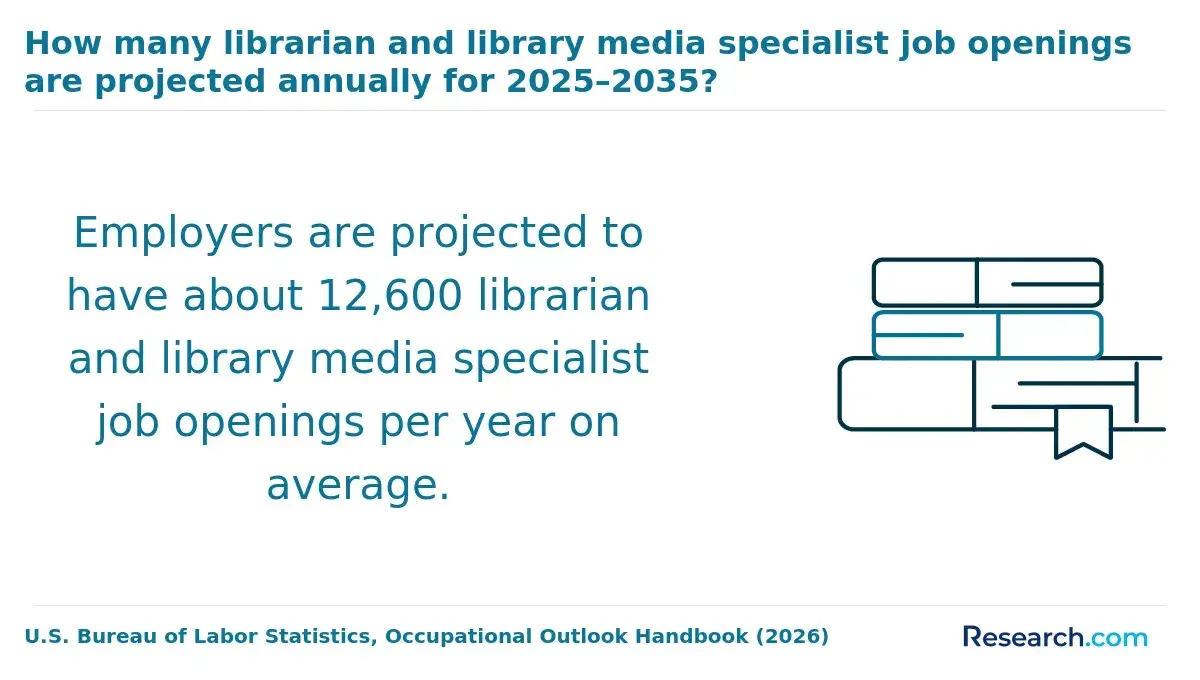
Choosing an MLIS for LGBTQ+ collection development means looking beyond a program's diversity statement. You need coursework and practical experience that prepare you to build representative collections, protect patron privacy, and serve communities well. The U.S. Bureau of Labor Statistics projects 2.6% employment growth for librarians and media collections specialists from 2025 to 2035, so specialized interests still need to fit a competitive career plan.
This guide helps prospective students evaluate programs, costs, credentials, and career paths without mistaking a relevant elective for a dedicated specialization.
Key Things You Should Know
- Look for verified collection-development, youth or adult services, metadata, and intellectual-freedom coursework; confirm that relevant electives will run before you graduate.
- ALA accreditation applies to an eligible master's program, not automatically to its university or to a particular LGBTQ+ elective; school librarian licensure is a separate state decision.
- Compare total required credits, fees, and practicum expenses alongside career requirements. BLS projects 2.6% growth for librarians and media collections specialists from 2025 to 2035, not a guaranteed opening in this specialty.
What are MLIS programs for LGBTQ+ collection development and services?
These are library and information science master's programs whose curriculum and applied opportunities can prepare students to select, describe, preserve, and provide access to LGBTQ+ materials and to serve LGBTQ+ patrons. The degree may be called an MLIS, MLS, Master of Science in Library Science, or Master of Information; the official degree name and curriculum vary by institution.
"LGBTQ+ focused" usually describes a student's pathway through relevant courses and projects, not a formally named concentration. Collection development includes setting selection criteria, assessing gaps, working within budgets, and responding to challenges to materials. Services work includes reference, reader advisory, programming, and outreach. Both require attention to whose perspectives are represented and whether access is safe and private.
Which MLIS programs offer LGBTQ+ collection development coursework?
A reliable named list requires current course catalogs and schedules for each school. A program's general commitment to inclusion does not establish that it offers a dedicated LGBTQ+ collection-development course, and a catalog listing does not establish that an elective will run during your enrollment. Rather than treating an unverified school list as a recommendation, compare programs by the evidence they publish.
Start with the current ALA directory if accreditation matters for your intended jobs. Then inspect each program's catalog for collection development, information organization, community engagement, intellectual freedom, and relevant youth or adult services courses. Search course descriptions for explicit LGBTQ+ content, but distinguish a dedicated course from a broader course in which you might pursue the subject through assignments. Ask the program when promising electives were last offered and whether an independent study or approved field placement could support your goal.
A strong candidate is one where you can identify both a viable course sequence and a supervised opportunity to produce relevant work. If you cannot confirm either, treat the program as generally aligned rather than as offering a verified specialization.
Is an ALA-accredited MLIS required for LGBTQ+ library careers?
There is no separate ALA credential for LGBTQ+ services. Many professional librarian employers seek a master's degree from an ALA-accredited program, but requirements depend on the position. Check the specific master's program in the current ALA directory: institutional accreditation alone does not establish ALA accreditation, and ALA accreditation does not verify a specialized course or internship.
School library positions add another question. State licensure, certification, or endorsement requirements may include approved preparation, fieldwork, or exams, and an online MLIS does not automatically meet every state's rules. Verify the state education authority's requirements before enrolling. Archives and community information roles may accept other degrees or substantial relevant experience; the library career degree requirements overview can help you frame those alternatives before checking individual job postings.
What do LGBTQ+ focused MLIS programs teach?
The most useful curriculum connects established LIS skills to decisions that affect LGBTQ+ communities. This table shows what to look for in course descriptions and what a student might demonstrate through an approved assignment or placement.
| Learning area | Relevant preparation | Possible evidence of skill |
| Collection development | Selection policies, community needs assessment, collection evaluation, and intellectual freedom | A documented gap analysis and selection rationale for a defined audience |
| Organization and discovery | Cataloging, subject access, and authority control - the consistent handling of names and subjects | A review of how catalog terms affect discovery of a sample collection |
| Public services | Reference, reader advisory, accessible programming, and community partnerships | A service or program plan developed with input from its intended users |
| Archives and digital collections | Appraisal, description, consent, and responsible digital access | A sample finding aid or digitization proposal that addresses sensitive information |
Look for assignments that require consultation rather than assumptions about a community. Digital discovery and AI-assisted tools can surface materials, but librarians still need to review descriptions for accuracy, bias, accessibility, and privacy risks. A course title alone cannot show how deeply those issues are taught; a syllabus or conversation with an instructor can.
Should you choose an online or campus-based MLIS program?
Choose the format that lets you complete the relevant courses and experience, not simply the one that sounds more flexible. Online courses may be asynchronous, require live attendance, or mix both; a remote degree may still involve an in-person placement. Campus study may make local partnerships easier, but proximity does not guarantee a suitable internship.
Ask whether specialized electives are available in your format, when they run, how field sites are approved, and whether a local LGBTQ+ archive, public library, or community organization could host an appropriate project. Compare the full cost of each option - including fees, travel, and time away from work - rather than assuming online tuition is uniform. A best online library program cost comparison is a starting point; confirm current charges and course access directly with each school.
What are the admission requirements for LGBTQ+ focused MLIS programs?
Admission is to the graduate program, not usually to an LGBTQ+ services pathway. Requirements vary, but applicants should check each school's published rules for a bachelor's degree, transcripts, statement of purpose, recommendations, minimum academic standards, and any program-specific materials. Do not assume volunteer work replaces a required degree or that every school uses the same test policy.
In your statement, connect your interests to concrete work: for example, evaluating a collection for gaps, supporting accessible programming, or describing community archives with consent. Explain what you hope to learn rather than claiming to speak for all LGBTQ+ patrons. Applicants with an unusual academic history can ask how the school evaluates it; library masters programs with holistic review may help identify questions to bring to admissions, but only the institution can determine eligibility.
How long do MLIS programs take and what do they cost?
Completion time depends on required credits, course sequencing, enrollment intensity, and any practicum. An elective offered infrequently can extend a specialization plan even when the core degree could be completed sooner. Request a term-by-term plan showing when you could actually take the courses you want.
For each school, calculate published tuition as the applicable per-credit rate multiplied by required credits, then add mandatory fees, materials, and any travel or placement costs. Separate that gross program cost from what you might pay after confirmed aid or employer support and from what you would borrow. Do not assume an online student receives in-state tuition or that an assistantship is available. The online library science cost and earnings comparison can provide context, but use the school's current tuition schedule and your own job goals for a final budget.
What careers can LGBTQ+ focused MLIS graduates pursue?
Graduates may pursue public or academic librarian roles in collection development, reference, youth services, or outreach; archival work involving community collections; or positions with cultural and nonprofit organizations. These are usually broader jobs in which LGBTQ+ expertise is valuable, not jobs exclusively devoted to LGBTQ+ services.
For a public-services goal, build a portfolio with a collection assessment or accessible program plan. For archives, seek supervised experience in description, consent, and access decisions. Some library assistant, technician, community-programming, and adjacent information roles may not require an MLIS, making them useful entry points or alternatives if the degree cost does not fit your target position. Compare actual job qualifications before committing; a guide to well paid information science careers should be read alongside the work you want to do, not as a promise that one specialization leads to a particular salary.
How much do librarians specializing in LGBTQ+ services earn?
The U.S. Bureau of Labor Statistics reports a $68,270 median annual salary for librarians and media collections specialists in May 2025. That is an occupation-wide midpoint, not a salary specific to LGBTQ+ collection development or services. Pay for a particular role depends on its duties, employer, location, experience requirements, and whether it is full-time.
Use postings for the kinds of positions you would accept to judge earning potential, then compare their qualifications and pay ranges with the total cost of each degree. A specialized portfolio may strengthen an application, but neither an MLIS nor a subject focus guarantees a particular role or salary.
What certifications and professional standards apply to LGBTQ+ library services?
There is no universal LGBTQ+ library-services certification. The relevant credential question is the one attached to your target role: an employer may request an ALA-accredited master's for a professional librarian position, while a school library position may require state certification or endorsement. Confirm any licensing requirement with the state education authority rather than inferring it from a program's accreditation.
Professional practice also matters. Selection and reconsideration policies, intellectual freedom, patron confidentiality, accessible service, and responsible description provide a basis for decisions about collections and services. When evaluating a program, ask where students practice applying those principles to contested materials, sensitive archives, and real community needs - not merely whether the principles appear in a course description.
Other Things You Should Know About Library Science
Yes, if they meet the library's collection policy and the library can care for and provide access to them. A donation does not automatically belong in the circulating collection; archival materials may also need a separate review of ownership, restrictions, and preservation needs.
Look for a defined role for community participants in setting goals and reviewing outcomes, along with clear expectations about consent and credit. A project built solely around a student's assumptions offers weaker preparation than one shaped with its intended users.
Follow the host institution's established reconsideration procedure and consult your supervisor. Document the concern without promising an outcome or bypassing the policy; students should not make unilateral collection decisions on behalf of a host library.
No. Effective work calls for listening, relevant professional skills, respect for patrons' privacy, and a willingness to correct mistakes. Lived experience can inform someone's perspective, but it does not replace collection, service, or archival training.
References
- LGBTQ+ Preservation & Accessibility - California State Library https://www.library.ca.gov/services/to-libraries/lgbtq-preservation/
- Protecting Privacy and Confidentiality | Scientific Integrity https://www.cdc.gov/scientific-integrity/php/protecting-privacy-confidentiality/index.html
- Program Eligibility, Written Arrangements, and Distance Education | 2024-2025 Federal Student Aid Handbook https://fsapartners.ed.gov/knowledge-center/fsa-handbook/2024-2025/vol2/ch2-program-eligibility-written-arrangements-and-distance-education
- Internships - LGBTQ+ Studies - San Diego State University https://lgbt.sdsu.edu/internships
- Exploring Bias and Library of Congress Subject Headings | si.edu https://blog.library.si.edu/blog/2021/08/04/exploring-bias-and-library-of-congress-subject-headings/
- Safe Schools Program for LGBTQ Students | mass.edu https://www.doe.mass.edu/sfs/lgbtq/
- LGBTQIA+ Subject Headings - Research Guides https://guides.library.brandeis.edu/lgbtq
- The Trans Metadata Collective - Deep Blue Repositories https://deepblue.lib.umich.edu/bitstreams/8a0f3daa-ad80-49ec-966a-85e88074cb73/download
- MLIS@DEN Specializations | University of Denver | DEN-EDU https://morgridgeonline.du.edu/online-mlis-program/curriculum/specializations/
- Accreditation Frequently Asked Questions | ALA https://www.ala.org/educationcareers/accreditedprograms/faq