2027 MLIS Programs With Practicum Placements in Public Libraries

Co-Founder and Chief Data Scientist
An MLIS program may advertise hands-on learning without offering the public library placement you need. That distinction matters if you want experience in reference, youth services, or community outreach before applying for librarian jobs. The U.S. Bureau of Labor Statistics reports a May 2025 median annual wage of $68,270 for librarians and media collections specialists, but that figure does not predict a graduate's starting pay.
This guide shows prospective students how to verify practicum access, compare programs and costs, and choose training that fits their intended work.
Key Things You Should Know
- An online MLIS can include a local public library practicum, but online classes do not mean the placement itself is remote or guaranteed.
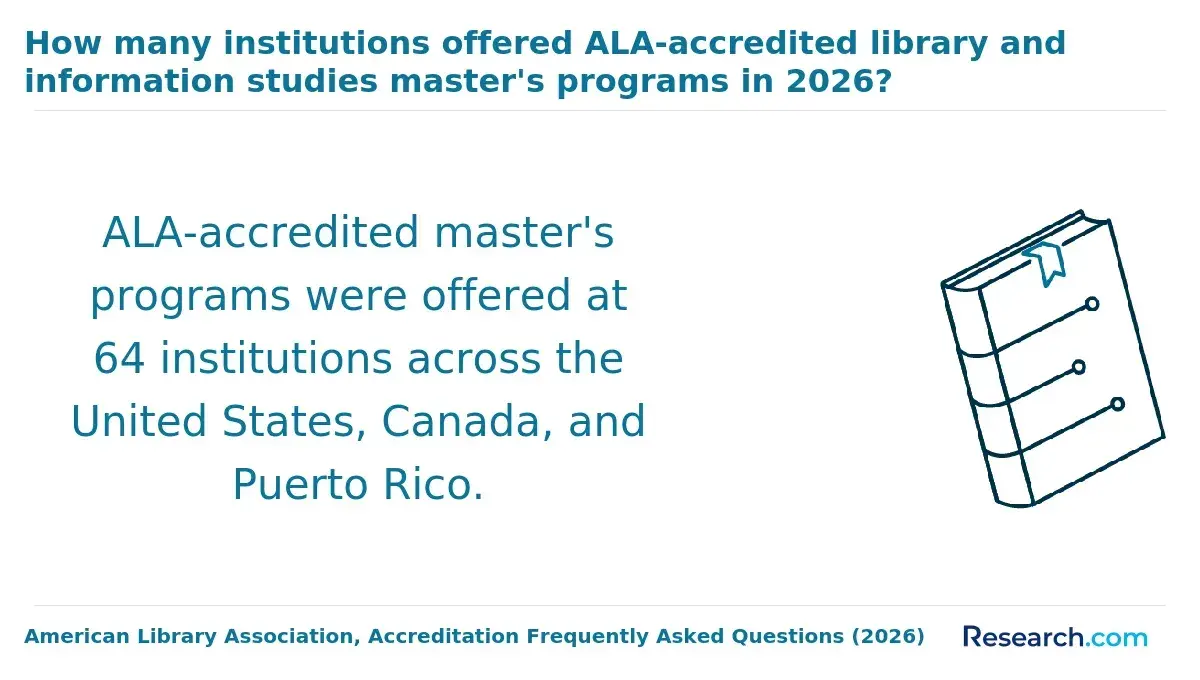
- Check the specific master's program's ALA accreditation separately from its practicum options; accreditation does not confirm a public library placement.
- BLS projects 2.6% growth for librarians and media collections specialists from 2025 to 2035. Relevant experience can strengthen an application, but a practicum does not guarantee a job.
What are MLIS programs with public library practicum placements?
These are graduate library and information science programs that allow supervised, applied learning in a public library. The degree may be called an MLIS, MLS, Master of Science in Library Science, or another institution-specific name. The important distinction is whether the specific degree program permits work at a public library as part of an internship, practicum, fieldwork course, or comparable approved experience.
"Practicum available" can describe very different arrangements. One school may assign students to approved sites; another may require students to find a host library and secure faculty approval. A placement might be an elective, a graduation requirement, or a noncredit opportunity. None of those arrangements necessarily constitutes a formal public librarianship concentration. Ask what appears on the transcript, who arranges the placement, and whether a public library can serve as the site.
Which MLIS programs offer practicum placements in public libraries?
A reliable list requires more than a program page mentioning internships: the school must confirm that its current fieldwork rules permit public library sites and explain how students obtain one. Placement availability can depend on host-library capacity, location, and the term. Without that confirmation for individual schools, naming programs as though a placement were assured would be misleading.
Use this sequence to turn a shortlist of MLIS programs into a verified comparison. It separates permission to pursue a placement from access to an actual site.
- Find the current catalog entry for the practicum, internship, or fieldwork course and check whether it is required, elective, or noncredit.
- Ask the program whether public libraries qualify as host sites and whether students must locate their own supervisors.
- Request recent examples of approved public library projects, noting that past placements do not guarantee future openings.
- Confirm the required hours, scheduling rules, site-agreement process, and whether the course will be offered when you need it.
Geography can narrow the search. If you need a placement near home, compare online librarian degrees in Southern states or programs in your own region, then contact each school about nearby host libraries. Do not infer practicum access from a program's location, delivery format, or affordability alone.
Why does ALA accreditation matter for public library MLIS programs?
American Library Association accreditation applies to an eligible library and information studies master's program, not automatically to every degree offered by its university. It is a useful screening factor because some librarian employers specify an ALA-accredited degree. Confirm the exact program and its current status in the ALA directory rather than relying on university-wide accreditation or an undated advertisement.
Accreditation does not certify a particular concentration, course, online format, or public library practicum. Evaluate those features separately. If two accredited programs differ in placement support, the one with a workable host-site process may be the better fit for a student seeking public library experience.
What do MLIS public library practicums involve?
A public library practicum typically pairs supervised work with learning objectives and some form of faculty assessment. Depending on the host library and approved project, a student might assist with reference questions, plan an accessible program, evaluate a collection, support digital literacy instruction, or develop outreach materials. The work should reflect professional learning rather than simply adding unpaid coverage to a service desk.
Before accepting a site, ask who will supervise you, what responsibilities you can perform, how your work will be evaluated, and whether you may include a de-identified project in a portfolio. Libraries protect patron privacy, so portfolio samples may need permission or redaction. Also check when the practicum course runs: fieldwork scheduling can affect how long does an MLIS take, especially if a required course or suitable host site is unavailable in your planned final term.
What courses do public library-focused MLIS programs include?
Course titles and requirements vary. The curriculum below describes subject areas worth looking for, not a claim that every program requires or regularly offers each one. Compare the current catalog with the upcoming course schedule before treating an elective as part of your plan.
| Subject area | Connection to public library work |
| Reference and information services | Interviewing patrons, finding trustworthy information, and teaching search skills. |
| Collection development | Selecting and evaluating materials for community needs and budgets. |
| Youth services or community programming | Designing services for particular audiences and assessing participation. |
| Organization of information | Understanding catalog records, discovery, and how patrons find materials. |
| Management, accessibility, and information ethics | Making service decisions that account for staffing, inclusive access, and patron privacy. |
A student aiming for children's services should look for relevant coursework and a youth-services placement, rather than assuming a general internship will provide both. For adult services or outreach, a project involving instruction, partnerships, or service assessment may be more useful than one focused solely on technical processing.
Can you complete an online MLIS practicum in a public library?
An online MLIS can allow a student to take classes online while completing fieldwork at an approved public library near home. The placement may still require regular on-site hours, a library supervisor, and an agreement between the library and university. "Online degree" is therefore not the same as "remote practicum."
Before enrolling, tell the program where you expect to live during fieldwork and ask whether it has approved sites there or permits student-proposed sites. Check whether weekday hours are necessary, whether your current library workplace can qualify, and what happens if a proposed host declines. For someone unable to attend an in-person site, an applied online project may be worth considering - but confirm whether it satisfies the same graduation requirement and provides experience relevant to public library hiring.
What are the admission requirements for public library MLIS programs?
Applicants generally need a bachelor's degree and must meet the chosen graduate program's published application requirements. Schools may request transcripts, a statement of purpose, recommendations, a résumé, or other materials; thresholds and deadlines vary. Prior library employment can help explain your goals, but do not assume it is required or that it replaces an academic admission requirement.
In your statement, connect the public library work you hope to do with specific courses and the program's documented fieldwork process. If you already have graduate coursework, ask whether it can count toward this degree before estimating your timeline. Policies for an online library masters advanced standing or transfer credit vary by institution, and accepted credits may not replace a required practicum.
How long do MLIS programs with practicums take and cost?
There is no dependable single timeline or price for this category. Required credits, enrollment pace, course sequencing, and whether fieldwork adds credits all affect completion time. A student who must arrange a host site may need to begin planning before the term in which the practicum appears on the schedule.
For a usable cost comparison, calculate each school's published tuition using its required credits and the rate that applies to you. Then add mandatory fees, books and equipment, and any travel or reduced work hours associated with the placement. Published tuition is not the full cost of attendance; online study does not automatically confer an in-state rate. The guide to value online library science masters can help frame an affordability search, but verify current charges with each university.
Compare the gross program cost with any confirmed employer support or grants, and distinguish both from the amount you would borrow. If financing is necessary, ask the financial aid office which aid rules apply to your enrollment period rather than assuming an older loan policy will remain in effect.
What careers and salaries follow a public library MLIS degree?
Public library graduates may pursue adult services, youth services, reference, outreach, collection development, or management roles. Job titles and qualifications differ by library system: a professional librarian opening may require an MLIS or equivalent LIS master's degree, while library assistant and technician roles may have different education requirements. A practicum can provide work samples and references, but it is not a hiring guarantee.
For perspective, BLS reports a May 2025 median annual wage of $44,580 for library technicians. That occupation is distinct from librarians and media collections specialists; the comparison illustrates why job title and duties matter when evaluating salary expectations. Neither occupational median represents a particular program's graduate outcomes or an entry-level offer. Explore MLIS roles and salary potential alongside actual postings in the communities where you intend to work.
If your immediate goal is an assistant or technician position, direct work experience may be a more economical first step than graduate school. If postings for your target librarian role specify an accredited master's degree, compare programs on both credential fit and opportunities to build relevant public-facing experience.
Do public library librarians need state certification or licensure?
Requirements vary by state, employer, and position. Some public library jobs are subject to state librarian certification rules; others rely primarily on the employer's education and experience requirements. Check the state library agency's current rules and the wording of actual job postings in your intended location before selecting a degree.
Public library credentials should not be confused with school librarian licensure or endorsement. School roles can have separate state education requirements, and neither an online MLIS nor a public library practicum automatically satisfies them. If you may pursue both settings, ask the program to identify its school-library preparation pathway and verify eligibility with the relevant state education authority.
Other Things You Should Know About Library Science
Yes. Volunteering can help you test your interest and learn how a library serves its community. Ask about the tasks available; volunteer duties may differ substantially from professional librarian work.
Often, with permission. Favor materials that demonstrate your contribution and results without exposing patron records, confidential staff information, or work the host library does not authorize you to share.
Skills such as instruction, reference interviewing, outreach, and accessible communication can transfer to other service roles. Employers in academic, special, or nonlibrary settings may also expect setting-specific knowledge.
An early conversation can reveal whether local opportunities are plausible. Do not secure or promise a placement on your own until you know the university's approval, supervision, and site-agreement requirements.
References
- Fact Sheet #71: Internship Programs Under The Fair Labor Standards Act | U.S. Department of Labor https://www.dol.gov/agencies/whd/fact-sheets/71-flsa-internships
- Cost of Attendance (Budget) | 2025-2026 Federal Student Aid Handbook https://fsapartners.ed.gov/knowledge-center/fsa-handbook/2025-2026/vol3/ch2-cost-attendance-budget
- MLIS Graduate Students - Volunteering - Library Research https://research.fairfaxcounty.gov/c.php
- Library Jobs FAQ - State Library of North Carolina https://library.nc.gov/nc-libraries/current-library-jobs/library-jobs-faq
- Practicum Requirements | UW School of Public Health https://sph.washington.edu/mph-practicum/requirements
- Public Libraries - SJSU - School of Information https://ischool.sjsu.edu/public-libraries
- Applied Learning | Online Master of Public Health | Brown University https://onlinemph.sph.brown.edu/applied-learning
- Practicum - School of Information Science & Learning Technologies https://cehd.missouri.edu/information-science-learning-technologies/practicum/