2027 MLIS Programs for Social Workers Moving Into Community Library Services

Co-Founder and Chief Data Scientist
Social workers moving into public libraries must decide whether they need an MLIS, not just whether their community-service skills transfer. The U.S. Bureau of Labor Statistics projects 2.6% employment growth for librarians and media collections specialists from 2025 to 2035, making job requirements and training costs important to weigh.
This guide explains where social work experience fits, which MLIS features matter, and how to compare credentials, schedules, costs, and career prospects before applying.
Key Things You Should Know
- For many professional public librarian roles, an ALA-accredited master's degree is the preferred or required credential; outreach and support roles may offer entry points without one.
- Social work experience is especially relevant to outreach, partnerships, and trauma-informed service, but librarians must also learn reference work, information access, and patron privacy.
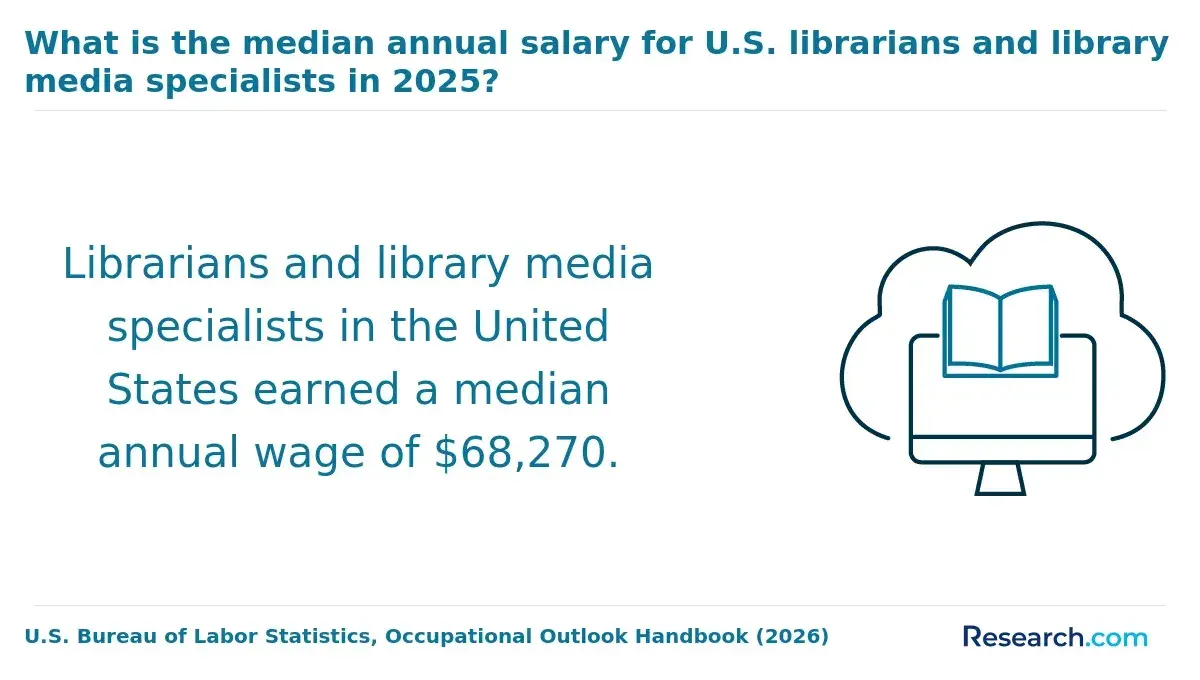
- The May 2025 median pay for librarians and media collections specialists was $68,270 nationally - not a starting salary or a forecast of what an individual MLIS graduate will earn.
What is an MLIS program for social workers entering community library services?
An MLIS is a graduate degree in library and information science. For a social worker, it can provide the professional library training needed to move from helping clients navigate services to helping a broader community find, assess, and use information. Community-facing work may include public library reference service, outreach, programming, digital inclusion, and partnerships with local organizations.
"MLIS for social workers" usually describes a student's career goal, not a formally named concentration. Programs may instead award an MLS, a Master of Science in Library Science, or another institution-specific information degree. Compare the accredited program and its actual curriculum rather than assuming degree titles indicate identical preparation.
The distinction matters because library service is not clinical social work. A librarian may help someone locate housing information or connect with an agency, but clinical assessment, treatment, and case management require appropriate roles, supervision, and credentials.
Do social workers need an ALA-accredited MLIS degree to become librarians?
Not for every library job. Many employers require or prefer a master's degree from an American Library Association (ALA)-accredited program for professional librarian positions. Outreach assistant, library associate, program coordinator, and other support positions may have different requirements. Read the qualifications for the jobs you actually want before committing to graduate school.
ALA accreditation applies to a specific master's program; a university's institutional accreditation does not establish that its LIS degree is ALA-accredited. Confirm the program's current status in the ALA directory and check whether the employer accepts its degree title. Accreditation also does not verify that a school offers a social-work-related track, a particular elective, or a local internship.
If your goal is solely community programming or service navigation, relevant library experience may be a less costly first step. If you want eligibility for librarian postings that specify an ALA-accredited master's, prioritize that credential when building a shortlist.
What career pathways connect social work experience with public librarianship?
The strongest transition combines existing strengths - community assessment, partnership building, accessible communication, and de-escalation - with library-specific skills. The roles below differ in scope and qualifications; job titles alone do not reliably indicate whether an MLIS is required.
| Pathway | Typical work | Credential consideration |
| Public services librarian | Reference assistance, information-literacy instruction, collections, and patron programs | An ALA-accredited LIS master's is commonly required or preferred for professional librarian postings. |
| Outreach or community engagement librarian | Partnerships, off-site services, and programs shaped by community needs | Often a professional librarian role; verify each employer's degree requirement. |
| Library-based social worker | Social-service referrals and work within an agency's social-work scope | Social-work qualifications may matter more than an MLIS; licensure depends on duties and state rules. |
| Library associate or program coordinator | Patron assistance, events, referrals, or outreach support | May be an entry point without an MLIS, depending on the posting. |
To test the transition before enrolling, compare local job descriptions and seek public-facing library experience. A small portfolio could document a needs-informed program proposal, an accessible resource guide, or an evaluation of a community partnership. For a broader view of library career options by degree, compare job duties alongside credentials rather than treating all library work as one occupation.
What do MLIS programs teach aspiring community librarians?
Useful preparation starts with reference and information services: how to identify a patron's information need, assess sources, and provide help without making unsupported claims or collecting unnecessary personal details. Look also for coursework in public library services, community engagement, collection development, information literacy, accessibility, and library management.
Digital inclusion is another practical fit. Community librarians may help patrons use online forms, devices, and information tools while respecting privacy and recognizing when a request exceeds library staff's role. Responsible use of AI-assisted search is relevant because staff must still evaluate results, protect patron information, and explain uncertainty.
Distinguish a required course from an elective, a documented concentration from a few related courses, and a listed practicum from a placement you can actually complete. Ask when pertinent electives last ran, whether working students can take them in the needed sequence, and whether a public library or community partner can host an approved applied project. A portfolio project that joins reference skills with a clearly defined community need may be more useful than a concentration name alone.
Are online or campus-based MLIS programs better for working social workers?
Neither format is inherently better. An online program may reduce travel and make it easier to remain employed, but "online" does not necessarily mean asynchronous. Scheduled live classes, group meetings, time-zone differences, and in-person practicum hours can still conflict with a social worker's shifts. Campus study may offer easier access to local partners and face-to-face instruction but can add commuting or relocation costs.
Compare a term-by-term course plan for the pace you can sustain. Ask whether core classes are available in the terms you need, how often relevant electives run, whether fieldwork can occur near home, and whether attendance is required at set times. These answers matter more than a program's advertised format. The library information science program duration also depends on enrollment pace and course sequencing, not simply whether classes are online.
What are the admission requirements for MLIS programs?
Applicants generally need a bachelor's degree and must meet each program's published graduate admission requirements. Schools may request transcripts, recommendations, a statement of purpose, a résumé, or other materials. Requirements - including any test, prerequisite, or minimum academic standard - vary, so use the current program application page rather than a general description of MLIS admissions.
A social work background can strengthen an application when the statement connects specific experience to library responsibilities. Explain, for example, how you have designed accessible services or worked with community partners, then identify the library skills you still need to learn. Experience does not automatically waive formal admission requirements.
If you have previous graduate coursework, ask whether it is eligible for review under the program's graduate transfer-credit policy; acceptance and the number of credits applied are school-specific. Library information science credit transfer is worth investigating before enrollment, but do not assume that credits from an MSW will replace required LIS courses.
How long do MLIS programs take, and how much do they cost?
Completion time depends on required credits, enrollment pace, course rotation, and any fieldwork or capstone. Full-time students may finish substantially sooner than students balancing classes with social work employment. Request a sample schedule based on the number of courses you can realistically take, including the terms when required courses and desired electives are offered.
To compare prices, multiply each program's required credits by the tuition rate that applies to you, then add mandatory fees and likely expenses for books, technology, travel, and fieldwork. That produces a more useful gross cost estimate than a per-credit price alone. Your out-of-pocket cost may differ if you receive employer support or other aid; borrowing changes when you pay, not the underlying program price. Never assume online enrollment qualifies you for in-state tuition.
Regional comparisons, including Southern library masters affordability, can help identify programs to investigate. Before applying, verify each school's current tuition schedule, required credits, fees, residency rules, and available funding. For federal aid, confirm current eligibility and loan terms with the school's financial aid office rather than relying on an older borrowing estimate.
What community library jobs can MLIS graduates pursue?
An MLIS graduate may pursue public services, outreach, adult services, youth services, digital inclusion, or branch librarian positions where their qualifications meet the posting. Responsibilities vary: one job may emphasize reference and collection work, while another centers on programs and partnerships. Some libraries also employ social workers alongside librarians rather than expecting one employee to perform both professions' duties.
A practical job search should separate professional librarian positions from paraprofessional and social-service positions. Check the required credential, schedule, service population, supervisory duties, and expectations for referral or crisis response. If the jobs you want consistently require an MLIS, an accredited degree may be worthwhile. If they prioritize an MSW or community-program experience instead, additional LIS study may offer less direct value.
What salaries can social workers earn after transitioning to librarianship?
The U.S. Bureau of Labor Statistics reports a May 2025 median annual salary of $68,270 for librarians and media collections specialists. This is a national occupational midpoint, not a public-library-only figure, a starting offer, or a measure of pay for former social workers. Location, employer, seniority, and full-time status can make an individual offer quite different.
Compare actual vacancies in your target area with your current compensation and the full cost of a degree. Include benefits, the possibility of reduced work hours while studying, and any borrowing when judging the value online library science masters might offer you. The sound comparison is between plausible jobs you qualify for and your existing options - not between tuition and a national median alone.
What licenses, certifications, and professional standards apply to community librarians?
An ALA-accredited MLIS is an educational credential, not a nationwide license to practice librarianship. Public librarian certification rules, where applicable, vary by state and sometimes by position or library system. Check the relevant state authority and prospective employer for the role you intend to pursue. School librarian positions are a separate pathway with state-specific educator certification or endorsement requirements; an online MLIS alone does not establish eligibility in every state.
Social workers who retain a social-work license must continue to follow its state rules and their professional scope of practice. In a library, that distinction protects both patrons and staff: information assistance and referrals should not be presented as clinical care. Patron privacy, equitable access, accessibility, and clear boundaries are essential professional considerations regardless of whether a particular position requires a license.
Other Things You Should Know About Library Science
Potentially. An MLIS does not replace or automatically renew a social-work license. Check your state board's renewal and continuing-education rules, especially if you plan to keep practicing while enrolled.
Do not assume so. Follow the library's privacy policies and your course requirements; use fictional scenarios or properly approved, de-identified information when appropriate. Avoid putting identifiable patron details in assignments or public portfolios.
It may be valuable where a library serves patrons in those languages. Check whether a posting requires language proficiency, and be accurate about your ability to provide assistance without implying that you are qualified to translate legal or clinical advice.
During an interview, ask how staff identify community needs, maintain partnerships, assess programs, and make services accessible. The answers can reveal whether outreach has dedicated time and support or is added to an already full desk schedule.
References
- RE-258982-OLS-25 | Institute of Museum and Library Services https://www.imls.gov/grants/awarded/re-258982-ols-25-1
- Cost of Attendance (Budget) | 2024-2025 Federal Student Aid Handbook https://fsapartners.ed.gov/knowledge-center/fsa-handbook/2024-2025/vol3/ch2-cost-attendance-budget
- Building a Trauma-Informed Workforce - NCBI - NIH https://www.ncbi.nlm.nih.gov/books/NBK207194/
- Spending a Year in the Library Will Prepare You for Anything | iu.edu https://journals.indianapolis.iu.edu/index.php/advancesinsocialwork/article/view/26176
- What Can You Do With a Library Science Degree? | Syracuse University Online Master's Programs https://onlinegrad.syracuse.edu/information-science/mslis/library-science-careers/
- Social Workers and Public Libraries | iupui.edu https://journals.iupui.edu/index.php/advancesinsocialwork/article/view/23690
- Trauma-Informed Libraries - Trauma-Informed Workplaces https://libguides.wilmu.edu/trauma/library
- Library Science Careers - UW Information School https://ischool.uw.edu/programs/mlis/careers
- Admissions and Costs | rutgers.edu https://sci.rutgers.edu/academics/graduate-programs/master-information/admissions-and-costs
- Social Services in Public Libraries: Librarian Agency, Identity, Practices | Proceedings of the ALISE Annual Conference https://iopn.library.illinois.edu/journals/aliseacp/article/view/1951