
2027 MLIS Programs for Legislative Research Services

Co-Founder and Chief Data Scientist
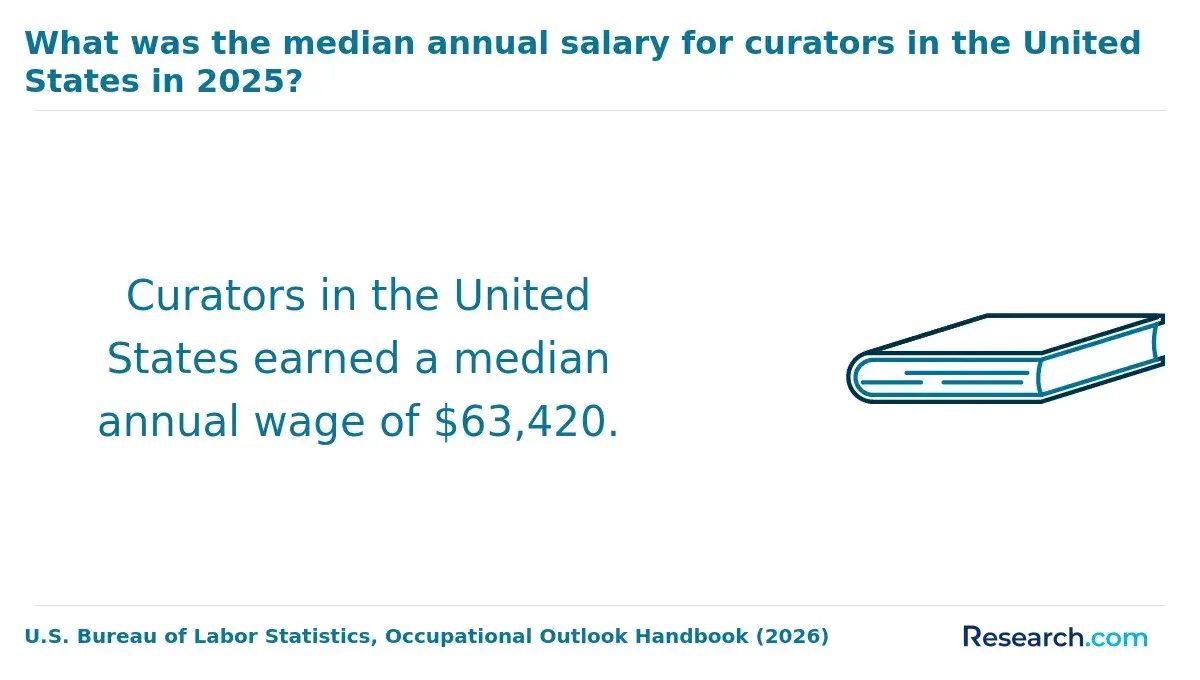
Choosing an MLIS for legislative research means looking beyond a program's name: you need training in government information, legal research, and clear, impartial answers under deadline. The U.S. Bureau of Labor Statistics reports a May 2025 median annual salary of $68,270 for librarians and media collections specialists, but that broad figure does not describe legislative jobs alone. This guide helps prospective students and career changers evaluate accreditation, coursework, practical experience, cost, and likely job requirements before committing to a degree.
Key Things You Should Know
- Look for an ALA-accredited master's program with government information and legal research coursework; do not assume it offers a formal legislative research concentration.
- BLS projects 2.6% employment growth for librarians and media collections specialists from 2025 to 2035. Legislative openings are a narrower market, so relevant experience matters.
- Compare verified elective schedules, access to legislative placements, and total attendance costs - not tuition or online delivery alone.
What is an MLIS degree for legislative research services?
An MLIS is a graduate degree in library and information science that can prepare someone to find, evaluate, organize, and explain information for lawmakers, legislative staff, committees, or the public. In this setting, a researcher might trace a bill's history, locate agency data, compare state statutes, or assemble sources for a time-sensitive policy question.
"MLIS for legislative research" usually describes a career-focused selection of courses and experience, not a standardized degree title. Schools may award an MLIS, MLS, Master of Science in Library Science, or another LIS degree. What matters is whether the particular program lets you build the relevant research skills and demonstrate them through supervised work.
The work also differs from advocacy or legal advice. A legislative research librarian may identify authoritative sources and explain what they say; an attorney or policy analyst may have different responsibilities for legal interpretation or policy recommendations. Job descriptions, rather than the degree title alone, establish the boundary for a particular position.
What education and accreditation do legislative research librarians need?
Professional librarian postings commonly look for a graduate LIS degree, while legislative analyst, researcher, and records positions may accept other education or experience. An ALA-accredited master's is a strong credential to consider if you want access to a broad range of professional librarian roles. Check the specific program and degree in the current ALA accreditation directory; a university's institutional accreditation is not the same thing.
ALA accreditation evaluates the master's program, not a student's legislative expertise. It does not establish that a school has a government information course, a legislative internship, or an online option. Those features require separate confirmation in the current catalog and with the program.
A law degree is not a universal requirement for legislative librarianship, although an employer may prefer legal training for a specialized role. If you primarily want to draft legislation or provide legal counsel, compare relevant policy or law pathways before assuming an MLIS is the best fit.
Which MLIS programs prepare students for legislative research careers?
No single program name establishes legislative career preparation. Build a shortlist from ALA-accredited programs, then compare the evidence for what each one actually offers. A catalog listing shows that a course exists; it does not show that you can take it during your enrollment.
The distinctions below help prevent a broad LIS offering from being mistaken for a documented specialization.
| Evidence level | What to look for | What it establishes |
| Formal specialization | An officially named government information, law librarianship, or related track with published requirements | A documented pathway, though not necessarily a legislative-specific one |
| Relevant coursework | Catalog descriptions for government documents, legal research, policy information, or advanced reference | Potential skill development, subject to scheduling and prerequisites |
| Experiential preparation | A documented practicum, internship, capstone, or approved independent project | An opportunity to produce work relevant to employers, subject to placement rules |
| General alignment | Core LIS research and information-organization courses | A foundation, not proof of specialist preparation |
Ask a program adviser which relevant electives are expected to run before your intended graduation date and whether a state legislature, government library, or policy organization would qualify as a placement. If affordability will determine your shortlist, use a low cost library degree for adults comparison as a starting point, then verify each school's current credit requirements, tuition, and fees directly.
Are online MLIS programs suitable for legislative research services?
Yes, an online MLIS can be suitable if the specific program is ALA-accredited and gives you access to relevant courses and applied work. Online delivery does not make a course less relevant to legislative research, but it also does not guarantee flexible deadlines, asynchronous classes, or a remote internship.
Before enrolling, confirm whether courses meet live, whether important electives are offered online, and whether a practicum can be completed near your home or workplace. A student already working in a government office may be able to turn an approved project into a useful portfolio sample; someone without that access may need to plan more actively for a supervised placement. For a broader format shortlist, review best online librarian education options and then check the current terms with each school.
What courses should an MLIS program include for legislative research?
Prioritize courses that teach you to answer a documented question accurately, show your sources, and explain their limits. The most useful mix depends on whether you hope to serve researchers inside a legislature, manage government collections, or support public access to legislative materials.
A strong course plan usually combines these areas; confirm whether each is required, elective, or unavailable at the programs you are considering.
- Government information and legal research: Finding bills, statutes, regulations, hearings, and official publications while distinguishing primary sources from commentary.
- Advanced reference and research methods: Clarifying a request, choosing sources, checking evidence, and writing a concise, reproducible answer.
- Information organization: Using metadata and controlled terms to make legislative documents discoverable across changing titles, subjects, and sessions.
- Public policy or quantitative literacy: Reading agency reports and data without overstating what a comparison establishes.
- Digital access and preservation: Supporting searchable collections and durable access to born-digital public records.
For a capstone or portfolio, consider an annotated bill-history guide or a source-checked briefing on a narrowly defined issue. Remove sensitive requests and obtain any necessary permission before sharing work completed for an employer.
What are the admission requirements for legislative research MLIS programs?
Admission is to an LIS program, not usually to a separate legislative research degree. Applicants should expect to document a completed bachelor's degree and follow each school's current instructions for transcripts, statements, recommendations, and any additional materials. GPA rules, testing policies, deadlines, and prerequisites vary by institution.
Use your statement to connect prior work to the role: careful source evaluation, neutral writing, government documents, public service, or research under deadline. Legislative experience can strengthen an application, but it does not automatically replace a published degree requirement. If your academic record does not match a stated criterion, ask admissions staff whether individual review or conditional admission is available rather than assuming an exception. A library science masters eligibility guide can help you frame that conversation.
How long do MLIS programs for legislative research take and cost?
Completion time depends on required credits, enrollment load, course sequencing, and whether an internship or project must fit around the legislative calendar. Published accelerated timelines may assume full-time study and uninterrupted access to required courses. A library science program pacing comparison is useful only if its schedule matches the courses and format you can actually take.
For each program, calculate gross tuition as the published rate applicable to you multiplied by the required credits, then add mandatory fees and likely books, equipment, travel, or placement expenses. Confirm residency rules rather than assuming online students receive in-state rates. Ask whether delayed electives could add a term of fees or living costs.
Separately estimate what grants, employer support, or other confirmed funding would leave you to pay, and how much you would borrow. Aid eligibility and loan terms depend on the enrollment period and your circumstances; verify current terms with the school's financial aid office before using a projected payment to judge affordability. The degree's value depends on the jobs you can realistically pursue and your current earnings, not on a tuition figure alone.
What careers can an MLIS degree lead to in legislative research?
Relevant titles may include legislative librarian, government information librarian, law librarian, legislative reference librarian, or research specialist. Work can sit within a state legislature, a government library, a law library, or an organization that helps people find and use legislative information. Titles are not standardized: a "research analyst" posting may emphasize policy analysis over librarianship and accept several degree backgrounds.
An entry route is to gain experience with government documents, reference questions, bill tracking, or public records before or during graduate study. For a professional librarian vacancy, the MLIS may be required or preferred; for a library technician or adjacent research role, it may not be necessary. Compare actual postings for your target employers to see which qualifications recur.
If you already have substantial policy research experience and want analyst rather than librarian responsibilities, an MLIS may be less directly useful than targeted legal research training, a policy degree, or continued work experience. If you want to lead reference services or manage legislative collections, the LIS credential and a focused portfolio make a stronger combination.
How much do legislative research librarians earn?
BLS reports a May 2025 median annual salary of $68,270 for librarians and media collections specialists. This is a national median for a broad occupation, not a legislative librarian salary or an MLIS graduate outcome. Employer type, location, responsibility, and experience can make an individual offer quite different.
Use posted pay ranges for the legislative employers you would actually consider when weighing tuition against prospective earnings. The broader library science specialization salary outlook can provide career context, but neither an occupational median nor a specialization comparison predicts your return on a particular program.
What skills and professional standards matter in legislative research services?
The central skill is producing a timely answer that another researcher can check. That means confirming the jurisdiction and date of a legal source, distinguishing enacted law from a pending bill, documenting search choices, and stating uncertainty plainly. Researchers also need to communicate with staff whose questions may be urgent or initially broad.
Impartiality, confidentiality, accessibility, and accurate attribution matter because the work may inform public decisions. Follow the employer's rules on handling requests and records rather than assuming every research exchange is public or private. AI-assisted search or summarization may help locate leads, but generated claims still need verification against authoritative sources; sensitive material should not be entered into an unapproved tool.
When evaluating a program, ask whether assignments require source citations and concise written responses - not just database searching. A portfolio showing a clearly scoped question, authoritative sources, and a readable answer provides more relevant evidence of readiness than a course title alone.
Other Things You Should Know About Library Science
Start with official bill, statute, and hearing collections maintained by Congress or your state legislature. Choose a bill and trace its versions and actions, recording what each source does - and does not - establish.
No. Publication and access rules depend on the employer and the type of work. Check an organization's policies before citing, sharing, or including a report in a portfolio.
Yes. Government information searching, reference interviewing, source evaluation, and document organization can apply in law, academic, public, and other government libraries. Additional subject expertise may be needed for a particular opening.
It can help you assess local opportunities, but do not assume an informal offer will count for academic credit. Ask the MLIS program what supervision and approval a placement requires before making plans with a host.
References
- Student Opportunities - Senate Employment Office https://employment.senate.gov/student-opportunities/
- About the Congressional Research Service | Congress.gov https://constitution.congress.gov/about/congressional-research-service/
- Legislative Research Council | South Dakota Legislature https://sdlegislature.gov/Staff
- Federal Legislative History: A Research Guide for Congressional Staff | Congress.gov | Library of Congress https://www.congress.gov/crs-product/R48533
- MLIS Master of Library and Information Studies - UA Online https://online.ua.edu/degrees/mlis-master-of-library-and-information-studies/
- Getting Started & Key Resources - Legislative History Research Guide - Guides at Georgetown Law Library https://guides.ll.georgetown.edu/legislative_history
- MLIS Admissions & Cost | College of Information Science https://infosci.arizona.edu/ma-library-information-science/admissions-cost
- Library and Information Science, MLIS (Online) | Southern Connecticut State University https://www.southernct.edu/academics/programs/library-and-information-science-mlis
- Library and Information Science | missouri.edu https://cehd.missouri.edu/information-science-learning-technologies/degrees-programs/library-information-science/
- Working with the Legislature - Introduction to Law Librarianship https://opentextbooks.library.arizona.edu/lawlibrarianship/chapter/working-with-the-legislature/


