2027 MLIS Programs for Translators Moving Into Multilingual Library Services

Co-Founder and Chief Data Scientist
Translation experience can help a library serve more people, but choosing an MLIS program requires more than finding one with a language-related elective. The U.S. Bureau of Labor Statistics projects library technician employment to decline by 6.4% from 2025 to 2035, making it especially important to distinguish professional librarian preparation from other library roles.
This guide helps translators evaluate accreditation, coursework, field experience, cost, and career options so they can choose a program - or an alternative - that fits the work they want to do.
Key Things You Should Know
- For professional librarian positions, prioritize an ALA-accredited master's program and verify its current status in the ALA directory; accreditation does not establish that multilingual courses are offered.
- Look for a combination of reference, collection development, metadata, community engagement, and applied work with language-diverse users - not merely a course labeled "multicultural."
- The BLS projects 2.6% growth for librarians and media collections specialists from 2025 to 2035. That is an occupational projection, not a forecast of openings for multilingual specialists or graduates of any particular program.
What Is an MLIS Degree for Translators Entering Multilingual Library Services?
An MLIS is a graduate degree in library and information science. For a translator, its value is learning to design, manage, and evaluate information services - not simply applying translation skills in a library. The work might include helping patrons find information across languages, developing collections for local communities, improving discovery of materials in different scripts, or making library communications easier to understand.
Relevant degrees may be called an MLIS, MLS, Master of Science in Library Science, or Master of Information. The title alone does not establish accreditation or curricular fit. Nor does a program need a formally named "multilingual library services" concentration to be useful: a coherent set of electives and an applied project may be more valuable than a specialization whose required courses do not match your intended job.
Do Translators Need an ALA-Accredited MLIS Degree for Library Careers?
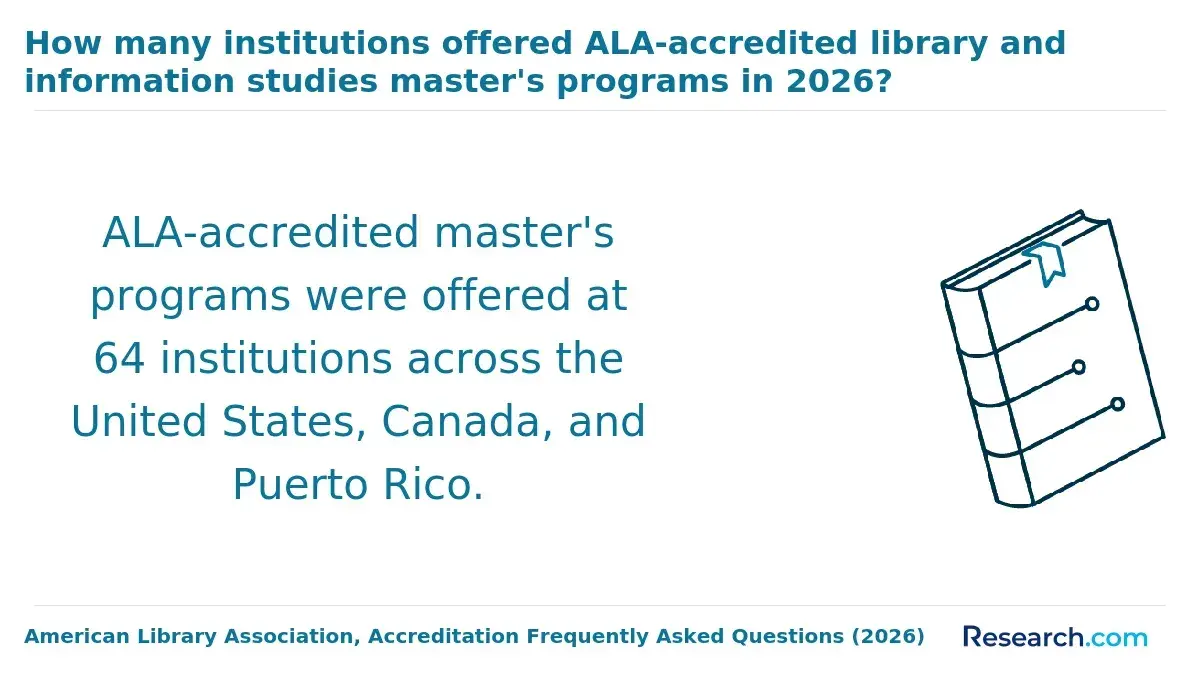
Many professional librarian postings require or prefer a master's degree from an American Library Association (ALA)-accredited program. Check the specific master's program in the current ALA directory; a university's institutional accreditation is a different credential. ALA accreditation evaluates the program, not whether it offers a particular language course, internship, or online format.
An MLIS is not necessary for every way into library work. Outreach assistant, library technician, translation vendor, and some digital-content positions may accept other qualifications. If your goal is school librarianship, check the relevant state education authority as well: state certification or endorsement requirements are separate from graduate-program accreditation, and an online MLIS does not automatically satisfy them.
Which MLIS Programs Best Prepare Translators for Multilingual Library Services?
There is no defensible single "best" program for every translator. Compare accredited programs against the setting you want to enter, then confirm which courses are scheduled and whether applied work can be completed with language-diverse users. The table shows how different career goals change the features worth prioritizing; it does not imply that any one program offers all of them.
| Intended work | Coursework to look for | Useful applied experience | Key limitation to check |
| Public library language access | Reference, collection development, community engagement | Outreach or service-design project with a local library | Whether a relevant placement is available near you |
| Multilingual discovery and metadata | Cataloging, knowledge organization, digital collections | Description or discovery project involving multiple scripts | Whether advanced electives actually run during your enrollment |
| Academic or special collections | Research services, archives, digital preservation | Project using collections in your working languages | Whether the role also expects subject or archival expertise |
Ask each program for its recent course rotation, practicum rules, and examples of eligible projects. A catalog listing proves that a course exists, not that it will run before graduation; an elective is not a formal concentration. If price will shape your shortlist, an affordable library science degree for adults can be a starting point for comparisons, but confirm current charges and requirements directly with each institution.
What Do Multilingual Library Services MLIS Programs Teach?
The strongest preparation combines general librarian skills with opportunities to apply them across languages. Reference courses address how to identify a patron's information need; collection development covers selection and evaluation; outreach and assessment help a library learn whether its services reach the community. Accessibility and privacy matter when designing translated materials, interpreting arrangements, or digital services.
For translators interested in discovery, cataloging and metadata courses are particularly useful. Authority control helps connect different forms of a name, while standards such as MARC and RDA support consistent description of materials. Translators can contribute language knowledge, but catalog records and search tools also require technical and cultural decisions that go beyond word-for-word translation.
Seek a project that produces evidence of this combined skill set: for example, a reviewed multilingual resource guide, an assessment of discovery for materials in another script, or an outreach plan developed with community input. Identify who will review the work and obtain permission before using patron information or publishing translations.
Are Online or Campus-Based MLIS Programs Better for Translators?
Neither format is inherently better for multilingual library work. An online program may let a working translator keep clients or a job, while a campus-based program may make it easier to use nearby libraries and meet placement partners. The decisive questions are whether required classes are synchronous, when specialized electives run, and where applied work can take place.
Do not equate online delivery with self-paced study or a remote internship. Ask whether live meetings conflict with your work hours, whether a practicum can be completed locally, and whether any campus visits are required. A low cost online library science degree is only lower-cost for you after accounting for your applicable tuition rate, fees, travel, and time away from paid work.
What Are the Admission Requirements for MLIS Programs?
Programs generally evaluate applicants' prior undergraduate education and application materials, but exact requirements vary. Check each program's current admissions page for its degree, transcript, statement, recommendation, language-proficiency, and deadline policies. Translation experience can strengthen an application; it should not be assumed to replace a required bachelor's degree.
In your statement, connect a specific language-access problem you have encountered to library work you want to learn. For example, explain how helping clients navigate information revealed a need for reference training or better multilingual discovery. If your transcripts are international or your academic history needs explanation, request an individual review of the program's documentation requirements before applying.
How Long Do MLIS Programs Take and What Do They Cost?
Time to completion depends on required credits, course sequencing, enrollment pace, and any practicum. Compare the published degree plan with a schedule that fits your translation work; an elective offered infrequently can extend a seemingly flexible program. Do not infer a completion date from the number of credits alone.
For a realistic cost comparison, multiply the tuition rate that applies to you by required credits, then add mandatory fees, materials, and any travel or practicum expenses. Published tuition is not the total cost of attendance, and online students should not assume they qualify for in-state rates. Keep gross program cost separate from your out-of-pocket cost after confirmed employer support or awards, and from any amount you would borrow.
If you expect to use financial aid for online library programs, ask each financial aid office about eligibility for your enrollment pattern, current federal loan rules, and funding that requires a particular course load. Compare that likely expense with your existing translation income and the qualifications in jobs you would actually pursue; a higher-paying occupation-wide median is not a personal payback calculation.
What Careers Can Translators Pursue With an MLIS Degree?
Translators can bring language and cross-cultural communication skills to several library settings, but each position adds distinct professional requirements. This table separates likely work from credential assumptions so you can target experience as well as coursework.
| Path | Typical work | Credential consideration |
| Public services or outreach librarian | Reference, programs, partnerships, and collection feedback | Professional librarian postings often require or prefer an ALA-accredited master's degree |
| Cataloging or metadata librarian | Describe and improve discovery of multilingual materials | MLIS preparation may matter alongside demonstrable metadata skills |
| Academic subject or special collections librarian | Support research or steward collections in relevant languages | Employers may also seek subject, archival, or advanced language expertise |
| Language-access or digital-content specialist | Coordinate accessible communications and information products | Some roles accept translation, UX, communications, or other backgrounds without an MLIS |
Before enrolling, compare job postings in your preferred region and setting. If they consistently seek library reference or cataloging expertise, an MLIS plus a targeted project may make sense. If they primarily seek localization or translation management, professional experience or another qualification may be a more direct route. Explore well paid information science careers with that distinction in mind: a job title's earning potential does not establish that an MLIS is its only entry path.
How Much Can Multilingual Librarians and Information Specialists Earn?
The BLS reports a May 2025 median annual wage of $68,270 for librarians and media collections specialists. This is a U.S. occupation-wide figure, not a multilingual-librarian wage or a starting salary. Employer type, location, responsibilities, and experience can make an individual offer substantially different.
For a local decision, compare current postings with the work you are qualified to perform and the income you would give up while studying. A resource on the Illinois library science salary outlook may help readers considering that state frame local questions, but it should not substitute for a specific employer's posted range.
What Certifications and Skills Advance Multilingual Library Careers?
There is no single certification that qualifies someone for every multilingual library position. School librarian credentials depend on state rules; other employers may prioritize demonstrated language ability, library experience, or technical skills rather than an additional certificate. Check job postings before paying for a credential.
Skills worth demonstrating include interviewing patrons without assuming their language preferences, evaluating translations for accessibility and accuracy, building community partnerships, and protecting privacy. For metadata-oriented roles, add examples of consistent description and searching across scripts. Keep a portfolio that explains the service problem, your contribution, review process, and outcome without exposing patrons' personal information.
Other Things You Should Know About Library Science
Some employers advertise language-related duties or differential pay, but neither is universal. Check the posting or collective bargaining agreement and ask which languages, proficiency levels, and duties qualify.
Do not assume so. Such conversations can require specialized interpreting skills and safeguards. Clarify the library's referral, interpreter, and staff-safety policies before accepting those duties.
Not automatically. Publication can raise copyright and permission questions even when you created the translation. Obtain appropriate authorization and follow the library's review process before sharing it publicly.
Start with the library's existing service information and conversations with community partners. Ask patrons about their needs voluntarily, avoid unnecessary personal data collection, and do not treat a single demographic measure as a complete picture of language preference.
References
- Career and Internship Opportunities | Share and Distribute https://www.loc.gov/library-of-congress-resources/share-and-distribute/career-and-internship-opportunities/
- Students & Recent Graduates | U.S. Office of Personnel Management https://www.opm.gov/policy-data-oversight/hiring-information/students-recent-graduates/
- Course Glossary | Introduction to Language Access Plans https://www.cms.gov/Outreach-and-Education/MLN/WBT/MLN2059239-Language-Access-Plans/lap/misc/glossary/index.html
- Language Access & Cultural Sensitivity | LSC https://www.lsc.gov/i-am-grantee/model-practices-innovations/language-access-cultural-sensitivity
- ILS Internship | Southern Connecticut State University https://inside.southernct.edu/information-and-library-science/internship
- Master's Degree (MSLS) in Library & Information Science | University of Kentucky https://online.uky.edu/masters/library-information-science/msls
- Is Field Placement Ready for Bilingual Students? | Applied Learning in Social Work Education Journal https://alswe.simmons.edu/article/is-field-placement-ready-for-bilingual-students/
- Career Outcomes | The ILR School - Cornell University https://www.ilr.cornell.edu/programs/undergraduate-admissions/career-outcomes
- Master of Library and Information Science | pitt.edu https://www.sci.pitt.edu/academics/masters-degrees/library-and-information-science-mlis
- Searching with non-Latin script | umich.edu https://guides.lib.umich.edu/c.php