2027 Choosing an Online Data Science Master's for a Career in Mortgage Lending

Co-Founder and Chief Data Scientist
An online data science master's can help a mortgage lending professional move into analytics, but the best program is not necessarily the one with the most advanced algorithms. Lenders also need people who understand loan data, model limitations, fair lending, and how analytical findings affect decisions. This guide helps current mortgage professionals and career changers assess whether a master's is worth pursuing, which program features matter, and how to compare the investment with their target role.
Key Things You Should Know
- Choose a program with substantial statistics, programming, model evaluation, and applied projects; mortgage-specific coursework is useful but not essential if you can build relevant work.
- A master's is not required for every mortgage analytics role. Compare it with targeted coursework and on-the-job projects before committing to graduate tuition.
- The U.S. Bureau of Labor Statistics projects 35% growth in data scientist employment from 2025 to 2035, but that occupation-wide forecast does not predict hiring by mortgage lenders.
What Is a Data Science Master's Degree for Mortgage Lending?
It is typically a general data science master's degree applied to lending problems - not a distinct mortgage credential. Students learn to manage data, use statistical and machine-learning methods, and communicate results. For mortgage work, those capabilities might be applied to application volume, underwriting operations, loan performance, prepayment, or servicing.
The distinction matters when comparing programs. A course called "financial analytics" may cover trading rather than consumer lending, while a general course in causal inference or model validation may be highly useful. Judge what students actually do in courses and projects, not whether "mortgage" appears in a degree title.
How Can Data Science Support Mortgage Lending Careers?
Mortgage analytics spans the life of a loan. Before closing, analysts may forecast application volume, identify processing bottlenecks, or evaluate how policy changes affect approval patterns. After closing, they may study delinquency, prepayment, servicing workloads, or portfolio risk. The work can combine application and property information with transaction records, operational timestamps, and economic indicators; access to sensitive borrower data must be controlled.
Strong analysis is not the same as permission to automate a lending decision. A model can perform well overall while producing poorly understood outcomes for particular applicant groups. Lenders must consider applicable fair-lending obligations, explainability, data quality, and how a model will be monitored. Students interested in advanced modeling should ask whether a program connects technical work with governance; choosing an AI ethics and governance track may be especially relevant to that goal.
Do Mortgage Lending Professionals Need a Data Science Master's Degree?
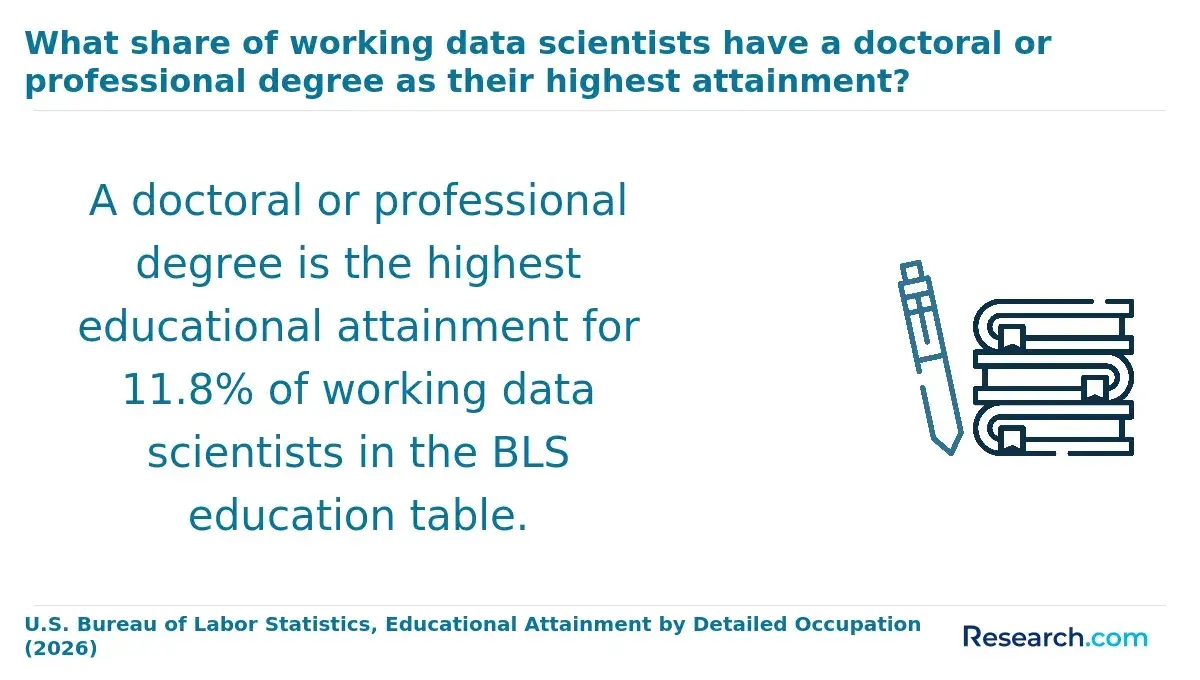
No. A mortgage operations specialist who wants to improve reporting may get more immediate value from SQL, statistics, and supervised projects than from a full degree. A professional targeting data scientist or model-development roles has a stronger case for graduate study, particularly if they need structured training in programming, statistical inference, and rigorous model evaluation. Hiring requirements still depend on the employer and position.
Existing mortgage experience is an asset when it helps you frame a useful question, spot misleading data, and explain results to underwriters, risk teams, or servicing leaders. It does not replace technical preparation. If your goal is specifically to develop AI systems rather than build broader statistical and analytical skills, compare options for studying artificial intelligence online against data science curricula before choosing a credential.
How Do Online and Campus-Based Data Science Master's Programs Compare?
Neither format is inherently better for mortgage lending. This comparison highlights the practical differences for someone balancing graduate study with a lending job; individual programs may depart from either pattern.
| Consideration | Online program | Campus-based program |
| Work schedule | May allow continued employment, though live sessions and group work can still constrain hours | May offer a more predictable in-person schedule but require commuting or reduced work hours |
| Collaboration | Often relies on remote meetings and digital project tools | Offers regular face-to-face contact with classmates and faculty |
| Industry access | Can let employed students apply learning at their current organization, subject to permission | May make local employer events and campus research easier to attend |
Choose online study if keeping your job is central to the plan, but confirm synchronous attendance, exam times, group-project expectations, and any campus visits. Compare data science graduate programs for working students on those operational details rather than assuming "online" means fully asynchronous.
What Courses Should an Online Data Science Master's Include?
Prioritize courses that let you move from messy lending data to defensible conclusions. The strongest fit usually includes Python or R, SQL and data engineering, probability and statistical inference, machine learning, model validation, and clear communication of uncertainty. Coursework in privacy, responsible AI, or model governance is particularly valuable when analytical outputs could influence consumer lending.
Look beyond course titles for evidence of depth. A substantial project should require students to define a question, prepare data, establish a baseline, test performance on appropriate holdout data, examine limitations, and explain the result to a nontechnical audience. A mortgage-relevant project might forecast servicing volume or compare methods for detecting application-processing delays; it need not use confidential borrower records.
A common mistake is selecting a program for its AI electives while overlooking statistics and data management. Ask for recent syllabi and examples of permitted capstone topics. If a program cannot show how students evaluate models or handle sensitive data responsibly, an impressive elective list alone is weak evidence of career fit.
What Are the Admission Requirements for an Online Data Science Master's?
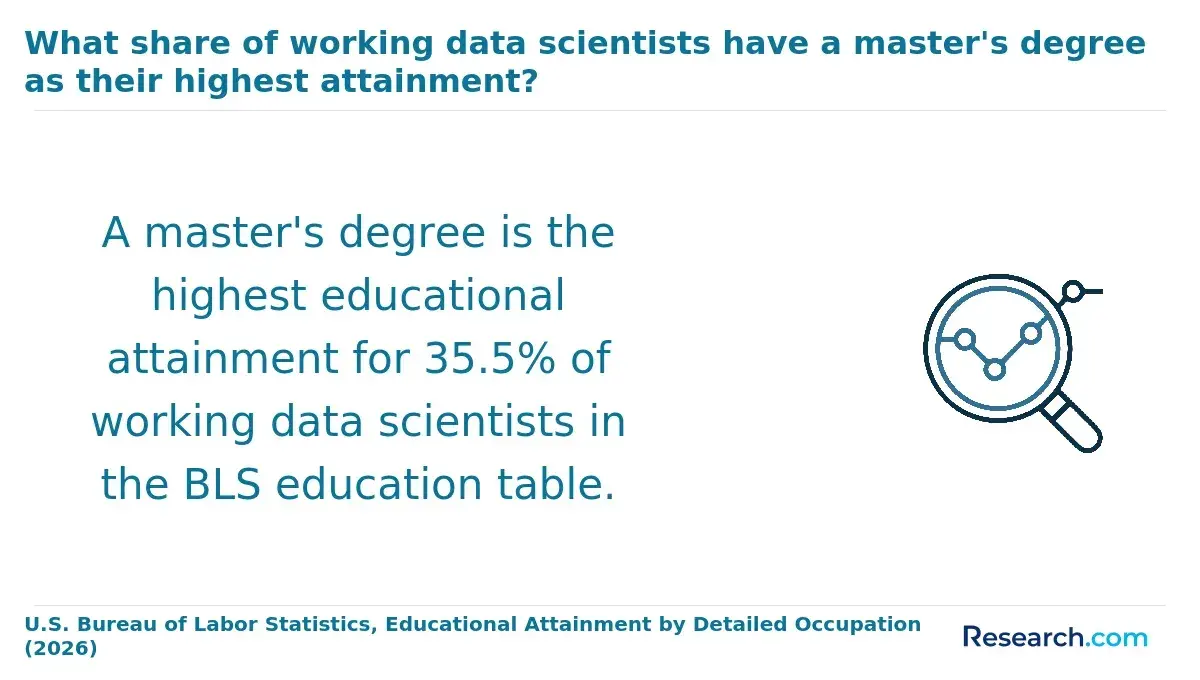
Requirements vary by university. Programs may assess prior coursework in mathematics, statistics, or programming alongside a bachelor's degree, transcripts, professional experience, and application materials. Mortgage experience can strengthen an application, but it should not be assumed to satisfy a formal technical prerequisite.
Before applying, compare your transcript and work samples with each program's published requirements. If you have not used calculus, linear algebra, or code recently, ask admissions whether a credit-bearing course is required or whether other evidence of readiness is accepted. Preparation through self-study can help you succeed without necessarily fulfilling an admissions rule. Applicants considering a more AI-focused route can also examine AI master's programs with preparatory coursework, while verifying exactly what each bridge course qualifies them to do.
How Long Does an Online Data Science Master's Take and Cost?
There is no reliable single timeline or price for an online data science master's. Required credits, course availability, part-time pacing, and any foundation courses affect completion time. Tuition may be charged per credit or term, and published rates can exclude mandatory fees. Confirm the current academic-year figures with each institution rather than relying on an older comparison page.
For an apples-to-apples estimate, compare the full cost of completing each candidate program - not just its advertised tuition. Include required credits, mandatory fees, software or equipment, possible travel, and the cost of any prerequisite courses. Then account for employer tuition assistance, if available, and whether the schedule lets you maintain your income. A lower sticker price is not necessarily cheaper if required courses are hard to schedule or additional preparation is needed.
Evaluate the investment against a specific target role and your current earnings, not the salary of all data scientists. Ask schools for completion policies and any relevant, clearly defined graduate outcomes; do not assume a degree will cause a promotion or a particular salary increase.
What Mortgage Lending Jobs Can Data Science Graduates Pursue?
Possible destinations include mortgage or servicing data analyst, credit risk analyst, portfolio analyst, model validation analyst, and data scientist at a lender, servicer, insurer, or financial technology company. These titles do not have uniform duties: one employer's risk analyst may primarily produce reports, while another's builds and tests predictive models.
Work backward from actual job descriptions. For an operations analytics role, demonstrate SQL, reliable reporting, and a project that improves a measurable workflow. For a modeling role, show statistical reasoning, documented validation, and an ability to explain limitations. If you are considering AI-oriented teams, ask whether a program provides introductions to relevant employers rather than treating the size of its general alumni network as proof of placement; AI master's degree options with alumni career networks offer another comparison point.
What Salaries and Job Outlook Can Data Science Graduates Expect?
The U.S. Bureau of Labor Statistics reports a $120,230 median annual wage for data scientists in May 2025. That is an occupation-wide figure, not a mortgage-industry starting salary or an expected salary for new master's graduates. Pay for lending analytics roles depends on the actual job, location, employer, technical responsibilities, and prior experience.
The BLS growth projection noted earlier is likewise for data scientists across industries. Mortgage hiring can respond to lending volumes, interest rates, and an individual employer's investment in analytics. Use occupation data to gauge the broader market, then examine current mortgage-related postings for the skills and compensation attached to the roles you would realistically pursue.
Which Accreditations, Certifications, and Licenses Matter in Mortgage Lending?
Check that a prospective university holds recognized institutional accreditation, and verify its current status through the institution and the accreditor or U.S. Department of Education. There is no mortgage-specific accreditation that every data science master's must hold. A certification in a software tool may support a narrow skill claim, but it is not a substitute for demonstrated analytical work.
Do not confuse analytics employment with mortgage loan origination. State licensing and registration rules for mortgage loan originators depend on the role and employer; a data science degree does not grant an origination license. If a position includes taking applications or offering or negotiating loan terms, confirm its requirements with the employer and the relevant state regulator. For an online program, also confirm that the institution can enroll students in your state.
Other Things You Should Know About Data Science
Yes. Publicly released mortgage datasets can support questions about application patterns or geographic differences. Read the dataset documentation first: available fields, reporting definitions, privacy protections, and missing information limit what you can conclude.
Only with explicit employer authorization and a project arrangement that meets its privacy, security, and contractual requirements. Removing names alone may not make borrower-level records safe to share.
Not necessarily. Relevant work experience and well-documented projects can also demonstrate readiness. If you are changing employers or functions, ask whether a program offers internships or employer-sponsored projects and whether they are available to online students.
That depends on the program's rules, data rights, and any employer agreement. Before starting, establish which code, results, and descriptions you may share publicly; a separate project using permitted data may be easier to show recruiters.
References
- Educational Attainment and Nonwage Labor Market Returns in the United States - PMC https://pmc.ncbi.nlm.nih.gov/articles/PMC10923559/
- IV-1 Fair Lending Laws and Regulations | FDIC.gov https://www.fdic.gov/consumer-compliance-examination-manual/iv-1-fair-lending-laws-and-regulations
- Cost of Attendance (Budget) | 2025-2026 Federal Student Aid Handbook https://fsapartners.ed.gov/knowledge-center/fsa-handbook/2025-2026/vol3/ch2-cost-attendance-budget
- Research Summary: Education and Lifetime Earnings | ssa.gov https://www.ssa.gov/policy/docs/research-summaries/education-earnings.html
- Accreditation in the U.S. | ed.gov http://www.ed.gov/laws-and-policy/higher-education-laws-and-policy/college-accreditation/accreditation-in-the-us
- Student & Recent Graduates Employment Opportunities | U.S. FEDERAL HOUSING https://www.fhfa.gov/about/careers/student-and-recent-graduates
- What You Can Do with a Master's in Data Science and Artificial Intelligence | Harvard Extension School https://extension.harvard.edu/blog/what-you-can-do-with-a-masters-in-data-science-and-artificial-intelligence/
- 12 Data Science Skills (+10 Hard-Won Career Lessons) | Syracuse University https://ischool.syracuse.edu/data-science-skills/
- Data Science: Policy, Governance & Society (Online) | Brown University https://graduateprograms.brown.edu/graduate-program/data-science-policy-governance-society-online-scm
- Is a Master's in Data Science Worth It? | University of San Diego Online Degrees https://onlinedegrees.sandiego.edu/is-a-masters-in-data-science-worth-it/