2027 MLIS Programs for Library Volunteers and Community Engagement Managers

Co-Founder and Chief Data Scientist
Library volunteers and community engagement managers often have experience serving patrons but face a different decision when considering professional librarian roles: which graduate program will build on that work? The U.S. Bureau of Labor Statistics reports a May 2025 median annual salary of $68,270 for librarians and media collections specialists, but a degree's value depends on the job you want and its cost.
This guide explains when an MLIS helps, what community-focused preparation looks like, and how to compare programs without mistaking a promising elective for a guaranteed career pathway.
Key Things You Should Know
- An MLIS can support a move into professional librarian or library leadership roles; many volunteer coordination and outreach jobs do not require one.
- Check the specific master's program's ALA accreditation, then verify that relevant electives and applied projects are actually available.
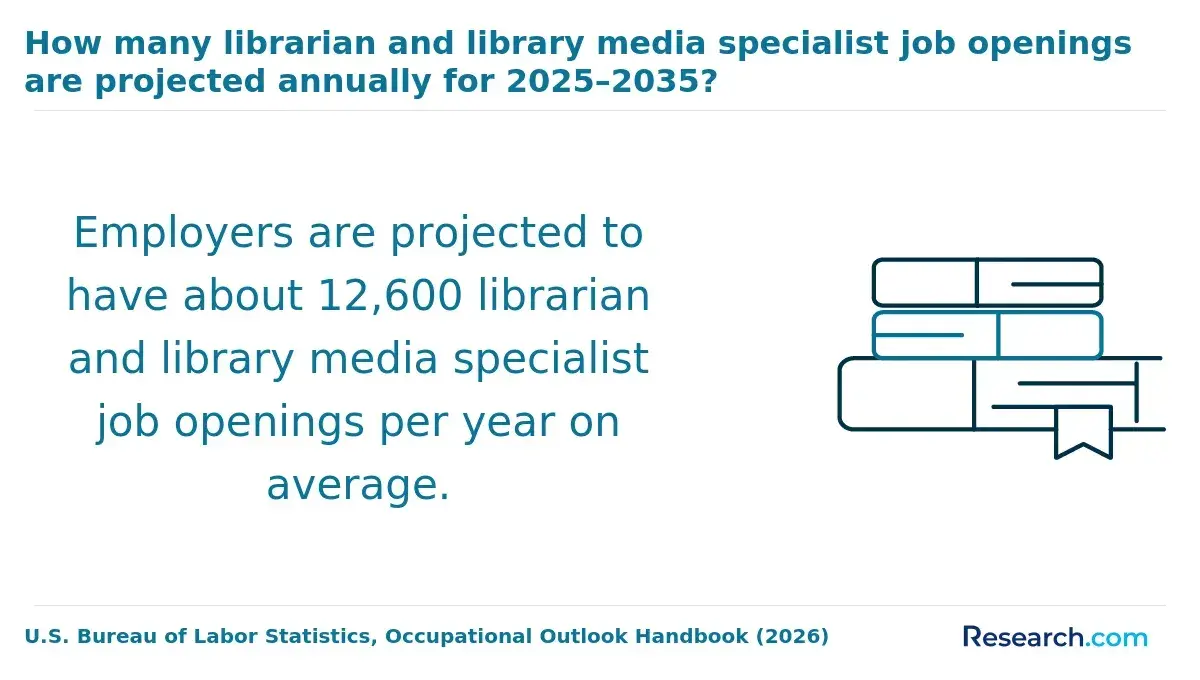
- BLS projects 2.6% growth for librarians and media collections specialists from 2025 to 2035; compare local job requirements and total degree cost before enrolling.
What are MLIS programs for library volunteers and community engagement managers?
These are library and information science master's programs chosen for their relevance to public service, outreach, partnerships, and program leadership - not necessarily programs with a formally named "community engagement" concentration. An institution may award an MLIS, MLS, Master of Science in Library Science, or another LIS-related degree. The degree name alone does not establish its accreditation or curriculum.
For a volunteer moving toward librarianship, useful preparation combines reference and information services, collection development, accessibility, and library administration with experience designing services alongside a community. For an engagement manager, the most valuable additions may be needs assessment, evaluation, supervision, and the ethical handling of patron information. A course listed in a catalog is evidence of a possible elective, not proof that it is required, offered regularly, or part of a formal specialization.
Do library volunteers and community engagement managers need an MLIS degree?
Volunteer, program assistant, outreach coordinator, and some community engagement positions may accept experience or other education. Professional librarian postings often seek an ALA-accredited LIS master's, but requirements vary by employer and role. Management jobs may place as much weight on budgets, supervision, partnerships, and demonstrated results as on the degree.
Start with postings for the jobs you would realistically pursue. Separate "required" qualifications from "preferred" ones, and note whether you would perform librarian duties - such as reference, collection decisions, or professional service planning - or primarily coordinate events and volunteers. If your target roles rarely require an MLIS, a shorter management credential, targeted training, or greater responsibility in your current position may be a better first investment.
How do you choose an accredited MLIS program for community-focused library careers?
First, confirm the specific master's program in the current American Library Association accreditation directory. Institutional accreditation is a separate matter and does not make an MLIS ALA-accredited. Then compare programs against the work you want to do, rather than treating a concentration's name as sufficient evidence of fit.
Ask each program which relevant courses are required, which are electives, and when students can expect to take them. Look for documented opportunities to assess community needs, develop accessible programs, manage volunteers, and evaluate outcomes. Ask whether a practicum or capstone can involve a public library or community partner, who arranges the placement, and whether your current workplace is eligible.
Cost belongs in that comparison. A lower per-credit rate may still lead to a higher bill if the program requires more credits or charges additional fees. A guide to the most affordable online MLIS programs can help identify options to investigate; confirm each program's current charges and accreditation directly before deciding.
What career paths can an MLIS degree open for library volunteers and engagement managers?
An MLIS is most useful when it helps you qualify for work beyond coordinating participation: designing library services, supervising staff, making collection decisions, or leading a branch or department. The table distinguishes possible destinations from roles where experience or another qualification may be sufficient.
| Path | Typical work | How an MLIS fits |
| Public services or outreach librarian | Reference, programs, partnerships, and service evaluation | Often sought for professional librarian positions; local postings control |
| Volunteer or community engagement manager | Recruitment, training, supervision, and partner relationships | May help with advancement but is not universally required |
| Branch or library administrator | Staffing, budgets, service priorities, and operations | Can meet a librarian qualification; management experience also matters |
A community-facing portfolio can show what you contributed: a program plan, a partner agreement you were authorized to share, or an evaluation explaining how feedback changed a service. Remove patron-identifying information. If you are considering a specialized or senior role, review library degree career barriers alongside actual job postings; the MLIS alone may not supply the supervisory experience an employer wants.
What do MLIS programs teach about community engagement and volunteer management?
Relevant study usually spans several courses rather than one universal volunteer-management curriculum. Public library services and reference courses can develop patron-centered service skills. Management courses can address planning, personnel, and budgets. Courses on accessibility, information literacy, and evaluation can help students design programs that people can use and assess whether those programs meet a need.
Applied work is especially important because supervising volunteers differs from completing a classroom plan. Seek a project in which you can define volunteer duties, create training materials, establish a feedback process, or evaluate a partnership. Ask whether faculty will supervise this work and what the final portfolio artifact can include. Digital inclusion and privacy are also practical concerns: an outreach activity may involve helping patrons use online services without collecting more personal information than the service requires.
Are online MLIS programs as effective as campus-based programs?
Online delivery can be a strong fit for someone already working in a library, especially if coursework can be applied locally. Delivery format by itself, however, does not establish instructional quality or hands-on access. Compare the same essentials in either format: program accreditation, course availability, faculty feedback, collaboration, and the feasibility of applied work.
Ask whether classes are asynchronous or meet at set times, whether required courses follow a fixed sequence, and whether any campus visits are required. Confirm where a practicum may be completed; an online course does not automatically mean a remote placement. A campus program may offer convenient access to nearby partners, while an online program may let you build relationships in the community where you intend to work.
What are the admission requirements for MLIS programs?
Applicants generally need a bachelor's degree, but minimum grades, required materials, references, statements, and application deadlines vary by institution. Library volunteering can give you strong examples for a statement of purpose; it should not be assumed to replace a published academic requirement. Some programs may also ask about your intended career direction or relevant experience.
If your record does not match a requirement, ask admissions staff whether the policy allows an individual review and what evidence would be useful. Do this before paying an application fee or planning around an exception. Readers assessing library masters prerequisite alternatives should still verify the current eligibility rules with each institution; admission is never assured by work experience alone.
How long do MLIS programs take and what do they cost?
Time to completion depends on required credits, course sequencing, enrollment pace, and any practicum. An accelerated schedule can shorten elapsed time but increase the weekly workload - an important trade-off if you coordinate programs or volunteers during evenings and weekends. A one year library science program comparison is a starting point for exploring faster routes, not a substitute for confirming that a proposed schedule is available to you.
To estimate cost, multiply the current tuition rate applicable to you by required credits, then add mandatory fees, materials, and any travel or placement expenses. Ask whether tuition differs by residency or online status and whether a slower course sequence adds term-based fees. Keep three figures separate: the program's gross cost, your likely out-of-pocket cost after confirmed support, and any amount you would borrow. Compare that expense with your current earnings and the qualifications in your target job postings; do not assume a degree will produce a particular pay increase.
What salaries and job outlook can MLIS graduates expect?
The U.S. Bureau of Labor Statistics reports a May 2025 median annual salary of $68,270 for librarians and media collections specialists and projects 2.6% employment growth from 2025 to 2035. Those occupation-wide figures describe neither a starting salary nor an outcome for MLIS graduates. A volunteer coordinator, branch manager, and outreach librarian may have different pay scales even within one library system.
For a useful comparison, examine advertised salaries in your geographic area and the positions you could plausibly enter after graduation. Note whether the posting requires an MLIS, asks for supervisory experience, or offers a salary range that would justify the costs you expect to incur. This is more informative than treating a national occupational median as your personal return on investment.
Which certifications or licenses do library professionals need?
Requirements depend on the role and jurisdiction. An ALA-accredited master's is a frequently requested educational qualification for professional librarian jobs, not a universal license to practice. Public library employment rules can vary by state or employer, so check the jurisdiction and the specific posting rather than assuming one rule applies nationally. An Illinois library career change guide can provide a state-focused starting point for readers pursuing work there.
School librarian roles require particular care: state educator licensure, certification, or endorsement rules are distinct from ALA program accreditation. Before choosing an MLIS for that goal, confirm the approved preparation route with the relevant state education authority and the university. Volunteer-management certificates may strengthen a résumé, but do not treat an optional credential as a legal requirement unless the role's governing authority says it is.
Other Things You Should Know About Library Science
Possibly, but approval depends on the program's rules. Ask whether existing volunteer work qualifies, whether new duties are required, and who must supervise and assess it.
Many libraries offer youth-service volunteer opportunities, but screening, supervision, and permitted duties vary. Ask the library about its policies before accepting an assignment.
Describe the program's goal, your responsibilities, aggregate participation or feedback where authorized, and what changed afterward. Follow your library's privacy and records policies.
No. A board typically has a governance role, while employees carry out library operations. Board service can demonstrate community commitment but does not automatically substitute for staff experience.
References
- Teaching at the Intersection of Community Engagement and Program Evaluation | cdc.gov https://www.cdc.gov/pcd/issues/2025/24_0405.htm
- Professional Development | NYSL - the New York State Library https://nysl.nysed.gov/libdev/cert/conted
- Library Outreach Services Coordinator Position Description | shenandoahcountyva.gov https://shenandoahcountyva.gov/DocumentCenter/View/3336/Library-Outreach-Coordinator-5-2025
- Master of Library and Information Science (MLIS) | umd.edu https://info.umd.edu/academics/masters-programs/master-of-library-and-information-science/
- Practicum - School of Information Science & Learning Technologies https://cehd.missouri.edu/information-science-learning-technologies/practicum/
- Master of Library and Information Science | pitt.edu https://www.sci.pitt.edu/academics/masters-degrees/library-and-information-science-mlis
- Master of Library and Information Science (MLIS) | Syracuse University https://ischool.syracuse.edu/academics/library-and-information-science-masters-degree/
- 4.1.21 Instructional Modalities and Distance Education | Illinois State https://policy.illinoisstate.edu/academic/4-1-21
- Library and Information Science, MS - Brooklyn | Pratt Institute https://www.pratt.edu/information/library-and-information-science/
- Tuition & Fees - UF Online - University of Florida https://ufonline.ufl.edu/tuition/tuition-fees/