2027 Online MLIS Programs With No Application Fee and No Enrollment Deposit

Co-Founder and Chief Data Scientist
An online MLIS may fit your career plans, but paying to apply, or to hold a place you may not accept, adds risk before classes begin. This guide helps prospective students find programs that charge neither an application fee nor an enrollment deposit, and verify those policies before relying on them. It also covers accreditation, scheduling, total cost, and career outcomes.
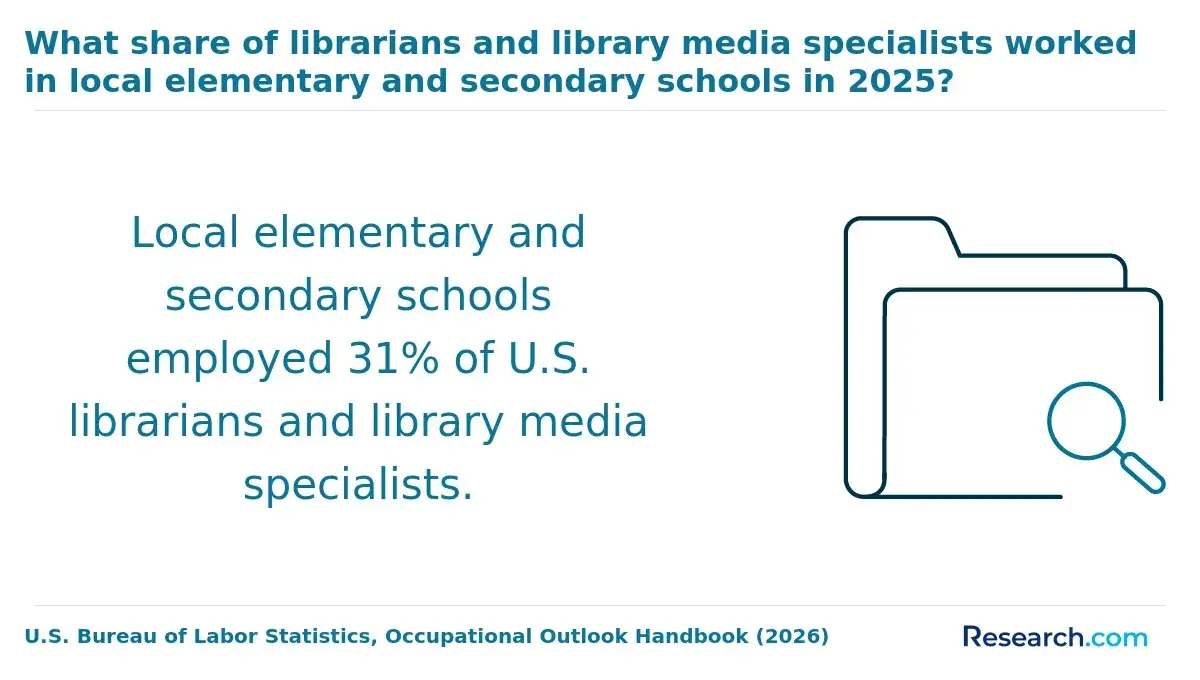
The U.S. Bureau of Labor Statistics reports a May 2025 median annual salary of $68,270 for librarians and media collections specialists. That occupational figure provides context, not a promise of what a particular program's graduates will earn.
Key Things You Should Know
- "No application fee" and "no enrollment deposit" are separate policies; confirm both for your program, start term, and applicant category.
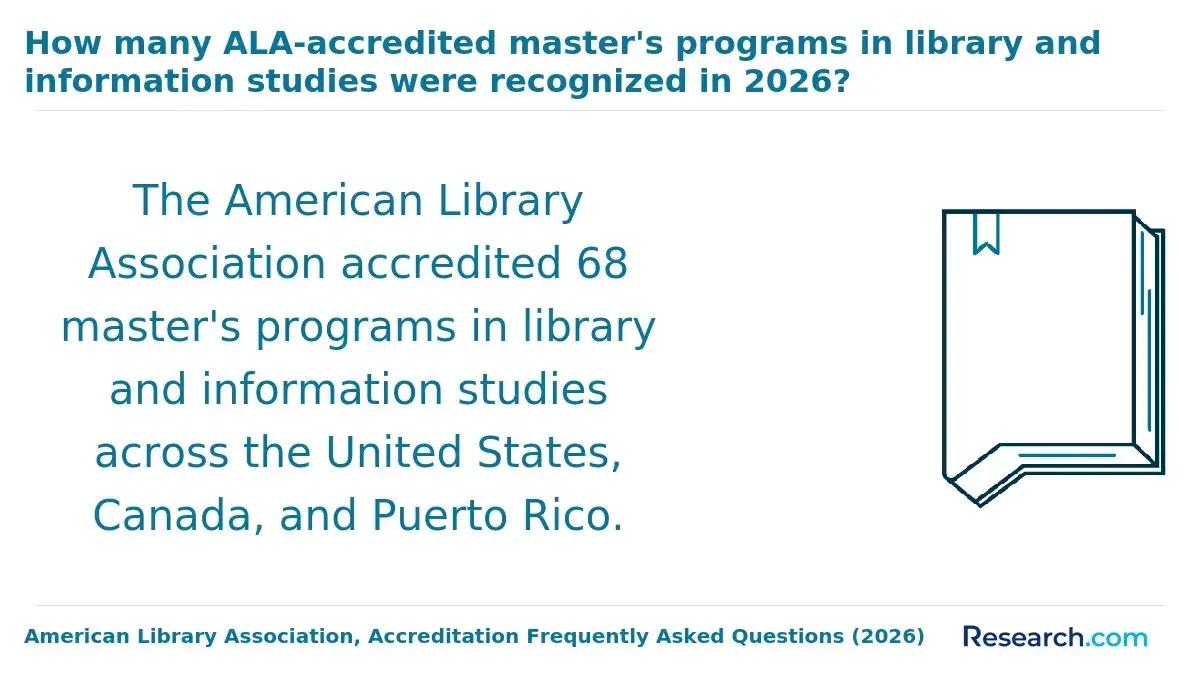
- Check the specific master's program in the American Library Association's accreditation directory; university accreditation alone does not establish ALA accreditation.
- BLS projects 2.6% employment growth for librarians and media collections specialists from 2025 to 2035, so compare total degree cost with the jobs you intend to pursue, not just the cost of applying.
What are online MLIS programs with no application fee or enrollment deposit?
They are online Master of Library and Information Science programs that let an eligible applicant submit an application without a charge and accept an offer without paying a deposit to reserve a seat. The two policies are independent. A waived application fee does not establish that the deposit is waived, and a deposit-free offer does not make the application free.
There is no verified school-by-school list here because these charges can change by start term, applicant type, or admissions route. Before treating a program as meeting both conditions, get its current graduate application instructions and written enrollment terms. An individual fee waiver is useful, but it is not the same as a program-wide no-fee policy.
The distinction matters when comparing offers: an enrollment deposit may be credited toward tuition, while an application fee generally pays for application processing. Neither tells you what the degree will ultimately cost. An online library masters value comparison can help frame the larger cost decision after you confirm the initial charges.
How can you verify an online MLIS program's accreditation?
Search the American Library Association's current directory of accredited master's programs for the institution and its specific LIS master's degree. Check the directory entry's status, then confirm with the university that the online option leads to that same accredited degree. Institutions may use names such as MLIS, MLS, or Master of Information; the name alone does not establish accreditation.
Also check the university's institutional accreditation separately. It serves a different purpose and cannot substitute for ALA accreditation when an employer specifies an ALA-accredited master's. ALA accreditation does not, by itself, verify online course availability, a particular concentration, or eligibility for a state school librarian credential. If a program's status or degree name is unclear, ask its admissions office to identify the exact directory entry before applying.
What are the admission requirements for online MLIS programs?
Expect a completed bachelor's degree and an application that may request transcripts, a statement of purpose, recommendations, and a résumé. Schools set their own requirements for academic performance, tests, references, and deadlines; relevant library work may strengthen an application but should not be assumed to replace a required degree.
Check the application portal before gathering documents. A program can charge no application fee while still requiring you to pay a separate transcript or credential-evaluation provider. Ask whether the no-fee policy covers your applicant category and whether all materials must arrive before the deadline. For applicants balancing employment and study, a library science program for busy adults is worth evaluating for workload and scheduling as well as admission costs.
How do online MLIS programs compare with campus-based programs?
The format changes how you attend, not necessarily the credential awarded. The comparison below identifies scheduling and experience questions that matter more than the label "online." Individual programs may combine these formats.
| Feature | Online program | Campus-based program |
| Class meetings | May be asynchronous, live at set times, or both | Typically meets at scheduled campus times |
| Applied work | Projects may be remote; placements may require a local site | May offer access to nearby libraries and campus partners |
| Location costs | May reduce relocation costs; travel can still be required | May require commuting or relocation |
| Peer interaction | Usually takes place through online discussions and group work | Often includes in-person classes and campus activities |
Do not assume "online" means self-paced or free of campus visits. Request a sample course schedule and ask whether live meetings, group projects, orientations, or practica have location requirements. A flexible pace library science masters may appeal to students with variable work hours, but its actual pacing and deadlines still need checking.
What courses do online MLIS programs typically include?
Common subjects include information organization, reference and research services, information-seeking behavior, collection development, and management. Programs may also offer electives in archives, metadata, digital preservation, youth services, research data management, or information technology. An elective is not a formal concentration unless the university identifies it as one.
Choose courses backward from the work you want to do. For a metadata role, look for opportunities to describe and organize digital resources, apply metadata schemas, and show the resulting work in a portfolio. For public librarianship, prioritize community services and inclusive access. Ask how often career-relevant electives run: a catalog listing does not mean a course will be available during your enrollment.
How long do online MLIS programs take and what do they cost?
Time to completion depends on required credits, course sequencing, term schedules, and how many courses you can take while working. A faster calendar is only useful if the required courses are offered when you need them. If speed is a priority, compare the published sequence with short accelerated library science masters options rather than assuming every online degree can be finished at an accelerated pace.
Calculate tuition by multiplying the applicable per-credit rate by required credits, then add mandatory fees, materials, any travel or placement expenses, and the cost of additional terms if scheduling delays graduation. Check whether your rate depends on residency and whether it can change. A $0 application fee and $0 enrollment deposit reduce upfront spending; they do not reduce tuition unless the school explicitly says so.
When comparing aid offers, keep three figures separate: the program's gross cost, your expected out-of-pocket cost after confirmed assistance, and the amount you would borrow. Ask the financial aid office about eligibility for your enrollment period rather than assuming a scholarship, employer benefit, or loan will cover the balance.
What careers can you pursue with an online MLIS degree?
An MLIS can prepare students for professional roles in public, academic, school, special, and government libraries. Work may involve reference assistance, instruction, collections, outreach, or managing access to information. Graduates also pursue archives, metadata, digital collections, records, and research support roles, but those jobs differ in their preferred training and experience.
Read job postings before choosing electives or a practicum. A prospective archivist, for example, should seek experience with archival description and finding aids; a prospective academic librarian may benefit from instruction and research support projects. Some adjacent information jobs accept other degrees or experience instead of an MLIS. For roles with additional hiring conditions, review specialized MLIS job requirements before committing to a program.
How much can you earn with an MLIS degree?
The BLS median annual salary for librarians and media collections specialists was $68,270 in May 2025. That is a national occupational median, not an entry-level salary, a salary for all MLIS holders, or a graduate-outcomes measure for any school.
Pay depends on the position, employer, location, experience, and responsibilities. Evaluate an MLIS against the jobs you can realistically pursue, your current earnings, and the amount you would need to finance. A deposit-free offer makes it easier to consider a program without an upfront commitment, but it does not establish a favorable return on the degree.
What is the job outlook for librarians and information professionals?
BLS projects 2.6% employment growth for librarians and media collections specialists from 2025 to 2035. That national projection describes an occupation, not the likelihood that an individual MLIS graduate will be hired or that openings will be equally available in every region.
Digital collections, accessible services, privacy, and effective use of discovery tools shape many information roles, but the mix varies by employer. Compare local postings for the settings you want to enter and note recurring skills, required credentials, and experience. If your target roles do not commonly request an MLIS, relevant work experience or another qualification may be a less costly first step.
Do MLIS graduates need professional certifications or state licenses?
There is no single professional license required for every MLIS graduate. School librarian positions are an important exception to investigate: states set their own educator certification or endorsement requirements, and an online MLIS does not automatically satisfy them. Before enrolling for that goal, confirm the program's school-library preparation pathway and check the rules with the state education authority where you plan to work.
Other specialized employers may prefer subject expertise or additional credentials without making them universal legal requirements. Review actual job postings and ask the program how its coursework and field experiences align with your intended role. Keep that review separate from ALA accreditation, which answers a different question.
Other Things You Should Know About Library Science
Yes, unless a specific admissions arrangement says otherwise. Track each program's document deadlines and offer-response date so you can compare decisions before committing.
Possibly. Schools decide which graduate credits qualify and how many can count toward their degree. Obtain a written evaluation before assuming a previous course will shorten your program.
Some programs permit deferral, but the rules and eligible start terms vary. Ask whether a deferral preserves your admission and any funding offer.
It can be useful for asking about course scheduling, placement options, and current admissions policies. Follow up by email on any policy that will affect your decision so you have a written answer.
References
- MLIS Master of Library and Information Studies - UA Online https://online.ua.edu/degrees/mlis-master-of-library-and-information-studies/
- Apply for MLIS Admission | Library and Information Science at Mizzou https://online.missouri.edu/degrees-programs/mu/education/library-and-information-science/mlis/admissions
- MLIS Admissions & Cost | College of Information Science https://infosci.arizona.edu/ma-library-information-science/admissions-cost
- Library and Information Science - MLIS - Kent State Online https://onlinedegrees.kent.edu/degrees/master-of-library-and-information-science
- 4.1.21 Instructional Modalities and Distance Education | Illinois State https://policy.illinoisstate.edu/academic/4-1-21
- online Master of Library and Information Science | DEN-EDU https://morgridgeonline.du.edu/online-mlis-program/
- The ALA Accreditation Program | jstor.org https://www.jstor.org/stable/40323051
- Library & Information Studies: Earn Your MLIS Degree Online | ODUGlobal https://online.odu.edu/academics/programs/library-and-information-studies
- 2.3 Graduate School Admissions | ncsu.edu https://catalog.ncsu.edu/graduate/graduate-handbook/admissions/
- MLIS Admissions FAQ - UW Information School https://ischool.uw.edu/programs/mlis/admissions/resources/faq