2027 MLIS Programs for Library Survey Design and Evaluation

Co-Founder and Chief Data Scientist
Choosing an MLIS for library survey design means looking beyond a program's name: you need coursework that teaches you to ask useful questions, analyze responses, and act on the findings. These skills matter in libraries assessing services, collections, and community needs.
The U.S. Bureau of Labor Statistics reports a May 2025 median annual salary of $68,270 for librarians and media collections specialists, but that figure is not a program outcome. This guide helps prospective students compare preparation, costs, and career fit before applying.
Key Things You Should Know
- Look for a combination of research methods, library assessment, and an applied project, a single relevant elective is not a formal survey-design specialization.
- Check the specific master's program in the ALA accreditation directory, then separately confirm that relevant courses will be offered while you are enrolled.
- BLS projects 2.6% employment growth for librarians and media collections specialists from 2025 to 2035, build demonstrable assessment experience rather than relying on the degree alone.
What are MLIS programs for library survey design and evaluation?
These are library and information science master's programs in which students can develop the skills to collect evidence about library users and evaluate whether services meet their needs. An MLIS may provide that preparation through electives, a practicum, or a capstone rather than a formally named survey-design track. Institutions also use degree titles such as MLS, Master of Science in Library Science, or Master of Information; the title alone does not establish the curriculum.
The work goes beyond writing a questionnaire. A library assessment project might define what decision staff need to make, identify whom to ask, choose appropriate questions, protect respondents' privacy, analyze results, and explain what the evidence can - and cannot - support. Survey findings may be combined with usage data, interviews, or observations. A useful program lets students practice that full cycle, not just learn survey terminology.
Which MLIS programs offer library assessment and evaluation coursework?
There is no reliable shortcut from a degree title to a current course schedule. Rather than treating an unverified list of schools as a recommendation, compare each prospective program's official catalog, recent schedules, and project options using the same evidence standard. The distinctions below show what each type of published information actually establishes.
| Evidence to look for | What it establishes | What to confirm |
| Named assessment concentration or track | The institution formally documents a pathway | Its required courses and whether they fit your intended role |
| Research methods or evaluation elective | Relevant coursework exists in the catalog | When it runs and whether MLIS students can enroll |
| Practicum, capstone, or independent study | A potential route to applied work | Whether a library survey project is permitted and supervised |
| Broad management or user-services curriculum | General alignment with assessment work | Whether survey design and analysis receive substantive coverage |
Ask a program adviser for recent syllabi and an expected course rotation. A catalog listing does not mean an elective runs every term, and a capstone requirement does not guarantee that you can complete it with an external library partner. For survey-focused preparation, dependable access to methods courses and a substantial project may matter more than a concentration label.
Do MLIS programs for library research require ALA accreditation?
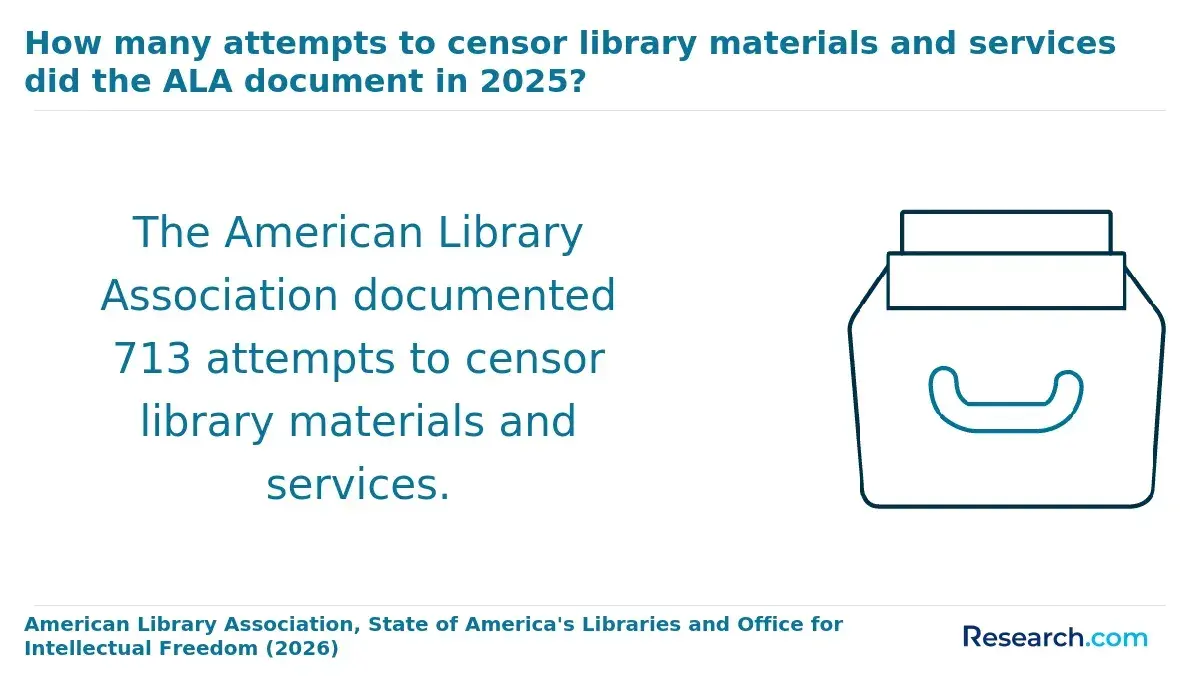
ALA accreditation is not a legal prerequisite for conducting library surveys. It is, however, an important program-selection factor for applicants seeking professional librarian positions: some employers require or prefer a degree from an ALA-accredited master's program. Check the specific graduate program's current status in the ALA directory. A university's institutional accreditation is different, and ALA accreditation does not verify particular electives, internships, or online formats.
Requirements also depend on the job. An assessment analyst outside a library may qualify through another research-focused degree or relevant experience. School librarian positions can involve state-specific licensure or endorsement requirements in addition to graduate study. If that setting interests you, review the applicable state education authority's rules; guidance on how to become a librarian in Illinois illustrates why a location-specific check belongs in your planning.
What courses teach survey methods and library program evaluation?
Prioritize a course sequence that connects research design to library decisions. Course names vary, so inspect descriptions and assignments rather than searching only for the word "survey." Strong preparation typically draws on research methods, statistics or data analysis, library management, and assessment or program evaluation.
In a methods course, look for practice defining a population, selecting a sample, writing neutral questions, testing a questionnaire, and recognizing nonresponse bias. Evaluation coursework should address outcomes, appropriate measures, interpretation, and reporting to stakeholders. Data-analysis instruction should help you summarize responses without treating a small or unrepresentative sample as proof of what every user thinks.
For an applied project, a useful portfolio artifact is an assessment plan paired with an accessible questionnaire, an analysis of appropriately collected data, and a short recommendation memo. Ask whether the program permits this work in a public, academic, or other library relevant to your goal. Learn how to handle privacy and institutional review requirements before collecting responses; completing a class assignment does not automatically authorize a survey of library patrons.
Are online MLIS programs suitable for learning library survey design?
Yes, if the online curriculum includes substantive methods instruction, feedback on questionnaire drafts, opportunities to analyze data, and a feasible applied project. Survey design does not inherently require a campus classroom. What matters is whether you can get timely instruction and access to a suitable project setting.
Online delivery does not necessarily mean a flexible schedule. Check whether relevant classes meet live, whether group projects require fixed meeting times, and whether electives are available in the terms you need them. If a practicum interests you, confirm whether you can arrange a local placement, who approves it, and whether any campus attendance is required. An asynchronous core is less useful if the one assessment elective conflicts with your work hours.
What are the admission requirements for survey-focused MLIS programs?
Admission is generally to the master's program, not to a separate survey-design credential. Applicants should expect to document a bachelor's degree and follow each institution's published requirements for transcripts, recommendations, a statement of purpose, or other materials. Requirements and test policies vary; prior library employment should not be assumed to replace a formal admission requirement.
Use your statement to describe a specific question you want to investigate - for example, whether a service reaches its intended users - and explain why the program's methods coursework fits that goal. Experience with community outreach, interviews, data analysis, or library services can give that interest context, but it does not guarantee admission. If you have completed relevant graduate study, review the school's policy on MLIS admissions with transfer coursework and request an individual evaluation before assuming credits will apply.
How long do MLIS programs take, and how much do they cost?
Time to completion depends on required credits, enrollment pace, course sequencing, and any project or practicum. A student studying part time may need additional terms, particularly if a desired methods elective is offered infrequently. Ask for a term-by-term plan that includes the courses you actually want to take, not just the fastest possible route through the core.
Without a particular institution and enrollment status, a defensible total price cannot be stated. Compare programs using the same calculation: required credits multiplied by the tuition rate that applies to you, plus mandatory fees and expected books, software, travel, or placement costs. Confirm whether online students qualify for a published rate rather than assuming they receive in-state tuition. A comparison of cheapest shortest online library science programs can help identify options to investigate, but verify current charges and elective access with each school.
Keep gross program cost separate from what you would pay after any confirmed employer support or other aid, and from the amount you might borrow. A lower tuition figure is not necessarily better value if the program cannot offer the coursework or applied experience you need. Ask financial aid staff about eligibility and borrowing rules for your enrollment period rather than assuming a particular aid package.
What careers use library survey design and evaluation skills?
Assessment-focused librarians evaluate services, collections, instruction, and user experience, then communicate findings to colleagues and decision-makers. Depending on the organization, similar work may appear under titles such as assessment librarian, user-experience librarian, research and evaluation specialist, or library administrator. Public libraries may investigate community needs; academic libraries may assess student services or information-literacy instruction.
Job titles are not standardized. A professional librarian posting may require or prefer an ALA-accredited master's degree, while an evaluation or user-research position outside libraries may favor demonstrated research skills or another degree. Survey work can also be part of a broader librarian job rather than a dedicated assessment position. Review actual postings for the employers you want to reach, including their expectations for analysis, presentation, and stakeholder collaboration. Understanding library science hiring competition can help you weigh the value of a strong project portfolio against the cost of another credential.
If you already hold a degree that qualifies you for your target research role, a focused course or supervised project may be more useful than a second master's degree. If your goal is professional librarianship, choose an MLIS that develops both assessment skills and the broader services knowledge the intended job requires.
How much do librarians and library assessment specialists earn?
BLS reports a May 2025 median annual salary of $68,270 for U.S. librarians and media collections specialists. That occupational median covers many kinds of positions; it is not a separate salary estimate for assessment specialists, an entry-level offer, or an outcome for any MLIS program. Pay for a particular job depends on the employer, location, responsibilities, and candidate experience.
When weighing tuition against potential earnings, compare the jobs you could plausibly pursue before and after the degree. An online library degree earnings comparison can provide context, but it cannot predict your return. Give more weight to current local postings, their credential requirements, and your realistic borrowing needs than to an occupational median alone.
What job outlook and professional certifications apply to MLIS graduates?
BLS projects 2.6% employment growth from 2025 to 2035 for librarians and media collections specialists. This occupation-wide projection does not measure demand specifically for survey-design positions. Applicants can improve their evidence of fit by showing how they defined an assessment question, selected methods, addressed limitations, and turned findings into a practical recommendation.
There is no single professional certification required to design library surveys. An employer may value training in research methods, data analysis, or a particular platform, but a tool certificate is not a substitute for sound study design. School librarians should separately verify state credential rules; applicants to other specialized roles should check the requirements in relevant job postings. Choose additional training to close a demonstrated skill gap, not simply to accumulate credentials.
Other Things You Should Know About Library Science
Usually, collect identifying information only when it is needed for the stated purpose. Explain how responses will be used, restrict access to the data, and follow the library's privacy policies.
Yes, for exploring experiences or identifying issues to investigate further. Report who responded and avoid presenting a small, self-selected group as representative of all patrons.
They may encourage participation, but they can also affect who responds. Check your organization's rules, disclose the incentive clearly, and consider whether it could distort the results.
Use clear language, avoid unnecessary questions, test the form with assistive technology where possible, and provide a practical alternative for patrons who cannot use the survey format.
References
- Types of Financial Aid: Grants, Work-Study, and Loans | studentaid.gov https://studentaid.gov/understand-aid/types
- Cost of Attendance (Budget) | 2025-2026 Federal Student Aid Handbook https://fsapartners.ed.gov/knowledge-center/fsa-handbook/2025-2026/vol3/ch2-cost-attendance-budget
- Public Libraries Survey (PLS) | Institute of Museum and Library Services https://www.imls.gov/research-evaluation/surveys/public-libraries-survey-pls
- 2023 Library Survey Results | University of Maryland Libraries https://www.lib.umd.edu/about/org/admin/assessment/2023-library-survey-results
- Library Science Master's Online - UW Information School https://ischool.uw.edu/programs/mlis/degree-options/online
- Choose a Method to Collect Data/Evidence | Assessment and Curriculum Support Center https://manoa.hawaii.edu/assessment/resources/choose-a-method-to-collect-data-evidence/
- Design Assessment Methods - opair - Penn State https://opair.psu.edu/assessment/loa-handbook/choose-and-design-assessment-methods/
- Protecting the integrity of survey research - Oxford Academic https://academic.oup.com/pnasnexus/article/2/3/pgad049/7091615
- Master of Library and Information Science (MLIS) | du.edu https://morgridge.du.edu/academics-advising/programs-gr/mlis-library-and-information-science
- ALA Accountability and Accreditation of LIS Programs | Library Journal https://www.libraryjournal.com/story/ala-accreditation-and-accountability-backtalk