2027 MLIS Programs for Customer Service Professionals Moving Into Public Libraries

Co-Founder and Chief Data Scientist
Customer service experience can be a strong starting point for public library work, but moving into a professional librarian role may require a graduate degree. The U.S. Bureau of Labor Statistics reports a May 2025 median salary of $68,270 for librarians and media collections specialists, a broad category, not a promise of public library pay.
This guide helps career changers decide whether an MLIS is worth pursuing, which skills to build first, and how to compare programs without overlooking accreditation, practical experience, or total cost.
Key Things You Should Know
- For many professional public librarian positions, an ALA-accredited master's degree is the preferred or required credential; assistant and technician jobs offer entry points without it.
- Customer service skills transfer directly, but competitive applicants also need evidence of reference, digital-literacy, programming, or community-outreach skills.
- BLS projects 2.6% employment growth for librarians and media collections specialists from 2025 to 2035, compare local job postings and program costs before borrowing for an MLIS.
What is an MLIS degree, and why is it valuable for public library careers?
A Master of Library and Information Science (MLIS) is a graduate degree in organizing information and helping people find, evaluate, and use it. Public librarians apply those skills when answering research questions, developing collections, teaching digital skills, planning programs, and protecting patrons' access to information and privacy.
Schools may call a closely related degree an MLS, a Master of Science in Library Science, or a Master of Information. The name alone does not establish what it teaches or whether it is accredited. A library information studies program is most useful for this transition when its coursework and applied opportunities match the public library work you want to do.
An MLIS can open access to positions that specify a library science master's degree. It is not the only way to enter a library: assistant, circulation, and some outreach positions may accept relevant experience without graduate study. If you are unsure about the profession, trying one of those roles before enrolling can make the investment decision clearer.
Do public librarians need an ALA-accredited MLIS degree?
Many U.S. employers require or prefer a master's degree from a program accredited by the American Library Association (ALA) for professional librarian openings. Requirements vary by employer and position, so read the qualifications in the job postings you would realistically pursue. There is no single degree requirement that applies to every public library employee.
ALA accreditation applies to a specific graduate program, not automatically to every degree at an institution. Check the current ALA directory for the exact program and credential, then check employer requirements separately. Accreditation also does not verify that a program offers a particular public-library track, elective, internship, or online format.
Do not confuse public librarianship with school librarianship. School library roles may involve state-specific educator licensure, certification, or endorsements beyond the graduate degree; confirm those requirements with the relevant state education authority if you might want to work in schools.
How can customer service professionals transition into public librarianship?
Start by translating your existing work into library language. Resolving a customer's problem resembles a reference interview: you listen, clarify what the person needs, explain options, and check whether the answer helps. De-escalation, accessibility awareness, and service across languages or backgrounds can also be valuable. The gap is usually not interpersonal ability; it is evidence that you can apply it to information services and community needs.
A practical transition has three stages, which can be pursued before or during graduate study:
- Read local public library postings and separate professional librarian requirements from assistant or technician requirements; note recurring skills and schedules.
- Seek library-facing experience through a paid entry-level role or a suitable volunteer opportunity, then observe reference, programming, circulation, and technology-help work.
- Build evidence of your new skills: document a digital-skills lesson, an accessible program proposal, a community-resource guide, or another project you can discuss in interviews.
Choose projects with patron privacy in mind: use fictional scenarios or obtain permission before sharing work involving real people. If an entry-level role meets your career and financial goals, you may not need to enroll in an MLIS immediately.
What do MLIS programs teach future public librarians?
Relevant study typically combines reference and information services, information organization, collection development, research methods, and professional ethics. For public library work, look for opportunities to study community assessment, youth or adult services, inclusive programming, outreach, accessibility, privacy, and instruction in everyday technology. Cataloging and metadata - the structured descriptions that help people discover materials - can matter even when a librarian's primary job is patron-facing.
Match course selection to the work you want. A prospective youth services librarian should look for age-specific services and programming; someone drawn to adult services might prioritize information literacy, digital inclusion, and community partnerships. A course listed in a catalog is not necessarily required, offered every term, or part of a formally named concentration.
Ask how students practice these skills through a field placement, capstone, or portfolio, and whether a project can be completed with a public library. If you already have extensive service experience, mastery based library information science options may be worth examining - but confirm how the program assesses learning, schedules required work, and supports applied library experience.
Are online MLIS programs as effective as campus-based programs?
Online study can prepare students for public library work when the specific program is appropriately accredited, teaches relevant material, provides meaningful feedback, and allows students to gain applied experience. Delivery mode alone does not establish educational quality or employer acceptance. Compare the actual degree, not an assumption that every online or campus program works the same way.
For someone keeping a customer service job, the decisive details are whether classes meet live, when those meetings occur, how often desired electives run, and whether fieldwork can be arranged near home. An online course may still have fixed meeting times or substantial group work; a placement may still require in-person hours. Campus study may make local professional connections easier for some students, while online study may preserve access to programs beyond commuting distance.
When reviewing library science degree options online, ask each program for a sample course sequence and placement rules. Then compare those answers against your work schedule and the libraries where you could realistically gain experience.
What are the admission requirements for MLIS programs?
Applicants generally need a bachelor's degree, and programs commonly request academic transcripts and an application explaining their goals. Additional requirements - such as recommendations, a résumé, a minimum GPA, or particular testing policies - vary by school and should be checked on the current admissions page. Customer service experience can strengthen an application, but it should not be assumed to replace a formal degree requirement.
Use your statement to make the career change specific. Describe a service problem you solved, what it taught you about helping people find reliable information, and which public library responsibilities you want to learn. If your grades or academic history need context, ask admissions staff how the program evaluates applicants individually rather than assuming an exception will be granted.
If you have prior graduate coursework, request the school's graduate transfer-credit policy before counting on it to shorten the MLIS. Undergraduate credits and professional training should not be treated as automatic substitutes for required graduate courses.
How long do MLIS programs take, and how much do they cost?
Completion time depends on required credits, whether you study full-time or part-time, course sequencing, and any fieldwork requirement. A working student should ask for a term-by-term plan based on the number of courses they can actually sustain - not just the shortest advertised completion time. An infrequently offered elective or placement can extend the schedule.
Because tuition and fees differ by school, residency status, and enrollment period, compare written estimates rather than an unverified average. Your comparison should account for these cost categories:
- Required credits multiplied by the tuition rate that applies to you, plus mandatory university and program fees.
- Books, equipment, and any travel or unpaid time associated with campus visits or fieldwork.
- Additional terms that could result from part-time study or course sequencing.
- Confirmed scholarships or employer support, distinguished from aid you may need to borrow and repay.
Published tuition is not the full cost of attendance, and an online program should not be assumed to charge every student the in-state rate. An affordable library science degree for adults is the one whose total cost and schedule fit your circumstances while meeting your career requirements. Before accepting loans, confirm current eligibility and terms with the school's financial aid office and compare likely local job pay with your present earnings.
What public library jobs can customer service professionals pursue after an MLIS?
Job titles overlap across library systems. The table distinguishes common work and credential patterns so you can search beyond a single title; an individual employer's posting is the authority for its requirements.
| Role | Typical work | Credential consideration |
| Adult services or reference librarian | Research help, digital-skills instruction, programs, and community resources | Many professional openings require or prefer an ALA-accredited master's degree |
| Youth services librarian | Programs and collections for children or teens, plus family and community partnerships | Professional openings commonly seek an MLIS and relevant youth-services experience |
| Outreach or community engagement librarian | Services beyond the building and partnerships with community organizations | Requirements vary; assess whether the posting is a professional librarian role |
| Library assistant or technician | Circulation, materials handling, and patron support; duties vary by system | An MLIS is often not required, making these possible entry points |
The BLS May 2025 median annual salary for library technicians was $44,580. That occupational figure does not predict a particular assistant or technician offer, but it underscores why someone considering an MLIS should compare the jobs it could qualify them for with roles they can pursue now.
Advancement may lead toward branch management or system-wide services, but a graduate degree alone will not secure it. Supervisory experience, budgets, community partnerships, and demonstrated service outcomes can matter. Some adjacent information jobs accept other degrees or experience, so pursue the MLIS for positions that genuinely call for its preparation.
How much do public librarians earn, and what is the job outlook?
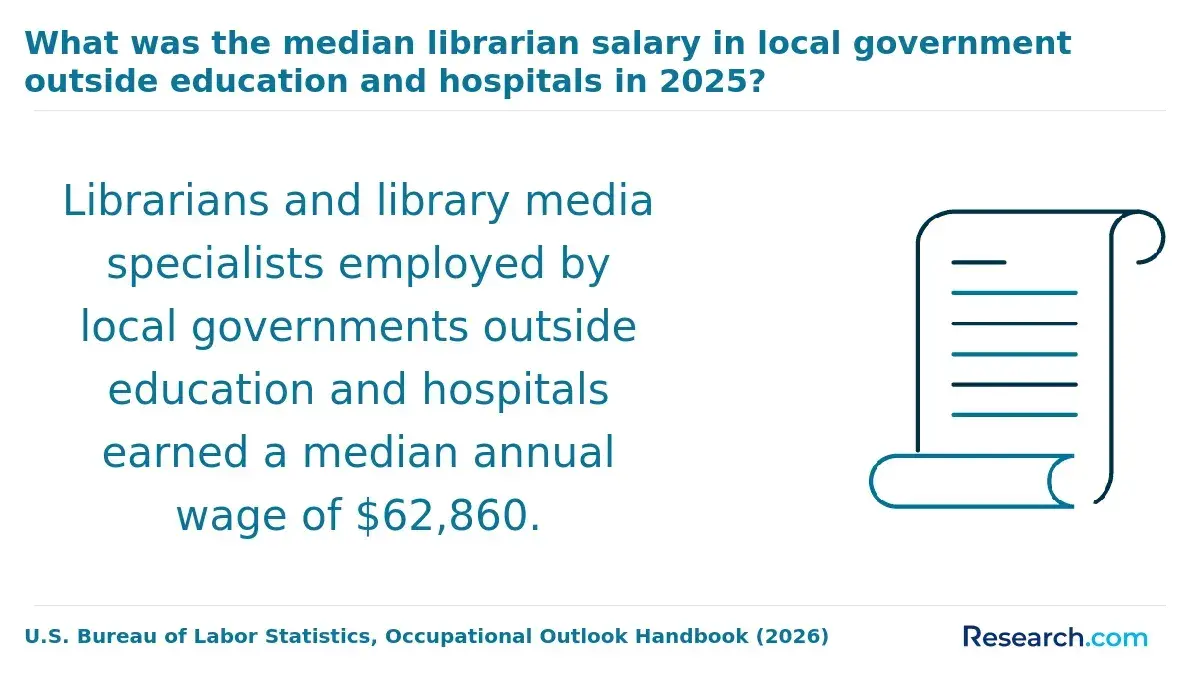
According to BLS, librarians and media collections specialists had a median annual salary of $68,270 in May 2025. This occupation includes settings beyond public libraries, and a median is not an entry-level offer. Check current vacancies in your target library systems for a more useful estimate of starting pay.
BLS projects 2.6% employment growth for that occupation from 2025 to 2035. Growth indicates a national direction, not how many openings will exist near you or whether a degree will lead to a job. Public libraries' staffing and pay also depend on local employers and budgets.
Compare salary options after an MLIS against the work you actually want: higher-paying information roles may have different duties and qualifications. For a realistic return-on-investment decision, weigh likely local pay, your current income, program cost, and the possibility of taking an entry-level library role first.
How can you choose a reputable MLIS program for public library work?
Begin with the professional jobs you want, then use their requirements to screen programs. Verify the exact master's program in the current ALA directory; next, examine required courses, public-library electives, applied projects, and the published schedule. A named concentration is helpful only if its required work fits your goals, while a program without one may still offer relevant preparation.
Before applying, ask a program representative whether your target electives are expected during your enrollment window, whether working students can arrange local public-library placements, and what support exists if a placement is difficult to secure. Request a personalized cost and course-sequence estimate. These answers matter more than a broad claim that a degree is flexible or career-focused.
If your goal is a professional librarian position and local postings commonly require an ALA-accredited master's, prioritize a program that meets that requirement and lets you build relevant experience without unmanageable debt. If you are still testing your interest in library work - or the roles you want do not require the degree - seek direct library experience first.
Other Things You Should Know About Library Science
Some do, particularly in branches open outside standard business hours. Schedules vary by library and position, so ask about regular shifts and rotation expectations during an interview.
Patron-facing staff may need to explain policies or respond to disruptive behavior. Ask employers about training, escalation procedures, and when supervisors or safety personnel take over.
Some are, depending on how the library system is governed. Application procedures, examinations, and hiring timelines can differ, so follow the instructions for the specific vacancy.
They can help a library serve its community, especially when a posting identifies particular languages. Describe your actual proficiency and how you have used it in service work rather than assuming every position requires it.
References
- entry level librarian (children's services) | suffolkcountyny.gov https://apps2.suffolkcountyny.gov/civilservice/0818ann.html
- Library Jobs FAQ - State Library of North Carolina https://library.nc.gov/nc-libraries/current-library-jobs/library-jobs-faq
- College Internships & Library Practicum | nashville.gov https://library.nashville.gov/support/internships
- Tuition Assistance Program (TAP) - HESC - NY. Gov https://hesc.ny.gov/find-aid/nys-grants-scholarships/tuition-assistance-program-tap
- Internships @ WCPL | Wake County Government https://www.wake.gov/departments-government/libraries/about-wcpl/jobs-volunteering/internships-wcpl
- Internships | Library of Virginia https://www.lva.virginia.gov/about/careers/internships
- Cost of Attendance (Budget) | 2025-2026 Federal Student Aid Handbook https://fsapartners.ed.gov/knowledge-center/fsa-handbook/2025-2026/vol3/ch2-cost-attendance-budget
- 03406 | nj.gov https://info.csc.nj.gov/Titlelist/JobSpec
- What Can You Do With a Library Science Degree? | Syracuse University Online Master's Programs https://onlinegrad.syracuse.edu/information-science/mslis/library-science-careers/
- Public Librarianship -- MLIS Career Pathway | SJSU https://ischool.sjsu.edu/public-librarianship