2027 MLIS Programs for Dissertation and Thesis Repository Management

Co-Founder and Chief Data Scientist
Managing electronic theses and dissertations takes more than uploading files. Repository staff must make graduate research discoverable, honor access restrictions, resolve rights questions, and preserve files over time. The U.S. Bureau of Labor Statistics reports a May 2025 median annual wage of $68,270 for librarians and media collections specialists, a broad occupation that includes some, but not all, repository roles.
This guide helps prospective MLIS students identify the coursework and experience that matter, compare study formats and costs, and decide whether an MLIS fits their intended job.
Key Things You Should Know
- Look for documented coursework and applied work in institutional repositories, metadata, copyright, and digital preservation, not an assumed "thesis repository" concentration.
- Check the specific master's program in the current American Library Association accreditation directory, institutional accreditation alone does not establish ALA accreditation.
- The BLS projects 3.4% growth for archivists from 2025 to 2035, but that broad forecast does not measure demand for dissertation repository specialists.
What are MLIS programs for dissertation and thesis repository management?
These are library and information science master's programs that students can use to prepare for work with electronic theses and dissertations, often called ETDs. A university may offer relevant courses or projects without offering a formally named repository management concentration. Check the catalog before treating a career-oriented description as an official track.
The work sits within an institutional repository, a service that collects, describes, provides access to, and helps preserve an institution's scholarship. An ETD workflow may involve receiving an approved manuscript, checking its files and descriptive metadata, applying an embargo requested under university policy, publishing the record, and coordinating longer-term preservation. Repository staff often work with graduate schools, IT teams, authors, and copyright specialists.
A library information science degree provides a broader foundation; repository readiness depends on the particular electives and hands-on work a student can actually complete.
Which accreditation should MLIS repository management programs have?
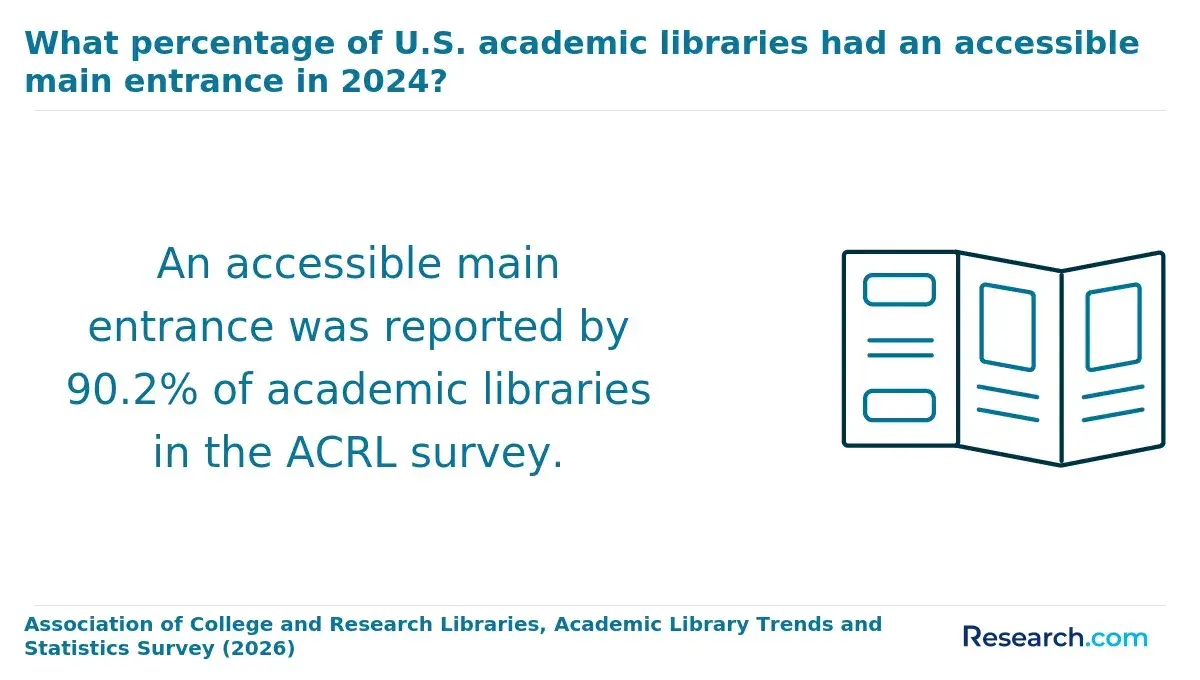
For U.S. academic-library careers, an ALA-accredited master's program is a strong starting point because some professional librarian employers require or prefer it. ALA accredits eligible master's programs, not individual ETD courses or a student's chosen specialization. An institution's own accreditation is a separate consideration.
Check the exact degree and program in the current ALA directory, particularly when a university offers several information-related master's degrees. An MLIS, MLS, Master of Science in Library Science, or institution-specific information degree may follow a different accreditation pathway; the degree title alone is not proof. ALA accreditation also does not verify that a repository elective is offered regularly, that a practicum accepts remote students, or that a graduate will qualify for a particular job.
What degree pathways prepare students for electronic thesis management?
An ALA-accredited MLIS or equivalent LIS master's with relevant electives is the most direct option for someone pursuing professional academic-librarian positions. Students interested primarily in technical platform administration may find information technology or software-focused graduate study more appropriate; aspiring archivists should also examine archives and digital-preservation preparation. Employers may accept different qualifications for repository, metadata, and scholarly communication jobs.
Within an MLIS, distinguish a formal concentration from an elective pathway you assemble yourself. The latter can work well if courses are available when needed and an internship or project lets you apply them. Compare library information science degree options against the qualifications in jobs you would actually apply for, rather than assuming every information-management role requires an MLIS.
Are online or campus-based MLIS programs better for repository careers?
Neither format is inherently better. An online program can suit a working student who can arrange an ETD project at a nearby university or through an existing employer. Campus study may make it easier to access a university library, meet repository staff, or pursue a local assistantship. In either format, the decisive question is whether students can complete relevant work - not where lectures take place.
When reviewing leading online information science degrees, confirm whether repository-related classes are asynchronous, how often they run, and whether a practicum can be completed at an approved site near you. Online delivery does not guarantee flexible deadlines, remote internships, or freedom from campus visits. Ask who identifies placements and whether the program can approve a project involving a repository's actual files, metadata, or workflows.
What coursework do MLIS repository management programs include?
Relevant programs usually combine broad LIS foundations with electives that address specific repository tasks. Course titles vary, so inspect descriptions and assignments rather than searching only for "electronic theses and dissertations." The comparison below connects subject areas to work a repository employee might perform.
| Coursework to look for | Application to thesis repositories |
| Metadata and knowledge organization | Create consistent author, title, subject, and degree information; map records between systems. |
| Digital libraries or repository systems | Understand deposit, review, publication, discovery, and platform workflows. |
| Digital preservation | Plan file checks, storage documentation, and responses to format or access problems. |
| Copyright and scholarly communication | Help apply institutional access policies and refer complex rights questions appropriately. |
| Project management and user services | Coordinate with graduate offices and explain deposit requirements clearly to authors. |
A particularly useful capstone would document an ETD workflow, audit a sample of records for inconsistent metadata, or propose an embargo-release procedure. Ask whether an instructor or placement supervisor can support that work. A catalog listing alone does not establish that an elective will run before you graduate.
What are the admission requirements for repository-focused MLIS programs?
Most applicants should expect to submit evidence of a bachelor's degree, academic transcripts, and materials such as a statement of purpose or references, subject to each program's published rules. Testing, minimum grades, prerequisite coursework, and application deadlines vary. Repository experience can strengthen an application, but it should not be assumed to replace a formal admission requirement.
Applicants changing careers can describe specific work that transfers to ETD services: managing documents, applying consistent metadata, supporting researchers, interpreting policies, or maintaining digital systems. If your academic record or credentials do not fit a program's standard criteria, ask admissions staff which requirements are firm and whether individual review is available. Guidance on MLIS programs for nontraditional students can help frame those questions; only the university can confirm its decision on your application.
How long do MLIS repository management programs take and cost?
Full-time study often takes about two academic years; part-time study takes longer and depends heavily on course sequencing. A required foundation course offered before a repository elective - or a placement available only during certain terms - can change an individual completion date. Review the program's published credit requirement and a proposed course schedule together.
Without a school, residency status, and enrollment plan, there is no reliable single price for this pathway. Calculate gross program cost using the tuition rate that applies to you multiplied by required credits, then add mandatory fees and likely books, equipment, travel, and placement expenses. Ask whether an added term would bring additional fees. Employer support or scholarships may reduce your out-of-pocket cost; borrowing changes the amount financed, not the published price.
An accelerated librarian degree online may shorten the calendar if its course sequence and workload fit your circumstances. Before choosing speed over an applied placement, ask the program for a term-by-term plan showing when the electives and project you need are available.
What careers can an MLIS prepare you for in thesis repositories?
Potential titles include institutional repository librarian, scholarly communication librarian, digital scholarship librarian, metadata librarian, and digital collections librarian. Duties differ: one position may guide authors through deposit and embargo policies, while another concentrates on record quality, system configuration, or preservation planning. Smaller libraries may combine several of these responsibilities.
An MLIS is particularly relevant when a posting classifies the position as a professional librarian. Repository coordinator, platform specialist, archives, and metadata positions may accept other degrees or substantial technical experience. The BLS projects 2.6% growth for the broad librarians and media collections specialists occupation from 2025 to 2035; use actual job postings, not that forecast alone, to assess demand in your target location.
For an entry-level portfolio, a supervised metadata cleanup, documented deposit workflow, or accessibility review is more informative than a claim of general interest in digital libraries. Keep confidential student records and unpublished manuscripts out of any public portfolio.
How much do dissertation repository and digital archive professionals earn?
The BLS does not publish a separate wage series for dissertation repository managers. These May 2025 U.S. occupational medians provide context for different kinds of work, not predicted pay for an MLIS graduate or a specific university job.
| BLS occupation | Median annual wage, May 2025 | How to interpret it |
| Librarians and media collections specialists | $68,270 | Broad context for professional librarian roles, including some repository positions. |
| Archivists | $64,550 | Relevant to some digital archives and preservation roles, but not all ETD work. |
| Library technicians | $44,580 | Context for some support positions; responsibilities and qualifications differ from librarian roles. |
Compare a real offer with its job classification, location, benefits, and required experience. Also compare the degree's full cost with your current earnings: an occupational median cannot establish the financial return on an individual MLIS.
What certifications and standards support electronic thesis repository careers?
There is no universal ETD repository certification that substitutes for an employer's stated degree or experience requirements. Training in a repository platform, metadata, copyright, or digital preservation can still be useful when it produces demonstrable skills. Evaluate a certificate by its assignments and relevance to target postings, not its title alone.
Commonly relevant practices include Dublin Core for sharing basic descriptive metadata, persistent identifiers for stable discovery, and file-integrity checks that help detect unexpected changes. Their implementation depends on the repository and institutional policy. A stronger job application explains what you did - for example, mapping local thesis fields to shared metadata or documenting a file-check workflow - rather than merely listing standards.
Other Things You Should Know About Library Science
Possibly, but the repository's correction policy governs the process. Staff may preserve the original version, add a replacement or notice, and record what changed. Authors should contact the repository rather than assuming they can overwrite a deposited file.
Not necessarily. Copyright ownership and the permission granted for repository distribution are different matters. Authors should read their institution's deposit agreement and seek qualified advice about unusual rights issues.
That depends on repository policy, file-size limits, and any restrictions on the data. Some institutions use a separate research data repository and connect its record to the thesis.
Only if the university's graduate school and library policies say so. Students should verify submission requirements with their institution before paying for printing or assuming a digital deposit is sufficient.
References
- Selecting a Data Repository | Grants & Funding https://grants.nih.gov/policy-and-compliance/policy-topics/sharing-policies/dms/selecting-a-data-repository
- Master of Library Science | Luddy School of Informatics, Computing, and Engineering https://luddy.iu.edu/academics/masters/library-science.html
- Copyright Considerations For Dissertation & Thesis Writers | Columbia University Libraries https://library.columbia.edu/research-teaching/copyright/dissertation-thesis-writers.html
- Master of Library and Information Science | missouri.edu https://cehd.missouri.edu/information-science-learning-technologies/academics/
- Master of Library & Information Science (MLIS) | UCLA School of Education & Information Studies https://seis.ucla.edu/academics/department-of-information-studies/master-of-library-information-science-mlis/
- Master of Library and Information Science (MLIS) | du.edu https://morgridge.du.edu/academics-advising/programs-gr/mlis-library-and-information-science
- Library Science Master's - MLIS - UW Information School https://ischool.uw.edu/programs/mlis
- Digital Preservation Framework | TARC https://tarc.tufts.edu/digital-preservation-framework
- Developing Criteria to Establish Trusted Digital Repositories | unl.edu https://digitalcommons.unl.edu/cgi/viewcontent.cgi
- Institutional Repository Policy | uwyo.edu https://www.uwyo.edu/libraries/about/policies/digital/repository-policy.html