2027 MLIS Programs for Applicants With a Degree in an Unrelated Technical Field

Co-Founder and Chief Data Scientist
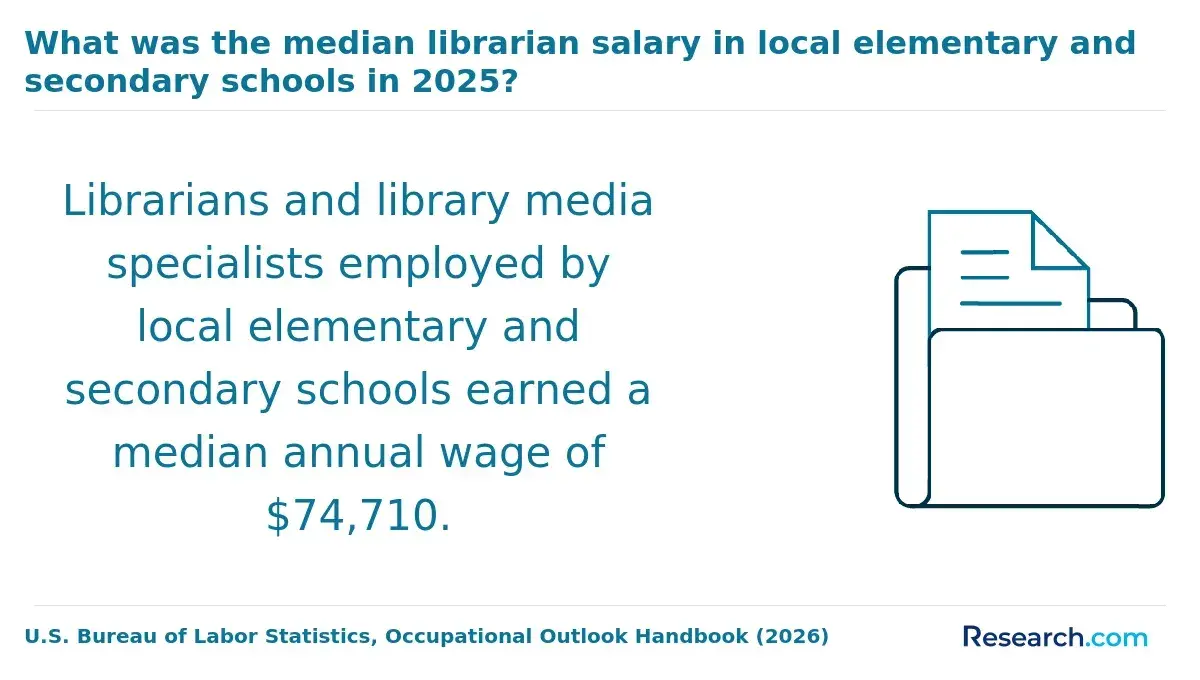
A technical degree can prepare you for information work without telling you whether an MLIS is the right next credential. The U.S. Bureau of Labor Statistics reports a May 2025 median annual salary of $68,270 for librarians and media collections specialists, but that occupation-wide figure cannot predict an individual graduate's earnings.
This guide is for applicants from fields such as engineering, computing, and laboratory science. It explains eligibility, accreditation, program costs, and career options so you can decide whether an MLIS - and which kind of program - fits your goals.
Key Things You Should Know
- An unrelated technical bachelor's degree does not, by itself, rule out MLIS admission; check each program's degree, transcript, and prerequisite policies.
- Verify accreditation for the specific master's program, not just its university, and match electives and applied work to your intended job.
- BLS projects 2.6% employment growth for librarians and media collections specialists from 2025 to 2035; investigate local openings before borrowing for a career change.
Can you earn an MLIS with a degree in an unrelated technical field?
An MLIS is a graduate degree, and applicants do not generally need an undergraduate major in library science. The decisive question is whether a particular program accepts your bachelor's credential and whether you meet its published admissions requirements. Do not assume that a technical major either disqualifies you or earns you advanced standing.
Your background may be useful in roles involving research data, digital collections, scientific information, or library technology. It does not replace preparation in reference services, information access, or working with communities. If you are changing careers, compare MLIS programs with strong career support alongside their curricula: ask what career advising, employer connections, and opportunities for relevant experience are actually available to online or part-time students.
Before applying, identify a target role and read its job postings. If those employers ask for an accredited library master's degree, an MLIS may be a sensible route. If they chiefly seek software engineering, data analysis, or cybersecurity experience, another credential or direct work experience may be a better investment.
What accreditation should you look for in an MLIS program?
For many professional librarian positions, the key credential is a master's program accredited by the American Library Association (ALA). Check the specific program in ALA's current directory before applying. Accreditation of the university is a separate matter and does not establish that its LIS master's program is ALA-accredited.
Degree names vary: an MLIS, MLS, Master of Science in Library Science, or institution-specific information degree may serve different purposes. Judge the credential by its verified program accreditation and curriculum, not its initials alone. ALA accreditation also does not confirm that a school offers your preferred elective, concentration, or online format.
Budget matters, but a lower advertised price is useful only if the program meets your credential needs. When reviewing the best affordable library masters in the South, verify each program's current accreditation, applicable tuition category, required credits, and fees directly with the institution.
What are the admission requirements for MLIS programs?
Programs commonly ask for evidence of a completed bachelor's degree and review academic records. Other materials - such as a statement of purpose, résumé, recommendations, or writing sample - depend on the school. Minimum grades, testing policies, application dates, and any prerequisites are also program-specific. Relevant employment can strengthen an application, but do not assume it substitutes for a required degree.
For an applicant from an unrelated technical field, the most useful admissions inquiry is a specific one. Take these steps before paying an application fee:
- Compare your degree and transcript with the program's current eligibility requirements, including any rules for international credentials or unusual grading.
- Ask admissions whether any prerequisites apply to your background and how the program evaluates technical work, research, or volunteer experience.
- Explain in your statement why you want the target information role and what you still need to learn; give concrete examples rather than claiming your technical skills cover all LIS work.
If your academic history does not fit a published rule, request an individual review. A positive conversation can clarify your options, but only the institution can make an admissions decision.
Are online MLIS programs as credible as campus-based programs?
An online MLIS can carry the same program accreditation as a campus-based offering; delivery format alone is not the test of credibility. Confirm that the degree and mode of study you are considering fall within the program's current accreditation status, then examine how you will complete its requirements.
For a working technical professional, the practical differences may be scheduling and access to experience. Ask whether required classes are asynchronous or held at set times, whether electives run often enough for your plan, and whether a practicum can be completed near home or remotely. "Online" does not necessarily mean no scheduled meetings, campus visits, or in-person fieldwork. If speed is important, use how fast can you get a library science degree online as a starting point, then obtain a course-by-course completion plan from each school.
What courses do MLIS programs typically include?
MLIS curricula typically introduce information organization, reference and research support, information services, and the management and use of collections or information systems. Your technical degree may make some tools familiar, but LIS coursework adds questions of discoverability, accessibility, privacy, and service to users.
Choose electives for the work you want to do rather than the title of your undergraduate major. For research data support, look for data management, scholarly communication, and applied projects with researchers. For digital collections, examine metadata - the structured descriptions that help people find and use resources - alongside digital preservation. For a public-library role, prioritize community services and information literacy instead of assuming advanced coding is the main qualification.
Distinguish a formally named concentration from a collection of electives or an independent project. A catalog listing establishes that a course exists, not that it will run when you need it. Ask an adviser which courses have recently been offered and whether you can complete an applied project relevant to your target role.
How long does an MLIS take, and how much does it cost?
Completion time depends on required credits, course sequencing, enrollment pace, and any fieldwork. Full-time study may take roughly two academic years, while part-time study can take longer. Request a term-by-term plan rather than treating an advertised minimum as your likely graduation date.
No single tuition figure applies across MLIS programs. To compare offers fairly, calculate required credits multiplied by the tuition rate that applies to you, then add mandatory fees and likely expenses for books, equipment, travel, or a practicum. Ask whether taking longer changes fees or creates additional costs. Published tuition is not the same as total attendance cost.
Scholarships, assistantships, employer reimbursement, and federal aid can change what you pay yourself, but eligibility and availability vary. Explore online library science degrees with scholarships, then confirm awards and current aid rules with each school's financial aid office. Keep the gross program cost, your out-of-pocket cost, and any amount borrowed separate when deciding whether the career change is affordable.
What careers can you pursue with an MLIS and technical background?
An MLIS can help connect technical expertise with services that organize information and make it useful to others. Requirements vary by employer: a professional librarian job may call for an ALA-accredited master's, while an adjacent data or technology job may accept several degree paths. The comparison below shows where your background could contribute without implying that an MLIS qualifies you for every position.
| Possible direction | Work and useful preparation | Credential consideration |
| Academic or special librarian | Help researchers find and assess sources; pair subject expertise with reference and instruction experience. | Check postings for the required library degree and subject qualifications. |
| Research data or scholarly communication specialist | Support data organization, sharing, repositories, or publishing; build applied projects with researchers. | An MLIS may be one route among information, research, and technical degrees. |
| Metadata or digital collections specialist | Describe digital resources and improve discovery; seek metadata coursework and collection projects. | Employers may weigh demonstrated standards knowledge and experience alongside the degree. |
| Library technology specialist | Support discovery systems, accessibility, or system integrations; combine technical work with user-service knowledge. | Some positions favor an MLIS, while others favor IT credentials and experience. |
Look at the duties - not just the title - of roles with library science careers with high barriers to entry. A portfolio that shows a documented metadata project, a usable research guide, or collaboration with users can help demonstrate the bridge between your previous field and your intended work. If you prefer building software to delivering information services, test the job market before committing to an MLIS.
What salary can you earn with an MLIS degree?
The BLS reports a May 2025 median annual salary of $68,270 for librarians and media collections specialists. That is an occupational median, not an MLIS graduate salary or a starting offer. Pay for a career changer will depend on the position, employer, location, and how relevant their prior experience is.
Use salaries from actual openings in your preferred area when weighing tuition against your current earnings. Do not apply the librarian median to an adjacent technology job or assume a technical bachelor's degree will secure a higher librarian salary.
What is the job outlook for librarians and information professionals?
BLS projects 2.6% growth in employment for librarians and media collections specialists from 2025 to 2035. That projection describes a national occupation, not openings in a particular community or demand for a particular MLIS specialization. Adjacent information roles have different hiring markets and may use job titles that do not contain "librarian."
Before enrolling, search postings in places where you could realistically work. Record which roles require an accredited MLIS, which accept equivalent experience, and which skills recur. This gives you a more useful picture of opportunity than a national growth figure alone.
Do librarians need state licenses or professional certifications?
Requirements depend on the job. Public and academic library positions do not share one universal state licensing rule. School librarian positions may require a state teaching license, school library certification, or an endorsement, with requirements set by the relevant state education authority. An online or ALA-accredited MLIS does not automatically satisfy every state's school-library rules.
Some specialized employers may prefer additional subject knowledge or credentials, but a preference is not a universal legal requirement. If school librarianship is your goal, ask the program which state preparation pathway it offers and confirm the answer with the state where you intend to work before enrolling.
Other Things You Should Know About Library Science
Usually, undergraduate credits should not be treated as graduate transfer credit. Ask the program whether it accepts prior graduate-level coursework and whether any approved credits would replace specific requirements.
Requirements differ. Some programs use a capstone, portfolio, comprehensive assessment, or other culminating work instead. Check the current degree plan, particularly if you want a research-focused project.
Some universities permit nondegree enrollment, subject to their policies and available seats. Confirm whether a course could later count toward the degree; admission and credit are not automatic.
Not for every LIS pathway. Technical expectations vary by program and role. Review required courses and the jobs you want: programming may be valuable for some systems work, while public-facing positions may place more emphasis on instruction and service.
References
- Tuition and Fees Data - Texas Higher Education Coordinating Board https://www.highered.texas.gov/legislative-appropriations-overviews/tuition-and-fees-data/
- Research Your Options: U.S. Online Learning | EducationUSA https://educationusa.state.gov/your-5-steps-us-study/research-your-options/online-learning
- Post-Secondary Employment Outcomes Tool Shows What You Might Earn Depending on the College You Attend | Census.gov https://www.census.gov/library/stories/2022/06/job-and-earnings-prospects-by-college-and-degree.html
- Career Outcomes for Graduate Students | Meruelo Family Center for Career Development https://careerdevelopment.nd.edu/outcomes/graduate/
- Graduate School: Transfer Credits for Prior Coursework | wisc.edu https://policy.wisc.edu/library/UW-1216
- Career Outcomes | The University of Texas at Dallas | University Career Center https://career.utdallas.edu/career-resource-library/career-outcomes/
- Online Master of Science in Library & Information Science | St. John's University Programs https://online.stjohns.edu/online-programs/online-master-science-library-information-science
- Program: Library and Information Science, MLIS - Pitt Catalog https://catalog.upp.pitt.edu/preview_program.php
- MLIS Curriculum, Specialties & Courses | University of Arizona College of Information Science https://infosci.arizona.edu/ma-library-information-science/curriculum-specialties-courses
- Transfer, Cross-Registration, and Evaluated Credit Policy | SUNY Empire https://sunyempire.edu/policies/graduate-transfer-cross-registration-and-evaluated-credit-policy.html