2027 MLIS Programs for Photograph and Image Collections Management

Co-Founder and Chief Data Scientist
Choosing an MLIS for photograph collections is harder than finding a program labeled "archives." The work spans physical prints, digital files, searchable metadata, and long-term preservation, while relevant courses and hands-on opportunities vary by school.
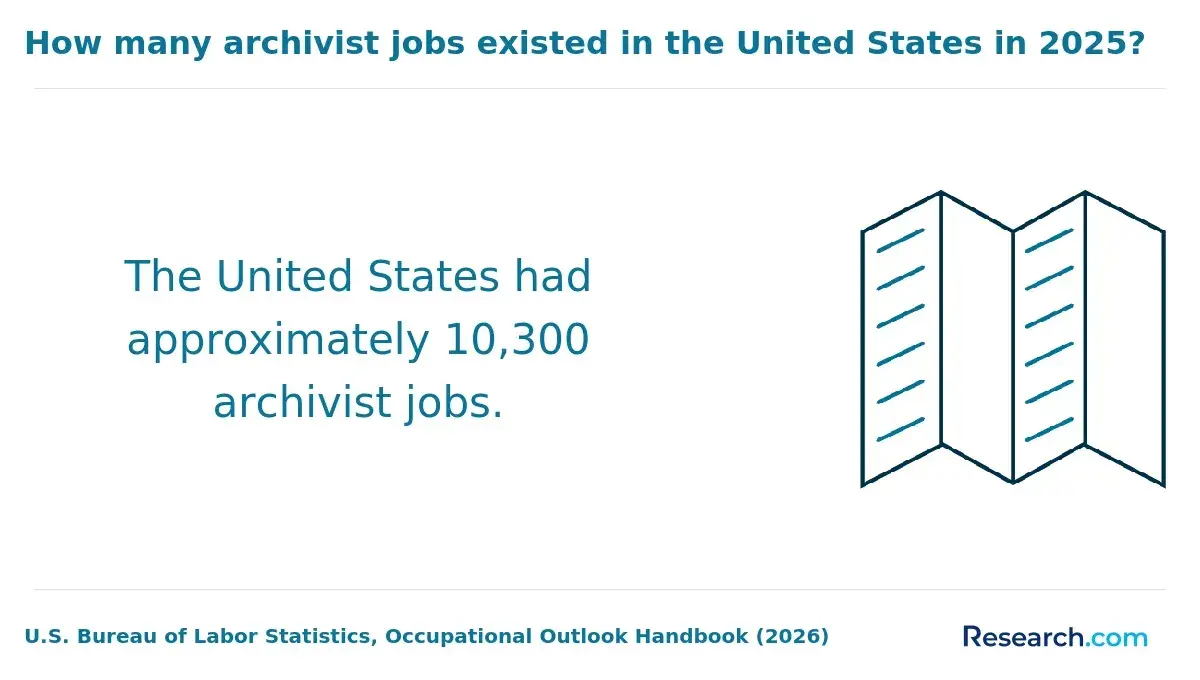
The U.S. Bureau of Labor Statistics projects 3.4% employment growth for archivists from 2025 to 2035, a reason to examine preparation carefully, not a promise of openings. This guide helps prospective students identify suitable coursework, compare program formats and costs, and decide whether an MLIS fits their intended role.
Key Things You Should Know
- Look for documented training in archival description, image metadata, digitization, and digital preservation; an archives elective is not proof of a photography specialization.
- Check the specific master's program in the ALA accreditation directory, then confirm whether relevant electives and hands-on projects are actually available to you.
- The May 2025 median annual wage for archivists was $64,550 across the occupation - not a starting salary or an outcome attributable to an MLIS program.
What are MLIS programs for photograph and image collections management?
These are graduate library and information science programs used to prepare for work with photographic prints, negatives, slides, born-digital images, and the information that makes them findable and usable. The work may involve assessing a collection, describing its contents, setting digitization priorities, managing digital files, and helping people access images responsibly.
"Photograph collections MLIS" usually describes a career goal, not a standard degree title. Depending on the institution, a suitable route might be an MLIS, an MLS, or a differently named LIS master's degree with archives, digital collections, or metadata coursework.
Compare the actual curriculum rather than treating those degree names, or a program's general interest in archives, as evidence of a dedicated photography track.
An MLIS is most compelling if you want positions that call for graduate LIS training and combine stewardship with discovery and access. If your goal is primarily photographic conservation, studio practice, or image-production technology, investigate training in those fields as well.
An online library masters value comparison can help frame the broader degree decision, but the decisive test here is whether a program supports your intended image-collections work.
Which MLIS programs offer photography and image collections specializations?
Do not assume that an MLIS program offers a formally named photograph or image collections specialization. Without a verified, current university catalog entry, it is more useful to compare levels of preparation than to treat schools with relevant-sounding courses as interchangeable.
The table shows what different kinds of program evidence establish:
| Published program evidence | What it establishes | What remains to verify |
| Officially named concentration or track | A documented curricular pathway | Its required courses, current catalog status, and fit for photographic materials |
| Relevant electives in archives, metadata, or digital collections | Potential coursework for the role | When the courses run and whether you can enroll |
| Documented practicum, capstone, or applied project | An opportunity to produce work beyond classroom assignments | Placement rules, supervision, location, and project availability |
| Broad LIS curriculum only | General preparation that may be adaptable | Whether specialized training is feasible at all |
Build a shortlist from official catalogs and program pages, then ask an adviser how a student interested in photograph collections would complete the degree. Request a realistic course sequence, not just a list of electives: a course appearing in a catalog may not run during your enrollment.
If no school offers the exact combination you need, a broader archives pathway with an image-focused project may be a better fit than an attractive specialization name with little relevant coursework.
Are ALA-accredited MLIS programs required for image archivist careers?
No single accreditation rule applies to every image archivist job. Employers set position-specific qualifications; some seek an ALA-accredited LIS master's degree, while others accept graduate study in archives, history, museum studies, or a related field alongside relevant experience.
Read postings for the settings where you hope to work rather than assuming either that an MLIS is universally required or that it is unnecessary.
ALA accreditation applies to a specific master's program, not automatically to every degree at an accredited university. Check the current ALA directory for the exact program and degree you are considering. Accreditation addresses program-level standards; it does not establish that the school offers a photograph-collections concentration, a particular elective, or a placement with an image archive.
If you are interested in school libraries as well as image collections, investigate that path separately. State school librarian licensure or endorsement requirements can differ, and an online LIS degree alone should not be assumed to satisfy them. Confirm the rules with the relevant state education authority before enrolling.
What do MLIS programs teach about photographic archives and digital images?
The strongest preparation connects archival judgment with technical workflow. A useful curriculum should help you explain not only how an image is described or scanned, but also why it belongs in a collection, how its context is preserved, and how people will find and use it.
The table links common areas of study to work you could demonstrate in a portfolio:
| Area of study | Application to image collections | Possible portfolio evidence |
| Archival appraisal and description | Assess materials and preserve information about their origins and relationships | A collection description or finding-aid excerpt |
| Metadata and knowledge organization | Make images searchable using consistent names, subjects, and descriptive fields | Sample records with a documented metadata approach |
| Digitization and digital preservation | Plan file creation, documentation, storage, and checks that help detect file damage | A small workflow and preservation plan |
| Access, rights, and user services | Support discovery while accounting for use restrictions and collection context | An access policy or user-facing collection guide |
For example, Dublin Core is a set of descriptive elements often used to help identify digital resources; knowing the name matters less than being able to apply fields consistently. When reviewing syllabi, look for assignments that require decisions about real or realistic collections. A general course in technology may be useful, but it is not a substitute for practice with image description and preservation workflows.
Should you choose an online or campus-based MLIS program?
Choose the format that lets you complete both the coursework and the applied work your target jobs value. Online study may reduce relocation and commuting, but "online" does not necessarily mean asynchronous classes, flexible deadlines, or remote internships.
Campus study may make local collection work easier to arrange, but proximity alone does not guarantee access to a photograph archive.
Ask each program when relevant courses meet, whether students can take them from a distance, and how practica are approved. If you already work in a library, museum, or archive, ask whether a project at your workplace could meet an applied-learning requirement; do not assume it will.
For scheduling and budget considerations beyond this specialization, compare working student library degree options against the actual timetable of the image-related courses you want.
What are the admission requirements for photograph collections MLIS programs?
Requirements belong to the institution and degree, not to the photograph-collections career goal. Applicants generally need to review each program's published eligibility rules, application materials, deadlines, and any requirements for a chosen track.
A photography background can provide useful subject knowledge, but it should not be assumed to replace a required undergraduate degree or another formal admission condition.
Use a statement of purpose to connect your interests to specific work: perhaps describing a family photograph collection, improving access to institutional images, or preserving born-digital files. Relevant volunteer or employment experience can strengthen that explanation without guaranteeing admission.
If you hope to apply prior graduate study, ask for an individual review of the courses; undergraduate credits and professional experience should not be treated as automatically transferable graduate credits. A guide to online library masters advanced standing can help you identify questions to ask, but the program's current transfer policy controls.
How long do MLIS programs take and how much do they cost?
Full-time students may be able to finish an MLIS in roughly two years; part-time study, course sequencing, and an applied-project requirement can extend the timeline. Ask for a term-by-term plan that includes the image-related electives - not just the minimum time in a program description.
No universal tuition figure describes photograph-collections MLIS preparation. To compare schools fairly, calculate the same categories for each program using its current published schedule and your residency and enrollment status:
- Program tuition; required credits multiplied by the applicable per-credit rate, or the published term charges where applicable.
- Mandatory university and program fees, including any charges tied to online enrollment.
- Books, equipment, software, and materials needed for coursework or projects.
- Travel and other expenses for campus visits or a practicum, if required for your plan.
This produces an estimate of gross educational cost, not your personal bill after confirmed grants or employer support, and not the amount you would borrow.
Compare a low tuition information science graduate degree on total required cost rather than its advertised per-credit price alone. Confirm aid eligibility and current loan terms for your enrollment period with the school's financial aid office before using borrowing to judge affordability.
What careers can you pursue in photograph and image collections management?
Possible titles include image archivist, photographic collections manager, digital collections librarian, metadata specialist, and digital asset manager.
The titles are not interchangeable: an archivist may concentrate on provenance and collection context, while a digital asset manager may focus on locating and controlling files for an organization's daily use. Libraries, archives, museums, government agencies, and other organizations may divide these responsibilities differently.
For professional archives or librarian openings, an MLIS can be a strong qualification, but a hiring institution may also consider another relevant graduate degree or substantial experience.
Some entry-level collections and digitization positions are paraprofessional and may not require a master's degree. Compare actual job postings with MLIS roles and salary potential before paying for a degree intended to reach one particular title.
A practical entry route is supervised work describing a small collection, documenting a digitization workflow, or improving records in a digital repository. Keep examples you have permission to share and record the decisions you made, not just the finished images.
If your target postings consistently favor hands-on production skills over a graduate credential, relevant employment or focused training may be the more economical first step.
How much do image archivists and photographic collections managers earn?
The Bureau of Labor Statistics does not provide a single wage category for "image archivist" or "photographic collections manager." These U.S. occupational figures offer context for different kinds of jobs, not salaries for graduates of a particular program or for photography specialists specifically.
| BLS occupation | Median annual salary, May 2025 | Projected employment growth, 2025-2035 |
| Archivists | $64,550 | 3.4% |
| Librarians and media collections specialists | $68,270 | 2.6% |
| Library technicians | $44,580 | −6.4% |
The gap between these occupation-wide medians illustrates why the job you are preparing for matters more than a degree's general salary claim. Pay for a specific position will depend on its duties, employer, location, and required experience. Use local postings and a realistic estimate of your educational cost when deciding whether graduate study is financially worthwhile.
What certifications and professional standards apply to image archivists?
There is no universal certification or license required for every U.S. image archivist position. Employers may value relevant professional development or credentials, but requirements depend on the role. Treat a certificate as evidence of particular learning, not as a replacement for every degree or experience requirement in a job posting.
Standards matter most when you can use them to make collections understandable and durable. Depending on the workplace, that may mean following established archival description practices, applying a consistent metadata scheme, documenting digitization decisions, and maintaining procedures for file integrity and access.
Ask prospective programs which standards students apply in assignments, rather than counting standards mentioned in course descriptions. For any optional credential, compare its eligibility rules and cost with the qualifications employers actually request.
Other Things You Should Know About Library Science
Not necessarily. The mix of qualifications depends on the job. Knowledge of photographic materials can help, but collections work also calls for description, organization, preservation, and user-service skills.
Often, but verify the source's rights statement and any rules governing access to the collection. Explain your own contribution - such as metadata or a workflow - so the portfolio does not imply that you created the original photographs.
Not automatically. Ownership of a physical item and ownership of copyright are distinct. Check the acquisition agreement and applicable rights information before promising users permission to reproduce an image.
Yes, particularly when the work is supervised and you can describe what you learned. Ask the organization about handling procedures and permission to discuss or display any project results before using them in an application.
References
- Pathways Internship Programs | state.gov https://careers.state.gov/interns-fellows/pathways-programs/pathways-internship-programs/
- Archives, History and Heritage Advanced Internship Program | loc.gov https://www.loc.gov/item/internships/archives-history-and-heritage-advanced-internship-program/
- Cost of Attendance (Budget) | 2025-2026 Federal Student Aid Handbook https://fsapartners.ed.gov/knowledge-center/fsa-handbook/2025-2026/vol3/ch2-cost-attendance-budget
- Library of Virginia: Home https://www.lva.virginia.gov/
- Processing | New York State Archives https://www.archives.nysed.gov/preservation/archives-management-processing
- Digitization & Digital Preservation | vermont.gov https://sos.vermont.gov/vsara/partner/assistance/resource-library/digital
- Preservation Resources from California Revealed | California State Library https://www.library.ca.gov/services/to-libraries/ca-revealed/resources/
- NARA Voluntary Internship Program | National Archives https://www.archives.gov/careers/internships/about
- Digital Curation -- MLIS Career Pathway | SJSU https://ischool.sjsu.edu/digital-curation
- Tuition and Fees | Southern Connecticut State University https://inside.southernct.edu/onestop/bill-payment/tuition-fees