2027 MLIS Programs for Data Visualization in Libraries

Co-Founder and Chief Data Scientist
Choosing an MLIS for data visualization means looking beyond a program's name: you need evidence that its courses and projects will prepare you to turn library or research data into useful, accessible visuals. The U.S. Bureau of Labor Statistics reports a May 2025 median annual salary of $68,270 for librarians and media collections specialists, but that broad figure does not predict pay for a visualization-focused role. This guide helps prospective students assess accredited programs, build relevant skills, compare costs, and decide whether an MLIS fits their intended work.
Key Things You Should Know
- Look for an ALA-accredited master's program with documented visualization coursework and applied projects; a relevant elective is not necessarily a formal specialization.
- The Bureau of Labor Statistics projects 2.6% employment growth for librarians and media collections specialists from 2025 to 2035; it does not publish a separate outlook for library data visualization roles.
- Compare the full cost and scheduling of the courses you need, not just advertised tuition or whether the degree is labeled online.
What are MLIS programs for data visualization in libraries?
These are library and information science master's programs that students can use to prepare for work presenting data clearly and responsibly. A librarian might map community service needs, build a dashboard of collection use, or help researchers communicate findings. The work combines data analysis with library priorities such as privacy, accessibility, research support, and explaining evidence to nontechnical audiences.
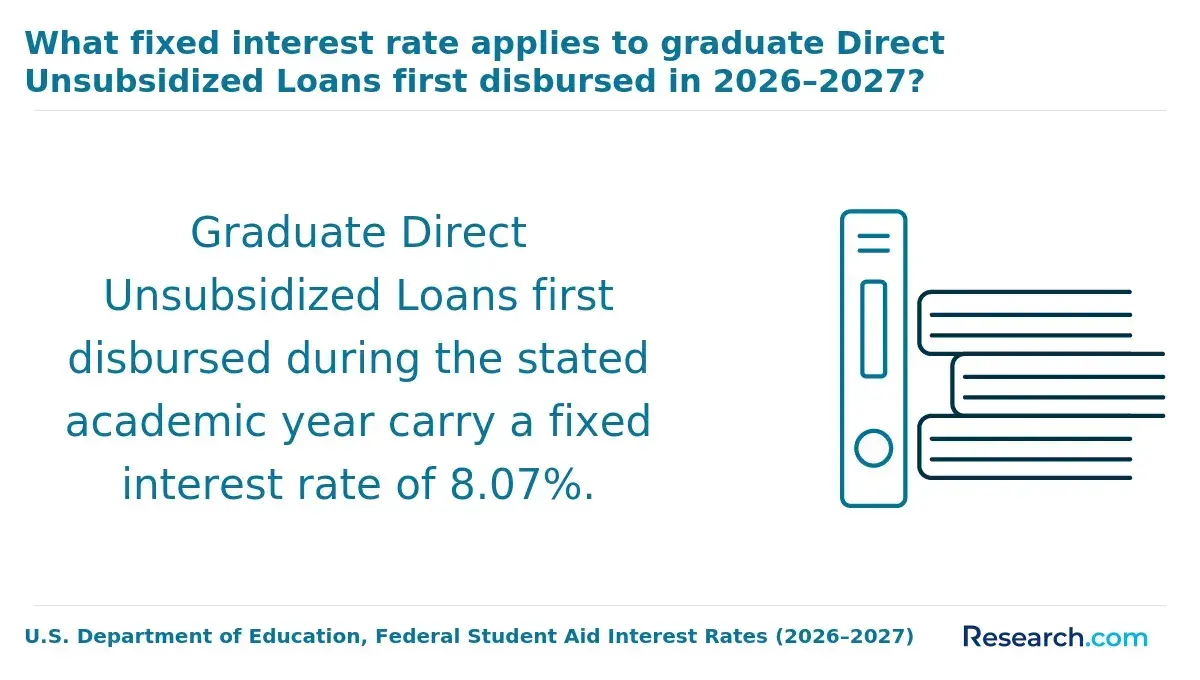
"Data visualization" may describe an elective, an assignment within another course, or a student-designed capstone rather than an officially named concentration. Degree titles also vary: an MLIS, MLS, Master of Science in Library Science, or Master of Information may be relevant. Check the specific master's program in the American Library Association's current accreditation directory; university-wide institutional accreditation does not establish ALA accreditation.
Which accredited MLIS programs offer data visualization coursework?
There is no dependable school list based solely on the phrase "data visualization MLIS." Course titles change, catalog listings do not guarantee a course will run, and a university's data science offerings may not be open to LIS students. Rather than treating an unverified list as a recommendation, start with the current ALA directory and check each program's catalog and upcoming course schedule.
Use the same evidence standard for every school you consider. The distinctions below help separate a promising catalog description from a realistic path to graduation.
| Evidence to check | What it establishes | What to confirm |
| Officially named track or concentration | A documented specialization | Required courses and whether the track is currently admitting students |
| Relevant LIS or approved cross-department electives | Potential coursework in visualization, analytics, or data communication | Enrollment access, prerequisites, and recent or planned offerings |
| Practicum, capstone, or independent study rules | A possible route to an applied portfolio project | Supervisor availability, project approval, and remote-work rules |
Ask an adviser which visualization-related courses students have actually completed recently and whether those courses can count toward the degree. A strong general MLIS can still fit if it lets you combine relevant electives with a substantial library-based project; neither an elective nor an independent project should be advertised as a formal concentration unless the university says it is one.
What careers can you pursue with an MLIS in data visualization?
The clearest fit is a librarian role in which visual communication supports existing services. An academic research data librarian may help scholars present results; an assessment librarian may report service and collection patterns; and a public library analyst may explain community data to staff or stakeholders. Titles vary by employer, so read duties and qualifications rather than searching for "data visualization librarian" alone.
These pathways differ in how much they rely on an MLIS. That distinction matters before you commit to a graduate degree.
| Pathway | Typical visualization work | Credential consideration |
| Assessment or research data librarian | Dashboards, research consultations, and reports | Check whether the employer requires or prefers an ALA-accredited LIS master's |
| Digital scholarship librarian | Teaching visual methods and supporting digital projects | Library experience and a project portfolio may matter alongside the degree |
| Data analyst outside librarianship | Reporting and visualization across an organization | An MLIS may be one route, but analytics experience or another degree may be more directly relevant |
If your goal is professional librarianship, an MLIS with data-focused experience can serve both parts of the job. If you want to build dashboards full-time without providing library services, compare analytics training and employer requirements before enrolling. For a wider view of library information career paths, distinguish librarian positions from adjacent information-management jobs.
What do you learn in a library data visualization curriculum?
A useful curriculum connects data work to decisions libraries and their users actually make. Core LIS study may cover research methods, information organization, reference, and ethics; relevant electives can add data preparation, statistical interpretation, visual design, mapping, or dashboard development. The exact mix depends on the program and which courses you can take.
Look for assignments that require you to explain where data came from, what it leaves out, and why a particular chart suits its audience. For example, a portfolio project could turn public community data into an accessible service-planning brief, with a short methods note and an explanation of limitations. That demonstrates judgment as well as software ability.
Privacy and accessibility are especially important in libraries: patron-level records may be sensitive, and a chart should remain understandable to people who cannot distinguish its colors or see the image. AI-assisted charting can speed up drafting, but students still need to check calculations, labels, source data, and whether information is safe to enter into a tool.
Are online or campus-based MLIS programs better for data visualization?
Neither format is inherently stronger for visualization. An online program may suit someone who needs to keep working, while campus study may make local collaborations easier. The better choice is the one that gives you access to the right courses, useful feedback on projects, and an achievable schedule.
"Online" does not necessarily mean asynchronous. Ask whether required sessions meet live, whether cross-department electives are available remotely, and whether a practicum can be completed where you live. A campus program deserves the same scrutiny: nearby data labs are useful only if LIS students can participate. When you compare online MLIS programs, confirm the delivery format of the specific electives you intend to take, not just the core degree.
What are the admission requirements for data visualization MLIS programs?
Applicants should expect each university to publish its own requirements for a bachelor's degree, transcripts, application materials, and any required statements or references. A program may welcome varied undergraduate majors; do not assume either that a technical major is mandatory or that professional experience waives a stated degree requirement.
Use your statement to connect a specific library problem to the skills you want to learn. Relevant evidence might include a research project, community report, spreadsheet analysis, or accessible chart - even if you have not worked in a library. Ask admissions and academic advisers separately about graduate transfer credit and whether an outside analytics course can satisfy an elective; admission eligibility and degree-credit approval are different decisions. Review the school's library science degree transfer policy before counting prior coursework toward your budget or graduation date.
How long do data visualization MLIS programs take and what do they cost?
Time to completion depends on required credits, course load, and when the electives you need are offered. A listed course that runs infrequently can delay a carefully planned pathway, so request a sample schedule for your intended enrollment pace before applying.
No single tuition figure represents these programs. To compare schools, multiply each program's required credits by the tuition rate that applies to you, then add mandatory fees and likely books, software, travel, or practicum expenses. Verify whether online students receive a different rate and whether taking extra courses for visualization changes the total. Published tuition is not the same as your out-of-pocket cost or the amount you would finance.
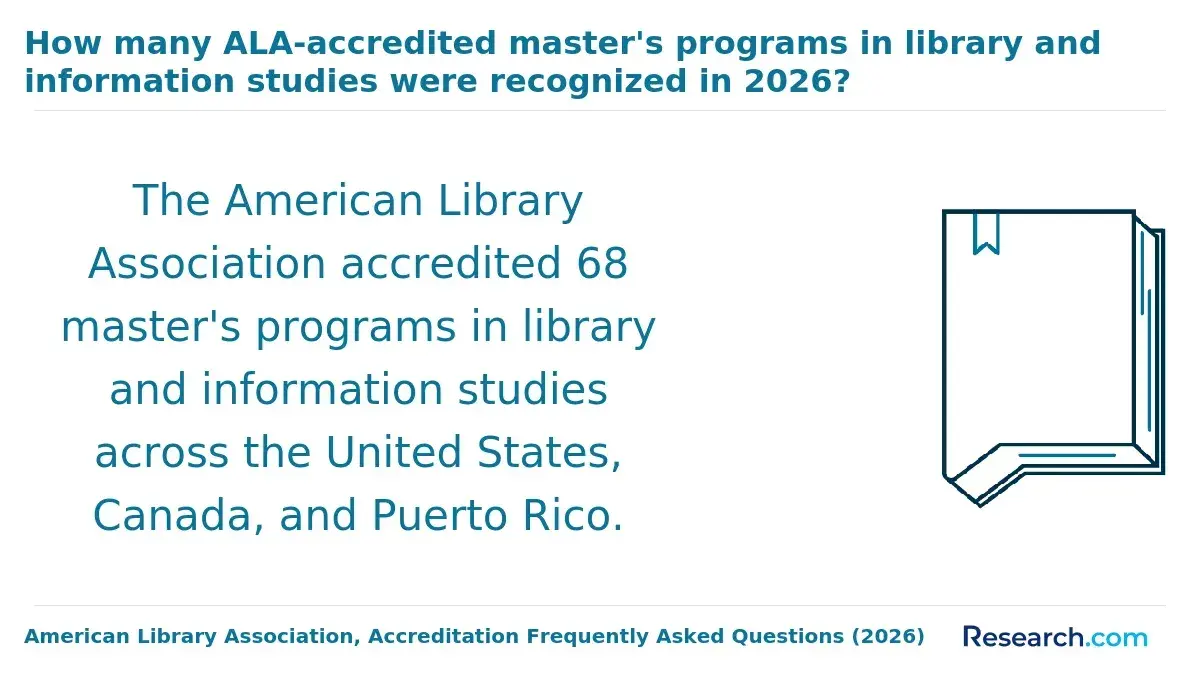
Scholarships, employer support, and federal aid can change the calculation, but eligibility is individual and aid rules should be checked for the period you enroll. For a starting point on best low cost library degree options, compare total degree requirements and access to relevant electives - not price per credit alone.
What salaries can data visualization librarians and specialists earn?
The Bureau of Labor Statistics reports a May 2025 median annual salary of $68,270 for librarians and media collections specialists. This is a broad occupational benchmark, not a median for data visualization specialists or graduates of a particular MLIS program. Pay for a specific opening can differ with the employer, location, responsibilities, and required experience.
For a realistic comparison, examine posted salary ranges for roles you would actually qualify for and note whether visualization is a primary duty or one skill within a librarian position. Compare those opportunities with your current earnings and the full cost of study; the occupational median alone cannot establish a degree's return on investment.
What is the job outlook for library data visualization professionals?
The Bureau of Labor Statistics projects 2.6% growth from 2025 to 2035 for librarians and media collections specialists. That projection covers the broader occupation, not a separately tracked visualization specialty. It is useful context for librarianship, but it cannot tell you how many local jobs will ask for dashboard design or research data support.
Review current postings in the settings that interest you - academic, public, government, or special libraries - and record the tasks and tools they request. Where openings combine visualization with assessment, instruction, or research data management, build experience in those paired responsibilities rather than preparing for chart production alone.
Do data visualization librarians need certifications or licenses?
There is no universal data visualization license for librarians. Employers may value software training or a certificate, but a credible portfolio and the qualifications in the job posting are more useful guides than collecting credentials indiscriminately. An optional tool certificate also does not replace an MLIS when a position requires one.
School library positions are a separate case: state educator licensure, certification, or endorsement rules may apply even if the master's program is ALA-accredited or delivered online. Check the relevant state education authority before choosing a preparation route. State and employer requirements can differ for other librarian positions as well; readers exploring Illinois librarian application steps should verify the requirements for their particular role.
Other Things You Should Know About Library Science
Yes. Public datasets and datasets your project supervisor has approved can support useful library-focused work. State the source, your methods, and the limits of what the data can show; do not publish identifiable patron records.
Use clear labels, sufficient contrast, and distinctions that do not depend on color alone. Provide a text description of the main finding and check the chart in the format in which people will encounter it.
Not necessarily. The quantitative skills depend on the role: many projects emphasize cleaning data, selecting an appropriate display, and interpreting results accurately. Check course prerequisites and job postings if you want a more technical analytics role.
No. Bibliometrics analyzes patterns in scholarly publications and citations; visualization is one way to communicate those patterns. A research-support role may involve both, but a chart alone does not constitute bibliometric analysis.
References
- Data Visualization Course | IES - Institute of Education Sciences https://ies.ed.gov/use-work/non-data-collection-program/nfes-national-forum-education-statistics/data-visualization-course
- Deceptive by Design: Data Visualization and The Ethics of Representation | The Public Interest Technologist https://technologist.mit.edu/deceptive-by-design-data-visualization-and-the-ethics-of-representation/
- What Can You Do With a Library Science Degree? | Syracuse University Online Master's Programs https://onlinegrad.syracuse.edu/information-science/mslis/library-science-careers/
- Digital Internships Program | Columbia University Libraries https://library.columbia.edu/about/jobs-internships/digital_internship.html
- Distance-Learning Courses | Teaching and Learning Resource Center https://teaching.resources.osu.edu/DistanceLearning
- Job advertisements for data visualization in academic libraries: A content analysis of job postings - ScienceDirect https://www.sciencedirect.com/science/article/abs/pii/S0099133324000570
- MLIS: Relevant Professional Certificates | SJSU https://ischool.sjsu.edu/mlis-relevant-professional-certificates
- MLIS Internships - College of Information Science https://infosci.arizona.edu/ma-library-information-science/internships
- Course Offerings | UT iSchool - The University of Texas at Austin https://ischool.utexas.edu/programs/course-offerings
- Undergraduate and Graduate Tuition and Fees | Purdue Global https://www.purdueglobal.edu/tuition-financial-aid/undergraduate-graduate-tuition-and-fees/