
2027 How to Compare Proctored Exams in Online MLIS Programs

Co-Founder and Chief Data Scientist
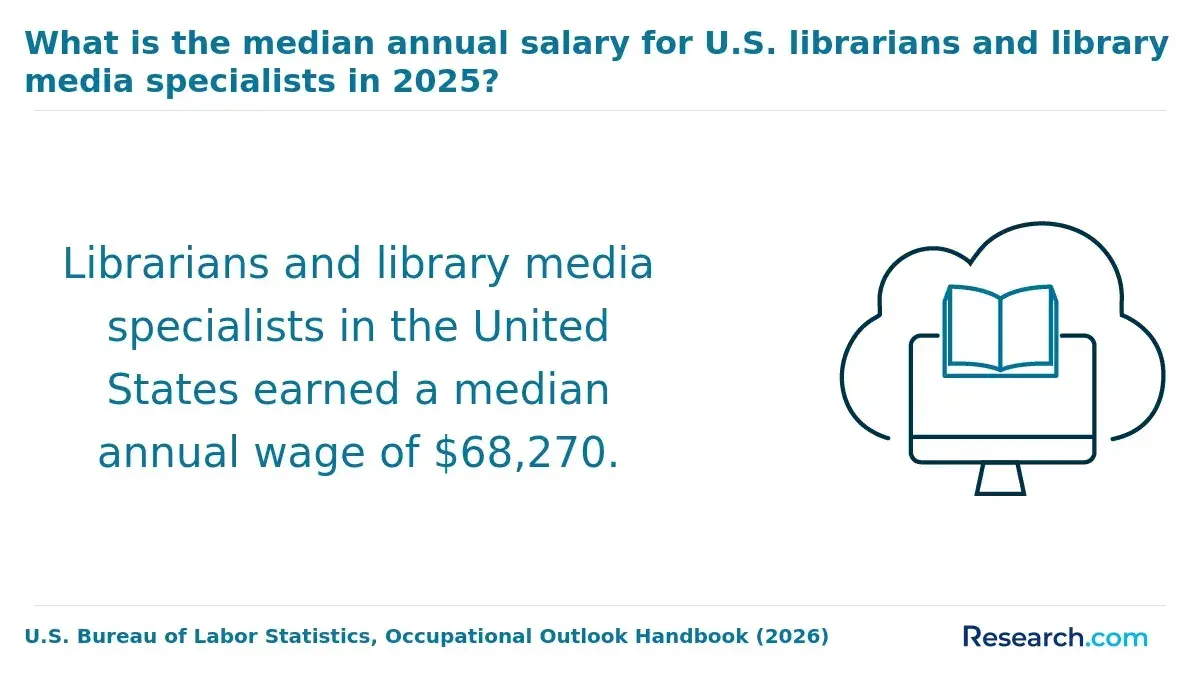
An online MLIS can fit around work and family - until an exam requires a live appointment, a private room, or software your computer cannot run. Those details matter when comparing programs, not just when a course begins. The U.S. Bureau of Labor Statistics reports a May 2025 median annual salary of $68,270 for librarians and media collections specialists, underscoring the value of evaluating graduate-study commitments carefully.
This guide shows prospective students how to compare exam rules, identify hidden scheduling and technology constraints, and get reliable answers before enrolling.
Key Things You Should Know
- Compare proctoring at the course level: a fully online MLIS may still require scheduled, monitored exams or visits to an approved testing site.
- Ask about every required course, not just a sample syllabus; exam arrangements can change by instructor or term.
- Proctoring is not an ALA accreditation requirement. BLS projects +2.6% employment growth for librarians and media collections specialists from 2025 to 2035, but that occupation-wide figure cannot tell you which exam format fits your schedule.
What are proctored exams in online MLIS programs?
A proctored exam is an assessment taken under supervision intended to verify a student's identity and enforce exam rules. Supervision might come from a person watching remotely, staff at a testing center, or software that records an exam session for later review. A timed quiz is not necessarily proctored: the distinction is whether monitoring or an approved testing environment is required.
In library and information science courses, instructors may assess knowledge through exams, papers, metadata projects, presentations, or portfolios. Do not assume that every MLIS course uses proctoring - or that a program without proctored exams has lighter academic requirements. The useful comparison is which assessments are required, how they are administered, and whether those conditions work for you.
How do proctored exams work in online MLIS courses?
The procedure depends on the course and proctoring provider. A typical monitored exam involves these stages, each of which can affect how much time and space you need:
- Reserve an available appointment or begin within a designated exam window, as the course requires.
- Complete an identity check and any required computer, webcam, microphone, or room checks.
- Take the exam under the stated rules for materials, breaks, and permitted applications.
- Submit the exam and follow the course procedure if a connection failure or other incident occurred.
An exam window and an appointment are different constraints. A course might let students choose when to start within a window but still require advance booking with a live proctor. Ask whether appointment availability, time zones, or testing-center hours further restrict that choice.
How do online MLIS programs compare proctored exam requirements?
Compare the required curriculum first. An elective with a monitored final matters less if you can choose another course; a required core course may make its exam arrangement unavoidable. Published program descriptions often say less about individual assessments than current syllabi do, so request recent examples and confirm whether the policy can vary by instructor.
The table separates common arrangements by their practical constraints. These are comparison categories, not claims that any particular MLIS program uses them.
| Assessment arrangement | Typical scheduling constraint | Potential extra requirement |
| Live remote proctoring | Available appointment and exam window | Private space, compatible device, stable connection |
| Recorded remote proctoring | Course exam window | Recording permissions and compatible device |
| Approved testing site | Site hours and advance coordination | Travel and possible site fees |
| Unproctored assessment | Submission deadline or timed access | Course-specific software or materials |
A useful program comparison records, for each required course, the assessment type, exam frequency, booking rules, fees, and available alternatives. Apply those same criteria when you choose the best online MLIS; a general "online" label cannot establish exam flexibility.
What technologies do online MLIS programs use for exam proctoring?
Depending on the course, remote proctoring can involve a video meeting with a human proctor, a browser lockdown tool, screen capture, webcam and microphone recording, or a combination of these. Some systems flag activity for review; a software flag should not be treated as proof of misconduct without the institution's review process.
Ask for the specific platform and current technical requirements, including operating-system compatibility, installation permissions, bandwidth needs, and whether a second device is required. This is especially important if you use a work-managed laptop, shared computer, or assistive technology. A platform that works for ordinary course videos may not meet an exam tool's requirements.
What are the privacy and accessibility rules for proctored MLIS exams?
Remote monitoring can capture a student's face, voice, screen, identification, and surroundings. Before accepting a program's exam arrangement, review its notice about what is collected, who can access recordings, how long they are retained, and how third-party vendors handle the information. Do not assume that a school's general learning-platform privacy notice describes every proctoring tool.
Students who need disability-related accommodations should contact the institution's accessibility office before an exam is scheduled. At institutions covered by applicable disability laws, accommodation requests must be considered through the relevant process; the appropriate arrangement depends on the student's needs and the assessment. Ask how approved breaks, assistive technology, alternative formats, or an alternative proctoring method work in practice. If you lack reliable internet or a suitable private space, ask about available testing-site or campus options rather than assuming an exception is automatic.
How do proctored exams affect online MLIS program flexibility?
Asynchronous lectures do not necessarily mean asynchronous exams. A narrow exam window can conflict with shift work, caregiving, or travel, while a testing-site requirement can make an otherwise remote program difficult to attend. Students in different time zones should confirm which time zone controls deadlines and appointment times.
Compare the whole course calendar, including required live meetings, practica, and exam windows - not just the program's delivery label. If controlling your study schedule is a priority, a flexible pace library science masters may be worth exploring, but verify its actual assessment rules rather than assuming a different pacing model eliminates scheduled exams.
How can students prepare for proctored exams in online MLIS programs?
Preparation is partly academic and partly logistical. Use this sequence once you have the course's actual exam instructions:
- Read the permitted-materials, identification, scheduling, and technical rules before booking.
- Run any required system check on the device and internet connection you will use for the exam.
- Arrange an acceptable location and address foreseeable interruptions before the appointment.
- Save the course's support instructions and the method for documenting a technical problem.
- Request approved accommodations early enough for the institution to arrange them.
Do not buy a new device or pay a testing-site fee based on a generic program webpage alone. Confirm the requirements for your enrolled course and ask whether equipment loans or no-fee alternatives exist. When comparing a cheap accelerated library masters with a longer program, account for any exam-related equipment, site, or travel expense as well as tuition.
Do ALA-accredited online MLIS programs require proctored exams?
No ALA accreditation rule makes proctored exams a universal requirement for online MLIS programs. Accreditation evaluates the graduate library and information studies program against professional standards; individual assessment methods are determined by institutions and instructors. Check the specific degree program's current status in the ALA directory, since institutional accreditation alone does not establish ALA accreditation.
ALA accreditation also does not establish eligibility for a state school librarian credential. If that is your goal, check the relevant state education authority for its preparation and licensure rules, then ask the program how its pathway aligns. For example, readers considering Illinois library certification options should distinguish school-library credential requirements from a general MLIS program's exam policies.
What should students ask about proctored exams before applying?
Send the same questions to each program and request answers covering required courses. This makes differences in flexibility and cost easier to evaluate:
- Which required courses currently use proctored assessments, and how often are they offered?
- Are exams live, recorded, or held at a testing site, and can the method change by instructor?
- How wide are exam windows, how far ahead must appointments be booked, and which time zone applies?
- What are the platform, device, room, and identification requirements?
- Are there proctoring or site fees, and what alternatives exist if access or technology is a barrier?
- Who handles accommodations, technical failures, privacy questions, and disputed exam incidents?
Ask for a current syllabus or written policy when possible. An admissions representative's description can help you narrow options, but it may not settle rules that individual instructors set for future terms.
How can students choose a reputable online MLIS program?
Start with the credential your intended role calls for and verify the specific program's ALA accreditation status where relevant. Then compare required courses, the availability of career-relevant electives, opportunities for applied work, total tuition and mandatory fees, and the exam constraints described above. Published tuition is not the full cost if you also need equipment, testing travel, or additional terms because of course sequencing.
Match the curriculum to your goal rather than treating a convenient exam policy as the sole deciding factor. An aspiring academic librarian, for example, may value documented instruction, scholarly communication, or research-support opportunities; an academic librarianship specialization should be verified as a formal track if a school describes it that way, rather than inferred from one elective. The strongest choice is a program whose credential, coursework, cost, and assessment arrangements all fit your circumstances.
Other Things You Should Know About Library Science
Transcripts generally record courses and grades, not the monitoring method used for an assessment. Ask the registrar if you need to know what your institution's transcript displays.
Only if the instructor's exam rules allow them. "Proctored" describes supervision, not whether an exam is open-book or closed-book.
No universal rule applies. Follow the course's reporting procedure promptly, retain any support ticket or error details, and ask the instructor how the incident will be handled.
Retake eligibility is set by the course and institution, not by the fact that an exam was proctored. Check the syllabus for the applicable policy.
References
- ADA Requirements: Testing Accommodations https://www.ada.gov/resources/testing-accommodations/
- Testing Accommodations - Disability and Access https://disability.utexas.edu/testing-accommodations
- Privacy in Video Proctoring Guidelines - Teaching Support https://teachingsupport.umn.edu/privacy-video-proctoring-guidelines
- Exam Types and Policies | Harvard Extension School https://extension.harvard.edu/enrolled-students/exam-types-and-policies/
- Proctoring - ASU Universal Learner Courses https://ulc.asu.edu/help-center/proctoring/
- Accommodations for Online Timed Assessments, Quizzes and Exams | Cleveland State University https://www.csuohio.edu/disability/accommodations-for-online-timed-assessments-quizzes-and-exams
- Testing Online with SmarterProctoring - FSU Testing Center https://testing.fsu.edu/smarterproctoring
- Availability of Online Testing Platforms (Respondus Monitor and Distance Education Proctoring) - Student Knowledge Base https://instruction.austincc.edu/students/article/availability-of-proctoru-and-respondus-monitor-testing-platforms-and-requirements/
- Room Scan Policy - Instructor Help - The University of Arizona https://help.intech.arizona.edu/article/851-room-scan-policy
- Online Proctoring Technical Requirements | NCARB https://www.ncarb.org/pass-the-are/start/prepare/online-proctoring-technical-requirements


