
2027 MLIS Programs for Digital Library Project Management

Co-Founder and Chief Data Scientist
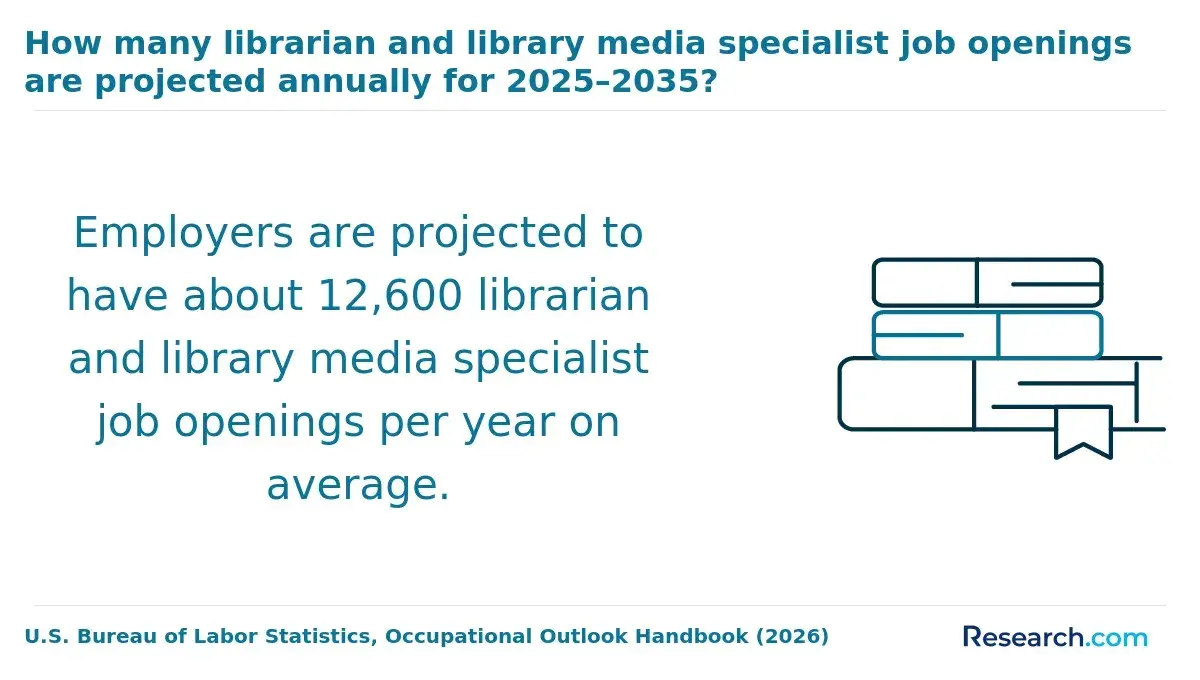
Choosing an MLIS for digital library project management means looking beyond a program's title: you need preparation to coordinate people, metadata, technology, rights, and preservation decisions. The U.S. Bureau of Labor Statistics projects 2.6% employment growth for librarians and media collections specialists from 2025 to 2035, so a specialized portfolio may matter more than the degree name alone. This guide helps prospective students identify useful coursework and experience, compare online and campus options, estimate costs, and decide whether an MLIS fits the work they want to do.
Key Things You Should Know
What Are MLIS Programs for Digital Library Project Management?
These are library and information science master's programs that can prepare students to plan and deliver digital collections work. A digital library project manager might coordinate the scanning of historical materials, define metadata requirements, schedule vendor work, resolve copyright questions, test accessibility, and arrange long-term stewardship of the files. The role combines library judgment with budgets, timelines, communication, and technical workflows.
"Digital library project management" is usually a career goal, not a standardized degree title. An MLIS, MLS, Master of Science in Library Science, or institution-specific Master of Information may offer a relevant pathway. Check whether the school documents a formal concentration, merely offers related electives, or provides a suitable independent project. Those are different levels of preparation.
A strong choice depends on the work you hope to manage. Someone targeting a university repository needs different experience from someone coordinating digitization for a public library's local-history collection. Broader library degree outcomes can provide context, but the decisive evidence is the program's current curriculum and the work you can demonstrate when applying for jobs.
Which Accreditation Should Digital Library MLIS Programs Have?
For U.S. professional librarian roles, ALA accreditation is an important program-level credential. Check the specific master's program in the current American Library Association directory rather than relying on a university's institutional accreditation or a statement about its information school. Institutional accreditation and ALA accreditation answer different questions.
ALA accreditation does not certify that a program offers a digital-library concentration, a particular elective, a remote internship, or project-management training. Verify those separately in the current catalog and with an adviser. If a role you want specifies an ALA-accredited degree, confirm whether the degree you are considering meets that employer's stated requirement; adjacent technology and cultural-heritage jobs may use different qualifications.
What Career Paths Follow a Digital Library Project Management MLIS?
The clearest path is through collections or repository work into coordination of increasingly complex projects. Entry-level responsibilities may center on preparing files, checking metadata, documenting workflows, or supporting users. Management responsibility typically calls for evidence that you can set priorities, work across departments, and deliver a collection that remains usable after launch.
Job titles vary across employers. The table distinguishes the work behind common titles so you can search for duties, not just the phrase "digital librarian."
| Career path | Typical work | Preparation to prioritize |
| Digital collections librarian | Coordinates collection creation, description, access, and outreach | Digitization workflows, metadata, rights, and user needs |
| Institutional repository librarian | Supports deposit, discovery, and stewardship of institutional work | Repository operations, scholarly communication, and stakeholder training |
| Digital preservation specialist | Plans storage, documentation, file monitoring, and preservation actions | Preservation planning and repeatable technical workflows |
| Digital projects coordinator or manager | Sets scope, coordinates contributors and vendors, tracks risks and deliverables | Applied project leadership plus collections or systems knowledge |
These titles do not share a universal degree requirement. Professional librarian postings may require an ALA-accredited master's, while a digital projects role in a museum, archive, or technology unit may accept other degrees and substantial experience. An MLIS is most compelling when you also want the professional librarian pathway.
What Coursework Covers Digital Libraries and Project Management?
A useful curriculum links collection decisions to delivery: what should be digitized, how people will find it, who may use it, and how the institution will maintain it. Course names differ, so inspect descriptions, assignments, prerequisites, and recent schedules rather than assuming a catalog listing will run before you graduate.
The following areas connect coursework to the decisions a project manager actually faces. A program need not package them as one formal track, but you should have a credible way to cover the areas most relevant to your goal.
| Learning area | Why it matters on a project | Useful student deliverable |
| Metadata and knowledge organization | Makes objects findable and descriptions consistent; Dublin Core is one possible descriptive schema | A documented metadata application profile and sample records |
| Digital collections and preservation | Connects capture, file handling, access, and long-term stewardship | A digitization workflow with quality checks and a preservation plan |
| Project and organizational management | Clarifies scope, responsibilities, dependencies, risks, and handoffs | A project charter, schedule, and risk register |
| Copyright, accessibility, and user experience | Helps a team make defensible access decisions and test whether people can use the collection | A rights review and accessibility-testing summary |
For applied learning, ask whether you can complete a practicum, capstone, or independent project with a real collection partner and retain a shareable version of the work. A portfolio that explains constraints and decisions is more informative than screenshots of a finished site alone. AI-assisted description may be worth studying, but human review remains important for accuracy, bias, privacy, and rights.
Are Online or Campus-Based MLIS Programs Better for Digital Library Careers?
Neither format is inherently better. Online study can suit a working student who can arrange a local collection project; campus study may make it easier to use nearby labs, archives, and faculty-supervised opportunities. The better format is the one that lets you take the needed courses and complete meaningful applied work within your schedule and budget.
Do not equate "online" with asynchronous or assume that a remote student can complete every practicum remotely. Ask about live meeting times, group-work expectations, campus visits, equipment access, placement support, and whether electives are offered online in a workable sequence. When comparing library science degree options online, apply the same questions to each program rather than treating delivery format as a proxy for flexibility or quality.
If you already work in a library, archive, or museum, ask whether a supervised project at your workplace can satisfy an applied requirement. Confirm approval rules before assuming it will count.
What Are the Admission Requirements for Digital Library MLIS Programs?
Applicants generally need a bachelor's degree and must meet the chosen graduate program's published application rules. Schools may request transcripts, a statement of purpose, recommendations, a résumé, or other materials; deadlines and testing policies vary. A library background can help explain your goals, but do not assume it is required - or that experience substitutes for a stated academic requirement.
Use the statement to connect a specific collections problem to the skills you want to develop. Relevant experience may come from cataloging, community history, archives, web content, accessibility testing, or coordinating a small project. If your previous study is in computing, history, design, or another field, explain what you bring and what LIS training would add.
Applicants with prior graduate coursework should request a written evaluation of transfer eligibility before planning their completion timeline. Policies on credit age, grades, course equivalence, and maximum transferable graduate credits differ; undergraduate credits are not interchangeable with graduate transfer credit. A comparison of MLIS programs with transfer credits is a starting point, not a substitute for an individual decision from the receiving institution.
How Long Do MLIS Programs Cost and Take to Complete?
Time and cost depend on required credits, course sequencing, enrollment pace, residency rules, and whether applied work must be scheduled in a particular term. Instead of assuming that an advertised completion time applies to you, map the courses you need against the terms they are actually offered. An infrequently offered elective can extend the timeline even when its credit requirement is small.
For a comparable gross tuition estimate, multiply each program's published tuition per credit by the credits you would need to complete there, then add mandatory fees. Budget separately for books, software or equipment, travel, and any practicum expenses. Confirm the applicable academic year, residency classification, online rate, and whether tuition or fees can change before enrollment. Published tuition is not the total cost of attendance.
Next distinguish gross cost from your out-of-pocket cost and the amount you would borrow. Scholarships, employer support, and assistantships should count only if you are eligible and the support is confirmed. Ask the financial aid office about aid eligibility and loan terms for your enrollment period rather than assuming a prior year's rules still apply. A low cost MLIS return on investment comparison is most useful when you weigh total borrowing against your current earnings, target jobs, and the experience you can gain during the degree.
What Jobs Can You Get With Digital Library Project Management Training?
Search beyond "digital library project manager." Relevant postings may use digital initiatives librarian, digital asset manager, metadata librarian, digitization coordinator, repository specialist, or digital projects manager. Read the duties closely: one employer may need a librarian to lead collection policy, while another needs someone to manage a platform rollout or coordinate vendors.
For early-career applications, demonstrate a complete piece of work: define a collection's scope, document a metadata decision, show quality-control checks, and explain how you handled a deadline or stakeholder disagreement. Seek permission before displaying employer materials or collection files in a portfolio. Experience supervising a small, well-documented project can be more persuasive than claiming familiarity with many tools.
If your main goal is software implementation or general IT project management rather than library collections, compare the MLIS with technology-focused study and relevant work experience. Likewise, browsing top paying library jobs should not replace checking actual postings for degree requirements, technical expectations, and management experience.
What Salaries and Job Outlook Can MLIS Graduates Expect?
Occupational data provides context, not a forecast for a digital library project manager or a particular graduate. The U.S. Bureau of Labor Statistics figures below cover broader occupations with different duties, employers, and qualification requirements.
| U.S. occupation | Median annual salary, May 2025 | Projected employment change, 2025-2035 |
| Librarians and media collections specialists | $68,270 | +2.6% |
| Archivists | $64,550 | +3.4% |
| Library technicians | $44,580 | −6.4% |
The librarian median is a useful benchmark for evaluating professional roles, but it combines workers across settings and experience levels; it is neither an entry-level offer nor a digital-project-management salary. The technician figure describes a different occupational category and should not be used as a proxy for professional librarian pay. Compare local job postings and their requirements with your likely debt and existing income before making an enrollment decision.
Do Digital Library Project Managers Need Licenses or Certifications?
There is no general professional license specifically for digital library project management. An employer may request an ALA-accredited master's for a librarian position, value project-management certification, or prioritize experience with its collections and systems. Treat a preferred certification in a job advertisement as an employer preference unless the position's applicable rules say otherwise.
School librarian positions are different: state certification or licensure requirements may apply, and an online MLIS does not automatically qualify a graduate in every state. If schools are your intended setting, check the relevant state education authority and the program's preparation pathway before enrolling. For other settings, compare several target postings first; that will show whether a full MLIS, a shorter credential, or additional project experience best addresses your gap.
Other Things You Should Know About Library Science
No. Digitization creates digital versions of materials. Digital preservation addresses how files, documentation, and access will be maintained over time. A project may need both.
Not automatically. Ownership of a physical item does not necessarily establish permission to publish it online. Projects should review copyright, donor agreements, privacy concerns, and applicable institutional policy.
Accessible projects consider how people navigate, read, search, and understand the collection using different devices and assistive technologies. Testing real interfaces and content is more useful than assuming an accessible platform makes every uploaded item accessible.
Yes, where an institution permits it and provides appropriate training and supervision. Staff should define tasks, quality checks, and handling rules so volunteer contributions fit the collection's standards.
References
- Distance Education Resources | Texas Higher Education Coordinating Board https://www.highered.texas.gov/new-program-development/distance-education-resources/
- Fall 2024 Voluntary Internship Opportunities | National Archives https://www.archives.gov/careers/internships/vip-opportunities-fall-2024
- Digital Preservation at the Library of Congress https://www.loc.gov/preservation/digital/
- Differentiating Job Titles for Program and Project Managers | U.S. Office of Personnel Management https://www.opm.gov/policy-data-oversight/career-paths-for-federal-program-and-project-management-guide/differentiating-job-titles-for-program-and-project-managers/
- Cost of Attendance - Financial Aid and Scholarships | The University of Utah https://financialaid.utah.edu/tuition-and-fees/cost-of-attendance.php
- Library Science Master's Online - UW Information School https://ischool.uw.edu/programs/mlis/degree-options/online
- Introduction to Metadata: Setting the Stage | getty.edu https://www.getty.edu/publications/intrometadata/setting-the-stage/
- MLIS Internships - College of Information Science https://infosci.arizona.edu/ma-library-information-science/internships
- What Can You Do With a Library Science Degree? | Syracuse University Online Master's Programs https://onlinegrad.syracuse.edu/information-science/mslis/library-science-careers/
- Digital Preservation Framework | UTSA Libraries https://lib.utsa.edu/about/policies/digital-preservation-framework


