2027 MLIS Programs for Disability Services in Libraries

Co-Founder and Chief Data Scientist
Choosing an MLIS for disability services means looking beyond a program's name: you need evidence that its courses and practical opportunities will prepare you to make library services accessible. The U.S. Bureau of Labor Statistics reports a May 2025 median annual wage of $68,270 for librarians and media collections specialists, but that broad figure does not describe a disability-services specialty.
This guide is for prospective students comparing programs, formats, costs, and careers. It shows what to verify before enrolling and how to build relevant experience while studying.
Key Things You Should Know
- Look for an ALA-accredited master's program with documented accessibility coursework and opportunities to apply it, a relevant elective is not necessarily a formal concentration.
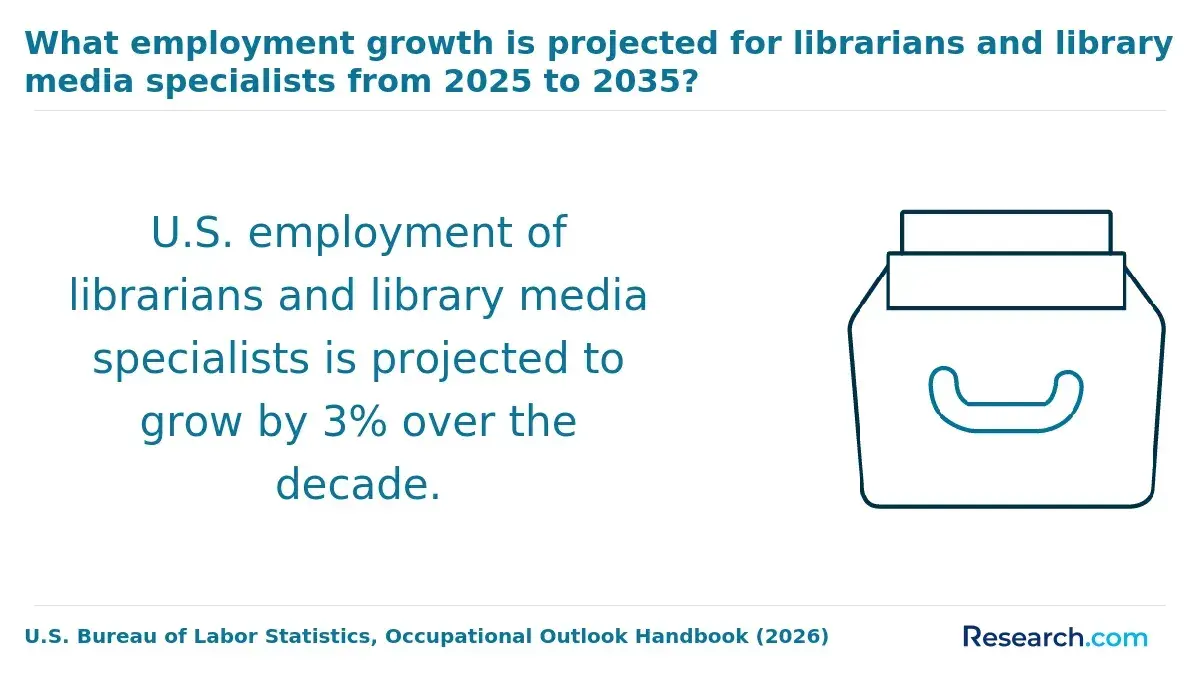
- BLS projects 2.6% employment growth for librarians and media collections specialists from 2025 to 2035, not a separate forecast for accessibility roles.
- Compare total required credits, fees, scheduling, and practicum arrangements - not tuition per credit alone - and confirm that needed electives will be offered while you are enrolled.
What are MLIS programs for disability services in libraries?
These are library and information science master's programs that students can use to prepare for accessible reference, collections, technology, instruction, and outreach. They are not necessarily degrees or formal concentrations titled "disability services." An institution may instead offer relevant electives, an independent project, or supervised experience within a general MLIS, MLS, or differently named LIS master's degree.
The work centers on removing barriers to using a library. Examples include checking whether a discovery system works with a keyboard and screen reader, helping patrons obtain materials in usable formats, improving the accessibility of online instruction, and consulting disabled community members when designing services. It also requires sound reference skills, privacy awareness, and an understanding that patrons - not staff assumptions - should guide accommodation and service decisions.
An ALA-accredited master's program has met the American Library Association's standards for the graduate program. That is distinct from the university's institutional accreditation, and it does not certify a particular accessibility course or placement. Students interested chiefly in web accessibility or assistive-technology support outside libraries may find a targeted certificate or relevant work experience more direct than an MLIS.
Which accredited MLIS programs prepare students for disability services librarianship?
There is no single, reliably defined list of "disability services MLIS programs." A responsible shortlist starts with the current ALA directory of accredited master's programs, then checks each university's catalog and schedule for evidence of relevant preparation. Without a current verification of individual offerings, naming a school as having this specialization would risk confusing general alignment with a documented pathway.
The table distinguishes the types of evidence worth seeking. Use the same criteria for every school rather than treating one appealing course title as proof that a program fits your goal.
| Evidence to compare | What it establishes | What still needs checking |
| ALA program accreditation | The specific master's program holds the relevant accreditation. | Its current status and the exact degree covered. |
| Named concentration or track | The university formally documents a specialization. | Its required courses and whether it addresses disability access. |
| Relevant electives | Students may be able to study accessibility-related subjects. | Prerequisites, recent scheduling, and whether seats are available. |
| Practicum, capstone, or project | A documented route to applied work exists. | Whether an accessibility-focused project and suitable supervision are possible. |
Ask a program adviser which relevant electives ran recently, which are expected during your enrollment, and whether you can pursue a project with a library serving disabled patrons. For context on degree types before building a shortlist, see library science degree admissions. Neither accreditation nor a catalog listing guarantees a particular course will run when you need it.
What degree and admission requirements do disability services MLIS programs have?
Applicants generally need a bachelor's degree for entry to an LIS master's program; each school sets its own documentation, academic, and application requirements. Check the current admissions page for transcript rules, references, statements, deadlines, and any program-specific conditions. Prior disability-services or library experience may strengthen an application, but it should not be assumed to replace a published degree requirement.
You normally do not need an undergraduate library science degree. Experience in public service, education, accessibility testing, community advocacy, or assistive technology can help you explain your goals. In a statement of purpose, connect a specific barrier you hope to address with the program's verified courses or applied-learning options rather than claiming a specialization the school does not advertise.
Applicants changing fields can use guidance on MLIS admissions for career changers to frame questions for admissions staff. If your academic history does not fit a stated policy, request an individual assessment rather than assuming an exception or an automatic rejection.
Are online or campus-based MLIS programs better for disability services careers?
Neither format is inherently better. An online program may let a working student remain employed at a local library and develop an accessibility project there. A campus-based program may make nearby partnerships or supervised work easier to access. In either format, the decisive questions are whether you can take the right courses, obtain useful feedback, and complete meaningful applied work.
Online does not necessarily mean asynchronous. Confirm meeting times, time zones, group-work expectations, technology requirements, and whether a practicum can be completed locally. Campus students should likewise check commuting demands and whether required courses conflict with work or caregiving. Students comparing a cheap online MLIS for working adults should verify both its full cost and the accessibility-related courses they could actually take.
If you need accessible learning materials or course technology, contact the institution about its accommodation process before committing. Request details about the learning platform and required activities rather than assuming either delivery format will meet your needs without planning.
What courses do disability services and accessibility-focused MLIS programs include?
A strong foundation combines core LIS subjects with coursework that lets you identify and address access barriers. Catalog labels vary, so examine course descriptions and assignments - not just titles - for inclusive service design, disability perspectives, accessible digital content, and evaluation of library technology.
Relevant courses may cover reference and information literacy, community outreach, collection development, user experience, web accessibility, and assistive technology. Metadata and digital-collections courses can also matter: descriptions, navigation, and usable file formats affect whether patrons can find and use materials. A course on accessibility is most valuable when students can test a real service and revise it based on feedback.
For an applied project, you might assess keyboard navigation in a library guide, improve the accessibility of an instructional handout, or work with staff and patrons to evaluate an outreach service. Obtain permission before testing institutional systems or using patron feedback, protect participants' privacy, and document both the changes made and any remaining limitations. A portfolio showing that process is more informative than a list of software tools.
How long do disability services MLIS programs take, and what do they cost?
Completion time depends on required credits, enrollment pace, course sequencing, and any applied-work requirement. Full-time students may finish sooner than part-time students, but an infrequently offered elective or a placement that needs advance approval can change either timeline. Ask the program to map your intended accessibility courses onto an actual proposed schedule.
No single tuition figure describes these programs, and published tuition is not the total cost of attendance. To compare schools fairly, calculate required credits multiplied by the tuition rate applicable to you, then add mandatory fees, materials, technology, and any travel or practicum expenses. Ask whether a longer schedule would add term-based charges. Do not assume online students receive in-state tuition.
For a budget-oriented comparison, low tuition MLIS with strong career outcomes is a useful starting point, not a substitute for current university price schedules. Keep gross program cost separate from what you expect to pay after confirmed assistance and from any amount you would borrow. Federal aid eligibility and loan terms depend on the student and enrollment period; confirm current details with each financial aid office. The degree's financial value also depends on your present earnings, intended jobs, and the qualifications employers actually request.
What careers can you pursue with an MLIS in disability services?
Accessibility work is often part of a broader librarian job rather than a position titled "disability services librarian." Public librarians may improve programs and patron services; academic librarians may work on accessible instruction and research support; digital-services librarians may evaluate websites, discovery tools, and collections. Employers can also have dedicated accessibility or outreach positions, with qualifications that vary by role.
The table connects common settings with the work and evidence an applicant might bring to an interview. It does not imply that every position has the same degree requirement.
| Possible role or setting | Accessibility-related work | Useful preparation |
| Public services librarian | Adapt reference, programs, and outreach to patron needs. | Inclusive service experience and community-informed projects. |
| Academic librarian | Improve instruction, guides, and access to research materials. | Accessible teaching samples and collaboration experience. |
| Digital services librarian | Assess online collections, navigation, and content usability. | Documented testing and remediation work. |
| Accessibility or assistive-technology specialist | Support access to systems or tools in a library or adjacent setting. | Technical and user-support experience; degree requirements vary. |
Read job postings for the exact roles you want: an MLIS may be required for a professional librarian position, preferred for another role, or unnecessary for an adjacent technical job. Guidance on barriers to library science employment can help you assess where experience or additional qualifications matter. Library assistant, outreach, and technology-support work can provide entry points, although paraprofessional roles should not be mistaken for positions with identical duties or pay.
What salaries can disability services librarians expect after earning an MLIS?
BLS reports a $68,270 median annual wage in May 2025 for librarians and media collections specialists. That occupational median is a reference point, not a starting salary, an MLIS graduate outcome, or a figure specific to disability-services work.
Actual offers can differ by employer, location, responsibility, and experience. Compare posted salary ranges for your target jobs and locations, then weigh them against the full cost of your degree and what you currently earn. A dedicated accessibility specialist role may also be classified outside the BLS librarian occupation, making the broad median a less useful comparison.
What is the job outlook for accessibility and disability services librarians?
BLS projects 2.6% growth from 2025 to 2035 for librarians and media collections specialists. It does not publish that figure as a forecast for disability-services librarians, so it cannot tell you how many specialized openings will be available in a particular area.
Libraries' need to make digital collections, instruction, and public services usable gives accessibility skills practical relevance across roles. Still, a relevant skill does not guarantee a dedicated position. Search both specialized titles and general librarian postings, and check whether employers expect candidates to improve accessibility as one responsibility among many.
Do disability services librarians need certifications or professional credentials?
There is no universal disability-services certification required for library work. For many professional librarian positions, the central educational credential is an LIS master's degree, often from an ALA-accredited program; employers set their own requirements. Additional accessibility training can demonstrate skill, but a certificate should be evaluated against the work you want to do rather than treated as a substitute for every MLIS requirement.
School library jobs are a separate case. State educator licensure, certification, or endorsement requirements may apply, and an online or ALA-accredited MLIS alone does not establish eligibility in every state. Check the relevant state education authority before enrolling. For other settings, review current job descriptions to distinguish a required credential from a preferred one.
Other Things You Should Know About Library Science
Disclosure is a personal decision. If you need application or interview accommodations, ask the institution how to request them. You can also discuss your academic interests without sharing private medical information.
Neither is a universal requirement for disability-services library work. Particular jobs or communities may benefit from those skills; check postings and local needs before choosing training.
Yes, with appropriate permission and privacy safeguards. Invite disabled patrons to identify priorities, make participation voluntary, and avoid publishing identifiable comments without consent.
Not automatically. A certificate can build a specific skill, while library experience shows how you apply it in services and workflows. Choose based on the qualifications in your target job postings.
References
- U.S. GAO - Library Services for Those with Disabilities https://www.gao.gov/products/gao-16-355
- IT Accessibility Laws and Policies | Section508.gov https://www.section508.gov/manage/laws-and-policies/
- Section 508: Digital Accessibility at NIH http://ocio.nih.gov/section-508
- Disability and Libraries Toolkit - Community, Equity, Data & Information Lab https://cedi.umd.edu/toolkit/
- Online Master's in Library & Information Science (MLIS) | Drexel University Online https://www.online.drexel.edu/online-degrees/information-sciences-degrees/ms-di/index.aspx
- Library Accessibility for Persons with Disabilities and Future Research | Proceedings of the ALISE Annual Conference https://iopn.library.illinois.edu/journals/aliseacp/article/view/1966
- FAQs | Valdosta State University https://www.valdosta.edu/colleges/education/master-of-library-and-information-science/faqs.php
- MLIS Tuition & Financial Aid - University of Denver | DEN-EDU https://morgridgeonline.du.edu/online-mlis-program/tuition-financial-aid/
- ALA-Accredited LIS Programs https://www.ala.org/educationcareers/accreditedprograms/ALA-accredited-programs-directory