
2027 Syracuse MLIS User Services vs. Children and Youth Services Tracks

Co-Founder and Chief Data Scientist
Choosing between User Services and Children and Youth Services at Syracuse means deciding whom you want to serve - and what experience you need to build before applying for jobs. The distinction matters in a field where the U.S. Bureau of Labor Statistics projects just 2.6% employment growth for librarians and media collections specialists from 2025 to 2035. This guide compares the two directions, explains what to verify in Syracuse's current curriculum, and connects each choice to realistic costs, credentials, and career opportunities.
Key Things You Should Know
- User Services is the broader fit for reference, research help, and information-literacy work; Children and Youth Services is the closer fit for programming, reading development, and outreach to young people and caregivers.
- Do not assume either label is a guaranteed, transcript-designated track or that a relevant elective runs every term. Confirm Syracuse's current pathway descriptions, course schedule, and graduation requirements before choosing.
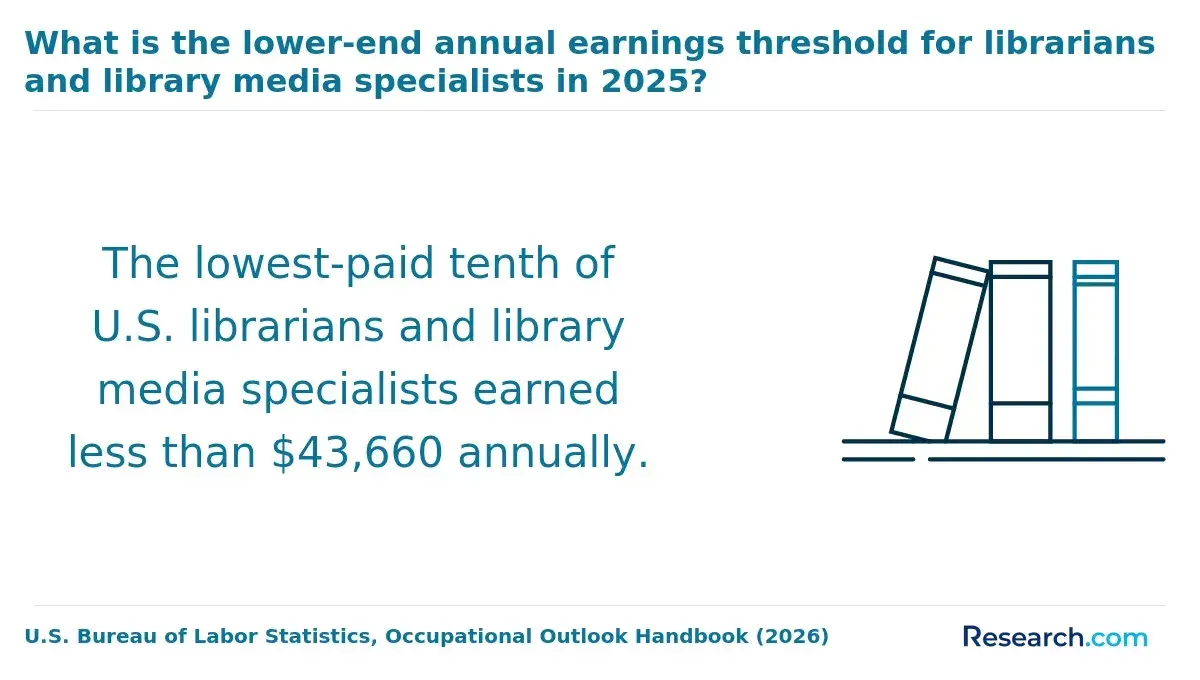
- The May 2025 U.S. median pay for librarians and media collections specialists was $68,270, but that occupation-wide figure is not a Syracuse graduate salary or a youth-services-specific wage.
What do Syracuse MLIS User Services and Children and Youth Services tracks cover?
User Services centers on helping people find, evaluate, and use information. Depending on the library, that can mean answering reference questions, teaching research skills, improving access to discovery tools, or designing services for patrons with different needs. It is relevant to public and academic libraries, though the work and hiring requirements differ by setting.
Children and Youth Services focuses on serving children, teens, and their caregivers. Typical work includes age-appropriate collection development, reading and learning programs, outreach, and partnerships with families or community organizations. Public-library youth services and licensed school librarianship are distinct career paths; an interest in working with children does not make an MLIS a school librarian credential.
Treat these names as career directions until you confirm how Syracuse currently defines them. A suggested course pathway, a formal specialization with prescribed requirements, and a designation recorded on a transcript are not interchangeable.
How do Syracuse MLIS User Services and Children and Youth Services tracks compare?
The most useful comparison is the work each direction helps you prepare to do. The table describes career alignment, not a promise that particular Syracuse electives or placements will be available.
| Decision factor | User Services direction | Children and Youth Services direction |
| Primary patrons | Potentially broad: adults, students, researchers, or the general public | Children, teens, caregivers, and organizations serving young people |
| Typical emphasis | Reference, research support, instruction, and accessible information services | Reading engagement, youth collections, programs, and family or community outreach |
| Useful applied project | A research guide or an accessible information-literacy workshop | A teen program plan with an evaluation method or an age-appropriate collection proposal |
| Important hiring distinction | Academic-library roles may expect subject expertise or teaching experience | School-library roles may require state educator certification; public-library youth roles have different rules |
If you want flexibility across patron groups, User Services may be the better organizing theme. If nearly all your target job postings involve children, teens, or families, youth-focused coursework and direct experience may make a more persuasive application. Neither direction substitutes for checking local job requirements.
Which Syracuse MLIS track is best for your library career goals?
Choose User Services if you can picture yourself teaching adults to use information resources, staffing a research desk, or improving how patrons get help online. Choose Children and Youth Services if you want to design services with young people rather than simply work in a building that serves them. If you are undecided, build a shared foundation in reference, accessibility, instruction, and collection decisions, then use electives and experience to test a preferred audience.
Start with several real job postings from the places where you could work. Note whether they ask for an ALA-accredited degree, youth-programming experience, teaching skills, or a state-issued school credential. Some MLIS careers requiring specialized experience cannot be entered through course selection alone; plan relevant work, volunteering, or a supervised project alongside the degree.
What courses are included in each Syracuse MLIS track?
Both directions should be evaluated against Syracuse's current catalog and degree worksheet, not a list of topics that sounds relevant. Core LIS study commonly addresses information organization, research and reference, and the design and management of information services. For User Services, look for documented options in reference, information literacy, and service design. For Children and Youth Services, look for documented options in youth literature, programming, collection development, and services to families. These are subjects to investigate, not verified Syracuse course titles or guaranteed requirements.
Ask an adviser which courses are required, which merely count as electives, how often relevant electives are offered, and whether a project or placement can serve your intended patron group. A catalog listing alone does not establish that a course will fit your enrollment schedule. If your priority is progressing by demonstrated mastery rather than following scheduled courses, compare Syracuse's published assessment and pacing rules with those of a competency based graduate library program; do not assume the formats work the same way.
Is the Syracuse MLIS program ALA-accredited?
Syracuse's graduate library and information science master's program is ALA-accredited. When making an enrollment decision, confirm the exact degree name and current status in the American Library Association's directory of accredited programs. ALA accreditation applies to the reviewed master's program, not separately to every elective or career pathway; it also does not establish that a particular course, internship, or online format is available.
This distinction matters when comparing offers. University-level institutional accreditation is not a substitute for ALA program accreditation, and neither accreditation automatically grants state school librarian certification.
Can you complete the Syracuse MLIS User Services or Youth Services track online?
Syracuse offers online study in library and information science, but confirm that your specific degree plan can be completed online with the electives you need. Ask whether courses are live or self-paced, when youth- or user-services electives are scheduled, and whether any applied experience can be completed near home. Online delivery does not, by itself, establish that every course is asynchronous or that a placement can be done remotely.
If time to completion is decisive, compare Syracuse's actual course rotation and your planned enrollment load with a short duration online library degree. An advertised fast timeline is useful only if the courses that support your intended career are available when you need them.
What are Syracuse MLIS admission requirements, length, and costs?
Use Syracuse's current admissions page for the applicable degree and entry term to confirm eligibility, required materials, and deadlines. Do not infer a guaranteed completion time from a full-time example: your pace will depend on approved credits, course availability, and how many courses you can take while meeting other commitments.
Likewise, an unverified per-credit figure would not tell you what you will pay. Request a cost estimate based on your intended enrollment plan and compare these components before accepting an offer:
- Published tuition multiplied by the credits required for your degree plan, using the applicable academic-year rate.
- Mandatory fees, books or materials, and any travel or placement expenses.
- The cost of additional terms if course sequencing changes your completion date, minus only funding you have actually been awarded.
Keep total program cost separate from what you pay out of pocket and what you borrow. If you need to study around a job, a comparison of a library science program for busy adults may help you assess scheduling alongside price. The cheapest published tuition is not necessarily the cheapest workable plan.
What jobs can each Syracuse MLIS track prepare you for?
A User Services-focused graduate might pursue public-library reference, academic-library public services, or information-literacy positions. A Children and Youth Services-focused graduate might pursue public-library children's librarian, teen services librarian, or youth-programming positions. Actual titles and qualifications vary by employer; school librarian positions involve separate state credential rules.
To compete for either kind of job, pair coursework with evidence of work you can do: a usable research guide, an evaluated workshop, or a youth program developed with attention to accessibility and patron privacy. Ask a prospective placement supervisor what you would produce and who would review it. If you are transitioning from another field and need a cheapest shortest online library science programs comparison, weigh the savings against time available for relevant experience. For some information-support or library assistant roles, experience may be a more appropriate first step than immediately enrolling in an MLIS.
What salaries and job outlook apply to Syracuse MLIS graduates?
The U.S. Bureau of Labor Statistics reports a $68,270 median annual wage in May 2025 for librarians and media collections specialists and projects 2.6% employment growth from 2025 to 2035. These national figures combine settings and do not isolate Syracuse alumni, entry-level hires, or children's librarians. They provide market context, not a salary forecast for either pathway.
For a personal financial decision, compare pay ranges in current postings in your target region with your existing earnings, likely borrowing, and the credentials those employers require. A compelling youth-services portfolio may improve your fit for a position, but it cannot remove local hiring limits or guarantee a return on tuition.
Do User Services or Children and Youth Services librarians need certification?
There is no single certification rule for all User Services or public-library Children and Youth Services jobs. Employers may require an ALA-accredited master's degree, experience, or credentials specified by the position and jurisdiction. Before planning for a particular public-library job, read its posting and check any applicable state or local requirements.
School librarian preparation is different. States set their own educator certification, licensure, or endorsement requirements, which may involve approved preparation, exams, or supervised experience. An ALA-accredited MLIS - including one studied online - does not automatically meet every state's school librarian rules. If schools are your goal, ask both Syracuse and the education authority in the state where you intend to work whether your exact degree plan meets that state's requirements.
Other Things You Should Know About Library Science
Yes, if you can explain your contribution and show an appropriate work sample. Obtain permission before sharing patron information, photographs, or materials created for an organization.
Do not assume it will. Ask Syracuse whether your chosen pathway is formally recorded on a diploma or transcript, or whether you should describe it through coursework and projects on your résumé.
It can help with lesson planning, group facilitation, and working with families. Public-library youth work also involves collections, voluntary participation, and community outreach, so demonstrate those skills where possible.
It is valuable experience, but employers may distinguish assistant or technician duties from professional librarian responsibilities. Describe the tasks you performed accurately rather than relying on the workplace or job title alone.
References
- NYS Public Librarian Certification - the New York State Library https://nysl.nysed.gov/libdev/cert
- Children's and Youth Literature: Databases - Research Guides https://researchguides.library.syr.edu/youthliterature
- Libraries and School of Information Studies Announce "Information Literacy Scholars" - Syracuse University Libraries https://library.syracuse.edu/news/libraries-and-school-of-information-studies-announces-inaugural-class-of-information-literacy-scholars/
- Information Studies (IST) - Course Catalog - Syracuse University https://coursecatalog.syracuse.edu/graduate/courses/ist/
- How to Become a School Librarian: Your Complete Career Guide | Syracuse University https://ischool.syracuse.edu/how-to-become-a-school-librarian/
- What Can You Do With a Library Science Degree? | Syracuse University Online Master's Programs https://onlinegrad.syracuse.edu/information-science/mslis/library-science-careers/
- Curriculum | Children, Youth and Families Track | USC Suzanne Dworak-Peck School of Social Work https://dworakpeck.usc.edu/academics/master-of-social-work/curriculum/children-youth-and-families
- Youth Services (MLIS) | missouri.edu https://cehd.missouri.edu/degree/youth-services-mlis/
- YA Services at Library Schools | American Library Association https://www.ala.org/yalsa/getinvolved/recruitment/libraryschools
- Online MLIS in Children & Young Adult Services Guide | mastersinlibraryscience.org https://www.mastersinlibraryscience.org/degree/children-young-adult-services/


