2027 MLIS Programs for Researchers Moving Into Librarianship

Co-Founder and Chief Data Scientist
Moving from research into librarianship means deciding whether your subject expertise is enough - or whether you need an MLIS to qualify for the work you want. The U.S. Bureau of Labor Statistics reports a May 2025 median annual wage of $68,270 for librarians and media collections specialists, but that occupation covers jobs with different requirements. This guide helps researchers identify suitable roles, assess programs and credentials, and weigh the time and cost of a degree against other routes into information work.
Key Things You Should Know
- An MLIS is a strong route into professional librarian roles, but research data, archives, and other adjacent jobs may accept different qualifications; check actual job postings before enrolling.
- Verify the specific master's program in the ALA accreditation directory, then assess its relevant courses, applied work, scheduling, and total cost - not just its degree title.
- BLS projects 2.6% employment growth for librarians and media collections specialists from 2025 to 2035; build experience in the service or specialty you want rather than relying on the degree alone.
What is an MLIS degree, and why is it valuable for researchers entering librarianship?
A Master of Library and Information Science (MLIS) is a graduate degree in organizing information, helping people find and evaluate it, and managing information services. Schools may use names such as Master of Library Science (MLS), Master of Science in Library Science, or Master of Information. The name alone does not establish a program's accreditation or curriculum.
Researchers already know how to investigate a subject. Librarianship adds a different responsibility: designing services that help other people conduct research. An academic librarian, for example, might teach database searching, advise on research data management, support a systematic review, or manage an institutional repository. A public librarian may apply similar search and instruction skills to community needs rather than a single academic discipline.
The MLIS is most valuable when those service, collection, and information-organization skills are central to your intended job. If you primarily want to continue conducting research, a discipline-specific degree or targeted training may offer a better fit. Start by reading postings for the roles you want: note which specify an ALA-accredited degree, which accept equivalent experience, and which prioritize subject expertise.
Do researchers need an ALA-accredited MLIS degree to become librarians?
Not for every job, but many U.S. professional librarian positions request or prefer a master's degree from an American Library Association (ALA)-accredited program. An ALA-accredited master's can preserve options across employers; it does not, by itself, qualify a graduate for every specialty or state-regulated position. Institutional accreditation and ALA program accreditation are different, so verify the specific degree program in the current ALA directory.
Requirements depend on the role. Some research data management, metadata, knowledge management, and digital scholarship jobs consider candidates with other graduate degrees and relevant experience. Library technician positions generally follow a different qualification path from professional librarian jobs. School librarians face state-specific educator licensure or endorsement rules in addition to any employer preference for an MLIS.
Geography can affect both the jobs you target and the programs you can afford. If you are comparing library science programs serving the South, check each program's current ALA status and published tuition rules separately; location or affordability does not establish professional eligibility. For your target jobs, ask employers whether an ALA-accredited degree is required, preferred, or one of several accepted qualifications.
What career paths can researchers pursue with an MLIS degree?
Research experience transfers especially well to roles that help others find evidence, manage outputs, or preserve information. The table distinguishes the work from the credential question so you can compare paths without assuming every information job requires an MLIS.
| Path | Typical work | Credential consideration |
| Academic or subject librarian | Teach research skills, develop collections, and support faculty and students | Professional librarian postings often request an ALA-accredited master's; subject expertise can strengthen an application |
| Health sciences librarian | Support clinical searching, evidence synthesis, and researcher instruction | Check employer requirements; biomedical knowledge and evidence-review experience matter alongside LIS training |
| Research data or scholarly communication specialist | Advise on data documentation, repositories, publishing, and access | An MLIS may help, but employers may also consider relevant research or technical backgrounds |
| Archivist or digital collections specialist | Appraise, describe, preserve, and provide access to records or digital materials | Archives coursework and hands-on collections experience can matter as much as the degree title |
| Metadata or information organization specialist | Describe resources and improve how people find them across systems | Employers may seek LIS training, technical skills, or both |
A practical transition starts with the work you can demonstrate. A researcher might help document a dataset, contribute to a repository project, teach a search workshop, or assist with a literature review. Record your contribution and its audience; that evidence makes a stronger portfolio item than a general claim of research proficiency.
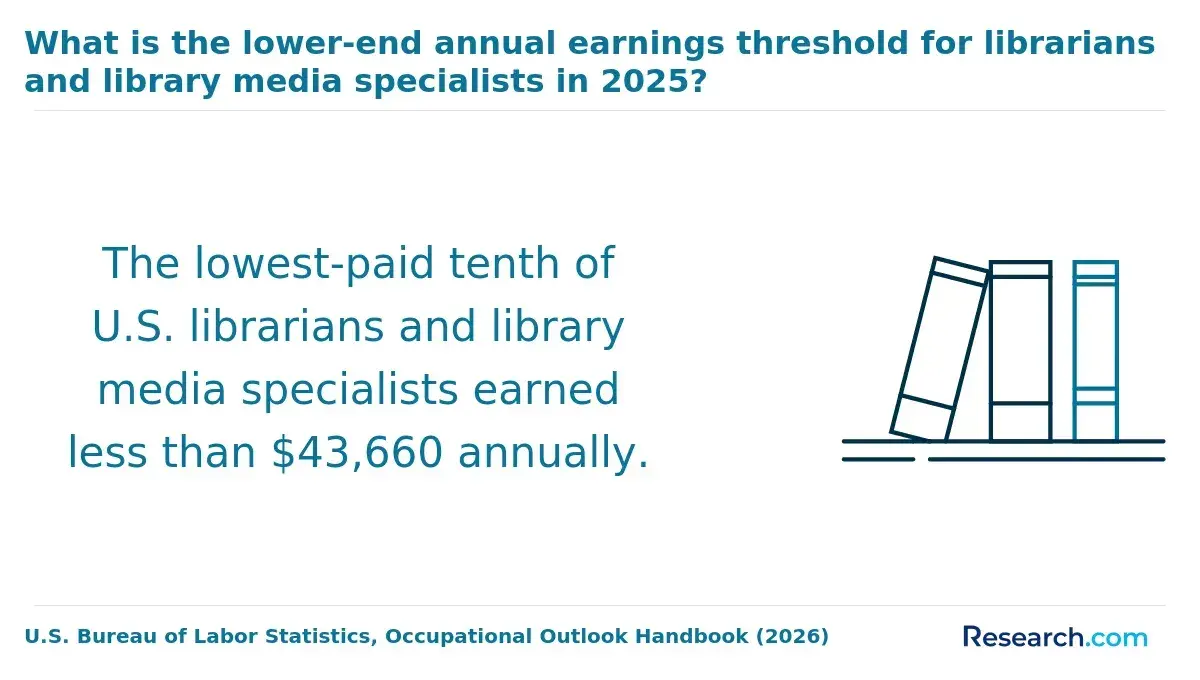
Pay varies substantially across roles and employers. Use lists of well paid information science careers to identify possibilities, then check whether their qualifications match your experience. Do not treat a high-paying adjacent technology role as a typical outcome of an MLIS.
What do students learn in an MLIS program?
MLIS curricula commonly address information organization, reference and research services, information technology, collections, ethics, and management. For a researcher, the useful question is how a program turns those foundations into the work you want to do. A course in metadata, for instance, can prepare you to describe resources consistently; a research data course may be more relevant if you want to support datasets and repositories.
Match the curriculum to your intended service area. Evidence synthesis and advanced searching suit health sciences work; instruction and information literacy suit teaching-focused academic roles; archival description and digital preservation suit collections work. If you want to support open access publishing or data sharing, look for scholarly communication and research data management opportunities. Responsible use of AI-assisted discovery, privacy, and accessibility are also relevant where a program connects them to actual library practice.
Separate an officially named concentration from a few relevant electives. Check the catalog to see what is required, then ask when electives last ran, whether online students can take them, and whether a practicum or project can be completed in your intended setting. A catalog listing is not a promise that a course will run during your enrollment.
A library science masters program comparison can help you assemble a shortlist. Make the final comparison against current program catalogs and schedules, using the same criteria for each school: accreditation, relevant coursework, applied experience, delivery, and total cost.
Are online MLIS programs as respected as campus-based programs?
Delivery format alone does not determine a degree's standing. For a professional librarian role, the more useful checks are whether the specific program is ALA-accredited, what skills you can demonstrate, and whether its learning and fieldwork arrangements fit your goals. Do not assume that online delivery means a separate accreditation status - or that every online program is ALA-accredited.
Online study can help researchers keep working, but flexibility differs. Some classes meet live; others have deadlines without scheduled meetings. Group projects, course sequencing, and practicums may still constrain your calendar, and a remote course does not guarantee a remote internship. Ask the program for a sample part-time sequence and confirm whether required courses and preferred electives will be available when you need them.
If fixed class meetings are a problem, an alternative online library masters format may be worth investigating. Confirm its accreditation, assessment structure, tuition model, and suitability for your target employers rather than assuming a different format will be faster or cheaper.
What are the admission requirements for MLIS programs?
Applicants generally need a bachelor's degree and must submit the materials specified by each graduate program. These may include transcripts, a statement of purpose, recommendations, and a résumé; test and minimum-grade policies vary. A research background can help explain your interests, but it does not automatically replace a published admission requirement.
Use your statement to connect what you have done to the people you want to serve. Describe a concrete research problem - such as helping colleagues locate evidence or making a dataset reusable - and explain why librarianship training would improve that work. If your academic record or credentials are unusual, request an individual review from admissions rather than assuming how a school will assess them.
Before applying, ask whether prerequisite courses are required, how previously completed graduate coursework is evaluated for transfer, and whether an applicant can enter without library work experience. Transfer-credit policies concern eligible graduate credits and vary by institution; prior research employment is not itself transfer credit.
How long do MLIS programs take, and how much do they cost?
Full-time MLIS study often takes roughly two academic years; part-time study takes longer. The actual timeline depends on required credits, course sequencing, enrollment limits, and any practicum or capstone. Ask for a term-by-term plan built around your work schedule, especially if a needed elective runs infrequently.
There is no reliable single price for an MLIS: published tuition varies by institution, enrollment status, and sometimes residency. To compare offers, multiply each program's required credits by the tuition rate that applies to you, then add mandatory fees and likely expenses for materials, equipment, travel, and fieldwork. Ask whether online students pay different rates or need campus visits. Tuition alone is not the full cost of attendance.
Separate that gross cost from your personal out-of-pocket cost after confirmed employer support, scholarships, or grants, and from any amount you would borrow. Do not count funding until its eligibility and renewal terms are clear. If you plan to use federal aid, confirm your eligibility, enrollment requirements, and currently applicable loan terms with the school's financial aid office before committing.
Accelerated online MLIS programs may appeal if you can devote more time to study, but a shorter calendar is not automatically a lower-cost or better career choice. Compare the workload, elective access, practicum timing, and income you might forgo. The strongest return on the degree is likely when it meets a real hiring requirement or gives you skills and experience you cannot obtain more efficiently elsewhere.
What librarian certifications or licenses do MLIS graduates need?
There is no single U.S. license required for every librarian job. Requirements depend on the state, employer, and position. School librarian roles are the clearest reason to investigate licensing early: a state may require educator certification, a school library endorsement, supervised experience, or assessments. Confirm the rules with the state education authority where you intend to work, and ask the MLIS program how its preparation aligns with them.
Other settings may value specialized preparation without imposing a universal legal credential. Medical and law libraries may seek relevant subject knowledge or professional experience; archives employers may value archival training and collections work. An optional professional certification can support development, but it should not be mistaken for a requirement in every posting.
If you are crossing from research into librarianship, save several representative job advertisements before choosing a program. Their stated requirements will tell you whether to prioritize state-approved school preparation, an accredited generalist degree, a specialty practicum, or a different qualification altogether.
How much do librarians earn after completing an MLIS degree?
National occupation medians provide context, not an MLIS graduate salary forecast. These May 2025 U.S. Bureau of Labor Statistics figures cover workers in each occupation regardless of where they studied or whether they hold an MLIS.
| U.S. occupation | Median annual wage, May 2025 |
| Librarians and media collections specialists | $68,270 |
| Archivists | $64,550 |
| Library technicians | $44,580 |
The gap between professional librarian and technician medians illustrates why job level matters when assessing a degree's potential value. It does not show that earning an MLIS causes a particular pay increase: location, employer, specialization, experience, and existing earnings all affect an individual decision. Compare salaries in postings for jobs you could realistically pursue with the full cost of changing careers.
What is the job outlook for librarians and information professionals?
The U.S. Bureau of Labor Statistics projects 2.6% employment growth for librarians and media collections specialists from 2025 to 2035. That national projection suggests modest growth, not the number of openings in your preferred city or specialty. Local hiring, replacement needs, and budgets matter when deciding whether to retrain.
Outlooks also differ across related occupations: BLS projects declining employment for library technicians over the same period. Avoid treating "library jobs" as one market. Review current postings for the roles and locations you want, note recurring skills, and seek projects that close your most important gap before or during graduate study.
For researchers, a sensible next step is to compare a small set of target postings with a small set of program curricula. If employers consistently require an accredited MLIS and the programs offer relevant applied work at a manageable cost, the degree has a clear purpose. If postings accept your current credentials and ask mainly for a specific technical skill, test that route before taking on a full master's program.
Other Things You Should Know About Library Science
It depends on the institution. Faculty status, promotion expectations, and research time are employer-specific, so check the position description and appointment policy if those conditions matter to you.
Yes. Some librarians publish in library and information science or collaborate on research in another discipline. Whether publication is supported, expected, or feasible within the workload depends on the job.
It can help with subject-specialist positions, and some employers may require or prefer one. Check postings in your discipline before pursuing another degree solely for this reason.
Often they can provide evidence of subject knowledge or writing ability, but portfolio rules vary. A program may also expect work demonstrating library-specific skills, such as instruction, metadata, or service design.
References
- Understanding College Costs | studentaid.gov https://studentaid.gov/resources/prepare-for-college/students/choosing-schools/consider-costs
- Exploring librarians' practices when teaching advanced... - PMC https://pmc.ncbi.nlm.nih.gov/articles/PMC11412128/
- Cost of Attendance (Budget) | 2025-2026 Federal Student Aid Handbook https://fsapartners.ed.gov/knowledge-center/fsa-handbook/2025-2026/vol3/ch2-cost-attendance-budget
- Data Competencies | NNLM https://www.nnlm.gov/resources/data/data-competencies
- Pathways for Students and Graduates | Student Internships and Jobs | Working at CDC | Careers at CDC https://jobs.cdc.gov/working-at-cdc/student-intern-jobs/pathways.html
- MLIS Career Outcomes | College of Information Science https://infosci.arizona.edu/ma-library-information-science/career-outcomes
- Online Library and Information Science Master's Degree | Syracuse University https://ischool.syracuse.edu/academics/online-library-and-information-science-masters-degree/
- Cost of Attendance - Financial Aid and Scholarships | The University of Utah https://financialaid.utah.edu/tuition-and-fees/cost-of-attendance.php
- Library Science Master's Online - UW Information School https://ischool.uw.edu/programs/mlis/degree-options/online
- Program: Library and Information Science, MLIS - Pitt Catalog https://catalog.upp.pitt.edu/preview_program.php