
2027 MLIS vs. a Social Work Master's for Community Library Programs

Co-Founder and Chief Data Scientist
Leading programs at a public library can mean designing accessible learning opportunities, connecting patrons with local services, or responding when someone needs support beyond the library's expertise. An MLIS and a Master of Social Work (MSW) prepare you for different parts of that work.
The U.S. Bureau of Labor Statistics (BLS) reports a May 2025 median annual wage of $68,270 for librarians and media collections specialists, but that occupation-wide figure cannot predict an individual offer. This guide helps prospective students compare responsibilities, credentials, training, and costs before choosing a degree.
Key Things You Should Know
- Choose an MLIS primarily for librarian roles and library-wide program leadership; choose an MSW primarily for social work roles involving assessment, referrals, and coordinated support.
- Neither degree automatically authorizes clinical practice: social work licensing depends on state rules, while librarian job requirements depend on the employer and position.
- BLS projects 2.6% employment growth for librarians and media collections specialists from 2025 to 2035; compare actual local openings and requirements before borrowing for either degree.
What is the difference between an MLIS and a social work master's for library programs?
An MLIS, or a differently named library and information science master's such as an MLS or Master of Information, prepares students to organize information, serve users, and manage library services. An MSW prepares students for professional social work practice. Both can contribute to community programs, but they approach a patron's needs from different professional responsibilities.
The comparison below separates the degree's primary purpose from the work a graduate might do in a library. Individual job descriptions still matter more than a degree title alone.
| Decision factor | MLIS or equivalent LIS master's | MSW |
| Primary preparation | Information access, reference, collections, instruction, outreach, and library management | Social work assessment, ethical practice, service coordination, and work with individuals or communities |
| Typical library contribution | Plans and evaluates programs as part of the library's public-service mission | Supports referrals, partnerships, and responses to complex social-service needs |
| Credential question | Whether the employer requires an ALA-accredited LIS master's for the librarian position | Whether state law or the employer requires a social work license for the duties |
| Main limitation | Does not, by itself, qualify someone to practice clinical social work | May not meet an employer's stated LIS-degree requirement for a librarian position |
For example, a librarian might develop a digital-skills series with community partners and assess attendance and accessibility. A library social worker might help establish referral procedures and support patrons seeking services. The two roles can collaborate without being interchangeable.
Which degree best prepares you to lead community library programs?
Choose based on the responsibilities you want to own. If you want to select programs, manage library staff and budgets, teach information skills, and advance into public-library leadership, an MLIS is usually the more direct preparation. If you want your central responsibility to be social work practice with patrons or community partners, an MSW is the more direct route.
"Community programs" covers substantially different jobs. A literacy event, a digital-inclusion workshop, and a service-navigation partnership may all happen in the same building, yet require different supervision and expertise. Review job postings in your target library system: distinguish "librarian" from "social worker," "outreach coordinator," and paraprofessional titles, then note which qualifications are required rather than merely preferred.
Career changers considering an MLIS can use a guide to the best MLIS track for career changers to identify relevant coursework. Do not assume a school offers a formal community-programming concentration; verify whether the subjects you need are required courses, electives, or applied projects.
Do community library programs require an MLIS or social work license?
There is no single credential rule for every community library program. Public libraries may assign programming work to librarians, other library employees, or community partners. A particular professional librarian vacancy may require an ALA-accredited LIS master's, while another outreach position may accept different education and experience. Check the posting and ask the hiring library how it classifies the role.
An MSW does not automatically confer a social work license. States set licensing categories, examinations, supervised-experience rules, and limits on protected titles or clinical activities. Someone planning to provide services described as social work should check the relevant state licensing board and the proposed job duties. A library program that shares information about resources is not necessarily clinical care; staff should not assume that a referral role authorizes diagnosis or therapy.
School-library positions add a separate consideration: state educator certification or endorsement rules may apply, and an online MLIS alone does not establish eligibility. State-specific career guidance, such as becoming a librarian in Illinois without experience, can help frame questions, but the applicable state authority and employer determine current requirements.
How do MLIS and MSW curricula prepare graduates for community services?
Relevant MLIS study may cover reference interviews, community assessment, collection development, information literacy, accessibility, privacy, and evaluation of public services. These subjects support programs that help people find and use reliable information. Relevant MSW study may cover human behavior, policy, research, ethics, and practice with individuals, groups, or communities; supervised field education connects classroom learning to practice.
The strongest preparation for either student connects coursework to the intended job. An aspiring librarian could develop an accessible workshop plan, a partnership agreement, and a way to evaluate participation without collecting unnecessary personal information. An aspiring social worker could seek field experience involving community referrals or public-service partnerships, subject to the MSW program's placement rules.
Read catalogs carefully. A course on community engagement is evidence of relevant coursework, not proof of a formal specialization or a guaranteed placement. Ask when electives run and whether a proposed practicum has supervision appropriate to the degree and the work.
What careers can you pursue with an MLIS or social work master's?
MLIS graduates may pursue public librarian, outreach librarian, youth services librarian, or library manager positions, depending on their experience and the employer's requirements. They may also work in other information settings, but those paths should not be confused with social-service practice. MSW graduates may pursue social worker or community-service roles in libraries or partner organizations, subject to the duties and any applicable licensing rules.
There are entry points that do not necessarily require either master's degree, including some library assistant, program support, and community outreach positions. They can help you test whether you prefer planning library services, direct support work, or partnership coordination before taking on graduate-school costs. Experience with facilitation, accessible communications, privacy-conscious referrals, and program evaluation is useful evidence of fit, though it does not replace a required credential.
Advancement is similarly role-specific: supervising a library department may favor an LIS-qualified candidate, while supervising social work practice may call for appropriate social work credentials. Ask prospective employers what their current leaders actually do, not just what their titles suggest.
How do online and campus-based MLIS and MSW programs compare?
Online study can reduce travel to class, but it does not guarantee self-paced coursework, flexible meeting times, or a remote practicum. Campus study may make local networking easier, while either format can require scheduled classes or in-person applied work. Compare the delivery of required courses - not just the label attached to the degree.
For an MLIS, ask whether online students can access the outreach electives and applied projects they want. For an MSW, ask the program how field placements are arranged near you, who approves sites, and what supervision is required. A library cannot automatically serve as an MSW placement simply because it offers community services.
A starting point for comparing best online librarian education options is useful, but confirm current scheduling, campus-visit expectations, and placement policies directly with each program. If work or caregiving limits your hours, request a sample term schedule before applying.
What are the admission requirements for MLIS and MSW programs?
Both paths generally begin with a bachelor's degree, but admissions criteria vary by institution. Applications may request transcripts, recommendations, a statement of purpose, and a résumé. Some programs may specify prerequisite coursework or additional materials; rely on each program's current admissions page rather than assuming that relevant work experience waives a published requirement.
Use the statement of purpose to explain the work you intend to do in a library. For an MLIS application, connect your experience to information access, learning, or program design. For an MSW application, explain why you seek social work training rather than only an opportunity to work in a library building. If your prior degree or academic record is unusual, ask admissions staff for an individual review before assuming eligibility.
Applicants interested in combining the degrees should also ask whether either school permits graduate transfer credit or a formal dual-degree arrangement. Credit acceptance and admissions to one program do not establish eligibility for the other.
How long do these degrees take, and how much do they cost?
Completion time depends on required credits, enrollment pace, course sequencing, and applied-learning obligations. An MSW field placement can substantially shape a working student's weekly schedule; an MLIS may offer an optional or required internship depending on the program. Ask for a degree plan showing when required courses and placements can actually be completed.
Published tuition alone is not a sound comparison. The categories below show what to include when you calculate each program's gross cost; obtain current amounts from the institutions before deciding.
| Cost category | What to verify for each program |
| Tuition | Required credits, rate per credit or term, and any residency or online-rate rules |
| Required charges | University and program fees, materials, and technology requirements |
| Applied learning | Travel, placement-related expenses, and any reduction in paid work hours |
| Time to completion | Extra terms caused by part-time enrollment or course sequencing |
Then distinguish gross cost from your out-of-pocket cost after confirmed grants or employer support, and from the amount you would borrow. Funding is not assured; ask financial aid staff which aid rules apply to your enrollment period. A comparison of library graduate programs that pay well can help generate options, but no earnings comparison substitutes for a current, individualized cost estimate or local job research.
What salaries and job outlooks can graduates expect?
BLS occupational figures describe workers across employers and experience levels, not outcomes for graduates of a particular program. This snapshot gives context for library-facing roles; it does not provide a comparable salary estimate for a specific library social work position.
| BLS occupation | Median annual pay, May 2025 | Projected employment change, 2025-2035 |
| Librarians and media collections specialists | $68,270 | +2.6% |
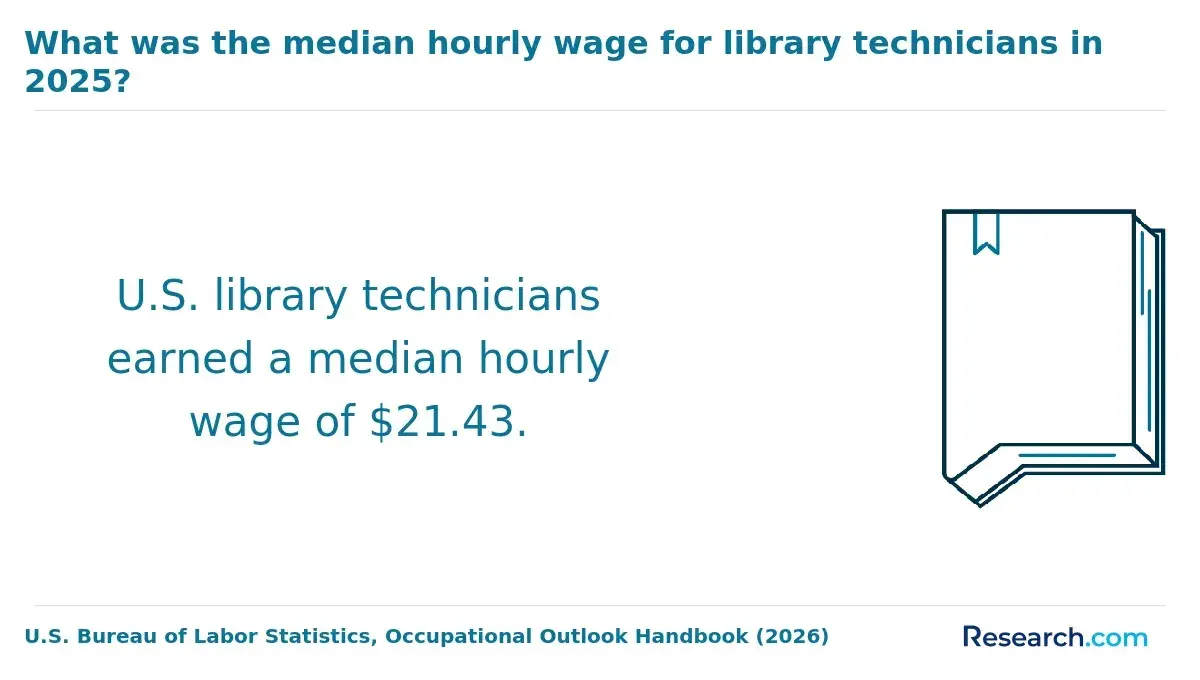
| Library technicians | $44,580 | −6.4% |
The difference between these occupational figures illustrates why job classification matters when estimating the financial value of an MLIS. It does not mean a new librarian will earn the librarian median or that a technician who earns a degree will move directly into a librarian opening. For an MSW comparison, research the pay and licensing requirements of the specific social work jobs you would seek, then weigh them against program cost and your current earnings.
How can you choose an accredited program for community library work?
Start with the credential your target jobs specify. For an LIS degree, check the specific master's program in the current American Library Association accreditation directory; accreditation of the university alone is not the same thing. For an MSW, check the program's status with the Council on Social Work Education and confirm that its pathway aligns with the state licensing rules relevant to your goal. Accreditation does not verify a particular elective, concentration, format, or placement.
Once you have confirmed credential fit, use the same questions for every school. This short sequence keeps an appealing program feature from obscuring a decisive constraint:
- Collect target job postings and mark required degrees, licenses, and experience.
- Verify program accreditation and, for social work or school-library goals, applicable state credential rules.
- Request current course schedules, applied-learning policies, and a completion plan for your enrollment pace.
- Compare total estimated costs and ask whether the program can support a project or placement relevant to community library work.
Students who need flexible LIS study can investigate a self paced library science degree, but should confirm how its assessments and schedule work in practice. The best choice is the program that meets your target role's requirements within a workload and budget you can sustain - not the one with the broadest marketing language.
Other Things You Should Know About Library Science
Follow the library's emergency and escalation procedures, including contacting designated staff or emergency services when appropriate. Do not improvise clinical advice. Ask a prospective employer how staff are trained for these situations.
Offer accessible registration information and materials, describe the venue clearly, and provide a straightforward way to request accommodations. Plan with the library's accessibility policies rather than requiring patrons to explain a diagnosis to attend.
Yes, if partners agree on responsibilities and keep referral information current. A useful arrangement makes clear what library staff can offer, when a partner takes over, and how patron privacy will be protected.
No. Many roles emphasize one profession and rely on partnerships for the other's expertise. Consider both degrees only if your intended work genuinely requires both forms of preparation and the additional time and cost make sense for you.
References
- Public libraries to promote public health and wellbeing - PMC https://pmc.ncbi.nlm.nih.gov/articles/PMC11069228/
- Code of Virginia Code - Chapter 37. Social Work https://law.lis.virginia.gov/vacodefull/title54.1/chapter37/
- Frequently Asked Questions for Social Work | nysed.gov https://www.op.nysed.gov/professions/social-work/faqs
- What is Social Work and What Do Social Workers Do? | buffalo.edu https://socialwork.buffalo.edu/admissions/is-social-work-right-career-for-me/what-is-social-work.html
- MLIS Curriculum, Specialties & Courses | University of Arizona College of Information Science https://infosci.arizona.edu/ma-library-information-science/curriculum-specialties-courses
- Social Workers and Public Libraries | iupui.edu https://journals.iupui.edu/index.php/advancesinsocialwork/article/view/23690
- Master's in Library and Information Science | UNC Greensboro https://www.uncg.edu/degrees/library-and-information-science-m-l-i-s/
- Full article: Anticipating and Overcoming Common Challenges for Library and Social Work Collaborations | tandfonline.com https://www.tandfonline.com/doi/full/10.1080/24750158.2023.2261598
- MLIS/MSW Dual Degree | Dominican University https://www.dom.edu/academics/grad-phd/dual-degrees/mlis-msw
- Social Work Licensing | Columbia School of Social Work https://socialwork.columbia.edu/content/social-work-licensing


