
2027 MLIS Programs for University Library Research Consultation

Co-Founder and Chief Data Scientist
Choosing an MLIS for university library research consultation means looking beyond a program's general library science courses. You need preparation for helping students and faculty turn complex questions into effective research strategies - and a way to practice that work. The U.S. Bureau of Labor Statistics projects 2.6% employment growth for librarians and media collections specialists from 2025 to 2035.
That broad outlook makes program fit and relevant experience especially important. This guide shows prospective academic librarians what to look for in a degree, what to verify before enrolling, and how to judge whether the investment suits their goals.
Key Things You Should Know
- Prioritize an ALA-accredited master's program with relevant reference and instruction coursework, plus opportunities to practice consultations; a course related to academic libraries is not necessarily a formal specialization.
- The May 2025 median salary for the broad U.S. occupation of librarians and media collections specialists was $68,270 - not a university research librarian starting salary or a program outcome.
- Compare total required credits, fees, elective availability, and access to academic-library experience before choosing an online or campus program.
What is an MLIS program for university library research consultation?
It is a library and information science master's degree that prepares a student for one-to-one or small-group research support in a college or university library. A research consultation might involve clarifying a student's topic, finding discipline-specific databases, developing search terms, evaluating sources, tracing citations, or referring a researcher to a specialist. Librarians also teach these skills through classes and research guides.
"Research consultation" usually describes a professional function, not the name of a degree concentration. Institutions award degrees under names such as MLIS, MLS, Master of Science in Library Science, or Master of Information. Judge the documented curriculum and experience opportunities rather than the degree abbreviation. A suitable program may combine reference services, information literacy instruction, academic librarianship, and a supervised library placement without advertising a dedicated research-consultation track.
Is an ALA-accredited MLIS required for academic library careers?
There is no universal legal requirement that every university librarian hold an ALA-accredited MLIS. Many professional academic-library postings, however, require or prefer a master's degree from an American Library Association-accredited program. Other postings accept equivalent information-science degrees or relevant experience, particularly for specialized roles. Read actual vacancies for the positions you want before deciding how much flexibility you have.
Check the specific master's program in the current ALA accreditation directory; a university's institutional accreditation does not establish ALA accreditation for its LIS degree. Accreditation also does not certify a particular research-consultation elective, placement, or online format. Confirm those features separately with the program. If you aim for subject-specialist positions, check whether employers also seek an advanced degree or substantial research experience in the discipline.
How do you become a university research librarian?
A practical route combines a suitable degree, direct work with researchers, and evidence that you can teach and troubleshoot searches. The sequence below helps you test the career before committing to a particular program.
- Read recent university-library postings in your target subject area; note degree requirements and recurring duties such as instruction, reference, or research data support.
- Seek a campus-library job, graduate assistantship, supervised practicum, or comparable opportunity that includes patron-facing research work.
- Choose courses and projects that let you conduct research interviews, teach search strategies, and assess whether your guidance helped.
- Build a portfolio with a research guide, lesson plan, or anonymized consultation reflection; never include a patron's identifiable research question without permission.
An accelerated degree can shorten the time spent studying, but it may leave less room for electives or a substantial placement. Compare any cheap accelerated library masters option against the course sequence and experience you need, not just its advertised completion time. If you already work in a university library, ask whether your duties can develop into supervised instruction or consultation experience.
What do MLIS programs teach about research consultation?
Relevant preparation spans more than a reference course. This table connects common areas of study to consultation duties so you can examine a catalog for substance rather than rely on a concentration label.
| Curricular area | Relevance to research consultation |
| Reference and information services | Research interviews, question clarification, search strategies, and appropriate referrals. |
| Information literacy and instruction | Teaching researchers to find, evaluate, and use information independently. |
| Information retrieval and discipline-specific resources | Database searching, controlled vocabulary, citation tracking, and subject literature. |
| Scholarly communication and research support | Questions about publishing, open access, copyright, and research outputs. |
| Research methods and assessment | Understanding research workflows and evaluating whether a service meets users' needs. |
Course titles alone do not establish depth or availability. Ask for recent syllabi, whether relevant electives are scheduled often enough to fit your degree plan, and whether students can practice with researchers. Responsible AI-assisted discovery is also worth discussing: a useful course should address verification, database coverage, citation accuracy, and patron privacy rather than treat generated answers as authoritative sources. Evidence-synthesis and research data services may require additional training beyond general reference coursework.
Are online or campus-based MLIS programs better for academic librarianship?
Neither format is inherently better. An online program can suit someone already employed near a university library who can arrange local experience. A campus program may make it easier to participate in nearby library work, but proximity does not guarantee a job or placement. In either format, the decisive question is whether you can complete relevant coursework and demonstrate research-support skills.
Check whether classes meet live, whether required courses run when you need them, and whether a practicum can be completed at an approved library near you. Online delivery does not necessarily mean self-paced study or a remote internship. If scheduling is your main constraint, a flexible online MLIS competency model may be worth investigating; confirm how that program assesses skills and accommodates academic-library experience before treating flexibility as a substitute for practice.
What are the admission requirements for MLIS programs?
Applicants generally need a bachelor's degree and must submit materials specified by each graduate program, often including transcripts, recommendations, a statement of purpose, and a résumé. Minimum grades, test policies, writing requirements, and deadlines vary. Library employment is valuable context for an application but should not be assumed to replace a published academic requirement.
Use your statement to explain why university research support interests you and how your academic or work experience connects to it. A disciplinary background can be useful for subject liaison work, but you do not need to assume that one undergraduate major is universally required. If you have already completed graduate study, ask about the institution's graduate transfer-credit policy; acceptance of a course elsewhere does not mean it will count toward this degree or a particular requirement.
How long do MLIS programs take and what do they cost?
Duration depends on required credits, enrollment pace, course sequencing, and any placement or capstone. Costs likewise depend on the tuition rate applicable to you and the number of credits you must complete. Without a named school and its current tuition schedule, a single price or completion-time estimate would be misleading.
For each program, calculate tuition using its published rate and required credits, then add mandatory fees, books or equipment, and any travel or lost work time associated with campus visits or placements. Ask whether online students pay a different rate and whether a needed elective is offered in time for your planned graduation. A comparison of value online library science masters is most useful as a starting point for checking each school's current charges - not as a substitute for your own total-cost estimate.
Separate the program's gross cost from what you expect to pay personally and what you would borrow. Scholarships, assistantships, employer support, and federal aid depend on eligibility and availability; confirm current terms with the school's financial aid office. Weigh the resulting debt against your existing earnings and the requirements of jobs you would realistically pursue, rather than assuming an MLIS produces a predictable pay increase.
What careers can you pursue with an MLIS in academic libraries?
Potential titles include reference librarian, research and instruction librarian, subject liaison librarian, and research services librarian. Duties differ: one position may emphasize teaching first-year students, while another supports faculty literature searches, scholarly communication, or research data practices. Some specialist roles call for disciplinary expertise in addition to an LIS degree.
Related academic-library work includes access services, metadata, repositories, and archives, but those jobs do not all have the same degree requirements or consultation duties. A paraprofessional library position can provide valuable experience without necessarily requiring an MLIS. If your goal shifts to a public library, investigate that employer's requirements separately; an Illinois public librarian career guide, for example, addresses a different setting from university research services. For roles centered primarily on data analysis or another technical specialty, compare the MLIS with a degree or training pathway in that field.
How much do university librarians earn?
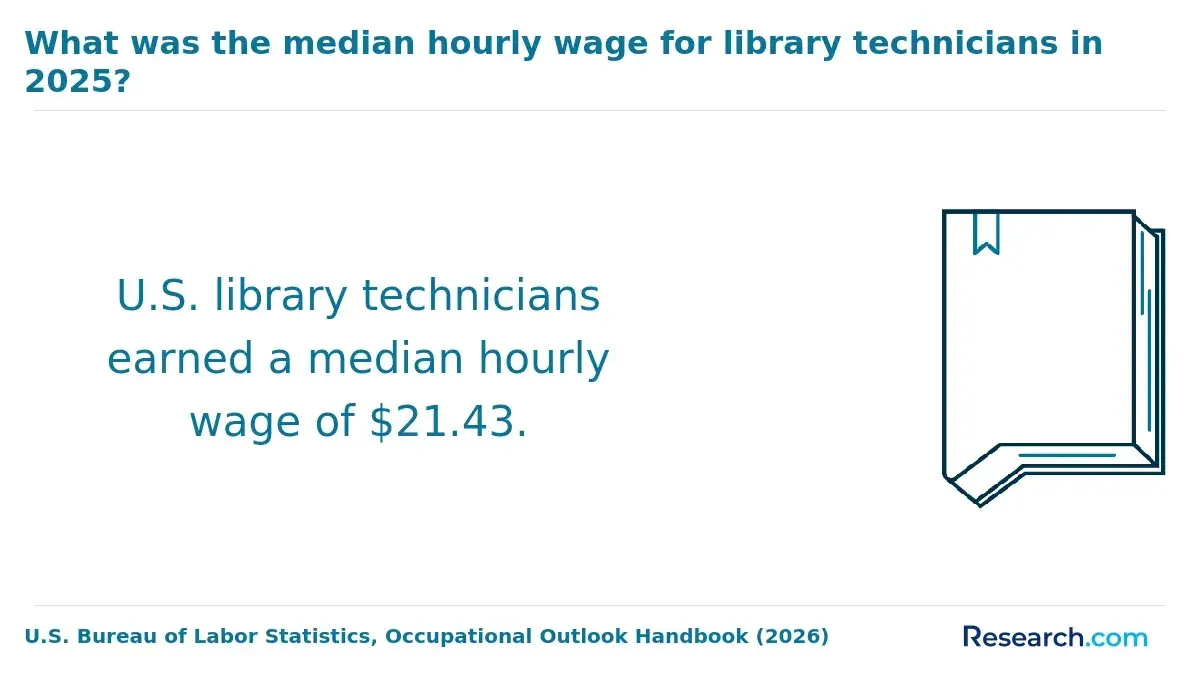
The U.S. Bureau of Labor Statistics reports a May 2025 median annual wage of $68,270 for librarians and media collections specialists. Its projected 2025-2035 employment growth for that occupation is 2.6%. Neither figure isolates university research librarians, entry-level salaries, or outcomes for graduates of a particular MLIS program.
For a more useful personal estimate, compare posted salary ranges for university-library roles in your target region and check whether they match your experience and subject qualifications. Publicly available salary options after an MLIS can help you explore other paths, but do not treat a higher-paying job title as an expected outcome of enrolling. Benefits, appointment length, and local living costs also matter when comparing offers.
What certifications and professional standards apply to academic librarians?
There is no single personal certification that every U.S. academic research librarian must hold. ALA accreditation applies to eligible master's programs, not to individual graduates. University employers set position qualifications, and specialized research-support duties may call for additional subject knowledge or training rather than a universal credential.
The Association of College and Research Libraries' Framework for Information Literacy for Higher Education is a useful reference for understanding how students learn to find and use information, but it is not a license or certification. For consultation work, professional judgment also includes accessible instruction, responsible handling of patron information, and clarity about the limits of advice on copyright, publishing, or research methods. Evaluate any optional certificate by the specific skills and job postings it addresses before paying for it.
Other Things You Should Know About Library Science
Bring the assignment or project description, the research question as it stands, and examples of searches or sources already tried. An unfinished question is fine; clarifying it can be part of the consultation.
A librarian can explain a citation style and help locate reliable guidance, but services differ by library. Do not assume a consultation includes proofreading or a full citation-by-citation review.
Usually, the librarian can help check available access routes and explain the institution's document-delivery or interlibrary-loan options. Eligibility and turnaround times depend on local policies.
Alumni access varies by institution and by service. Ask the library which consultations, databases, borrowing privileges, or on-site resources remain available after graduation.
References
- Roles for librarians in systematic reviews: a scoping review | nih.gov https://pmc.ncbi.nlm.nih.gov/articles/PMC5764593/
- Librarians-in-Residence Program | loc.gov https://www.loc.gov/item/internships/librarian-in-residence/
- Program: Library and Information Science, MLIS - Pitt Catalog https://catalog.upp.pitt.edu/preview_program.php
- MLIS Curriculum, Specialties & Courses | University of Arizona College of Information Science https://infosci.arizona.edu/ma-library-information-science/curriculum-specialties-courses
- MLIS Career Pathways: A Look at Academic Librarianship | SJSU https://ischool.sjsu.edu/istudent-blog/mlis-career-pathways-look-academic-librarianship
- Systematic Reviews - Library Guides at UChicago https://guides.lib.uchicago.edu/systematicreviewservice
- Ask a Librarian Internship Program | Columbia University Libraries https://library.columbia.edu/about/jobs-internships/Columbia_University_Libraries_Ask-A-Librarian_Internship.html
- Online Master of Science in Library and Information Science Curriculum | St. John's University Programs https://online.stjohns.edu/online-programs/mslis/curriculum
- MS in Library and Information Science | illinois.edu http://ischool.illinois.edu/academics/graduate/ms-library-and-information-science
- Systematic Reviews: Library Help and Levels of Services | calstatela.edu https://libguides.calstatela.edu/c.php


