
2027 MLIS Programs for Designers Moving Into Library UX

Co-Founder and Chief Data Scientist
Designers moving into library UX need to decide whether an MLIS will open the roles they want - or duplicate skills they already have. The U.S. Bureau of Labor Statistics reports a May 2025 median annual salary of $68,270 for librarians and media collections specialists, but that broad figure is not a library UX salary. This guide explains which jobs may call for an MLIS, what to look for in a program, and how to weigh coursework, experience, cost, and alternatives before enrolling.
Key Things You Should Know
- An ALA-accredited master's can matter for professional librarian positions, but library UX designer and researcher jobs may accept other degrees and experience.
- Look for both LIS foundations and documented opportunities to study user research, accessibility, discovery systems, and applied design; a relevant elective is not necessarily a formal UX concentration.
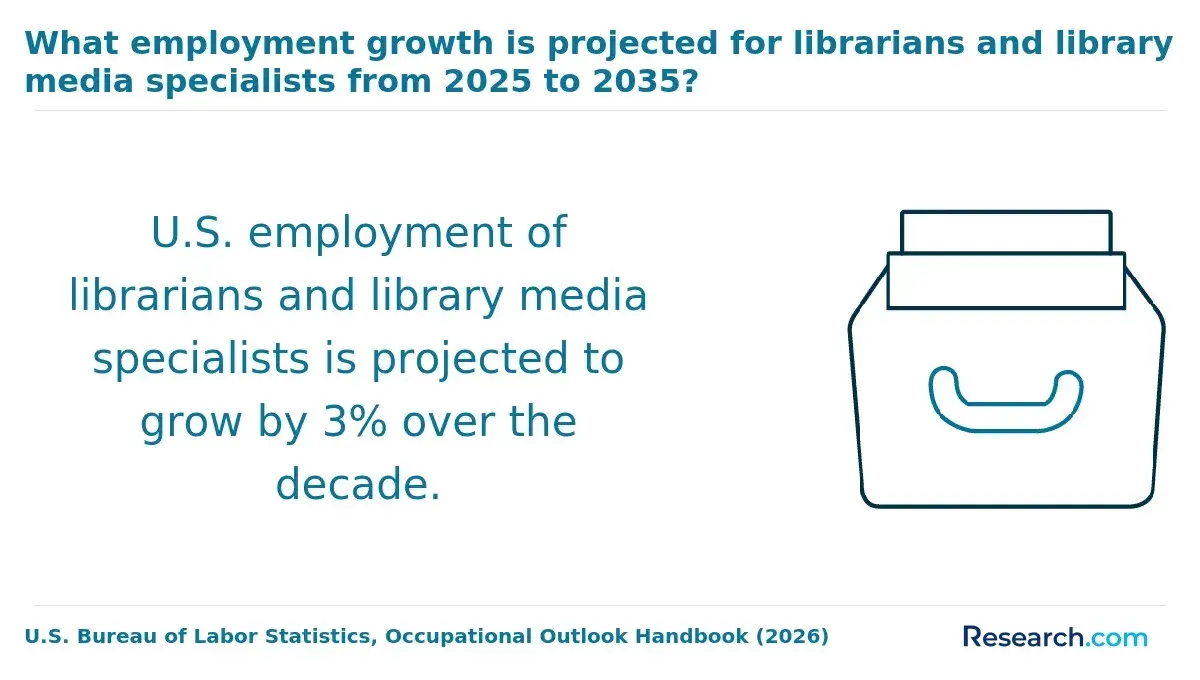
- BLS projects 2.6% employment growth for librarians and media collections specialists from 2025 to 2035; compare local postings rather than treating that broad projection as a forecast for UX-specific openings.
What is an MLIS degree for designers transitioning into library UX?
A Master of Library and Information Science (MLIS) prepares students to organize information and serve people through libraries and related institutions. For a designer, its distinctive value is learning the service context behind an interface: how patrons find materials, how discovery systems describe them, and how privacy, accessibility, and public service affect design decisions.
Library UX can encompass a website, catalog, research guide, self-service workflow, or the experience of finding help in a physical library. A strong program choice combines LIS fundamentals with relevant electives and applied work; it need not have a concentration literally called "library UX." Degree titles vary: an MLS, Master of Science in Library Science, or Master of Information may serve similar career goals, but applicants should check the specific curriculum and accreditation status rather than infer either from the name. An overview of library science degree programs can help frame that comparison.
Why does ALA accreditation matter for library UX careers?
American Library Association (ALA) accreditation applies to a specific master's program, not automatically to every graduate degree at an accredited university. It is an important screening criterion when pursuing professional librarian positions whose employers require or prefer graduation from an ALA-accredited program. It does not certify a UX concentration, guarantee access to a particular course, or replace an employer's assessment of design experience.
Check the current ALA directory for the exact degree and program under consideration, then read job postings in your intended setting. If they consistently require an ALA-accredited degree, prioritize that credential. If they seek a UX researcher or product designer and accept several degree backgrounds, compare the MLIS with less costly ways to gain library experience before committing.
What career paths can designers pursue with an MLIS degree?
The right credential depends partly on whether the position is classified as a librarian role or a design role. These common pathways show where an MLIS may add value without implying that every employer uses the same titles or requirements.
| Pathway | Typical work | Credential context |
| UX or user-experience librarian | Study patron needs and improve library services, websites, or discovery | Professional librarian postings may require or prefer an ALA-accredited master's |
| Digital services or discovery librarian | Improve search, navigation, access, and communication across library systems | Often combines librarian qualifications with technical and service experience |
| Library UX designer or researcher | Conduct research and design or test digital and physical experiences | May accept design, HCI, information, or LIS backgrounds |
| Academic-library web or service designer | Improve research support and student-facing services | Requirements depend on whether the job is a librarian appointment |
Public libraries may emphasize accessible community services, while academic libraries may focus on research discovery and student journeys. A designer who wants a professional librarian appointment has a stronger reason to pursue an MLIS. Someone who wants to remain primarily a product designer might first seek library projects, a relevant certificate, or an information-design role that does not require the degree.
Which MLIS programs offer library UX and human-centered design coursework?
There is no sound shortlist based solely on a "UX" label. Course catalogs, schedules, and program requirements must be checked for each institution: a catalog listing establishes that a course exists, not that it will run during your enrollment. Without verified, current program-level offerings, naming particular schools as UX pathways would risk overstating what students can actually take.
Start with ALA-accredited programs if your goal is a librarian appointment. Look for published courses in user research, human-centered design, information architecture, accessible technology, digital libraries, or information-seeking behavior. Then check whether those courses count toward the degree and whether a practicum, capstone, or independent project could produce work for a library UX portfolio. Ask the program for a recent course schedule and whether projects with libraries are available to online students. Treat a documented concentration, an elective, and permission to propose a project as three different levels of commitment.
Are online or campus-based MLIS programs better for aspiring UX librarians?
Neither format is inherently better for library UX. Online study may make it easier to keep a design job; campus study may make local library collaboration easier. In either format, access to patrons, research supervision, and a substantial applied project matters more than the delivery label.
Ask whether classes are asynchronous or meet live, when UX-relevant electives run, and whether any campus visits are required. Also confirm how a practicum is arranged: online coursework does not necessarily mean remote fieldwork. If speed is a priority, compare the published course sequence with an accelerated library degree timeline, then ask whether the electives you want fit that pace. An accelerated route is less useful if it leaves no room for research practice or portfolio work.
What are the admission requirements for MLIS programs?
Applicants generally need a bachelor's degree and the documents specified by each graduate program, which may include transcripts, a statement of purpose, recommendations, and a résumé. Policies on tests, minimum grades, prerequisites, and application deadlines vary. A design degree is not inherently a barrier; the statement of purpose should connect prior research and design work to the library users and services you hope to support.
If you have previous graduate study, check the program's library degree transfer credit rules before assuming earlier courses will shorten the MLIS. Transfer decisions can depend on course level, content, grades, age of credit, and limits set by the receiving institution. Ask for an individual review rather than counting credits toward your budget or graduation date in advance.
How long do MLIS programs take and how much do they cost?
Duration depends on required credits, enrollment pace, course sequencing, and whether a practicum or project can be completed alongside classes. Cost comparisons need the same level of care: multiply the published tuition rate by required credits, then add mandatory fees and likely expenses such as materials, travel, and practicum costs. Published tuition alone is not the total cost of attendance.
Compare the affordable rapid library degree options using your applicable tuition rate, not an advertised rate that may depend on residency or enrollment status. Ask whether working part-time through the degree would preserve income and employer support. Scholarships and reimbursement can reduce personal out-of-pocket cost, while borrowing changes when and how you pay; neither should be assumed available until confirmed. For financial aid, check current eligibility and loan terms with the school's aid office for your intended enrollment period.
What skills do designers need to succeed in library UX roles?
Design methods transfer, but library UX requires understanding what users are trying to accomplish with collections, services, and often unfamiliar terminology. Useful work combines interviews and usability testing with accessibility, privacy-conscious research, clear writing, and collaboration with librarians and technology staff. Knowing how a catalog or discovery tool exposes records and search filters helps a designer diagnose problems that a visual redesign alone will not solve.
Build a portfolio around the problem, evidence, constraints, decisions, and results - not just polished screens. A project might examine whether users can locate an accessible resource or complete a request through a library website. Obtain permission before using patron research or internal data, and explain how findings informed changes. Because libraries serve people with varied devices, abilities, and levels of digital access, test with participants who reflect the service population rather than relying only on design peers.
What salaries and job outlook apply to library UX careers?
BLS reports a May 2025 median annual salary of $68,270 and projected 2025-2035 employment growth of 2.6% for librarians and media collections specialists. Those figures cover a broad occupation, not a distinct "library UX librarian" category. A designer comparing offers should use them as occupational context, then inspect pay ranges for actual positions by location, employer, job classification, and experience level.
An MLIS may qualify you for roles that would otherwise be closed to you, but it does not establish a personal salary increase. Weigh tuition and foregone earnings against the requirements of jobs you would genuinely apply for. Broader information about library degree return on investment can inform the comparison, but a credible decision still depends on your current pay, likely borrowing, and local openings.
Do library UX professionals need licenses or additional certifications?
There is no universal U.S. library UX license. Employers may value accessibility training, research experience, or particular technical skills, but an optional certificate is not a substitute for an ALA-accredited master's when a posting requires one. Check the qualifications for the specific role rather than collecting credentials without a target.
School librarian positions are a separate case: state certification or endorsement requirements can apply even when a candidate has an MLIS, and an online MLIS does not automatically satisfy every state's rules. Verify the applicable pathway with the state education authority before choosing a program for school-library work.
Other Things You Should Know About Library Science
Yes. Show the research question, your role, the evidence behind design decisions, and what you learned. Explain how the approach could apply to a library service without claiming the project was library work.
Not automatically. Follow the library's consent, privacy, and data-retention rules, and remove identifying details before sharing a portfolio case study. Ask your project supervisor what may be made public.
Do not assume so. Some work can be done remotely, but patron observation, service testing, and collaboration may require time on site. Check each posting's location and schedule requirements.
No. It also concerns how people use collections, physical spaces, assistive technology, and staff-supported services. A useful UX study considers the complete task, not just whether a webpage passes a technical check.
References
- Usability | Digital.gov https://digital.gov/topics/usability
- Overview | Internships and Fellowships https://www.loc.gov/internships-and-fellowships/overview/
- Tips for Usability Testing with People with Disabilities | Section508.gov https://www.section508.gov/test/usability-testing-with-people-with-disabilities/
- Tuition Information | Office of the Registrar | Illinois https://registrar.illinois.edu/tuition-fees/tuition-info/
- Master of Library and Information Science (MLIS) | du.edu https://morgridge.du.edu/academics-advising/programs-gr/mlis-library-and-information-science
- Cost of Attendance - UChicago Financial Aid https://financialaid.uchicago.edu/graduate/costs/cost-of-attendance/
- What Can You Do With a Library Science Degree? | Syracuse University Online Master's Programs https://onlinegrad.syracuse.edu/information-science/mslis/library-science-careers/
- Internship Opportunities | Penn State University Libraries https://libraries.psu.edu/about/awards-scholarships-internships-and-graduate-assistantships/internship-opportunities
- Internships | Minnesota State University, Mankato https://library.mnsu.edu/about/information/jobs/internships/
- Library Science Careers - UW Information School https://ischool.uw.edu/programs/mlis/careers


