2027 MLIS Programs for Digital Scholarship Library Roles

Co-Founder and Chief Data Scientist
Choosing an MLIS for digital scholarship means looking beyond the degree title: the right program must help you work with research data, digital collections, and scholars. The U.S. Bureau of Labor Statistics reports a May 2025 median annual salary of $68,270 for librarians and media collections specialists, but that broad figure cannot predict pay in a specialized role. This guide is for prospective students and career changers comparing curricula, practical experience, accreditation, costs, and alternatives so they can choose a pathway that fits the work they want to do.
Key Things You Should Know
- Prioritize an ALA-accredited master's program with relevant electives and a feasible applied project; a course related to digital scholarship is not proof of a formal specialization.
- Build evidence of work with metadata, research data, digital collections, or scholarly communication. The field draws on several specialties, so the strongest course choices depend on your target job.
- Compare the full degree cost against likely opportunities: BLS projects 2.6% employment growth for librarians and media collections specialists from 2025 to 2035, not a guaranteed opening in digital scholarship.
What are MLIS programs for digital scholarship library roles?
These are library and information science master's programs whose coursework and applied opportunities can prepare students to support research conducted, shared, or preserved through digital methods. A digital scholarship librarian might advise faculty on a digital exhibit, help researchers organize and share data, develop metadata for a collection, or explain open-access publishing options. The work often combines technical problem-solving with teaching, consultation, and collaboration.
"Digital scholarship" is usually a career focus, not a standard degree name. An MLIS, MLS, Master of Science in Library Science, or institution-specific Master of Information may provide a suitable route, depending on its curriculum and the employer's requirements. When reviewing a school, distinguish an officially named concentration from relevant electives, an independent project, and general program alignment. None of those features alone establishes that graduates are prepared for every digital scholarship position.
Which accreditation should an MLIS program have for digital scholarship careers?
For U.S. professional librarian positions, ALA accreditation of the specific master's program is an important screening criterion because employers may require or prefer a degree from an ALA-accredited program. Check the program - not just the university - in the current American Library Association accreditation directory before applying. Institutional accreditation and ALA program accreditation answer different questions; neither verifies that a school offers a digital scholarship track, a particular elective, or an online practicum.
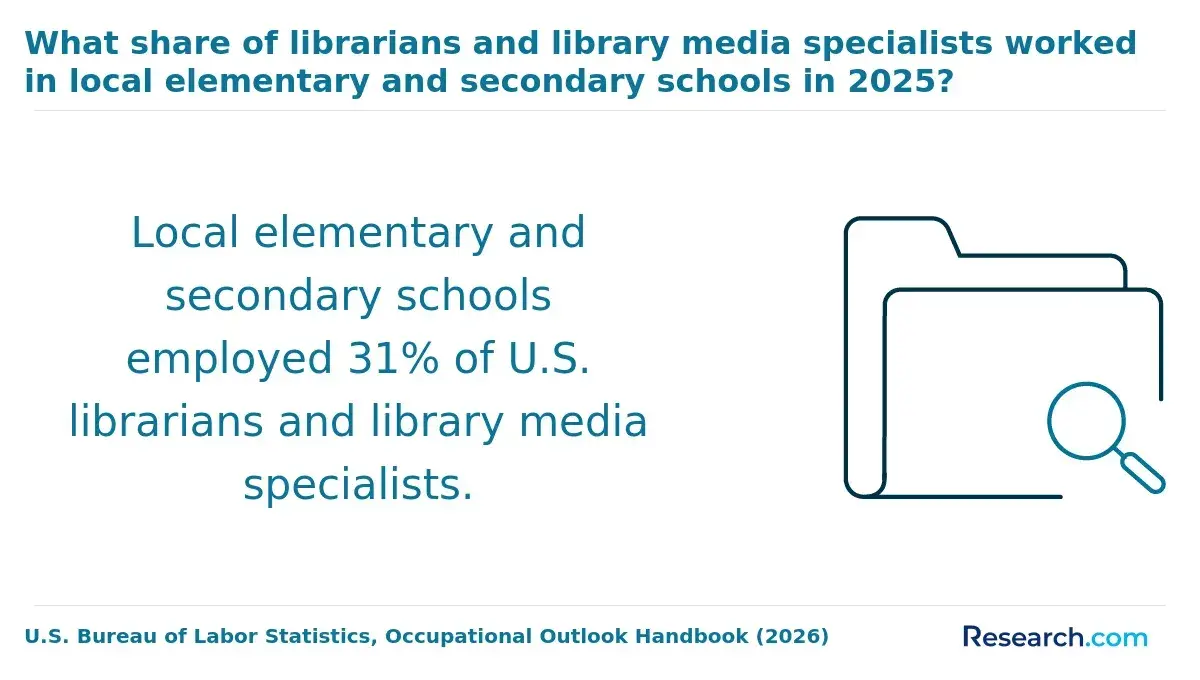
Read representative job postings alongside accreditation information. Some academic library positions accept an ALA-accredited LIS degree or an equivalent qualification, while more technical positions may consider other graduate degrees and substantial experience. If you are also considering school librarianship, check the relevant state education authority's certification rules separately; an online MLIS does not automatically confer a school librarian credential.
What degree pathways lead to digital scholarship librarian positions?
An ALA-accredited LIS master's with focused electives is a strong route for someone seeking professional librarian roles. Pairing that degree with research-assistant work, a digital collections project, or subject expertise can make the pathway more relevant to a particular department. Students interested chiefly in software development, data science, or a discipline-specific digital humanities role should also compare computing, information science, and subject-area degrees; an MLIS is not required for every adjacent job.
For someone who already has an LIS degree, a targeted certificate or supervised project may address a skills gap without repeating a master's program. If you are comparing ways to demonstrate existing skills while studying, online library science progress by skill offers another lens for evaluating degree pathways. Confirm how any individual program assesses skills and whether its available courses match your intended role.
Are online or campus-based MLIS programs better for digital scholarship?
Neither format is inherently better. An online program may let a working student remain employed and build a project with a local library or research group. A campus program may make it easier to join an in-person lab or work alongside faculty. In either format, access to relevant electives, project supervision, and research partners matters more than the delivery label.
Compare best accredited MLIS for working adults options against your actual schedule, then ask each school whether key courses are synchronous, how often they are offered, and whether a practicum can be completed where you live. Online delivery does not establish that all classes are asynchronous or that every placement can be remote. Campus students should similarly verify access to the projects they hope to join rather than assume that proximity guarantees a placement.
What coursework prepares students for digital scholarship library work?
Start with the work you want to perform, then look for courses and projects that produce evidence of those abilities. The table connects common areas of study with potential work products; course titles and availability vary by program.
| Area of study | Relevant work product | Why it matters |
| Metadata and knowledge organization | A documented description scheme for a digital collection | Helps people find, connect, and reuse materials |
| Research data management | A sample data-management plan or curated dataset | Supports responsible organization, documentation, and sharing |
| Digital preservation | A preservation workflow for born-digital files | Addresses continued access as files and systems change |
| Scholarly communication | A researcher-facing guide to publishing or repository options | Prepares students for consultations about sharing scholarship |
| Instruction and user research | An accessible workshop or usability assessment | Builds the teaching and collaboration skills the role requires |
Relevant library information science coursework can also include copyright, information ethics, and digital collections. Ask whether desired electives have recently run, whether students can take them in their planned sequence, and whether a capstone or independent study permits a digital scholarship project. A catalog listing is not a promise that a course will be offered during your enrollment.
What are the admission requirements for digital scholarship MLIS programs?
Requirements are set by the institution and degree, not by a universal digital scholarship standard. Applicants generally need a bachelor's degree and should check each program's current instructions for transcripts, recommendations, a statement of purpose, a résumé, and any testing or language-proficiency requirements. Prior programming experience should not be assumed either required or sufficient for admission.
Use the statement to connect your interests to specific, verified learning opportunities: for example, explain a research dataset you would like to document or a collection you would like to make accessible. Applicants changing careers can describe relevant teaching, research, records, publishing, or technical work without presenting it as a substitute for a published degree requirement. If your academic history or intended project does not fit the standard application guidance, request an individual clarification from admissions before relying on an exception.
How long do MLIS programs take and how much do they cost?
Completion time depends on required credits, enrollment pace, course sequencing, and any practicum or capstone. Cost depends on more than the advertised per-credit rate. For each school, calculate required credits × your applicable tuition rate, then add mandatory fees and expected project, technology, materials, and travel expenses. Ask how a delayed elective or placement would affect your completion date and additional term charges.
Use the same assumptions when comparing library science tuition duration and salary. Confirm whether online tuition differs by residency and academic year, and do not treat a scholarship or employer benefit as certain until its eligibility and renewal terms are clear. Gross program cost, your out-of-pocket cost after confirmed support, and the amount you borrow are different figures. Ask the financial aid office which aid rules apply to your enrollment period before making a borrowing plan.
A lower-priced degree can be a poor fit if the electives you need are unavailable; a more expensive one is not automatically worth the difference. Weigh the total expected cost against your current earnings, the qualifications in jobs you would actually pursue, and the value of relevant experience you can gain while enrolled.
What jobs can you pursue with an MLIS focused on digital scholarship?
Titles vary across academic libraries, archives, research centers, and cultural institutions. Digital scholarship librarians often consult with researchers and teach workshops; research data librarians help plan data organization and sharing; scholarly communication librarians advise on publishing and repository services. Digital collections or metadata librarians may concentrate on describing, managing, and providing access to materials. Job descriptions can overlap, so assess duties and required qualifications rather than relying on a title alone.
Professional librarian postings may require or prefer an ALA-accredited LIS master's. A repository developer, data analyst, or digital project manager position may instead emphasize technical experience or another degree. For a broader view of what can you do with library science degree, compare the qualifications in current postings for your target setting. Library assistant or technician work can provide useful exposure, but paraprofessional positions and professional librarian roles are not interchangeable.
How much do digital scholarship librarians earn?
The Bureau of Labor Statistics does not report a separate national median for "digital scholarship librarian." Its May 2025 median annual salary for the broader librarians and media collections specialists occupation was $68,270. Use that as occupational context, not as a starting-salary estimate or an outcome attributed to any MLIS program.
Actual pay depends on the employer, location, position level, responsibilities, and experience. When evaluating a degree's potential return, compare posted salary ranges for jobs you qualify for with the full cost of the program and the earnings you may forgo while studying. A specialized elective or portfolio can strengthen an application, but neither guarantees a higher-paying role.
What skills and certifications do digital scholarship librarians need?
The most transferable skills are researcher consultation, clear instruction, project scoping, accessible design, and the ability to document decisions. Technical needs depend on the job: one team may need metadata and repository expertise, while another needs data documentation, digital preservation, or basic scripting. Privacy and responsible use of AI-assisted tools matter when handling research materials or evaluating automated descriptions; students should be able to explain what a tool did and check its output.
Build a small portfolio that shows both a result and your reasoning: a metadata sample with a schema choice explained, a preservation plan, or a workshop designed for a defined audience. Obtain permission before sharing work created for an employer or research partner. No single certification is universally required for digital scholarship librarians. If an employer names a platform or credential, decide whether training in that tool is a better immediate investment than an additional qualification.
Other Things You Should Know About Library Science
Not automatically. Check the material's rights information, any license or permission, and your institution's guidance before publishing it. A classroom use case may differ from posting an exhibit publicly.
Only when you have appropriate permission and have addressed privacy, confidentiality, and any data-use agreement. A synthetic dataset or a carefully cleared public dataset may be safer for demonstrating your methods.
Accessibility should be part of the project plan, not a final cosmetic check. Consider readable text, meaningful image descriptions, keyboard access, and captions or transcripts where relevant, and follow your institution's requirements.
No. A repository typically manages and provides access to deposited research outputs or other institutional materials. A digital exhibit presents selected materials with interpretation for an audience; the two may draw on the same collection but serve different purposes.
References
- Types of Financial Aid: Grants, Work-Study, and Loans | studentaid.gov https://studentaid.gov/understand-aid/types
- Digital Scholarship Resources | Research Guides at Library of Congress https://guides.loc.gov/digital-scholarship/resources
- What does a digital scholarship librarian do anyway? | wm.edu https://libraries.wm.edu/blog/wm-libraries/what-does-digital-scholarship-librarian-do-anyway
- Librarians and Scholars: Partners in Digital Humanities | educause.edu https://er.educause.edu/articles/2014/6/librarians-and-scholars-partners-in-digital-humanities
- Master of Library and Information Science (MLIS) | du.edu https://morgridge.du.edu/academics-advising/programs-gr/mlis-library-and-information-science
- Tuition & Aid - Higher Education & Student Affairs, MA | University of San Francisco https://www.usfca.edu/education/programs/masters/higher-education-student-affairs/tuition-aid
- MLIS Master of Library and Information Studies - UA Online https://online.ua.edu/degrees/mlis-master-of-library-and-information-studies/
- What Can You Do With a Library Science Degree? | Syracuse University Online Master's Programs https://onlinegrad.syracuse.edu/information-science/mslis/library-science-careers/
- MLIS Curriculum, Specialties & Courses | University of Arizona College of Information Science https://infosci.arizona.edu/ma-library-information-science/curriculum-specialties-courses
- Best Online Master's in Library Science Programs 2027 https://www.mastersinlibraryscience.org/degree/