2027 MLIS Programs for Library Branch Operations Directors

Co-Founder and Chief Data Scientist
Choosing an MLIS for branch leadership means looking beyond the degree title: you need preparation to supervise people, run public services, manage resources, and respond to community needs. The U.S. Bureau of Labor Statistics projects 2.6% employment growth for librarians and media collections specialists from 2025 to 2035, so experience and program fit matter as much as the credential.
This guide is for prospective students and library employees weighing whether an MLIS is worth pursuing. It explains which courses, work opportunities, costs, and employer requirements deserve attention before you enroll.
Key Things You Should Know
- For many professional public-library leadership roles, an ALA-accredited master's is a strong credential, but employers set their own branch-director requirements; management experience remains essential.
- The BLS median salary for librarians and media collections specialists was $68,270 in May 2025. That broad occupational figure is not a branch-director salary.
- Compare programs by management coursework, access to applied branch experience, actual course scheduling, and total cost - not by an unverified promise of a "branch operations" concentration.
What Is an MLIS Program for Library Branch Operations Directors?
An MLIS program for this career is a graduate library and information science degree chosen to support public-library management. "Branch operations director" is an employer-specific title, not a standard MLIS concentration. Depending on the library system, similar positions may be called branch manager, branch head, or regional manager.
The work combines service and administration: coordinating staff coverage, coaching employees, monitoring a branch budget, overseeing programs and collections, handling facilities issues, and applying system policies.
A suitable degree gives you a foundation in librarianship; progressively responsible library work develops the judgment needed to lead a branch. An MLS or another institution-specific LIS master's may serve the same purpose if its accreditation, curriculum, and the employer's requirements align.
Do Library Branch Operations Directors Need an ALA-Accredited MLIS?
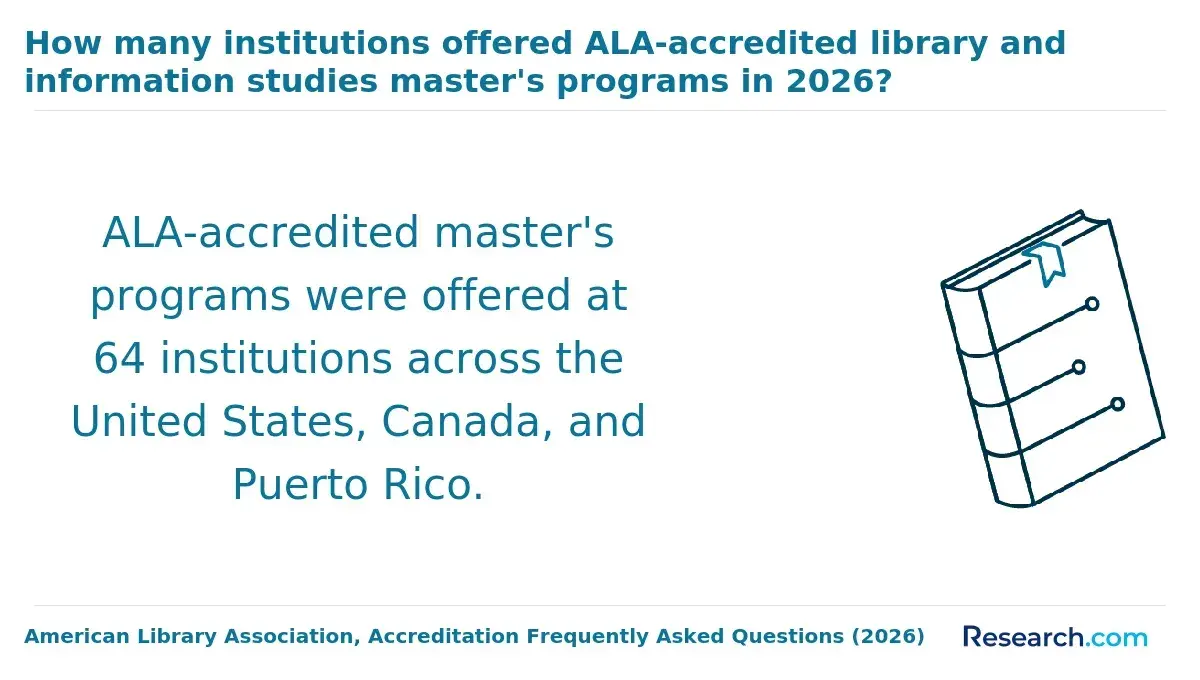
Not universally. Some public-library employers require a master's from an American Library Association (ALA)-accredited program for professional or management positions; others accept equivalent education or emphasize experience. Check actual job postings in the systems where you hope to work before treating any credential as mandatory.
ALA accreditation applies to a specific master's program, not automatically to every degree at an institution. Confirm the exact program and its current status in the ALA directory before applying.
Accreditation also does not establish that a school offers a management concentration, a particular elective, or a remote internship. If you plan to move between library systems, an ALA-accredited degree may preserve more options where postings specify it, but it will not substitute for supervisory experience.
Which MLIS Career Path Leads to Library Branch Operations Leadership?
A common route is to gain public-facing library experience, move into a professional librarian or supervisory role, and then apply for branch management.
The sequence varies: an experienced paraprofessional may already know circulation and scheduling but need the credential required for a professional opening; a new MLIS graduate may need time to build supervisory experience.
Seek assignments that show increasing responsibility, such as coordinating service-desk coverage, training colleagues, managing a program budget, evaluating a community partnership, or leading a service improvement.
Keep evidence of the problem, your decisions, and the result without disclosing patron information. If you already supervise people outside libraries, an MLIS can add library-specific knowledge, but you may still need direct experience with public-library services and policies.
What Do MLIS Programs Teach About Library Operations and Management?
Programs commonly provide a foundation in information services, collections, organization of information, and professional ethics. For branch leadership, the distinction is whether you can also study management and apply what you learn. A relevant elective is not the same as a formal concentration, and a course listed in a catalog may not run when you need it.
The following curriculum areas connect graduate study to recurring branch decisions. Use them to compare required courses, electives, and opportunities for applied work:
| Curriculum area | Branch-level application | What to check in a program |
| Library administration | Staffing, budgets, policy implementation, and service evaluation | Whether management study is required or elective |
| Public-library services | Community needs, programming, outreach, and inclusive access | Whether assignments address public-library settings |
| Collections and information services | Service-desk decisions, collection priorities, and patron support | Whether courses connect policy to day-to-day practice |
| Applied learning | Projects involving a service change, assessment, or partnership | Whether a practicum or project can be completed with a public library |
Digital inclusion, accessibility, privacy, and the responsible use of AI-assisted tools also affect how branches deliver services. A director needs enough understanding to evaluate staff training and patron impact, not necessarily to become a specialist in every technology.
Are Online MLIS Programs Suitable for Aspiring Branch Directors?
Yes, if the program lets you study while gaining or retaining relevant library experience. Online delivery can make an MLIS feasible for a working employee, but it does not guarantee asynchronous classes, flexible deadlines, or a fully remote practicum.
Ask how required courses are scheduled, whether live sessions are expected, and whether an applied project can use your current workplace.
For an experienced employee, comparing competency based MLIS programs may be useful, but confirm how each program assesses learning and whether its format accommodates management coursework.
Whichever format you choose, look for chances to practice supervision and collaboration with colleagues - not just individual assignments.
What Are the Admission Requirements for MLIS Programs?
Applicants generally need a bachelor's degree and must meet the institution's graduate admission requirements. Schools may request transcripts, a statement of purpose, recommendations, a résumé, or other materials; testing and prerequisite policies vary. A library job can strengthen your application, but it should not be assumed to replace a published academic requirement.
Use your statement to explain a specific leadership goal: the services you have worked with, a problem you want to learn to manage, and why the program's available coursework fits. If your academic record is unusual or you want graduate credits evaluated for transfer, request an individual review before assuming those credits will apply to the MLIS.
How Long Do MLIS Programs Take and What Do They Cost?
Completion time depends on required credits, course availability, and how many courses you take at once. Full-time study may take roughly two years; part-time study can take longer, particularly if a needed elective is offered infrequently. Ask for a course-by-course plan that reflects your intended pace rather than relying only on an advertised minimum.
To compare costs, multiply each program's required credits by the tuition rate that applies to you, then add mandatory fees and likely books, equipment, travel, or practicum expenses.
Published tuition is not the full cost of attendance, and online enrollment does not necessarily qualify you for an in-state rate. A search for a low cost online library science degree is a starting point; verify current charges directly with each school.
Separate the gross program cost from what an employer may reimburse and what you would personally borrow. Employer support may come with employment or grade requirements, while financial-aid eligibility depends on your circumstances and enrollment period.'
If you already hold a library position, compare the likely benefit of the degree against your current earnings and the actual qualifications for the promotion you want.
What Jobs Can You Get With an MLIS and Operations Experience?
Relevant opportunities include public services librarian, department head, branch manager, regional manager, and system-level operations positions.
The MLIS may satisfy a professional-degree requirement, while hiring decisions for leadership roles also depend on evidence of staff supervision, sound judgment, and results in a library setting.
Operations experience is useful outside branch management, but not every adjacent role calls for an MLIS. Someone more interested in preservation, repositories, or specialized collections should compare archives and digital library degrees with public-service-oriented study.
Those paths develop different expertise; they should not be treated as automatic stepping stones to running a public branch.
How Much Do Library Branch Operations Directors Earn?
There is no single national salary figure for the job title "library branch operations director." The BLS reports a May 2025 median annual salary of $68,270 for librarians and media collections specialists, with projected employment growth of 2.6% from 2025 to 2035.
This occupational category is useful context, but it combines jobs at different levels and should not be presented as a director's expected pay.
For a realistic comparison, examine posted salary ranges for branch leadership jobs in your target area alongside your current compensation and the degree's total cost.
Public-sector pay schedules, branch size, supervisory scope, and local budgets can change the calculation. Resources on inexpensive librarian masters with outcomes can help frame the cost discussion, but program-level earnings figures should never be read as a promise of promotion or salary.
How Should You Choose an MLIS Program for Library Leadership?
Start with the employers you might realistically join. Compare their degree requirements with each program's current accreditation, then evaluate whether you can build management skills and experience within your budget and schedule.
Location-based searches, including accredited Southern library science degrees, can narrow options, but verify each named program's status and costs independently.
Before committing, ask a program representative questions that test whether its published offerings will work for your specific goal:
- Which management and public-library courses can I take, and how often are they scheduled?
- Can I complete a project or practicum focused on branch operations, including at my current employer?
- What would the required credits, fees, and estimated completion schedule be at my intended enrollment pace?
- What leadership work could I show an employer when I graduate?
If local branch postings favor experience over an additional credential and you already meet their education requirements, a supervisory assignment or targeted professional development may be the better immediate step. If the MLIS is required for the roles you want, choose a program you can complete while accumulating credible leadership experience.
Other Things You Should Know About Library Science
A branch director typically leads one location or an assigned group of branches. A system director has responsibility for the wider organization, although titles and reporting structures vary by employer.
They may. Public libraries often offer service outside standard office hours, and a director's schedule may include coverage, events, or urgent issues. Check the specific posting and ask about on-call expectations.
A branch leader may coordinate the immediate staff response and follow the library's emergency procedures. Facilities teams and system administrators may handle repairs, closures, and broader decisions; clarify those responsibilities with the employer.
Boards generally provide governance rather than direct daily supervision. A branch leader usually works through the library's management structure, but the division of authority depends on the system's policies.
References
- Internships | Library of Virginia https://www.lva.virginia.gov/about/careers/internships
- College Internships & Library Practicum | nashville.gov https://library.nashville.gov/support/internships
- Facilities Management Institute | U.S. General Services Administration https://www.gsa.gov/governmentwide-initiatives/federal-highperformance-buildings/highperformance-building-clearinghouse/learning-resources/facilities-management-institute
- Chapter 6. Facility Management, Operations, and Maintenance | HHS.gov https://www.hhs.gov/about/hhs-manuals/hhs-facilities-manual/facility-management-operations-maintenance/index.html
- Remote and In-Person Learning: Utility Versus Social... - PMC https://pmc.ncbi.nlm.nih.gov/articles/PMC9769479/
- Junior Fellows Program | loc.gov https://www.loc.gov/item/internships/junior-fellows-program/
- Cost of Attendance (Budget) | 2025-2026 Federal Student Aid Handbook https://fsapartners.ed.gov/knowledge-center/fsa-handbook/2025-2026/vol3/ch2-cost-attendance-budget
- Types of Financial Aid: Grants, Work-Study, and Loans | studentaid.gov https://studentaid.gov/understand-aid/types
- Leadership and Management -- MLIS Career Pathway | SJSU https://ischool.sjsu.edu/leadership-and-management
- MLIS Admissions FAQ - UW Information School https://ischool.uw.edu/programs/mlis/admissions/resources/faq