
2027 MLIS Programs With Academic Library Practicum Partnerships

Co-Founder and Chief Data Scientist
Choosing an MLIS program for academic librarianship means looking beyond a university's list of library science courses: you need to know whether you can actually complete supervised work in a college or university library. The U.S. Bureau of Labor Statistics projects 2.6% employment growth for librarians and media collections specialists from 2025 to 2035, making relevant experience worth evaluating alongside the degree.
This guide helps prospective students distinguish documented placements from general internship options, compare online arrangements and costs, and choose a program that fits their intended work.
Key Things You Should Know
- A documented academic library placement is more useful than a general internship listing, confirm the host, supervision, eligibility, and placement process before enrolling.
- Check the specific master's program in the current ALA accreditation directory. Accreditation does not establish that an academic library practicum is available or guaranteed.
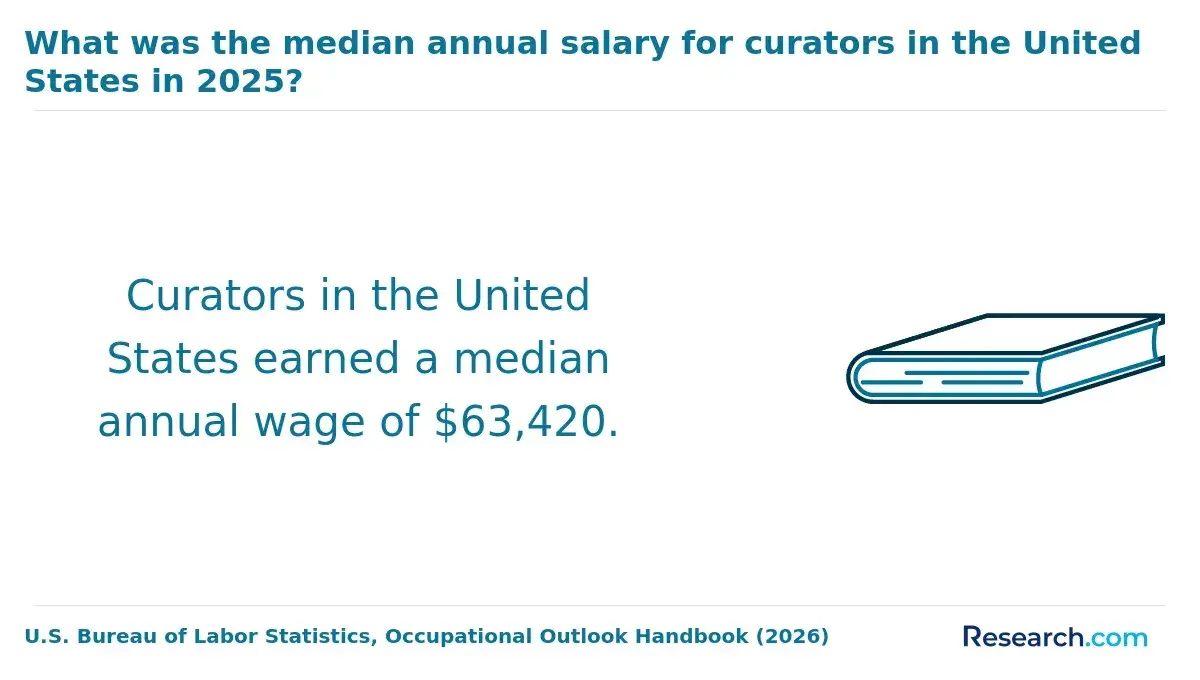
- The May 2025 median annual wage for librarians and media collections specialists was $68,270 across settings and experience levels - not an expected starting salary for MLIS graduates.
What are MLIS programs with academic library practicum partnerships?
These are master's programs in library and information science that provide a structured route to supervised experience in a college or university library. A placement may be arranged through an ongoing relationship with a host library, an agreement developed for an individual student, or a university library's established student-training program. The term partnership is not, by itself, proof that every student receives a placement.
A practicum usually combines defined learning objectives, a library-based supervisor, an approved workload, and evaluation by the host and academic program. It differs from an elective about academic libraries and from an independent project with no library host. Programs may call the experience an internship, fieldwork, or practicum; compare its requirements rather than its label.
Ask whether the host regularly accepts students from the degree program, which departments offer projects, and who secures the placement. Also determine whether it earns academic credit, is required or optional, and can be completed in a library near your home. Those answers matter more than a broad claim that students have "internship opportunities."
Why does ALA accreditation matter for academic library careers?
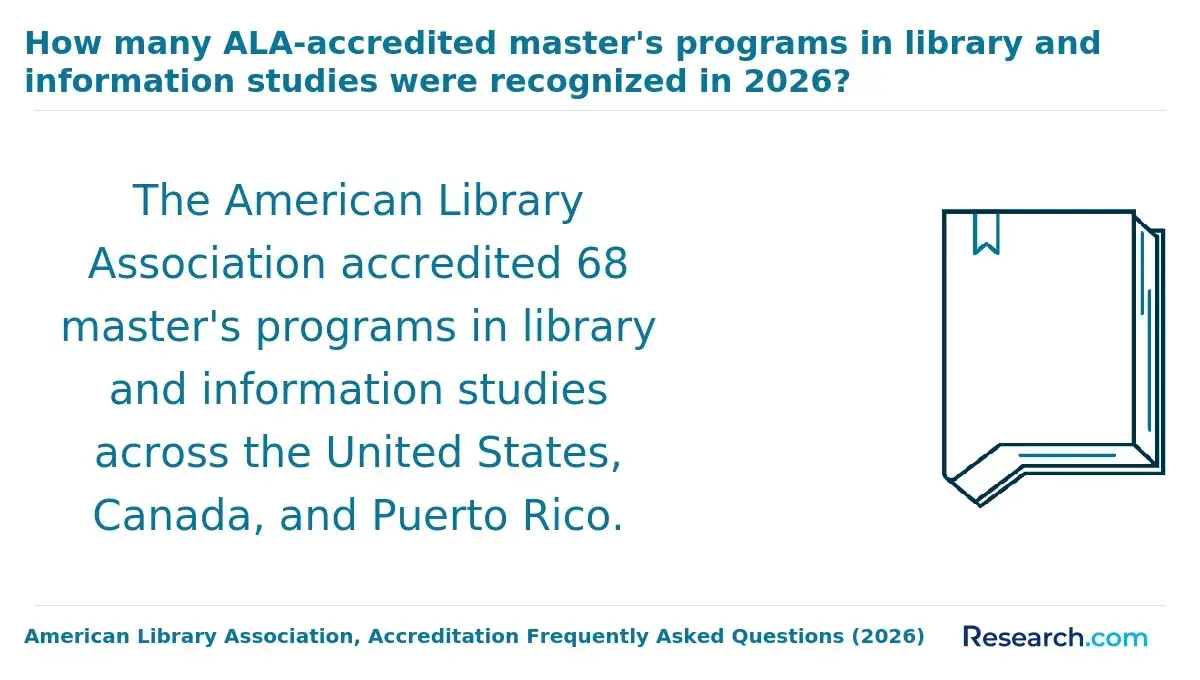
American Library Association accreditation evaluates a specific library and information studies master's program, not every degree at its university. Employers may require or prefer a master's degree from an ALA-accredited program for professional librarian positions. Check the program's current listing in the ALA directory, including the exact degree named there; institutional accreditation alone is not a substitute.
An MLIS, MLS, Master of Science in Library Science, or differently titled information degree can be relevant, but the title alone does not establish accreditation. Nor does ALA accreditation certify an academic library concentration, a particular course, an online format, or a practicum partnership. Verify each of those features separately in the current catalog and with program staff.
Some research-intensive or subject-specialist positions also prefer disciplinary expertise, teaching experience, or another graduate degree. Review actual postings for your target role before assuming that either accreditation or a practicum will satisfy every hiring criterion.
Which MLIS programs offer academic library practicum placements?
There is no dependable answer based on an internship page alone: a program may permit academic library placements without reserving places at named partner libraries. Conversely, a university library may host interns without promising a place to every MLIS student. Because partner arrangements and capacity can change, named recommendations require current confirmation from both the program and the host. Do not treat an unverified school list as a placement guarantee.
The following evidence levels help you compare programs consistently. They show what each published claim establishes - and what you still need to ask.
| Evidence available | What it supports | What remains to verify |
| Named academic library and documented placement process | A specific route to an academic library host | Current capacity, eligibility, project types, and selection |
| Approved practicum or internship course | A way to receive academic credit for fieldwork | Whether an academic library will accept you and who finds it |
| Academic librarianship courses or pathway | Relevant classroom preparation | Whether supervised academic library work is available |
Start with the ALA directory, then examine the current catalog and practicum handbook. Request examples of recent academic library hosts, whether placements were arranged by the school or students, and any restrictions for online learners. Compare those answers with the library science degree affordability and pay considerations that apply to your budget; a well-matched placement is only one part of the decision.
What do students do during an academic library practicum?
Projects depend on the host's needs and the student's preparation. A practicum in research services might involve answering supervised reference questions, developing a research guide, or helping teach information literacy - the skills students use to find, evaluate, and cite sources. Other hosts may offer collection assessment, accessibility work, or support for scholarly communication and open access.
Technical and digital projects can be equally relevant. A student might describe materials for a digital collection, improve metadata so resources are easier to discover, assist with an institutional repository that holds university research, or document a research data support workflow. Ask what deliverable you will complete and who will review it. Observing a service desk is useful, but a defined project can provide stronger evidence of what you can do.
Before accepting a placement, discuss supervision, access to necessary systems, training, and what work may be shown to employers. Patron records, unpublished research, and internal documents may need to remain confidential. A portfolio can instead include a public guide, a de-identified workflow description, or a reflection approved by the host.
How do online MLIS programs arrange academic library placements?
Online coursework does not mean the practicum can be completed online. A program may match students with nearby libraries, approve a host proposed by the student, or allow remote projects when the host and supervisor agree. Each arrangement has different implications for travel, work schedules, and access to library systems.
For a prospective online student, the placement process is worth checking in this order:
- Ask whether an academic library practicum is required, optional, or available only through a general internship course.
- Find out who contacts hosts, how far in advance approval is needed, and whether an existing employer can serve as the host.
- Confirm location, on-site hours, supervision, course enrollment, and any travel or background-check requirements before planning a term.
Asynchronous classes may ease scheduling without changing a host library's working hours. If flexible pacing is a priority, compare a competency based information science degree with conventional online study, but confirm whether its applied-work requirements fit your intended academic library experience.
What courses prepare students for academic librarianship?
Choose courses around the work you want to practice, not just a pathway's name. For instruction and research services, look for reference, information literacy instruction, research methods, and inclusive teaching. For collections and discovery, consider collection development, cataloging or metadata, and information organization. Digital scholarship, copyright, scholarly communication, and research data management may be useful for more specialized university library roles.
Distinguish a required course from an elective and a formally documented concentration from an informal set of choices. A catalog listing shows that a course exists; it does not establish that the course runs during your enrollment. Ask when relevant electives were last offered, whether online students can take them, and how prerequisites fit with the practicum term.
One coherent combination might pair instruction coursework with a supervised teaching project. Another might pair metadata coursework with a digital collections placement. The strongest choice is the one that leaves you with both foundational LIS knowledge and evidence of skills used in your target job.
What are the admission requirements for MLIS programs?
Applicants typically need a bachelor's degree and must submit materials specified by the individual graduate program, which may include transcripts, a statement of purpose, recommendations, and a résumé. Minimum grades, test policies, deadlines, and prerequisites vary. Check the current admissions page rather than assuming requirements are shared across ALA-accredited programs.
Prior library employment can strengthen an application and help you identify a practicum goal, but it should not be assumed to replace formal admission requirements. Applicants without library experience can use a statement to explain relevant teaching, research support, technology, or community-service work. If your academic record or professional background is unusual, ask admissions staff how it will be reviewed before paying an application fee.
Admission and placement approval are separate decisions. Ask whether practicum eligibility depends on completing core courses, maintaining academic standing, or receiving host approval; acceptance into the degree should not be mistaken for acceptance by a partner library.
How long do MLIS programs take and how much do they cost?
Completion time depends on required credits, course load, elective scheduling, and when a practicum can begin. A part-time student may need an additional term if a required course or placement is not available at the expected time. Request a sample plan for your intended enrollment pace, including prerequisites and the term in which fieldwork can be completed.
For a useful cost comparison, calculate required credits multiplied by the tuition rate that applies to you, then add mandatory fees and expected books, technology, travel, and placement expenses. Check whether practicum credits carry tuition and whether on-site work affects your ability to earn income. Published tuition is not the same as your total cost of attendance or the amount you will need to borrow.
If price is a major constraint, compare low cost library graduate degree options using the same credit and fee assumptions. Ask financial aid staff about aid eligibility and borrowing rules for your enrollment period, and check employer reimbursement or assistantship terms rather than counting on funding before it is awarded. A cheaper program may be the better fit if it offers an approvable local placement; a more expensive one needs a concrete advantage that matters to your goals.
What careers and salaries can MLIS graduates expect?
A relevant practicum can help applicants demonstrate experience for academic reference, instruction, collection development, metadata, digital collections, or scholarly communication roles. Job titles and qualifications vary: some professional librarian openings require an ALA-accredited master's degree, while adjacent technical or information-management jobs may accept other degrees or substantial experience. Library assistant and technician positions are distinct from professional librarian roles.
The Bureau of Labor Statistics reports a May 2025 median annual wage of $68,270 for librarians and media collections specialists. That figure covers workers across settings and career stages, not just academic libraries or recent graduates. Use local job postings - with their stated duties and pay ranges - to assess your likely entry point rather than treating the national median as an offer.
For specialized roles, compare postings and specialized MLIS job requirements before choosing electives. A subject liaison position, for example, may value disciplinary knowledge alongside research instruction, while a metadata position may place greater weight on demonstrated technical work. A practicum builds evidence of those skills but does not guarantee a job.
What job outlook and certifications apply to academic librarians?
BLS projects 2.6% growth for librarians and media collections specialists from 2025 to 2035. The projection describes a broad U.S. occupation, not vacancies in college libraries or the odds of employment for a particular graduate. Geographic flexibility, relevant projects, and experience working with students or researchers may matter more to an individual search than the national growth figure.
There is no single nationwide academic librarian license. Employers set position-specific education and experience requirements, so read current postings closely. Do not confuse academic library hiring with public-school librarian certification, which is governed by state-specific rules. If your plans include school libraries, consult the relevant state education authority; an online MLIS or academic library practicum should not be assumed to qualify you for that credential.
Location also shapes the decision. Someone considering several library settings in one state can use an Illinois library career change guide as a starting point, then verify the requirements for the specific academic or school position they intend to pursue.
Other Things You Should Know About Library Science
Payment depends on the host and arrangement; academic credit does not establish that a placement is paid. Ask about wages, credit requirements, and expenses before accepting an offer.
Some programs may approve an existing workplace if the proposed work meets learning objectives and supervision rules. Get written approval before assuming your regular duties qualify.
Ask the program how it handles replacement hosts, enrollment changes, and credit deadlines. Knowing the contingency process is especially important if the placement is required for graduation.
Only with the host's permission. Request approval for specific examples, remove confidential information, and describe restricted work without sharing protected records or documents.
References
- The Federal Work-Study Program - FSA Partner Connect https://fsapartners.ed.gov/knowledge-center/fsa-handbook/2022-2023/vol6/ch2-federal-work-study-program
- 34 CFR Part 675 -- Federal Work-Study Programs | ecfr.gov https://www.ecfr.gov/current/title-34/subtitle-B/chapter-VI/part-675
- Student Learning Outcomes | Wayne State University https://sis.wayne.edu/mlis/student-learning-outcomes
- MLIS Program Overview and Assessment Data | Reich College of Education https://rcoe.appstate.edu/academics/leadership-library-and-research/library-and-information-science/mlis-program-overview
- Library & Information Science, M.S. | St. John's University https://www.stjohns.edu/academics/programs/library-and-information-science-master-science
- MLIS student learning outcomes | Valdosta State University https://www.valdosta.edu/colleges/education/master-of-library-and-information-science/our-program/student-learning-outcome-assessments.php
- Program: Library and Information Science, MLIS - Pitt Catalog https://catalog.upp.pitt.edu/preview_program.php
- Practicums, Internships and Projects What's the Difference? | Oregon State University https://health.oregonstate.edu/internships/types-of-experiential-learning
- MLIS Program Performance - SJSU - School of Information https://ischool.sjsu.edu/mlis-program-performance
- How Internships, Practicums, and Clinicals Actually Work | Florida National University (FNU) https://www.fnu.edu/internships-practicums-clinicals-explained/


