
2027 MLIS Programs for Academic Library User Experience Research

Co-Founder and Chief Data Scientist
An academic library can offer extensive collections and still make it difficult for students to find an article, navigate a website, or get accessible help. User experience (UX) research investigates those barriers and tests improvements. For prospective MLIS students, the decision is whether a program offers enough research training and hands-on work to enter this specialty.
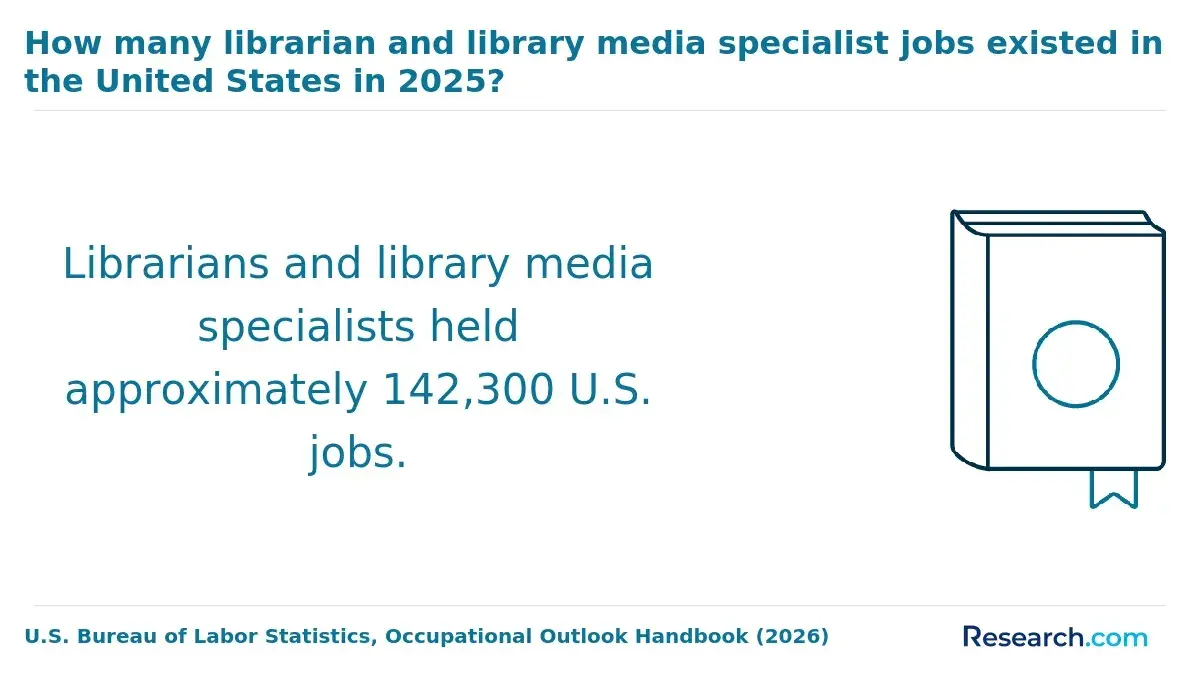
The U.S. Bureau of Labor Statistics reports a May 2025 median annual salary of $68,270 for librarians and media collections specialists - but that broad figure is not a UX-specific outcome. This guide shows what to look for beyond the degree title.
Key Things You Should Know
- Look for an ALA-accredited master's program with relevant research methods, accessibility training, and opportunities to study real library services; a UX-focused concentration is not essential.
- Compare actual elective schedules and applied-project access, not just catalog descriptions. A course listed in a catalog may not run when you need it.
- BLS projects 2.6% employment growth for librarians and media collections specialists from 2025 to 2035. That broad outlook does not predict demand for academic library UX specialists at a particular institution.
What is an MLIS program for academic library user experience research?
It is an MLIS - or another library and information science master's degree - with coursework and applied learning that prepare a student to investigate how people use academic library spaces, websites, discovery systems, and services. It need not be a formally named "academic library UX" program. Unless a university documents a concentration or track under that name, treat UX preparation as a pathway assembled through electives and projects.
The work combines questions about people and systems. A researcher might observe how students locate course readings, test whether a discovery interface communicates its options clearly, or interview faculty about research-support services. Findings can inform changes to navigation, signage, instruction, or service workflows. Good studies also account for accessibility and patron privacy; more clicks or longer visits are not automatically signs of a better experience.
When reading a program page, distinguish relevant coursework from experiential preparation. A research methods elective builds useful knowledge, while a supervised project gives you evidence that you can plan a study, interpret findings, and communicate a feasible recommendation. Neither alone establishes a formal specialization.
Which accreditation should academic library UX research programs have?
If you want to remain competitive for professional academic librarian positions, check whether the specific master's program holds current American Library Association (ALA) accreditation. An institution's accreditation does not establish that its MLIS, MLS, Master of Science in Library Science, or differently named LIS master's program is ALA-accredited. Confirm the exact degree in the current ALA directory before applying, because program names and statuses can change.
ALA accreditation concerns the graduate program; it does not certify an individual UX elective, guarantee that a practicum is available, or establish that graduates meet every employer's requirements. An academic library may ask for an ALA-accredited LIS master's and value UX experience, while a university's central UX team may consider applicants with other research or design backgrounds. Read several recent descriptions of the jobs you want before deciding how much the accreditation matters to your path.
What degree pathways prepare students for academic library UX research careers?
Choose the degree by the role you want to qualify for, then identify the research experience you still need. The pathways below differ most in their fit for librarian positions, rather than in whether they can teach research skills.
| Pathway | Strongest fit | What to verify |
| ALA-accredited LIS master's with UX electives and a library project | Professional academic library roles that combine librarianship and service research | Elective timing, project supervision, and access to an academic library partner |
| LIS master's with broader academic librarianship coursework | Reference, instruction, or digital services roles with some UX responsibilities | Whether you can build research-methods skills outside the core curriculum |
| Human-computer interaction, design, or related research degree | UX research positions that do not require a librarian credential | Whether target library jobs accept the degree and what library-domain experience you can gain |
An MLS or Master of Information may serve the same career goal as an MLIS, but degree names alone reveal little about accreditation or curriculum. If you already have graduate coursework, ask each school which credits are eligible for review, how many may count, and whether they replace required courses or only electives. Graduate transfer policies are school-specific; advice aimed at a library science degree for transfer students can help frame questions, but it does not establish an MLIS program's graduate-credit policy.
Which MLIS courses develop academic library UX research skills?
Start with research methods: you should be able to formulate a question, select participants appropriately, conduct interviews or usability tests, analyze evidence, and explain a study's limitations. Then look for coursework that helps you apply those methods to academic libraries. Course titles vary, so inspect descriptions and assignments rather than searching only for "UX."
A useful combination includes human-computer interaction or usability; information-seeking behavior; academic library services; accessibility; and assessment or evaluation. Instructional design can help with library guides and teaching materials, while information architecture concerns how content is organized and labeled. Basic statistics or qualitative analysis may strengthen either pathway, depending on the projects you want to undertake.
Applied work matters because library UX decisions rarely come from a single test. A strong capstone, independent study, or practicum could compare students' stated needs with observed difficulties using a library discovery tool, then propose changes that staff can evaluate. Ask who approves projects, whether you must find your own partner, and when relevant electives actually run. A catalog listing is evidence of a course's existence, not a promise that it will fit your schedule.
Also check whether coursework addresses accessible digital services and responsible use of analytics or AI-assisted discovery. Researchers should be able to evaluate what these tools help users do - and what their data cannot reliably tell them - without exposing individual patrons' information.
Should you choose an online or campus-based MLIS program?
Choose the format that lets you complete both the coursework and the fieldwork you need. Online study may make it easier to keep a job or work with a library near home. Campus study may offer easier access to university library staff and in-person observation. Neither format automatically provides a UX project, and online delivery does not necessarily mean asynchronous classes.
Before you choose the best online MLIS for your circumstances, ask whether key electives are live or self-paced, whether group meetings cross time zones, and whether a practicum can be completed with a local academic library. If you hope to study physical wayfinding or service desks, confirm that your project site permits in-person observation. If you work full time, map required courses and limited-schedule electives across the terms you expect to enroll; flexibility on a program homepage may not extend to every course.
Campus access is valuable when it leads to supervised research, not merely because classes meet in person. Compare the actual project opportunities, commute or relocation burden, and schedule constraints of each option.
What are the admission requirements for MLIS UX research programs?
Applicants generally need to document completion of a bachelor's degree and meet the chosen program's published graduate admission requirements. Schools may request transcripts, a statement of purpose, recommendations, a résumé, or other materials; prerequisites, tests, and deadlines vary. Check the current requirements for the exact degree and entry term rather than assuming that a UX-oriented elective has a separate admissions process.
Use your statement to connect a concrete question about library users to the program's documented offerings. Experience in a library, accessibility work, teaching, web content, or research can demonstrate relevant preparation, but it does not automatically waive a formal requirement. If your transcript, prior degree, or professional background is unusual, ask admissions for an individual explanation of eligibility before paying an application fee.
You can also ask when students choose electives or project supervisors. Being admitted to an MLIS does not necessarily reserve a place in a particular UX course or practicum.
How long do MLIS programs take and what do they cost?
Completion time depends on required credits, enrollment pace, course sequencing, and whether an applied project needs a host site or supervisor. Request a term-by-term plan for your intended pace - especially if a crucial elective is offered infrequently. A shorter advertised timeline may not fit someone balancing employment with fieldwork.
To compare costs fairly, multiply each program's published tuition per credit by its required credits, then add mandatory fees. Separately budget for materials, technology, travel or campus visits, and any practicum expenses. Check the applicable tuition rate for your residency and delivery format; online enrollment does not automatically qualify everyone for the same rate. A guide to the cheapest online library science masters that pay well can help start a comparison, but confirm current charges and requirements with each school.
Keep three figures separate: the program's gross cost, what you expect to pay after confirmed grants or employer support, and what you may finance through borrowing. Ask the financial aid office about eligibility and current loan rules for your enrollment period rather than assuming aid or reimbursement will be available. The best-value option is one whose total cost and attainable project experience fit the jobs you plan to pursue - not simply the lowest advertised tuition.
What careers can an MLIS support in academic library UX research?
UX work may be a dedicated position or one responsibility within an assessment, web services, digital initiatives, discovery, or public services librarian role. Titles differ across universities. Staff may conduct interviews and usability tests, analyze service feedback, collaborate with developers and accessibility specialists, and present recommendations to colleagues who can implement them.
An MLIS is especially relevant when the position also requires professional librarianship: understanding research workflows, teaching or reference services, and the library's obligations to its users. A university UX researcher working across many departments, however, may be hired on the strength of human-computer interaction training or research experience rather than an LIS degree. Reviewing specialized MLIS job requirements alongside actual local postings can help you distinguish a required credential from a preferred one.
For entry-level competitiveness, build a portfolio that shows the question, method, ethical safeguards, findings, limitations, and a practical recommendation - not just a redesigned screen. Relevant experience can come from a supervised library project or from user research in another service setting, provided you can explain how it applies to academic libraries. Avoid assuming that earning a UX-related elective alone qualifies you for a dedicated researcher position.
How much do academic library UX researchers and librarians earn?
The BLS reports a May 2025 median annual salary of $68,270 for librarians and media collections specialists in the United States. This is useful context for professional librarian roles, but it combines many settings and duties; it is not the median for academic library UX researchers or the expected salary of an MLIS graduate.
Compare posted pay for the specific titles and locations you are targeting. A dedicated UX role and a librarian role with occasional UX duties may have different qualifications and pay structures. For a personal return-on-investment decision, weigh realistic openings and compensation against tuition, borrowing, your current earnings, and the experience you can gain while studying. The occupational median cannot establish a payback period for a particular degree.
What job outlook and certifications apply to academic library UX research?
BLS projects 2.6% growth from 2025 to 2035 for librarians and media collections specialists. Because that category includes many kinds of librarianship, use the projection as broad labor-market context - not a forecast of UX vacancies at colleges and universities. Job postings will give you a clearer view of local expectations for research methods, accessibility, assessment, and collaboration.
There is no single UX certificate that substitutes for every employer's degree or experience requirements. Before paying for optional training, compare its assessed skills and project opportunities with the roles you want. If you are also considering school library positions, treat that as a separate credential decision: state educator licensure or endorsement rules may apply, and an online MLIS does not by itself establish eligibility in every state. Readers comparing paths in one state, for example, can use an Illinois library career change guide for context and confirm school-specific requirements with the state education authority.
A practical next step is to collect several current academic library postings, mark which qualifications are required and which are preferred, and compare that evidence with each program's confirmed courses and project options. Revisit the comparison before enrolling; both openings and course schedules can change.
Other Things You Should Know About Library Science
Show the user problem, your research question, method, findings, limitations, and recommendation. Describe your own contribution clearly, especially on a team project, and remove identifying participant information.
No. Analytics may reveal where activity occurs, but they generally cannot explain why someone struggled or whether they accomplished their goal. Pair appropriate aggregate data with methods that capture users' experiences, while following library privacy policies.
It depends on the project and the institution's rules. Ask your instructor or project supervisor before recruiting participants; they can direct you to the appropriate office to determine whether review is required.
Propose a small, supervised study of an existing service, such as finding a library guide or requesting help. Agree on the scope and permissions with staff first, then document what you learned and what the library could realistically change.
References
- Accessibility for designers and user experience (UX) researchers | Portland.gov https://www.portland.gov/officeofequity/digital-accessibility/how-make-accessible-web-content/accessibility-designers-and
- User Experience (UX) Internship:: Libraries | Swarthmore College https://www.swarthmore.edu/libraries/user-experience-ux-internship
- User Research Methods and Recommendations | harvard.edu https://enterprisearchitecture.harvard.edu/user-research-methods-and-recommendations
- Skill analysis of library and information science professionals | sagepub.com https://journals.sagepub.com/doi/full/10.1177/09610006231207656
- Library and Information Science, MS - Brooklyn | Pratt Institute https://www.pratt.edu/information/library-and-information-science/
- Master of Library and Information Science | Wayne State University https://sis.wayne.edu/mlis
- Journal of Education for Library and Information Science | utppublishing.com https://utppublishing.com/doi/10.3138/jelis-2025-0021
- Guidelines for Choosing a Master's Program in Library and Information Studies | ALA https://www.ala.org/educationcareers/accreditedprograms/guidelines-choosing-masters-program-library-and-information-studies
- Balancing Qualitative and Quantitative Data in UX Research | dovetail.com https://dovetail.com/ux/qualitative-and-quantitative-data-in-ux-research/
- When to Use Which User-Experience Research Methods | Nielsen Norman Group https://www.nngroup.com/articles/which-ux-research-methods/


