2027 MLIS Programs for Library Website Content Strategy

Co-Founder and Chief Data Scientist
A library website can make a service easy to find - or hide it behind confusing labels, outdated pages, and inaccessible content. If you want to improve that experience professionally, the right MLIS should build more than general librarianship skills.
The U.S. Bureau of Labor Statistics reports a May 2025 median annual salary of $68,270 for librarians and media collections specialists, but that broad figure cannot predict pay for a website-focused role. This guide shows prospective students and career changers how to evaluate coursework, applied experience, costs, and job requirements before choosing a program.
Key Things You Should Know
- Look for evidence of information architecture, accessible writing, usability research, and content governance, not merely a course labeled "technology."
- Confirm the specific master's program's ALA accreditation separately from its website-related electives; neither establishes that the other exists.
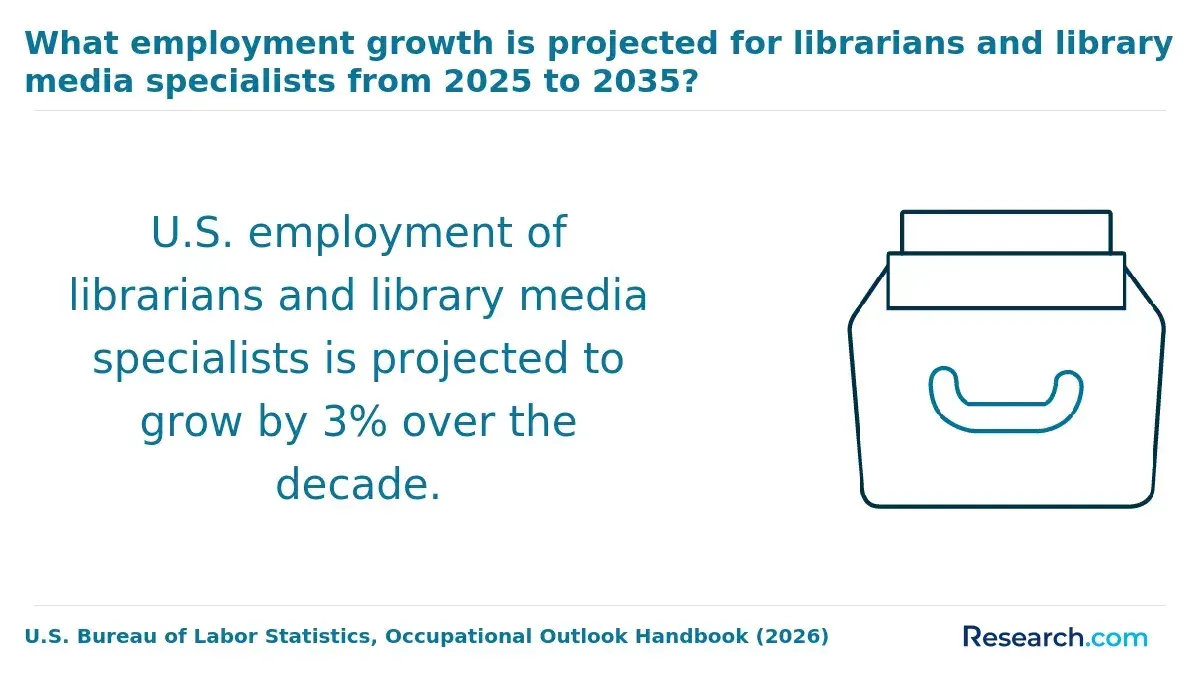
- BLS projects 2.6% employment growth for librarians and media collections specialists from 2025 to 2035; a portfolio and relevant experience matter when competing for specialized website work.
What is an MLIS degree, and what careers can it prepare you for?
A Master of Library and Information Science (MLIS) is a graduate degree in organizing information and helping people use it. Programs may instead award an MLS, a Master of Science in Library Science, or an institution-specific information degree. Compare the actual program and curriculum rather than assuming those titles indicate identical preparation.
For library website content strategy, the work involves deciding what information a site needs, how visitors find it, who maintains it, and how the library knows whether it works.
A strategist might audit service pages, revise navigation labels, establish writing standards, coordinate with subject librarians, and test tasks such as finding borrowing rules or research help. In a small library, this may be part of a librarian's broader job; a larger organization may have dedicated web, user-experience, or communications staff.
An MLIS can be particularly useful when website decisions require understanding reference services, discovery tools, information literacy, privacy, and public access. It is not the only route into digital content work: employers may also consider candidates with web, communications, design, or user-research experience.
Decide whether you want a professional librarian role that includes website responsibility or a primarily digital-content role that may not require an MLIS.
Why does ALA accreditation matter when choosing an MLIS program?
American Library Association (ALA) accreditation applies to a specific master's program, not automatically to every degree at an accredited university. It is an important screening criterion for applicants seeking professional librarian positions because some employers specify an ALA-accredited degree. Check the current ALA directory for the exact program and degree you are considering.
Accreditation does not certify a library website content strategy concentration, guarantee particular electives, or establish that an internship is available online. Evaluate that evidence separately in the current catalog and course schedule.
If a school advertises a "digital" pathway, ask whether it is a formally documented concentration, a suggested set of electives, or simply an area you can explore through individual projects.
How do online MLIS programs compare with campus-based programs?
Either format can support website-focused study if students can take relevant courses and complete meaningful applied work. The practical difference is access: an online student may need to arrange a local project partner, while a campus-based student may find it easier to participate in nearby library teams. Neither outcome is guaranteed.
Online does not necessarily mean self-paced. Ask whether courses meet live, when required classes run, how group work is scheduled, and whether any practicum or campus visit has an in-person requirement.
For someone already employed at a library, a supervised website project at work may be more valuable than proximity to campus, but the program must permit that arrangement.
Use an online library masters program guide to identify possibilities, then verify delivery details, course availability, and project rules directly with each program before applying.
What courses do students take in an MLIS program?
Most useful curricula pair LIS foundations with opportunities to study how people find and use digital information. The table distinguishes broad preparation from website-specific evidence; a catalog listing alone does not establish that an elective will run during your enrollment:
| Curriculum area | Connection to website content strategy | What to verify |
| Information organization and metadata | Supports consistent labels, categories, search results, and connections between content. | Whether assignments address digital discovery or website navigation. |
| Reference and user services | Reveals common visitor questions and the language patrons use to describe them. | Whether students analyze user needs or service interactions. |
| Information architecture or user experience | Develops skills in navigation, task flows, content audits, and usability testing. | Whether the course is offered and open to MLIS students. |
| Web content, accessibility, or digital services | Builds practice writing, evaluating, and maintaining usable pages. | Whether work includes an applied project rather than only theory. |
| Practicum, capstone, or independent study | Can produce a documented improvement for a real or simulated library site. | Approval rules, supervision, and whether a website project is permitted. |
A strong project might trace one patron task from search result to completed action, then document revised page language, navigation decisions, accessibility checks, and feedback.
If you hope to bring previous graduate coursework into the degree, ask how transfer friendly library science programs apply accepted credits to required courses versus electives; accepted credits may not replace the courses most relevant to your goal.
What are the admission requirements for MLIS programs?
Applicants should expect to document a completed bachelor's degree and follow each program's published application instructions.
Schools may also request transcripts, a statement of purpose, recommendations, a résumé, or writing materials; test policies and prerequisites vary. Check the current requirements for the specific degree rather than relying on a general graduate-school page.
Website experience can strengthen an application, but it is not universally required and does not automatically replace an academic admission requirement.
In your statement, connect a concrete problem, such as patrons struggling to locate a service, to the skills you want to develop. Applicants comparing flexible library science admissions should still confirm deadlines, document requirements, and any policies affecting working or returning students with each admissions office.
How long do MLIS programs take, and how much do they cost?
Completion time depends on required credits, enrollment pace, course sequencing, and any applied-work requirement. Ask for a sample schedule at your intended pace: a program can allow part-time enrollment yet offer a needed elective too infrequently for your preferred graduation date.
For a meaningful cost comparison, calculate required credits multiplied by the tuition rate that applies to you, then add mandatory fees and expected expenses for materials, technology, travel, and any practicum.
Published tuition is not the same as total attendance cost. Ask whether an online rate differs by residency, whether an extra term would add fees, and whether employer support or scholarships are available to you.
Compare those estimates against likely job requirements and your current earnings; neither a lower price nor an MLIS by itself establishes a financial return. A guide to cheapest online library science masters that pay well can help start a shortlist, but confirm current prices and required credits with the institutions.
What librarian certifications and licenses do MLIS graduates need?
There is no single license required for every U.S. librarian or library website content strategist. Requirements depend on the position and jurisdiction. Public or academic library website jobs may emphasize an appropriate graduate degree and demonstrated web work, while other roles may have additional employer-specific requirements.
School librarianship is a distinct decision: state education authorities set certification, licensure, or endorsement rules, and an online MLIS does not automatically qualify a graduate in every state.
If you want to manage a school library website as a licensed school librarian, verify both the program's preparation pathway and your state's requirements before enrolling.
Do not assume that a general web credential substitutes for school librarian authorization, or that such a credential is mandatory for every web-focused library job.
What jobs can you get with an MLIS degree?
Website content strategy is often a responsibility embedded in another position, so searching only for "content strategist" can miss relevant openings. The table shows plausible pathways and the qualification distinction that matters when evaluating postings:
| Role or pathway | Typical website-related work | How to assess MLIS fit |
| Digital services or web librarian | Maintains service pages, improves online access, and coordinates changes with library staff. | Check whether the posting requires an ALA-accredited degree and expects technical administration. |
| Public services or academic librarian | Uses patron questions and instruction experience to improve guidance and online service content. | Website duties may be only one part of a broader librarian position. |
| Library content strategist or UX practitioner | Plans content, tests navigation, sets standards, and measures whether visitors can complete tasks. | Employers may accept other degrees alongside substantial portfolio experience. |
| Web content specialist | Edits and publishes pages, manages review cycles, and works with subject experts. | An MLIS may help in a library setting but may not be required. |
For a competitive portfolio, show your reasoning as well as the finished page: define the audience and task, identify a content problem, explain your revisions, and report what testing or feedback showed. Seek permission before publishing work from an employer or practicum. Reviewing MLIS roles and salary potential can broaden your search, but the deciding evidence is the qualification and work described in each actual posting.
How much do librarians and information professionals earn?
The BLS reports a May 2025 median annual salary of $68,270 for librarians and media collections specialists. That occupational median spans many duties and employers; it is not a starting salary, a library website specialist salary, or an outcome for graduates of a particular MLIS program.
To judge a specific opportunity, compare posted pay with the role's scope, location, required experience, and whether website strategy is a primary responsibility or one duty among many.
Also compare positions that require an MLIS with content roles that accept other qualifications. This helps you assess whether the degree's cost is justified for the jobs you actually intend to pursue.
What is the job outlook for librarians and information professionals?
BLS projects 2.6% growth in employment for librarians and media collections specialists from 2025 to 2035. That projection describes a broad occupation, not demand for library website content strategists specifically. It should inform your expectations without standing in for a review of local and remote job postings.
Libraries' digital services create work involving discoverability, accessibility, content maintenance, and privacy, but organizations distribute those responsibilities differently. When assessing opportunities, collect several relevant postings and note recurring duties and qualifications.
If most appealing roles ask for an MLIS, choose a program with applicable projects; if they prioritize content design or web operations without requiring the degree, targeted experience or another educational route may be the better first step.
Other Things You Should Know About Library Science
Yes, as an independently labeled exercise. Make clear that your proposal is not affiliated with the library, avoid implying access to its internal data, and explain the limits of decisions made without staff or patron input.
Use clearly defined patron tasks and observe where a small group of participants encounters difficulty. Treat the findings as directional feedback, not as a representative measure of every visitor's experience.
Not necessarily. Clear writing, content organization, accessibility awareness, and collaboration may be central to the role. Basic familiarity with HTML and a content management system can help you communicate with technical colleagues; check postings for the jobs you want.
Ask the organization about permission and review any confidentiality or workplace policies first. If you cannot share screenshots, describe the problem, your process, and a nonconfidential example of your recommendations.
References
- Content governance: lightweight practices your team can adopt now | U.S. Department of Labor https://www.dol.gov/agencies/eta/ui-modernization/use-plain-language/content-governance
- Fact Sheet: New Rule on the Accessibility of Web Content and Mobile Apps Provided by State and Local Governments https://www.ada.gov/resources/2024-03-08-web-rule/
- Tips for Usability Testing with People with Disabilities | Section508.gov https://www.section508.gov/test/usability-testing-with-people-with-disabilities/
- The Complicated Role of the Modern Public Library | National Endowment for the Humanities https://www.neh.gov/article/complicated-role-modern-public-library
- Program: Library and Information Science, MLIS - Pitt Catalog https://catalog.upp.pitt.edu/preview_program.php
- Library and Information Science (online) (LBSO) | University of Maryland Catalog https://academiccatalog.umd.edu/graduate/programs/library-information-science-online-lbso/
- Online Master's Degree: Information Sciences | Vols Online https://volsonline.utk.edu/program/masters/information-sciences-ms/
- How to Audit Your Library Website for WCAG 2.1 Compliance | umich.edu https://journals.publishing.umich.edu/weaveux/article/id/218/
- MLIS Program Requirements and Curriculum | umd.edu https://info.umd.edu/academics/masters-programs/master-of-library-and-information-science/curriculum-specializations/
- Online Master of Science in Library and Information Science Curriculum | St. John's University Programs https://online.stjohns.edu/online-programs/mslis/curriculum