2027 What Jobs Can You Get With an MLIS in Digital Humanities?

Co-Founder and Chief Data Scientist
An MLIS can lead to digital humanities work, but the degree alone does not tell you which jobs you will qualify for or whether a program will help you build the right experience. The distinction matters as libraries, archives, and museums expand access to digital collections. U.S. employment of archivists is projected to grow 3.4% from 2025 to 2035, although that broad category includes many jobs outside digital humanities.
This guide connects specific roles to coursework, portfolio projects, credentials, and pay so you can decide whether an MLIS fits your career plans.
Key Things You Should Know
- MLIS graduates can pursue digital scholarship, digital collections, metadata, archives, and research-support roles; qualifications vary by employer and job title.
- Choose programs by their available courses and applied projects, not by assuming that a digital humanities course amounts to a formal concentration.
- The U.S. median annual salary for librarians and media collections specialists was $68,270 in May 2025. It is an occupational benchmark, not a digital humanities starting salary.
What jobs can you get with an MLIS in digital humanities?
An MLIS can prepare you to make humanities collections discoverable, help researchers use digital methods, and sustain projects after they launch.
Relevant job titles include digital humanities librarian, digital scholarship librarian, digital collections librarian, metadata librarian, digital archivist, scholarly communication librarian, and project coordinator. Titles are not standardized: read the duties and required qualifications rather than assuming two similarly named jobs are alike.
Academic libraries often employ specialists who consult with faculty and students on digital exhibits, text-based research, and publishing. Archives, museums, historical societies, and special collections may focus instead on digitization, description, rights, and long-term access. Some positions require an ALA-accredited LIS master's; others accept related graduate degrees or substantial technical and project experience.
If you are exploring careers beyond librarianship, compare the qualifications attached to different information science degree pathways. An MLIS is especially relevant when the work combines research support, collections, access, and stewardship; a computing or humanities degree may be a stronger match for a role centered primarily on software development or disciplinary research.
What does a digital humanities MLIS prepare you to do?
Digital humanities applies digital approaches to questions about history, literature, culture, and related subjects. In an MLIS pathway, the emphasis is usually on organizing sources, helping people find and interpret them, and keeping digital work usable over time, not necessarily leading the underlying humanities research.
Depending on the courses and experience available, graduates may describe digitized materials, manage a digital collection, advise on research workflows, or coordinate a public-facing exhibit.
Metadata, the structured information used to describe and connect materials, is central to much of this work. So are accessibility, copyright assessment, privacy, and digital preservation: an attractive project is of limited value if people cannot use it responsibly or the institution cannot maintain it.
Preparation is not uniform. A general MLIS may provide a foundation in information organization and reference work without offering substantial digital humanities practice. Before enrolling, look for evidence that you can complete a relevant project using real or appropriately licensed materials and explain your decisions to both technical and nontechnical collaborators.
What are the best digital humanities careers for MLIS graduates?
The best fit depends on whether you prefer working directly with researchers, building access to collections, or maintaining digital resources.
This comparison distinguishes the day-to-day work from the credential expectations you may encounter.
| Career path | Typical work | MLIS fit and likely gap to address |
| Digital scholarship or digital humanities librarian | Consults on projects, teaches tools and research practices, and coordinates campus partnerships | Strong fit for research support; build a record of collaborative projects |
| Digital collections or metadata librarian | Describes, organizes, and improves access to digitized or born-digital materials | Strong fit for information organization; demonstrate metadata and repository experience |
| Digital archivist | Appraises, describes, preserves, and provides access to digital records | Relevant pathway; obtain archival training and hands-on digital preservation experience |
| Scholarly communication specialist | Supports publishing, repositories, author rights, or open-access services | Relevant when the role serves humanities scholarship; develop publishing and rights expertise |
| Digital project developer | Builds or maintains websites, interfaces, and data workflows | An MLIS can add user and collections expertise, but employers may prioritize software-development experience |
For a first job, digital collections or research-support work may provide a practical entry point if you can show completed projects. A position leading a cross-campus digital humanities program may call for substantial collaboration or supervisory experience.
Conversely, if the jobs you want consistently require advanced programming or original humanities research, compare an MLIS with a technical degree or a subject-focused graduate degree before committing.
What coursework is included in a digital humanities MLIS program?
There is no universal digital humanities MLIS curriculum. Some schools may document a formal concentration; others offer relevant electives or permit an independent project. A course title alone does not establish that a specialization exists or that the course will be offered when you need it.
Look for a combination of information organization, archives or digital collections, digital preservation, research services, and practical work with digital tools.
Depending on your target role, useful electives might cover metadata schemas such as Dublin Core, which describes digital resources; text and data analysis; web publishing; copyright; or research data management. A practicum or capstone is most valuable when it produces work you can discuss with an employer and identifies your individual contribution.
Ask a program which relevant courses have run recently, which are required versus elective, who supervises applied projects, and whether a digital humanities placement is feasible. Applicants whose prior degree or experience does not match a program's usual profile can also investigate library masters programs with holistic review, while checking each school's actual admission requirements. Flexible review does not replace a stated degree requirement.
Do you need an ALA-accredited MLIS for digital humanities jobs?
Not for every job. ALA accreditation applies to specific LIS master's programs, not to an entire university or to a digital humanities concentration. Some professional librarian postings require or prefer a degree from an ALA-accredited program; digital project, museum, archives, and research roles may accept other relevant degrees or experience.
If you want to preserve eligibility for a broad range of U.S. librarian positions, check the specific program in the current ALA directory before applying. Then examine postings from employers you hope to work for. Accreditation can answer a credential question, but it does not verify that a school offers the electives, format, internship, or project opportunities you need.
How long does an MLIS in digital humanities take to complete?
Completion time depends on the program's required credits, your course load, and when relevant electives and applied experiences are available. Full-time study may take roughly two academic years, while part-time enrollment generally extends the timeline. Treat either estimate as a planning range, not a promise from a particular school.
If speed matters, compare published online MLIS in 12 months options against the courses and project experience your target job requires. An accelerated schedule may leave less room for a specialized elective or internship. Ask for a term-by-term plan showing when each course runs and whether an applied project can fit before graduation.
Are online MLIS programs suitable for digital humanities careers?
Online MLIS programs are suitable for digital humanities careers if the program lets you practice the work employers assess. Online study can accommodate an existing job and may allow you to develop projects with a nearby library, archive, or cultural organization. Delivery format alone does not guarantee flexible class times, remote internships, or access to specialized electives.
Check whether courses are asynchronous or require live attendance, what software and collections you can use, and how faculty supervise collaborative work. Confirm any campus visits and whether a practicum can be completed where you live.
If location and budget shape your search, comparisons of online librarian degrees in Southern states can help you build a shortlist, but verify current tuition rules and digital humanities opportunities directly with each program.
What skills do employers seek in digital humanities professionals?
Employers commonly need people who can translate between researchers' questions and the practical demands of collections, platforms, and users. The most useful skills depend on the role: a metadata librarian may need careful description and quality control, while a digital scholarship librarian may spend more time consulting, teaching, and coordinating partners.
A strong portfolio shows how you applied those skills, not merely which tools you encountered. One project could demonstrate a documented metadata workflow and accessibility decisions; another could explain how you scoped a digital exhibit, handled rights questions, and planned for maintenance. Describe the problem, your contribution, the choices you made, and what you would improve.
Technical fluency can include structured data, basic scripting, repository workflows, or text analysis, but not every position requires advanced coding. Human judgment remains important when using automated description or AI-assisted discovery: outputs still need review for accuracy, bias, privacy, and appropriate access.
How much can you earn with an MLIS in digital humanities?
There is no single U.S. salary category for digital humanities MLIS graduates. The following Bureau of Labor Statistics occupational medians from May 2025 offer context for related roles; they include workers outside digital humanities and should not be read as starting salaries or outcomes for a particular degree.
| Related U.S. occupation | Median annual salary, May 2025 |
| Librarians and media collections specialists | $68,270 |
| Archivists | $64,550 |
| Curators | $63,420 |
Compare an actual posting's salary, contract length, benefits, and location with your current earnings and the cost of study. Published tuition is only part of that calculation: required credits, fees, materials, and possible practicum travel also matter.
A guide to library science tuition and completion time can help frame the comparison, but obtain a current, individualized cost estimate from each school before deciding whether to enroll or borrow.
What is the job outlook for digital humanities careers?
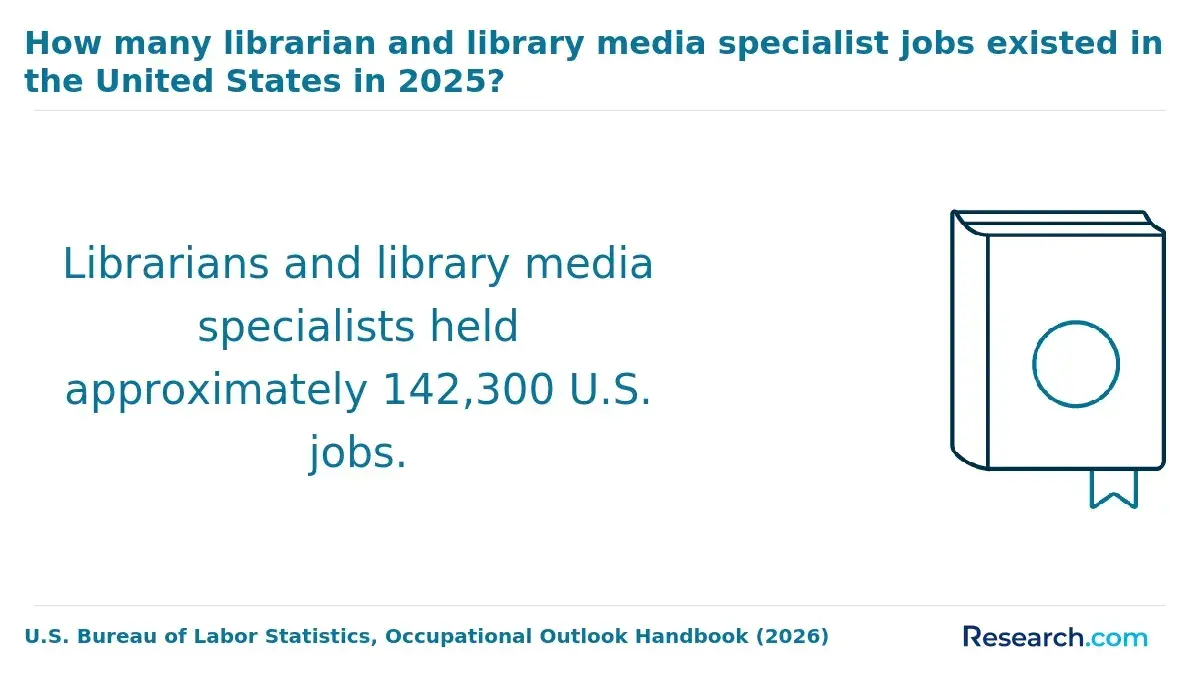
The Bureau of Labor Statistics projects 2.6% U.S. employment growth for librarians and media collections specialists from 2025 to 2035. That is a broad occupational forecast, not a projection of digital humanities vacancies. Specialized openings may depend on institutional funding, project priorities, and whether a position is permanent or grant-supported.
Build a search around duties rather than one title: digital collections, metadata, archives, scholarly communication, and digital scholarship postings may all involve humanities materials.
Compare the required degree, technical tasks, employment term, and evidence of prior work in several real postings before choosing electives. If those postings consistently seek skills you can gain through a smaller credential or professional projects, an MLIS may not be the most efficient next step.
Other Things You Should Know About Library Science Programs
Owning an item does not necessarily mean owning its copyright or having permission to publish it online. Check the item's rights status, any donor agreements, privacy concerns, and your institution's policies before releasing files.
It may qualify you to teach workshops or provide instruction through a library position. Faculty appointments in a humanities department can have different requirements, often tied to disciplinary research and teaching experience.
With permission, show a redacted workflow, sample metadata created from openly licensed material, screenshots cleared for sharing, or a written account of your decisions. Avoid posting restricted collection files or confidential information.
That should be agreed upon before launch. Project partners should identify responsibility for hosting, updates, accessibility fixes, rights questions, and preservation; otherwise, a successful pilot may become difficult to sustain.
References
- Pathways Programs | Institute of Museum and Library Services https://www.imls.gov/about/jobs/pathways-programs
- Introduction to Geospatial Resources and Formats | loc.gov https://www.loc.gov/preservation/digital/formats/content/gis_intro.shtml
- Job & Internship Opportunities | Columbia University Libraries https://library.columbia.edu/about/jobs-internships.html
- Library and Information Science: Digital Humanities - Guides https://guides.lib.uiowa.edu/c.php
- How to Become a Librarian: Steps, Skills & Career Tips | Syracuse University https://ischool.syracuse.edu/how-to-become-a-librarian/
- What are Metadata Standards | DCC https://www.dcc.ac.uk/guidance/briefing-papers/standards-watch-papers/what-are-metadata-standards
- Future of Jobs Report 2025: The jobs of the future | World Economic Forum https://www.weforum.org/stories/2025/01/future-of-jobs-report-2025-jobs-of-the-future-and-the-skills-you-need-to-get-them/
- What Are Employers Looking for When Reviewing College Students' Resumes? | naceweb.org https://www.naceweb.org/talent-acquisition/candidate-selection/what-are-employers-looking-for-when-reviewing-college-students-resumes