
2027 MLIS Programs for Subject Headings and Controlled Vocabulary Work

Co-Founder and Chief Data Scientist
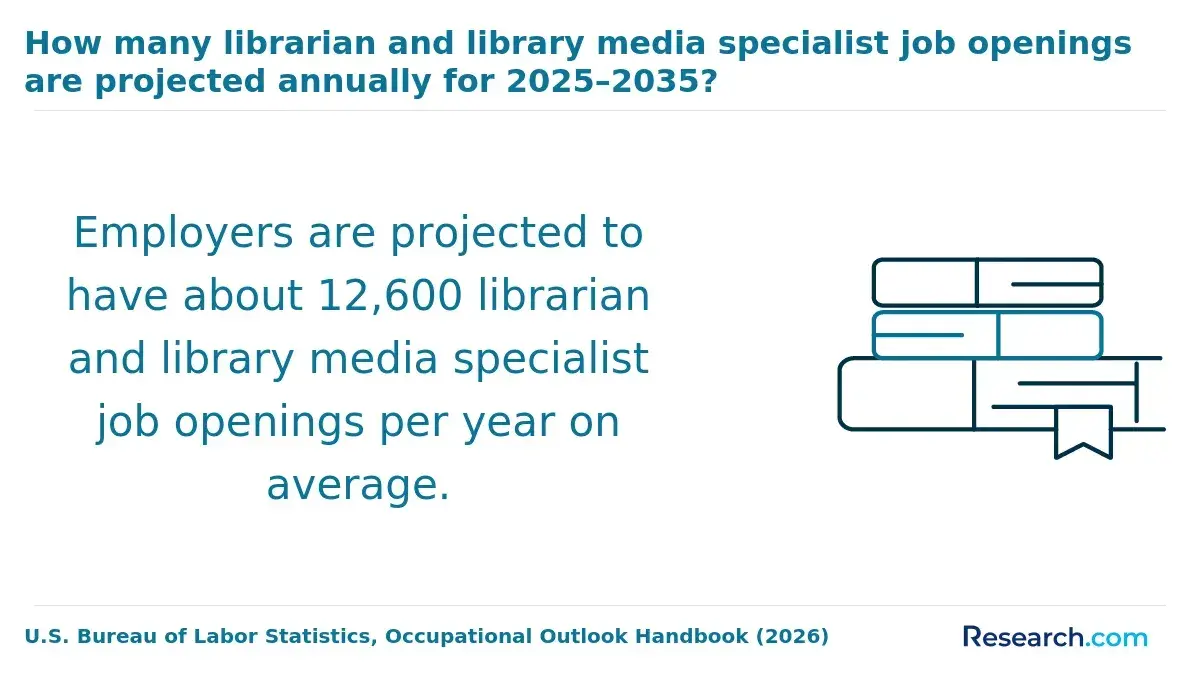
Choosing an MLIS for subject headings work takes more than finding "cataloging" in a course catalog. Students need practice applying vocabularies, managing authority records, and making subjects discoverable across systems. The U.S. Bureau of Labor Statistics projects 2.6% employment growth for librarians and media collections specialists from 2025 to 2035, making preparation and career fit worth examining carefully. This guide helps prospective students compare curricula, applied opportunities, costs, and credentials without mistaking a relevant elective for a guaranteed career pathway.
Key Things You Should Know
- Look for subject analysis, cataloging, metadata, and authority-control work in the actual curriculum; a single relevant elective is not a formal specialization.
- Verify ALA accreditation for the specific master's program, then ask whether the courses and applied projects you need will be available during your enrollment.
- The May 2025 median annual pay for the broad BLS category of librarians and media collections specialists was $68,270 - not a salary estimate for new metadata graduates.
What are MLIS programs for subject headings and controlled vocabulary work?
These are library and information science master's programs in which students can build skills for describing what resources are about. A subject heading is a standardized term used to represent a topic in a catalog. A controlled vocabulary supplies approved terms and relationships so that different words for the same concept do not scatter relevant results.
The work extends beyond assigning labels. Practitioners analyze a resource's subject, choose appropriate terms, distinguish ambiguous names or concepts, maintain authority records, and check whether users can retrieve the resource. Library of Congress Subject Headings (LCSH) are one important vocabulary, but employers may use other thesauri, taxonomies, or locally maintained terms.
An MLIS is one possible degree title; institutions also use MLS, Master of Science in Library Science, Master of Information, and other names. Degree title alone does not establish either ALA accreditation or specialized preparation. Most applicants should seek a documented combination of relevant coursework and hands-on description work, rather than expect a concentration literally named "subject headings."
Which MLIS programs offer cataloging, metadata, and subject analysis courses?
There is no dependable universal list based solely on degree titles: institutions use different course names, and a catalog listing does not establish that an elective will run while a student is enrolled. The most useful shortlist consists of ALA-accredited master's programs whose current catalogs document the particular combination a student needs.
Look beyond a general "organization of information" requirement. Course descriptions that explicitly address subject analysis, descriptive cataloging, classification, authority control, metadata schemas, or knowledge organization provide stronger evidence of relevant coursework. A documented practicum, capstone, or independent study involving real records provides separate evidence of experiential preparation. Neither proves that the program offers a formal concentration unless the university names and defines one.
When comparing programs, request a recent course rotation or tentative schedule and ask whether advanced cataloging and metadata courses are required or elective. Confirm prerequisites, enrollment limits, and whether a project can involve an actual catalog, repository, or digital collection. Those answers are more useful than an unverified list of supposedly "best" schools.
How do you choose an ALA-accredited MLIS program for controlled vocabulary careers?
First, confirm that the specific master's program appears in the current ALA accreditation directory. A university's institutional accreditation does not establish ALA accreditation, and ALA accreditation does not guarantee a particular elective, concentration, delivery format, or internship.
After that check, use the same questions for every program on your shortlist:
- Which required and elective courses teach subject analysis, cataloging, metadata, and authority control?
- When are those courses expected to run, and can you complete their prerequisites in the right order?
- Can you produce reviewed sample records, a taxonomy, or another relevant portfolio project?
- What are the total required credits, fees, format constraints, and opportunities for supervised experience?
Give particular weight to the type of work you want. A library cataloger may need substantial MARC and RDA practice; someone targeting a digital repository may need more experience with metadata mapping and local vocabularies. For a broader comparison of accreditation considerations, see this guide to best online librarian degree accreditation, then verify the current status and curriculum of each program directly.
What do MLIS students learn about controlled vocabularies and information organization?
Students learn to turn a resource's subject matter into consistent, usable access points. That involves both judgment - what the resource is substantially about - and technical work - how terms are recorded, connected, displayed, and maintained.
The following concepts show how classroom topics relate to the work without assuming every MLIS teaches each one in equal depth.
| Concept | Application to subject access |
| Subject analysis and classification | Identify a resource's principal topics and distinguish topical access from its shelf placement or call number. |
| Authority control | Connect variant names or terms to a consistent authorized identity or concept. |
| MARC, RDA, and BIBFRAME | Understand common approaches to recording and exchanging bibliographic descriptions; their purposes and implementation differ. |
| Dublin Core and local metadata | Describe digital objects and map subject information between systems. |
| Taxonomies and linked data | Represent relationships among concepts so systems can support navigation and reuse. |
Good preparation also addresses accessibility and inclusive description. Students should be able to explain when a standard term supports interoperability, when it may misrepresent a community, and how an institution can document local alternatives without losing useful connections to shared records. AI-assisted term suggestions may speed review, but a person still needs to evaluate accuracy, bias, and the vocabulary's rules.
Are online MLIS programs effective preparation for cataloging and metadata work?
They can be, if students receive structured practice, feedback on their records, and access to the tools and datasets used in assignments. Delivery mode alone says little about whether graduates have practiced assigning headings, resolving authority conflicts, or correcting metadata at scale.
Ask for examples of cataloging assignments and how instructors review them. Check whether courses are asynchronous or require live attendance, whether advanced electives are offered online, and whether any practicum has on-site requirements. "Online" does not necessarily mean self-paced or free of travel. Students balancing work and study can compare scheduling questions using this guide to online librarian masters pacing.
Where a program permits it, a supervised project with a local library or digital collection can supply practical experience without requiring a campus-based degree. Confirm the placement rules before assuming remote work will qualify.
What are the admission requirements for cataloging-focused MLIS programs?
Applicants generally enter through the program's standard master's admissions process, not a separate cataloging license or subject-analysis examination. A bachelor's degree and academic transcripts are common baseline requirements; statements of purpose, recommendations, résumés, test policies, and minimum academic standards vary by institution and term.
Prior library work can help an applicant explain their interests, but it does not automatically replace a published degree requirement or guarantee admission. Applicants without cataloging experience can describe relevant work in data cleanup, indexing, multilingual research, database management, or careful application of editorial rules.
Compare each school's current admissions checklist and contact admissions staff about unusual transcripts, prior graduate credit, or a missing prerequisite before applying. This overview of MLIS programs with flexible admissions can help frame those questions; an individual program must confirm its own policies.
How long do MLIS programs take, and how much do they cost?
Many full-time master's study plans are built around approximately two academic years, but completion depends on required credits, enrollment pace, prerequisites, and when advanced electives are offered. Part-time students should request a term-by-term plan: a course that appears only at particular times can extend the path to graduation.
There is no responsible single price for this specialization. Compare required credits × applicable tuition per credit, then add mandatory fees, materials, and any travel or practicum expenses. Published tuition is not the full cost of attendance, and an online student should not assume eligibility for in-state rates. For regional options, affordable Southern online MLIS programs can be a starting point, not a substitute for each university's current tuition schedule.
Ask financial aid offices which funding options apply to your enrollment period and status. Scholarships and employer support can reduce personal out-of-pocket costs, while loans change when costs are paid rather than reducing the program's gross price. Compare likely borrowing with your existing earnings and the requirements of jobs you would actually pursue.
What careers use subject headings, metadata, and controlled vocabularies?
Job titles vary, and subject access is often one responsibility within a larger description or systems role. The table distinguishes common settings and duties; it does not imply that every employer uses the same title or requires an MLIS.
| Role or setting | Typical subject-access work | Credential context |
| Cataloging or metadata librarian | Create and revise bibliographic records, headings, and authority data for library collections. | Professional librarian postings commonly warrant close attention to MLIS requirements or preferences. |
| Digital collections metadata specialist | Describe digitized materials and map terms across repositories or discovery systems. | Employers may consider an MLIS or relevant technical and collections experience. |
| Taxonomy or knowledge-organization specialist | Maintain terms and concept relationships for search, content, or product information. | An MLIS can help, but adjacent experience or another information-related degree may also qualify. |
| Library technician | Support record maintenance and routine cataloging workflows under local procedures. | An MLIS is not necessarily required for paraprofessional positions. |
Academic, public, government, law, medical, and special libraries may all need subject access, but their vocabularies and hiring preferences differ. A useful entry portfolio might show a small set of original records, documented heading decisions, or a before-and-after metadata cleanup project. Remove confidential data and explain the rules used. For someone focused on taxonomy work outside libraries, a shorter certificate or relevant job experience may be a better first investment than an MLIS.
What salaries and job outlook can MLIS graduates expect in metadata roles?
The BLS does not publish a separate national salary series for "controlled vocabulary specialist." Its broader occupational categories provide context, not a prediction for a particular graduate, employer, or metadata job. The May 2025 median annual salaries below illustrate why the position's duties and classification matter.
| BLS occupation | Median annual salary, May 2025 |
| Librarians and media collections specialists | $68,270 |
| Archivists | $64,550 |
| Library technicians | $44,580 |
The librarian category's projected 2025-2035 growth of 2.6% signals a relatively limited overall growth rate; it does not measure demand for metadata specialists specifically. Archivist and technician figures describe different occupations, not alternative salaries for the same MLIS position. When assessing a program's value, compare actual vacancies in your preferred location with their required credentials, duties, and pay rather than treating a national median as an expected starting offer. This guide to highest paying MLIS specializations may suggest other career directions, but job-level evidence should drive a salary decision.
Do controlled vocabulary specialists need certification or state licensure?
There is no universal state license specifically for assigning subject headings or maintaining controlled vocabularies. Employers set qualifications for cataloging and metadata jobs, and an optional professional certificate or training course is not a legal substitute for a required degree.
School librarian positions are a separate case: public-school roles may require state educator certification, licensure, or an endorsement. Requirements differ by state, so check the relevant state education authority and the program's school-library preparation details. Do not assume that an ALA-accredited or online MLIS automatically qualifies a graduate for school employment in every state. Specialized law or medical library employers may likewise have position-specific preferences rather than a universal controlled-vocabulary credential.
Other Things You Should Know About Library Science
No. A subject heading expresses what an item is about for searching and discovery. A call number identifies its location within a classification and shelving scheme.
Yes. A resource may cover multiple substantial topics. The appropriate number and form of headings depend on the resource and the cataloging rules in use.
A library may update authority data and linked bibliographic records so searches continue to retrieve relevant materials. How much changes automatically depends on its systems and local workflows.
No. Keywords preserve the words used in a resource or search; controlled terms standardize concepts across different wording. Discovery systems often benefit from both.
References
- Cataloging with Medical Subject Headings (MeSH) | nih.gov https://www.nlm.nih.gov/oet/ed/mesh/2024/04-24_cataloging_mesh.html
- Controlled Vocabularies | Librarians and Archivists https://www.loc.gov/librarians/controlled-vocabularies/
- Internships - Cataloging & Metadata - BYU https://cataloging.lib.byu.edu/internships
- Using Controlled Vocabularies for Subject Terms | ucla.edu https://meap.library.ucla.edu/about/news/focus-on-metadata-using-controlled-vocabularies-for-subject-terms/
- What Do Librarians Do? A Look Inside the Job | Syracuse University https://ischool.syracuse.edu/what-do-librarians-do/
- Special Libraries - SJSU - School of Information https://ischool.sjsu.edu/special-libraries
- Locating and Using Subject Headings - LibGuides - UC Merced https://libguides.ucmerced.edu/using-subject-headings/defined
- Knowledge organization content in graduate coursework | emerald.com https://www.emerald.com/gkmc/article/66/1-2/90/276830/Knowledge-organization-content-in-graduate
- Searchable Database of ALA-Accredited Programs https://www.ala.org/educationcareers/accreditedprograms/directory/search


