
2027 MLIS Programs for Applicants With Extensive Library Experience but No Related Degree

Co-Founder and Chief Data Scientist
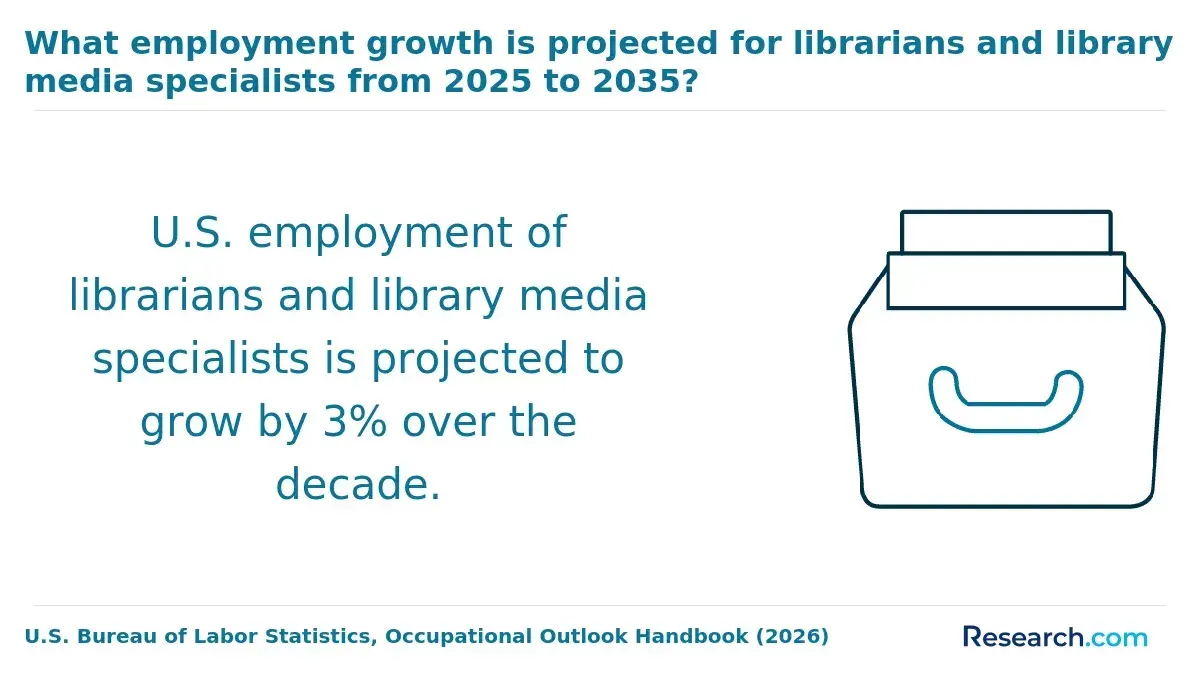
Years of library work can make you ready for professional responsibilities, but they do not necessarily tell you whether you qualify for an MLIS. The distinction matters if your bachelor's degree is in another field - or you have no bachelor's degree at all. The U.S. Bureau of Labor Statistics projects 2.6% growth for librarians and media collections specialists from 2025 to 2035, so an expensive degree deserves a clear purpose.
This guide helps experienced library workers assess admission eligibility, compare programs, and decide whether an MLIS fits the roles they want next.
Key Things You Should Know
- MLIS programs commonly admit graduates from varied disciplines, but applicants without any bachelor's degree must check each university's graduate admission rules.
- Show what you did, what you learned, and which professional role now requires graduate preparation.
- The May 2025 median salary for librarians and media collections specialists was $68,270 across the occupation - not a promised starting salary or a program outcome.
Can You Earn an MLIS Without a Library Science Bachelor's Degree?
Yes, if you hold a bachelor's degree in another field and meet the program's other admission requirements. MLIS is a graduate credential; a library science undergraduate major is generally not the prerequisite. A history graduate who manages local-history collections, for example, may have a strong reason to pursue archival coursework, while a business graduate working in a public library may bring useful budgeting or outreach experience.
Without any bachelor's degree, the answer is different. Graduate admission normally requires a completed undergraduate degree or an institution-approved equivalent. Years in circulation, technical services, or reference support should not be assumed to waive that requirement. Ask the graduate admissions office whether it has a published exception or alternative-entry policy, what evidence it accepts, and whether that policy applies to the MLIS specifically. Guidance on library science programs with alternative requirements can help you frame those questions, but only the university can confirm your eligibility.
If admission is not yet possible, compare the cost and time of completing a bachelor's degree with your actual career goal. Remaining in a paraprofessional role, pursuing targeted training, or seeking employer-supported undergraduate study may be more useful than planning around an unconfirmed exception.
Why Does ALA Accreditation Matter for MLIS Programs and Library Careers?
The American Library Association (ALA) accredits qualifying master's programs in library and information studies, not every university degree with "information" or "library" in its name. An institution can hold institutional accreditation while its particular master's program does not hold ALA accreditation. Degree titles also vary: MLIS, MLS, Master of Science in Library Science, and Master of Information are not interchangeable evidence of accreditation.
For an experienced employee seeking a professional librarian position, accreditation is worth checking early because employers may require or prefer a master's degree from an ALA-accredited program. Confirm the specific program in ALA's current directory, then inspect vacancies in your target setting. Accreditation does not establish that a school offers your desired elective, internship, online format, or state school-librarian credential pathway.
What Are the Admission Requirements for MLIS Programs?
Programs set their own requirements, but applicants can expect a review of prior education and evidence of readiness for graduate work. Experience is most persuasive when it demonstrates judgment and growth rather than simply time served. The following comparison separates commonly requested application materials from the questions an experienced worker should resolve before applying.
| Application element | What it may establish | What varies by program |
| Undergraduate transcripts | Degree completion and academic record | Minimum grades, equivalent credentials, and review of unusual academic histories |
| Statement of purpose | Career goal and reasons for graduate study | Prompt, length, and emphasis on professional experience |
| Recommendations | Academic or workplace readiness | Number of letters and acceptable referees |
| Résumé or work history | Scope of library responsibilities | Whether experience is required, preferred, or optional |
| Additional materials | Writing, language proficiency, or other specified abilities | Which materials are requested or waived |
Translate your experience into specific evidence: a catalog cleanup, accessible public program, staff training, or improved workflow is more informative than "worked in a library for ten years." If your degree, grades, or transcripts do not fit the published criteria, request an individual eligibility review before paying an application fee. Ask which rules are firm, which allow discretion, and whether any preparatory study would help. An exception offered by one school does not establish a policy at another.
How Do Online and Campus-Based MLIS Programs Compare?
For someone already employed in a library, the relevant question is whether required learning fits a real workweek - not simply whether a program is labeled online. This comparison identifies scheduling differences to investigate rather than guarantees about any particular school.
| Format | Potential advantage | Constraint to check |
| Asynchronous online | Coursework can often be completed outside scheduled class meetings | Weekly deadlines, group projects, and any in-person requirements |
| Live online | Regular discussion without routine campus travel | Meeting times, time zones, and shift conflicts |
| Campus-based or hybrid | Scheduled in-person interaction and local connections | Commute, course times, and required campus visits |
Ask whether required courses run in the terms you can attend, whether a practicum can take place at your current workplace, and who must approve its supervision. An online lecture does not mean every field experience can be completed remotely. The best library degree for working adults comparison is a starting point; confirm current schedules and placement rules directly with each program.
What Courses Do MLIS Programs Typically Require?
Core study commonly covers information organization, reference or information services, research methods, and the social and ethical context of information. Catalog names and requirements differ. The best curriculum for an experienced worker fills gaps left by the job: a circulation supervisor may need collection development and budgeting, while a cataloging assistant may want deeper metadata and systems work.
Look beyond course titles. Metadata courses may teach standards such as MARC or Dublin Core and how records support discovery; archives study may address appraisal and finding aids; instruction courses may build information-literacy teaching skills. Check whether a relevant subject is required, an elective, a formal concentration, or only a possible independent project. A listed elective is not proof that it will run before you graduate. Ask for a recent course schedule and a workable sequence for the skills you need.
How Long Do MLIS Programs Take and What Do They Cost?
Completion time depends on required credits, your course load, and when required classes are offered. Working fewer hours at a job does not necessarily speed graduation if a required course has limited availability. Use the published degree plan to map your own sequence; guidance on MLIS time to completion can help you identify scheduling questions to take to an adviser.
For each school, calculate required credits × tuition per credit, then add mandatory fees and expected books, equipment, and travel or practicum costs. Verify the applicable tuition rate for your residency and delivery format rather than assuming online students pay one rate. Also ask whether taking an extra term creates additional fees. Published tuition is not the full cost of attendance.
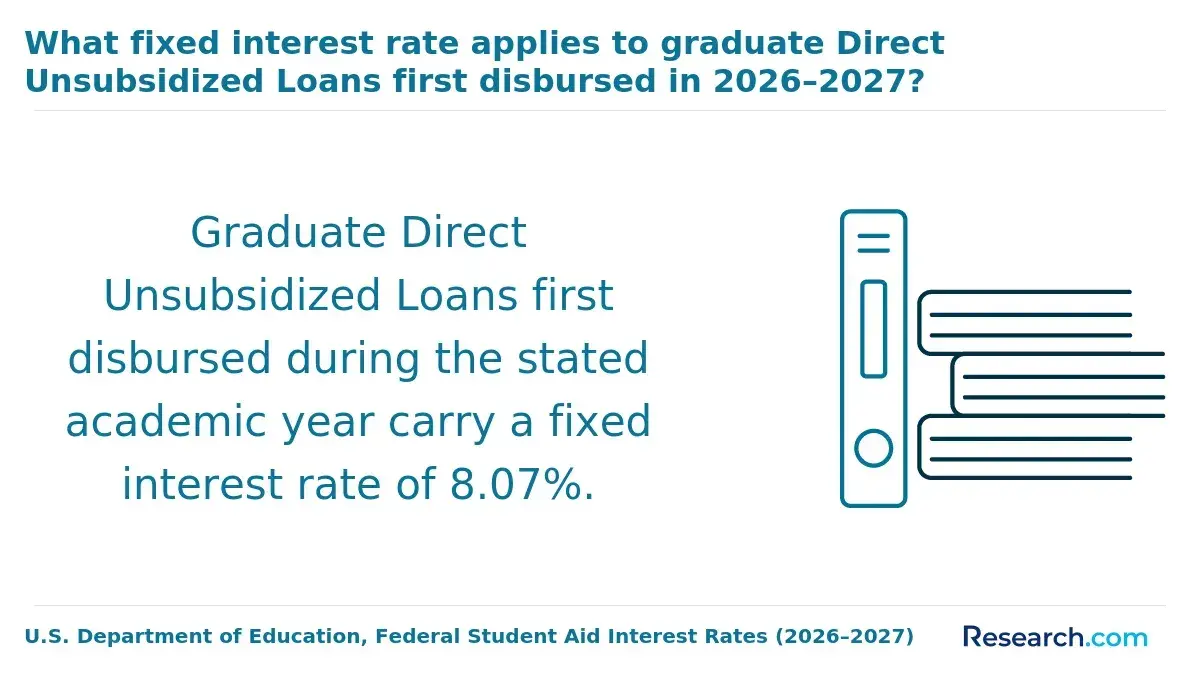
Compare three different amounts: the gross program cost, what you expect to pay after confirmed employer assistance or other funding, and what you would borrow. Ask financial aid staff about eligibility and loan terms for your intended enrollment period; ask your employer whether reimbursement requires particular grades or continued service. Finally, compare those costs with your current earnings and actual job postings. An occupational median is not a reliable personal payback estimate.
Which MLIS Specializations Fit Experienced Library Professionals?
Choose a pathway based on the work you want to perform next, not the department where you happen to work now. A public-services employee aiming for academic librarianship could seek instruction, research support, and scholarly communication experience. Someone managing local collections may prefer archival description and digital preservation; a technical-services worker might focus on metadata, discovery systems, or digital asset management.
Compare each option at three levels: an officially named concentration, individual courses that build the skill, and documented opportunities to apply it through a project or supervised placement. These are different kinds of evidence. A career focused library information degree is most useful when its available coursework matches a target job and produces work you can discuss with employers. Before committing, ask when the electives last ran and whether your proposed applied project is permitted.
What Library Careers Can You Pursue With an MLIS?
An MLIS can help an experienced worker move from support duties into positions involving independent service decisions, instruction, collection strategy, or management. Public librarians may lead programming and community services; academic librarians may teach research skills and support faculty work; special librarians may organize information for a business, agency, medical institution, or law practice. Requirements depend on the employer and position.
Archives, records management, metadata, and research data support are additional possibilities, but an MLIS is not the only relevant qualification for every opening. Some roles emphasize another graduate degree, subject expertise, technical ability, or demonstrated projects. Compare several vacancies you would genuinely apply for: note which require an ALA-accredited master's, which merely prefer one, and which value another credential. If your desired next role is attainable through experience or targeted training, that is a meaningful alternative to graduate tuition.
How Much Can MLIS Graduates Earn and What Is the Job Outlook?
U.S. Bureau of Labor Statistics figures describe occupations, not the results of a particular MLIS program. The comparison below helps distinguish the librarian roles an applicant might seek from a support occupation they may already hold.
| U.S. occupation | Median annual pay, May 2025 | Projected employment change, 2025-2035 |
| Librarians and media collections specialists | $68,270 | +2.6% |
| Library technicians | $44,580 | −6.4% |
| Archivists | $64,550 | +3.4% |
The librarian-technician comparison suggests why a worker might investigate advancement, but it does not measure the raise an individual will receive after graduation. Medians include workers at different career stages and in different locations. Check local vacancies, public pay scales where available, and your employer's promotion rules before using these figures in a borrowing decision.
Do Librarians Need State Licensure or Professional Certification?
There is no single licensing rule covering every U.S. librarian position. School librarian roles can require a state educator license, certification, or endorsement with specific coursework or supervised experience. An online, ALA-accredited MLIS does not by itself establish eligibility in every state. Check the state education authority's requirements and ask the university whether its preparation pathway meets them where you intend to work.
Public-library rules and employer requirements may also differ by jurisdiction and job title. Specialized employers, including medical and law libraries, may prefer subject knowledge or other credentials, but those preferences are not universal legal requirements. If you are considering one state in particular, an Illinois library career change guide can help organize your research; confirm any applicable credential rules with the relevant state authority before enrolling.
Other Things You Should Know About Library Science
Yes, but remove patron information and any restricted records. Describe your decisions and results without sharing identifying details, and obtain workplace permission before using internal documents.
Include it when it demonstrates relevant responsibilities or skills. Identify it as volunteer work and describe what you actually did rather than implying it was paid employment.
Use your experience and goals as a foundation, then address each program's prompt and explain why its verified curriculum fits your plans. Check the requested length and format before submitting.
Give a brief, accurate explanation if it helps make your timeline clear. Focus the rest of the application on your current skills, relevant work, and readiness for graduate study.
References
- Professional Development | NYSL - the New York State Library https://nysl.nysed.gov/libdev/cert/conted
- Public Librarian Certification | wi.gov https://dpi.wi.gov/libraries/public-libraries/certification
- Admission Guidelines - College of Information and Communications | University of South Carolina https://sc.edu/study/colleges_schools/cic/academic_programs/masters/master_of_library_and_information_science/admission_guidelines.php
- Online Library and Information Science Master's Degree | Syracuse University https://ischool.syracuse.edu/academics/online-library-and-information-science-masters-degree/
- Library Science Master's Online - UW Information School https://ischool.uw.edu/programs/mlis/degree-options/online
- What Can You Do With a Library Science Degree? | Syracuse University Online Master's Programs https://onlinegrad.syracuse.edu/information-science/mslis/library-science-careers/
- Program: Library and Information Science, MLIS - Pitt Catalog https://catalog.upp.pitt.edu/preview_program.php
- How to Apply for an Academic Librarian Job | Virginia Libraries https://virginialibrariesjournal.org/articles/10.21061/valib.v67i1.657
- Guidelines for Choosing a Master's Program in Library and Information Studies | ALA https://www.ala.org/educationcareers/accreditedprograms/guidelines-choosing-masters-program-library-and-information-studies
- MLIS Without Library Experience: What Grads Say | mastersinlibraryscience.org https://www.mastersinlibraryscience.org/articles/mlis-without-experience/


