
2027 Choosing an Online Data Science Master's for a Career in Telecommunications

Co-Founder and Chief Data Scientist
Choosing an online data science master's for telecommunications means looking beyond a program's title. A network engineer may need stronger statistical modeling; an analyst may need experience with network telemetry and large-scale data systems. The right program depends on the telecom problems you want to solve, the projects you can complete, and whether its schedule and total cost work for you.
This guide helps you compare those factors without assuming that a data science degree - or a telecom-specific label - automatically leads to an industry job.
Key Things You Should Know
- Prioritize programs that let you apply statistics, machine learning, and data engineering to network performance, outages, capacity, or customer behavior - not just programs that mention telecommunications.
- Check institutional accreditation, online scheduling, project access, and the full cost before enrolling; a telecom-relevant capstone may be more valuable than a course title alone.
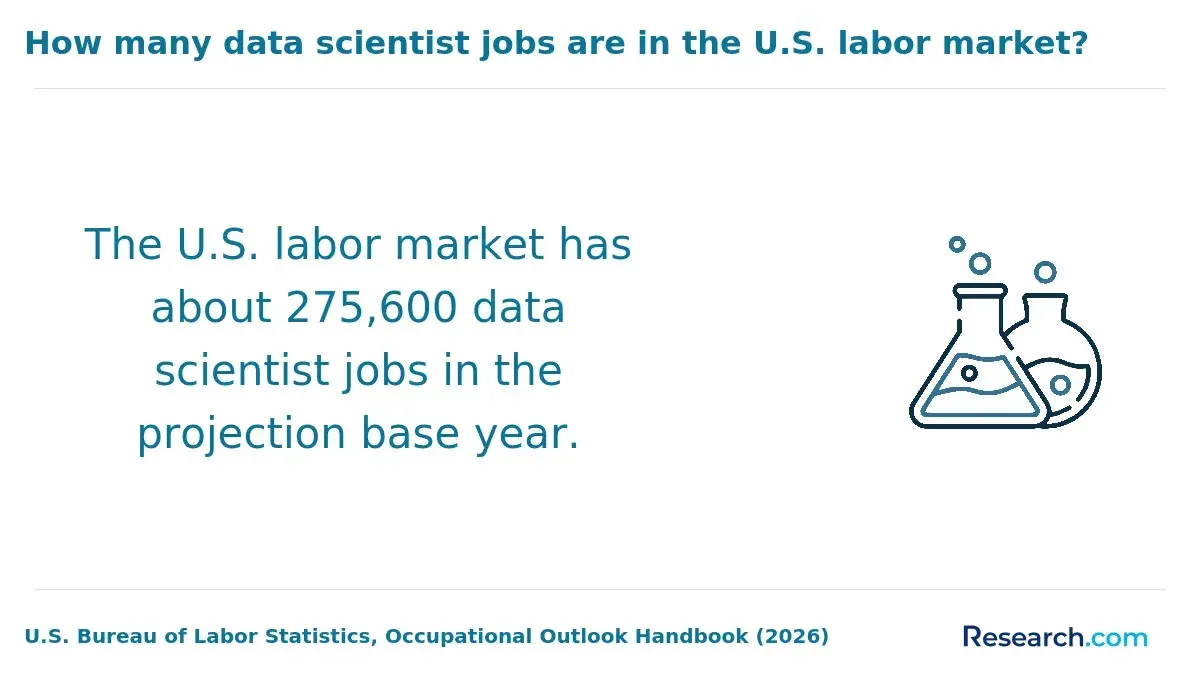
- The U.S. Bureau of Labor Statistics reports a $120,230 median annual wage for data scientists in May 2025, but that figure covers occupations across industries, not salaries promised to telecom master's graduates.
What Is an Online Data Science Master's for Telecommunications?
It is typically an online data science master's whose coursework and projects can be applied to telecommunications - not necessarily a degree formally named for the industry. Students learn to analyze data, build and evaluate models, and communicate results. For telecom work, those skills need to transfer to problems such as predicting equipment failures, investigating service degradation, forecasting demand, or understanding customer churn.
Choose this route if you want to make decisions from network or customer data. If your goal is primarily to design AI systems rather than analyze telecom operations, compare the curriculum with a guide to online AI programs. Neither degree title substitutes for examining the courses and projects you would actually complete.
Why Choose Data Science for a Telecommunications Career?
Telecommunications produces interconnected operational and customer data: network alarms, performance measurements, service tickets, equipment inventories, and usage records. Data science can help teams distinguish a recurring fault from a one-time spike, anticipate where capacity may be needed, or identify customers at risk of leaving. The difficult part is not only building a model; it is deciding whether its predictions would improve an operational decision.
That makes a master's most useful when you need deeper statistical, computational, or experimental skills than your current role provides. An experienced telecom analyst might use it to move toward model development, while a network engineer might use it to formalize forecasting and evaluation skills. If your target role relies mainly on established reporting tools, a smaller course of study or an employer-supported project may be a better first step.
How Do You Choose an Accredited Online Data Science Master's Program?
Start with the institution's accreditation, then test whether the degree fits your intended work. Confirm the institution's current accreditation status with its accreditor or the U.S. Department of Education's accreditation database. Also ask whether the institution can enroll students residing in your state; institutional accreditation and state authorization answer different questions.
For a telecom-focused comparison, use the same checks for every program on your shortlist:
- Technical fit: Look for substantial work in statistics, machine learning, databases or data engineering, and model evaluation - not just introductory exposure to each topic.
- Project fit: Ask whether students can propose an industry-specific capstone, obtain faculty support for it, and use approved employer or public data.
- Operational fit: Verify live-session times, group-work expectations, exam arrangements, and any campus visits against your work schedule.
- Responsible-data fit: Look for instruction in privacy, security, and model governance, especially if you expect to analyze customer-related information.
A course label alone cannot establish depth. Ask for recent syllabi or project descriptions when public catalogs are vague. For another way to assess responsible-modeling content, review what AI ethics coursework in master's programs covers, then compare it with the courses available in your shortlisted data science degrees.
What Do Online Data Science Master's Programs Teach?
Relevant programs generally combine statistical inference, programming, machine learning, data management, and communication. For telecommunications, the question is whether students can apply those subjects to noisy, time-dependent operational data rather than only to tidy classroom datasets.
The examples below connect common academic subjects to telecom problems. They illustrate useful applications, not coursework guaranteed by every program.
| Academic subject | Telecom application | What a strong project demonstrates |
| Time-series analysis and forecasting | Traffic demand and network capacity | Evaluation against historical baselines and changing demand |
| Classification and anomaly detection | Fault triage and service degradation | Attention to false alarms and missed incidents |
| Data engineering | Joining alarms, performance records, and tickets | Documented, reproducible data preparation |
| Causal inference or experimentation | Assessing a service or retention intervention | A defensible comparison rather than a prediction alone |
Review required courses and electives separately: a relevant method offered only as an occasional elective may not be available when you need it. If you are deciding between a broader data science curriculum and a more model-development-focused degree, choosing between AI degree pathways can help clarify which skills should be central to your program.
What Are the Admission Requirements for Online Data Science Master's Programs?
Requirements vary by institution. Programs may ask for a bachelor's degree, academic transcripts, evidence of quantitative preparation, programming experience, recommendations, or a statement of purpose. Do not assume telecom experience replaces a stated mathematics prerequisite - or that a non-computing bachelor's degree rules you out.
Compare your background with each program's published prerequisites. Network professionals may have strong domain knowledge but need more probability or programming practice; applicants from statistics or software backgrounds may need to learn how telecom networks generate and use data. If you have a gap, ask admissions whether a proposed course formally satisfies its requirement before paying for it. Applicants also considering AI degrees can examine bridge pathways into an AI master's, while checking the separate policies of every data science program on their list.
How Do Online and Campus-Based Data Science Master's Programs Compare?
Online study may let an employed telecom professional keep working and develop projects connected to an existing role. Campus study may offer easier access to in-person research groups or local recruiting. Neither format establishes that a program has stronger instruction or better telecom connections; those depend on the institution and the opportunities available to its students.
Choose online study if continued employment and location flexibility matter most, but verify whether classes are live, whether teams must meet across time zones, and whether any residency is required. Choose campus study if in-person collaboration or access to particular laboratories is central to your goal. To evaluate online scheduling in more detail, compare data science programs for employed professionals before committing to a pace you cannot sustain.
How Long Does an Online Data Science Master's Take and Cost?
Completion time and price vary with required credits, course availability, enrollment pace, residency rules, and fees. A school's advertised tuition rate is not necessarily the amount you will pay. Request a current, program-specific estimate for the number of credits you must complete, including mandatory online or technology fees and any required travel.
Ask when telecom-relevant electives and capstone supervision are available: a course offered infrequently can affect your timeline. If you plan to study while employed, compare the likely out-of-pocket cost after employer assistance with the workload and any income you would give up by reducing work hours. Avoid treating a higher future salary as a guaranteed return on the degree; advancement depends on your experience, target role, employer, and location.
What Telecommunications Jobs Can a Data Science Master's Prepare You For?
Potential targets include network analytics specialist, capacity forecasting analyst, customer analytics scientist, fraud analytics specialist, and data scientist working on telecom operations. Job titles vary by employer. Read postings for the actual responsibilities: a role centered on dashboards may call for different preparation than one requiring production models or large-scale data pipelines.
Build a portfolio around the role you want. A network-operations project could combine incident records and performance measurements to prioritize faults, then explain how false alarms would affect technicians. A customer-analytics project could evaluate a churn model while addressing privacy and whether a proposed intervention can actually be tested. A master's can develop this evidence, but relevant work experience and projects may also qualify candidates for some roles.
How Much Can Telecommunications Data Scientists Earn?
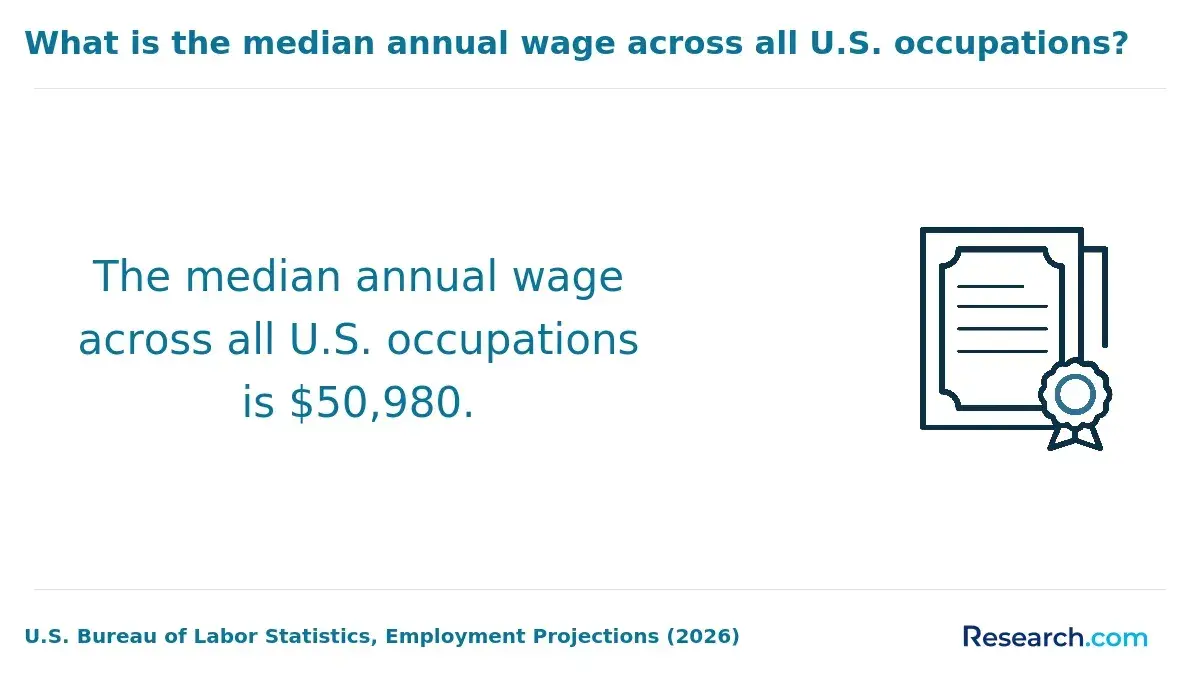
The U.S. Bureau of Labor Statistics reports that the median annual wage for data scientists across industries was $120,230 in May 2025. This is a national occupational benchmark, not a telecom-specific wage or an expected salary for a new master's graduate. Pay for a particular job depends on duties, experience, location, and employer.
BLS also projects 35% employment growth for data scientists from 2025 to 2035. That outlook supports considering the occupation, but it does not predict hiring at a particular carrier or guarantee that a degree will lead to a data scientist position. Compare current job postings for your target role with the skills a program teaches before using broad labor-market figures to justify its cost.
What Certifications Support a Telecommunications Data Science Career?
A certification is most useful when it fills a specific gap alongside your degree. Cloud data-platform credentials may help with data pipelines; networking credentials may strengthen understanding of the systems generating the data. Their value depends on the tools named in jobs you want and on whether you can demonstrate the skill in a project or at work.
Do not collect certifications before defining a target role. Check several relevant job descriptions, identify repeated technical requirements, and compare those requirements with your coursework and experience. A credential can document preparation, but it does not replace a rigorous analysis of telecom data or an employer's assessment of your skills.
Other Things You Should Know About Data Science
Only with the employer's permission and the program's approval. Confirm access, confidentiality, retention, and publication rules before proposing the project; removing names alone may not make sensitive records safe to share.
Yes. Network equipment vendors, internet service providers, cloud providers, and consulting firms may also analyze connectivity or service data. Compare job duties rather than relying on the employer's industry label.
It generally is not a standard requirement for data science roles. Positions involving regulated engineering practice may have different requirements, so check the specific job and applicable state rules.
No. Public or appropriately generated synthetic data can support a strong project if you clearly explain its limitations, document your methods, and show how you would evaluate the approach in a real operational setting.
References
- Find your next job in data science in the Federal Government | USAJOBS https://data-science.usajobs.gov/
- Remote and In-Person Learning: Utility Versus Social... - PMC https://pmc.ncbi.nlm.nih.gov/articles/PMC9769479/
- Accreditation in the U.S. | ed.gov http://www.ed.gov/laws-and-policy/higher-education-laws-and-policy/college-accreditation/accreditation-in-the-us
- 13 Top Data Science Careers: Key Insights | Syracuse University https://ischool.syracuse.edu/data-science-careers/
- Tuition & Fees | UW-Eau Claire https://www.uwec.edu/tuition-aid/tuition-fees
- All Capstone Projects - Duke MIDS https://datascience.duke.edu/capstones/
- Tuition Rates and Fees - Student Financial Services https://www.uwsp.edu/student-financial-services/tuition-rates-and-fees/
- M.S. in Data Science, Online | virginia.edu https://datascience.virginia.edu/degrees/msds-online
- Data Science and Society (DATA) - UNC Catalog https://catalog.unc.edu/courses/data/
- Asynchronous vs. Synchronous Learning | Unitek College https://www.unitekcollege.edu/blog/asynchronous-vs-synchronous-learning-whats-the-difference-and-which-is-right-for-you/


