2027 Online MLIS Programs Compared by Part-Time Flexibility and Course Sequencing

Co-Founder and Chief Data Scientist
An online MLIS may let you keep working while preparing for a library career, but "part-time" does not necessarily mean you can take the courses you need whenever you want. The U.S. Bureau of Labor Statistics projects 2.6% growth for librarians and media collections specialists from 2025 to 2035. If you are comparing programs around a job, caregiving, or a career change, course timing matters as much as delivery format. This guide shows you how to evaluate schedules, prerequisites, accreditation, and costs before committing.
Key Things You Should Know
- The most flexible online MLIS is the one whose required courses and desired electives fit your actual term-by-term schedule, not simply the one labeled asynchronous.
- Ask for a projected part-time course plan showing prerequisites, course rotation, live meetings, and any fieldwork before comparing completion times.
- The May 2025 median salary for librarians and media collections specialists was $68,270, that occupational figure is not a graduate salary or a return-on-investment guarantee.
What is an online MLIS program, and who is it best suited for?
An online Master of Library and Information Science (MLIS) is a graduate degree in organizing information, serving users, and managing information resources. Related degrees may be called an MLS, Master of Science in Library Science, or Master of Information; the name alone does not establish accreditation, curriculum, or career eligibility.
Online study can suit working library staff, career changers, and students who cannot relocate. It is a stronger fit when the program's meeting times, assignment deadlines, and fieldwork arrangements fit your life. Someone seeking a particular elective or supervised placement should check its availability before assuming that online delivery makes it accessible.
How do online MLIS programs compare with campus-based library science degrees?
The degree's delivery method is less important than what you can study and complete on schedule. The comparison below highlights planning differences; neither format has a universal advantage.
| Decision factor | Online program | Campus-based program |
| Class access | May use recorded work, scheduled live sessions, or both | Usually requires travel to scheduled classes |
| Practical experience | May require arranging a suitable local placement | May provide access to nearby sites, subject to availability |
| Course planning | Must account for online section availability and time zones | Must account for campus timetables and travel |
| Cost beyond tuition | May involve technology, travel, or placement expenses | May involve commuting, relocation, or campus expenses |
Compare the specific degree and its online and campus course schedules, not just the formats in the abstract. An online student may have considerable control over when to watch a lecture but little control over when a prerequisite or elective is offered.
Which online MLIS programs offer the best part-time flexibility and course sequencing?
No single online MLIS is the most flexible for everyone. The best choice is an ALA-accredited program, where that credential matters for your goals, with a documented route through required courses and your intended electives at a manageable pace. Without comparable, current course rotations for named institutions, a school-by-school flexibility ranking would be misleading.
These scheduling patterns are comparison tools, not claims that a particular university offers every feature shown. Use them to identify which trade-off fits your circumstances.
| Scheduling pattern to look for | Potential advantage | Constraint to check |
| Mostly asynchronous courses | Work can often be completed around changing shifts | Deadlines, group work, and occasional live activities may still be fixed |
| Predictable live evening sessions | Regular discussion and a clear weekly routine | Time zones and work shifts may make attendance difficult |
| Published part-time course rotation | Easier to map prerequisites and plan time away from work | A desired elective may run infrequently or depend on enrollment |
| Broad elective choice | More ways to tailor preparation | A large catalog does not establish when online sections will run |
Request a projected schedule covering your expected enrollment period. Ask which core courses must precede others, how often each desired elective has actually run online, whether summer study is necessary, and what happens if you miss a required course. A program with fewer choices but a dependable rotation may be more flexible for a part-time student than one with a larger catalog and uncertain availability.
Is an online MLIS program accredited by the American Library Association?
Some online MLIS programs are ALA-accredited; online delivery itself neither grants nor prevents accreditation. Check the specific master's program in the current ALA directory, including how the institution identifies the degree you intend to earn. Institutional accreditation is a separate question and is not a substitute for ALA program accreditation.
ALA accreditation can matter for professional librarian positions, but it does not verify an elective's availability, guarantee an internship, or confer a state school librarian credential. If a university offers multiple LIS-related degrees, confirm which one carries the accreditation rather than assuming the status applies to all of them.
What courses do online MLIS programs typically require?
Common core subjects include information organization, reference and user services, research methods, and the management of information institutions. Exact requirements vary. Courses in metadata, archives, digital preservation, youth services, or research data support may be required, elective, or unavailable online depending on the program.
For part-time planning, the distinction between a required course and an elective is crucial: a prerequisite can delay graduation, while an infrequently offered elective may require a different specialization plan. Students interested in digital collections or discovery systems can explore a library technology specialization, then verify whether a prospective school documents a formal track, relevant individual courses, or only general LIS preparation.
Ask to see recent online course schedules alongside the catalog. A course description shows what could be taught; it does not show that a seat will be available in the term you need it.
What are the admission requirements for online MLIS programs?
Applicants generally need a bachelor's degree and must follow each institution's graduate admission process. Schools may request transcripts, a statement of purpose, recommendations, or a résumé; GPA expectations, test policies, and application deadlines vary. Library employment can strengthen an application, but it should not be assumed to replace a stated degree requirement.
If your academic record or experience does not fit a standard checklist, ask admissions staff which requirements are firm and whether individual review is possible. Guidance on library masters programs with holistic review can help you frame that conversation, but only the institution can confirm its current policy. Also ask whether prior graduate coursework is eligible for transfer and whether accepted credits would change your course sequence.
How long do part-time online MLIS programs take to complete?
Completion time depends on required credits, the number of courses you can take each term, prerequisites, and when courses run. A part-time pace can reduce weekly course load while extending the period in which tuition, fees, and other expenses arise. A published shortest-possible timeline may assume a course load or summer enrollment that does not suit you.
Build a term-by-term plan with an adviser before relying on a completion estimate. Mark required courses first, then prerequisites, desired electives, and any practicum or capstone; leave room for a course that is not offered when expected. If speed is a priority, comparisons of short affordable library science masters can identify possibilities, but confirm each school's current part-time route rather than applying a full-time timeline to yourself.
How much do online MLIS programs cost, including tuition and fees?
There is no reliable single price for an online MLIS. Published tuition may be charged per credit or term, and the rate that applies to you may depend on residency or enrollment status. Compare programs using the same assumptions: your applicable tuition rate, required credits, expected number of terms, and mandatory fees.
The following cost categories belong in a personal estimate because tuition alone may understate what you will pay.
| Cost category | What to verify |
| Tuition | Applicable rate and credits required for your degree |
| Mandatory fees | Per-credit, per-term, technology, and program charges |
| Learning and fieldwork expenses | Books, equipment, travel, and any placement-related costs |
| Extra terms | Fees or living costs if sequencing extends enrollment |
Use the same assumptions when reviewing library science program price and career options. Then separate the gross program cost from what grants or employer support would actually cover and what you would need to finance. Ask the financial aid office about eligibility at your intended part-time enrollment level and the loan rules applicable to your enrollment period; do not assume aid or employer reimbursement is guaranteed.
What careers and salaries can an online MLIS degree lead to?
An MLIS can prepare students for professional roles in public and academic libraries, as well as positions involving information organization, reference, digital collections, and records. Job titles and qualifications differ by employer. For example, an archives position may value archival coursework and hands-on description work, while a school library role may require a state credential beyond the degree.
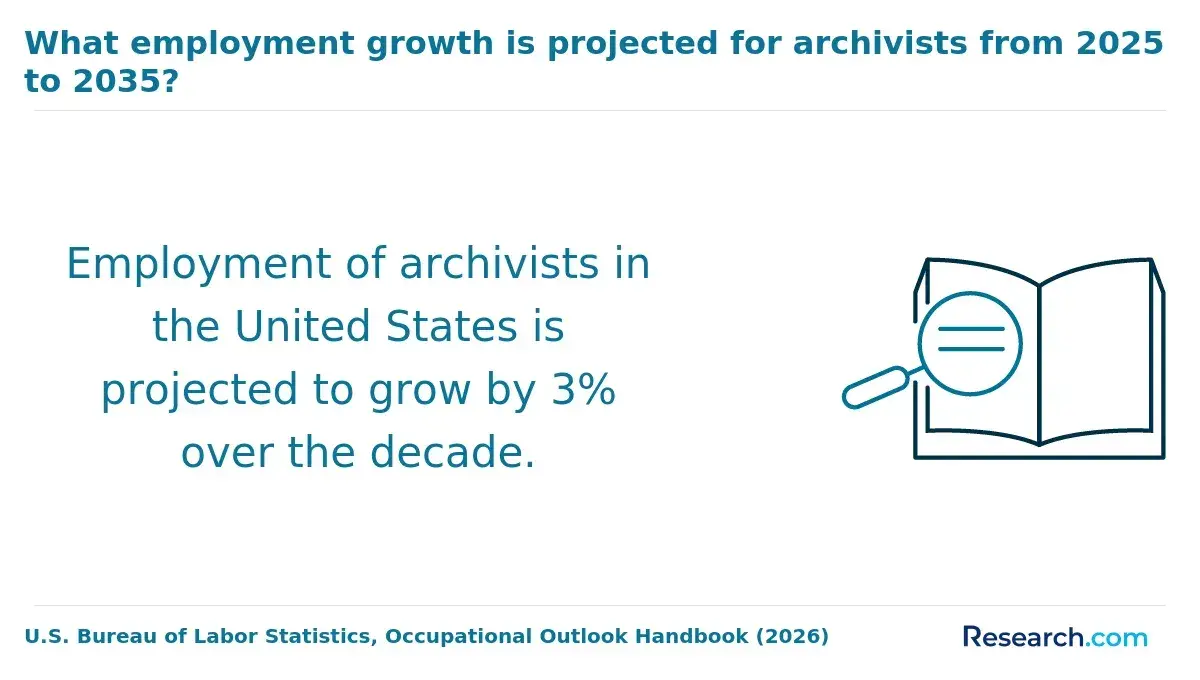
The BLS reports a May 2025 median annual salary of $64,550 for archivists. That occupation-wide figure includes workers with different backgrounds and experience; it cannot predict an online MLIS graduate's starting pay. When judging career value, compare local job requirements and likely pay with your current earnings, program cost, and opportunities to gain relevant experience while studying.
A portfolio project - such as a small digital collection with documented metadata decisions - can demonstrate skills developed in class. For some adjacent technology or information-management jobs, experience, a certificate, or another degree may be a better fit than an MLIS; check actual job descriptions before enrolling primarily for those roles.
Do online MLIS graduates need licensing or professional certification?
There is no single license required for every U.S. librarian or information-management job. Requirements depend on the position and jurisdiction. School librarian roles are a particularly important exception to investigate: a state may require an educator license, endorsement, examinations, or supervised preparation in addition to a graduate degree.
Check the education authority in the state where you intend to work and ask the program whether its school library pathway meets that state's requirements for an online student. State-focused information, such as Illinois library science degree requirements, can provide a starting point, but the responsible state authority and university should confirm your individual route. Specialized employers may prefer additional training or credentials without making them universal legal requirements.
Other Things You Should Know About Library Science
Yes. Libraries employ assistants and technicians as well as professional librarians. Such work can help you test your interests and gain experience, though it does not automatically qualify you for positions requiring a graduate degree.
Yes. A course project can show how you researched user needs, organized a collection, created metadata, or evaluated access. Explain your decisions and your individual contribution rather than presenting a finished product without context.
Often, but your options depend on remaining requirements and when relevant electives run. Speak with an adviser before replacing planned courses, especially if your new goal involves fieldwork or state-specific preparation.
Expect to need reliable internet access and a computer capable of using the university's learning platform and required software. Ask the program for its current technical requirements before buying equipment; needs can differ by course.
References
- FAQs | umaryland.edu https://www.ssw.umaryland.edu/practicum/faqs/
- How to Format Prerequisites, Concurrents, and Corequisites | psu.edu https://cim.psu.edu/user-guides/course-management/prerequisites-concurrents-corequisites/
- MLIS Course Load - SJSU - School of Information https://ischool.sjsu.edu/mlis-course-load
- online Master of Library and Information Science | DEN-EDU https://morgridgeonline.du.edu/online-mlis-program/
- Synchronous vs. Asynchronous Classes: What You Need to Know - Boston University Questrom https://www.bu.edu/questrom/blog/synchronous-vs-asynchronous-classes-what-you-need-to-know/
- MLIS Degree Options: FAQ - UW Information School https://ischool.uw.edu/programs/mlis/degree-options/faq
- Prerequisites and Corequisites | Oklahoma State University https://registrar.okstate.edu/class_schedule_short_courses/prerequisites_corequisites
- Program: Library and Information Science, MLIS - Pitt Catalog https://catalog.upp.pitt.edu/preview_program.php