2027 MLIS Programs for Library Vendor Contract Review

Co-Founder and Chief Data Scientist
Choosing an MLIS for library vendor contract work means looking beyond a program's collection-development course. Libraries also need staff who can evaluate database licenses, protect patron privacy, assess accessibility, and manage the cost of renewals. The U.S. Bureau of Labor Statistics reports a May 2025 median annual wage of $68,270 for librarians and media collections specialists, but that figure does not predict pay for contract-focused jobs. This guide shows prospective students and working library staff which courses, experiences, and program features matter - and how to judge whether a degree is the right investment.
Key Things You Should Know
- Look for a combination of acquisitions or electronic-resources coursework, licensing and copyright knowledge, budgeting, and an applied project; a relevant elective is not the same as a formal specialization.
- Check the specific master's program in the current ALA accreditation directory, then verify when relevant electives run and whether contract-related fieldwork is available.
- The BLS projects 2.6% employment growth for librarians and media collections specialists from 2025 to 2035; contract-focused openings are a narrower subset, so experience and local demand matter.
What are MLIS programs for library vendor contract review?
These are library and information science master's programs whose coursework and practical opportunities can prepare students to assess agreements with publishers, database providers, software companies, and other suppliers. "Library vendor contract review" is a career focus, not necessarily an official degree or concentration name.
The work extends beyond comparing prices. A reviewer may examine who may use a resource, whether remote access is permitted, what happens when a subscription ends, how usage data is handled, and whether the product meets accessibility needs. They may document concerns for procurement or legal counsel and coordinate with librarians, IT staff, and vendors before a decision is made.
For prospective students, the central question is whether a program offers enough relevant study and a way to apply it. Someone already handling purchases may need targeted training rather than a second degree; someone seeking professional librarian roles may benefit more from an MLIS or an equivalent employer-accepted LIS master's credential.
Do MLIS programs teach library acquisitions and vendor negotiations?
Some do, but coverage varies. Acquisitions courses may address selection, ordering, purchasing workflows, and budgets. Electronic-resources courses may cover licensing, access, usage assessment, renewals, and cancellation. Negotiation might appear in either course, in management instruction, or only through a project or internship.
A course title alone cannot establish depth. Ask for a recent syllabus and distinguish required instruction from an elective that may not run before graduation. For contract review, look for opportunities to practice comparing license terms, explaining risks to colleagues, and documenting a recommendation - not merely learning how an order is placed.
Which accreditation should you look for in an MLIS program?
For many U.S. professional librarian roles, ALA accreditation is an important screening criterion. Check the specific master's program in the current American Library Association directory; a university's institutional accreditation does not establish that its MLIS, MLS, Master of Information, or differently named LIS degree is ALA-accredited.
Accreditation also does not confirm a contract-review concentration, a particular elective, or an online format. After verifying status, compare the actual curriculum with your target job requirements. Readers weighing delivery and accreditation together can use this guide to the best accredited MLIS for working adults as a starting point, then confirm each program's current details directly.
What coursework prepares students for library vendor contract review?
The strongest preparation combines collection decisions, contract literacy, financial judgment, and systems knowledge. The table shows what to seek in a catalog or syllabus and how each area connects to the work; it does not imply that every MLIS offers every course.
| Coursework area | Contract-review application |
| Collection development and acquisitions | Relates purchases and renewals to community needs, selection policies, and available budgets. |
| Electronic resources and licensing | Examines authorized users, access conditions, usage reporting, cancellation, and continuing-access terms. |
| Copyright and information policy | Builds the vocabulary to identify rights questions and know when specialist or legal review is needed. |
| Library management and assessment | Supports budget analysis, vendor evaluation, documentation, and communication with decision-makers. |
| Information systems, privacy, and accessibility | Helps assess authentication, data practices, product integration, and barriers to use. |
An applied project can make this learning visible to employers. With permission, a student could compare sample license clauses, write a renewal recommendation using fictional usage data, or design a vendor-evaluation rubric. Do not put confidential agreements, pricing, or patron information in a public portfolio.
Are online MLIS programs effective for vendor contract careers?
They can be, if students can take the relevant courses and obtain meaningful practice. Contract analysis, budget exercises, and collaborative vendor evaluations can be taught online; the delivery format alone does not establish whether those experiences are offered.
Check whether classes are asynchronous or require live meetings, whether electives fit your planned sequence, and whether an internship can be completed at your workplace or locally. An online course may still include scheduled group work or a placement with restricted access to agreements. For a closer look at sequencing and workload, see this guide to an online library masters schedule.
What admission requirements apply to library science master's programs?
Applicants generally need to meet a program's published graduate-admission requirements, including its prior-degree and transcript rules. Programs may also request a statement of purpose, résumé, recommendations, or other materials; requirements and deadlines vary. Library employment can strengthen an application but should not be assumed to replace a required degree.
Use the statement to connect your experience or interests to a specific learning plan: acquisitions, electronic resources, licensing, or library management. If you already work with vendors, ask whether workplace projects can meet course requirements and whether your employer permits the use of appropriately anonymized materials. Working applicants comparing working student library degree options should check both admission requirements and the course schedule before applying.
How long do MLIS programs take and how much do they cost?
Time to completion depends on required credits, enrollment pace, and when needed courses are offered. A part-time student may face an extra term if a licensing elective runs infrequently. Ask for a sample plan based on your intended pace rather than relying on an advertised minimum completion time.
To compare costs, multiply each program's current tuition rate by its required credits, then add mandatory fees and likely books, technology, travel, or fieldwork expenses. Check whether the rate applies to your residency and online enrollment status. That produces an estimated gross cost - not necessarily your out-of-pocket cost after employer support or scholarships, and not the amount you would borrow.
If you expect to keep working, investigate funding an MLIS while working. Confirm award eligibility, reimbursement conditions, and current federal aid terms with the relevant offices before committing. The financial case is strongest when the degree meets requirements for jobs you intend to pursue and its cost fits your likely earnings and existing obligations.
What careers involve library vendor contracts and acquisitions?
Contract work appears under several titles, and the share of time spent reviewing agreements differs by employer. The table distinguishes common responsibilities from the credential question applicants should investigate in actual job postings.
| Role | Typical connection to vendor agreements | Credential consideration |
| Electronic resources librarian | Coordinates licenses, access, renewals, and vendor relationships. | Professional librarian postings may require or prefer an ALA-accredited LIS master's degree. |
| Acquisitions or collection development librarian | Connects purchasing and renewals to collection priorities and budgets. | Degree expectations depend on the institution and role. |
| Electronic resources or acquisitions specialist | Maintains records, resolves access issues, and supports purchasing workflows. | Some positions are paraprofessional and may prioritize experience over an MLIS. |
| Library procurement or licensing coordinator | Coordinates agreement review with library staff, purchasing, and counsel. | Qualifications may include procurement experience or other degrees. |
Academic libraries often manage substantial electronic-resource portfolios, but public, government, medical, law, and other specialized libraries also purchase licensed products. Experience resolving access problems, tracking renewals, and communicating with vendors can provide an entry point. Compare postings in your intended setting before assuming that either an MLIS or a nondegree route will qualify you.
What salary and job outlook can MLIS graduates expect?
The BLS reports a May 2025 median annual wage of $68,270 for librarians and media collections specialists and projects 2.6% employment growth for that occupation from 2025 to 2035. These are occupation-wide figures, not salaries or forecasts for vendor contract reviewers, MLIS graduates, or a particular library.
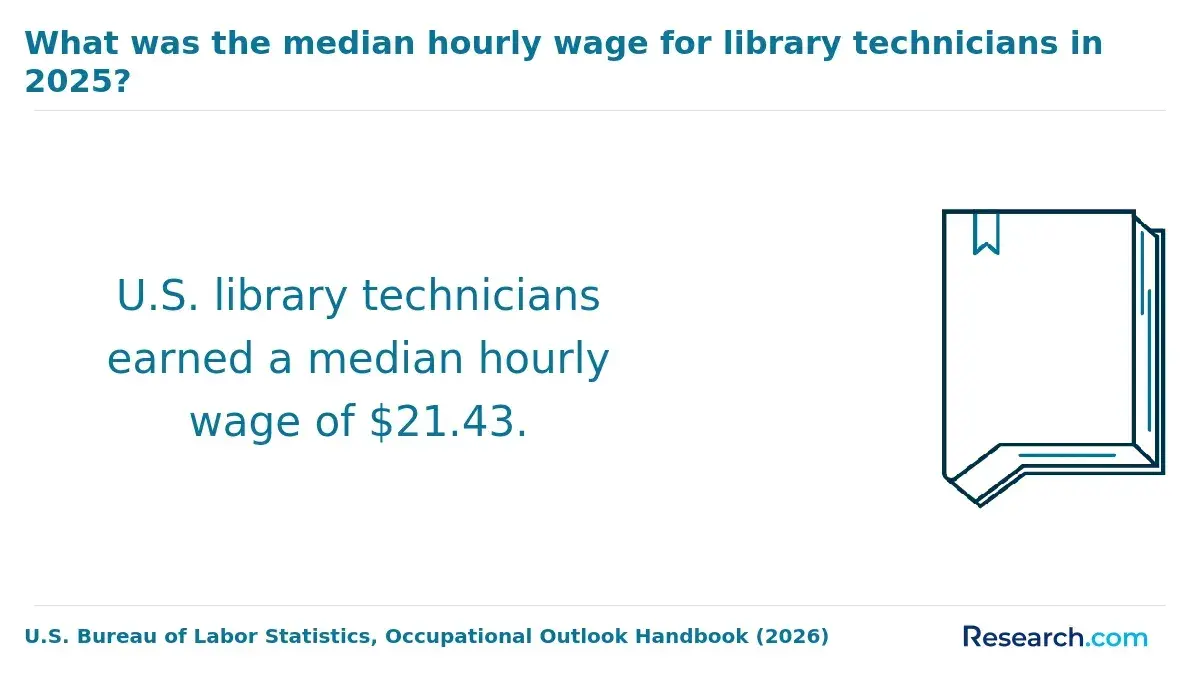
Pay and prospects depend on the job title, employer, location, and experience. For comparison, the BLS median for library technicians was $44,580 in May 2025; that is a different occupational category, not a predicted starting salary. Before estimating the value of an MLIS, compare local openings you could realistically qualify for with your current earnings and the full cost of study.
Which certifications and standards support library contract work?
No single certification substitutes for being able to read an agreement, identify operational risks, and work with the appropriate institutional specialists. Familiarity with library licensing practices and relevant standards can help: for example, usage-reporting standards make vendor statistics easier to compare, while accessibility standards provide a basis for product questions.
Treat credentials as job-specific rather than universally required. Procurement training may help a purchasing-focused employee; copyright or electronic-resources professional development may better suit a librarian. School library positions are a separate case: state certification or endorsement requirements can apply even when a candidate has an ALA-accredited master's degree. Readers considering that route should check the state education authority and review library jobs requiring certification.
Other Things You Should Know About Library Science
Only with permission and appropriate redaction. Agreements and pricing may be confidential. Publicly available sample terms or fictional scenarios are safer choices for a portfolio.
A librarian can identify how proposed terms affect access and operations, but legal interpretation should go to the institution's authorized counsel or contracts staff.
Sometimes. The consortium's role depends on its arrangement with members and the vendor. Confirm who signs, pays, administers access, and handles renewals before relying on a group agreement.
Check the expiring agreement and plan for permitted continuing access, necessary records and usage reports, patron communications, and a transition that minimizes service disruption.
References
- Wayne State School of Information Sciences' MLIS degree receives continued ALA accreditation https://today.wayne.edu/news/2025/03/10/wayne-state-school-of-information-sciences-mlis-degree-receives-continued-ala-accreditation-65667
- Full article: Fundamentals of E-Resource Licensing | tandfonline.com https://www.tandfonline.com/doi/full/10.1080/0361526X.2014.881236
- Electronic Resources Librarian | Print Preview https://employment.msubillings.edu/postings/7278/print_preview
- Library Licensing Guide: License Terms and Language | depaul.edu https://libguides.depaul.edu/c.php
- Licensing and Copyright | VCU Libraries https://pressbooks.library.vcu.edu/hscolldev/chapter/licensing-and-copyright/
- Resource Management & Licensing Librarian | U-M Careers https://careers.umich.edu/job_detail/283603/resource-management-licensing-librarian
- Electronic Resource Licensing Principles | CARLI https://www.carli.illinois.edu/products-services/eres/licensing-principles
- Practicum - School of Information Science & Learning Technologies https://cehd.missouri.edu/information-science-learning-technologies/practicum/
- Licensing Preferences for Electronic Resources | University of Pittsburgh Library System https://library.pitt.edu/licensing-preferences
- Accredited Programs | ALA https://www.ala.org/educationcareers/accreditedprograms