2027 Best Career Training Programs With Credit for Life Experience

Co-Founder and Chief Data Scientist
If you already have job skills, military training, industry credentials, or substantial volunteer experience, repeating introductory coursework can add time and cost to career training. Programs that assess prior learning may reduce what you need to complete, but credit policies, licensing eligibility, and transfer value vary widely. This guide helps working adults compare credit-bearing certificates and associate degrees, understand documentation requirements, and avoid weak programs. The U.S. Bureau of Labor Statistics projects healthcare occupations to grow much faster than average from 2023 to 2033, making verified, career-aligned training especially important.
Key Things You Should Know
- Prior-learning assessment can award credit for documented college-level learning from work, military service, exams, licenses, or portfolios; it does not automatically award credit simply for years on a job.
- For regulated careers such as nursing, dental assisting, and many trades, life-experience credit may shorten general education requirements but usually cannot replace required clinical hours, lab work, apprenticeships, or state-approved coursework.
- Compare the full path - not just advertised speed: occupational median pay ranged from $44,200 for medical assistants to $62,350 for electricians in May 2024, but entry requirements and licensure rules differ by role.
Top 10 Best Career Training Programs With Credit for Life Experience
Popular Trade School Programs
Credit-friendly trade pathways may include HVAC certificates, electrical technology certificates, welding certificates, construction management certificates, and associate degrees in automotive technology. Adults with military technical training, union coursework, manufacturer credentials, or documented field experience may receive elective or technical credit after review. A short certificate can build entry-level skills, while an associate degree may add general education and supervisory preparation. Choose an approved apprenticeship or state-recognized pathway when your goal requires a license; a school certificate alone does not make someone a licensed electrician, plumber, or HVAC contractor.
Healthcare Programs
Common options include medical assisting certificates, practical nursing diplomas, health information technology certificates, pharmacy technician certificates, and associate degrees in nursing or allied health. Prior learning may apply to general education, medical terminology, or nonclinical coursework when competence is verified. Clinical education, background checks, immunizations, skills labs, and board-required courses generally remain mandatory. A certificate is education; national certification exams, such as those used for some medical assisting or pharmacy technician roles, are separate credentials. Confirm that the program meets the requirements of the employer, certifier, and state where you intend to work.
Criminal Justice / Law Programs
Programs may include criminal justice certificates, corrections certificates, paralegal certificates, legal studies certificates, and associate degrees in criminal justice. Relevant military police, security, emergency management, or administrative experience can support a portfolio review or elective credit request. These programs can strengthen knowledge of procedure, report writing, ethics, and legal research, but they do not automatically qualify graduates as police officers, attorneys, or licensed investigators. Police hiring standards are set by agencies and states. Paralegal employers may prefer formal education, and some positions require an associate or bachelor's degree rather than a short certificate.
Arts & Design Programs
Graphic design certificates, digital media certificates, web design certificates, UX/UI-focused programs, and associate degrees in visual communication may recognize prior learning through portfolio assessment. Professional projects can demonstrate proficiency in software, typography, layout, branding, or client communication, but the school should use clear faculty-reviewed rubrics. A portfolio often matters as much as the credential for design hiring. Select a program that produces current work samples and teaches accessible design, digital workflows, and responsible use of AI tools. Verify whether awarded credit reduces tuition or only fulfills graduation requirements.
How do career training programs grant college credit for prior work and life experience?
Schools commonly call this process prior-learning assessment (PLA), credit for prior learning, or credit for experiential learning. It evaluates whether what you learned outside a classroom matches specific, college-level course outcomes. The assessment is not a waiver based on age or job title; you must demonstrate knowledge and skills.
The most common assessment routes differ in evidence, cost, and likelihood of applying to a credential. Ask whether credits become transcripted institutional credit, transfer credit, elective credit, or merely a course exemption.
| Assessment route | Typical evidence | Best use | Important limitation |
| Portfolio assessment | Work samples, resume, supervisor verification, reflective narrative | Specialized workplace learning | Faculty must find a course-level match |
| Standardized examination | Passing score on a recognized exam | General education subjects | Schools set their own score and acceptance rules |
| Military or workforce evaluation | Official training transcript or evaluated credential | Military, public safety, technical training | Recommended credit is not automatically awarded |
| Challenge examination | School-administered test or practical assessment | Demonstrable technical skills | May not satisfy licensing or clinical requirements |
Before paying for an assessment, obtain the school's written policy showing the maximum prior-learning credit allowed, assessment fees, appeal process, and whether the credit can transfer elsewhere.
What accreditation and licensing standards should these career training programs meet?
Start with institutional accreditation from an accreditor recognized by the U.S. Department of Education or the Council for Higher Education Accreditation when you want academic credit, federal aid eligibility, or a transferable associate degree. Institutional accreditation supports quality review, but it does not by itself prove that a program meets occupational licensing rules.
Programmatic approval matters most in regulated fields. Nursing programs need approval from the relevant state board of nursing; many allied-health programs need specialized accreditation or approval for graduates to sit for a certification exam; and trade programs may need alignment with state apprenticeship or licensing requirements. Ask the licensing board directly, especially if you will study online in one state and work in another.
A meaningful quality check is to confirm all of the following before enrollment:
- The institution's accreditation status and any sanctions are current.
- The exact program meets the education requirements for your intended license or certification examination.
- The school publishes completion, withdrawal, and job-placement information using clear definitions.
- The prior-learning policy identifies which credits count toward required major courses rather than only open electives.
Be cautious of providers that promise professional licenses, guaranteed jobs, or large blocks of credit without reviewing evidence. Those claims can conceal a credential that employers, boards, or other colleges do not recognize.
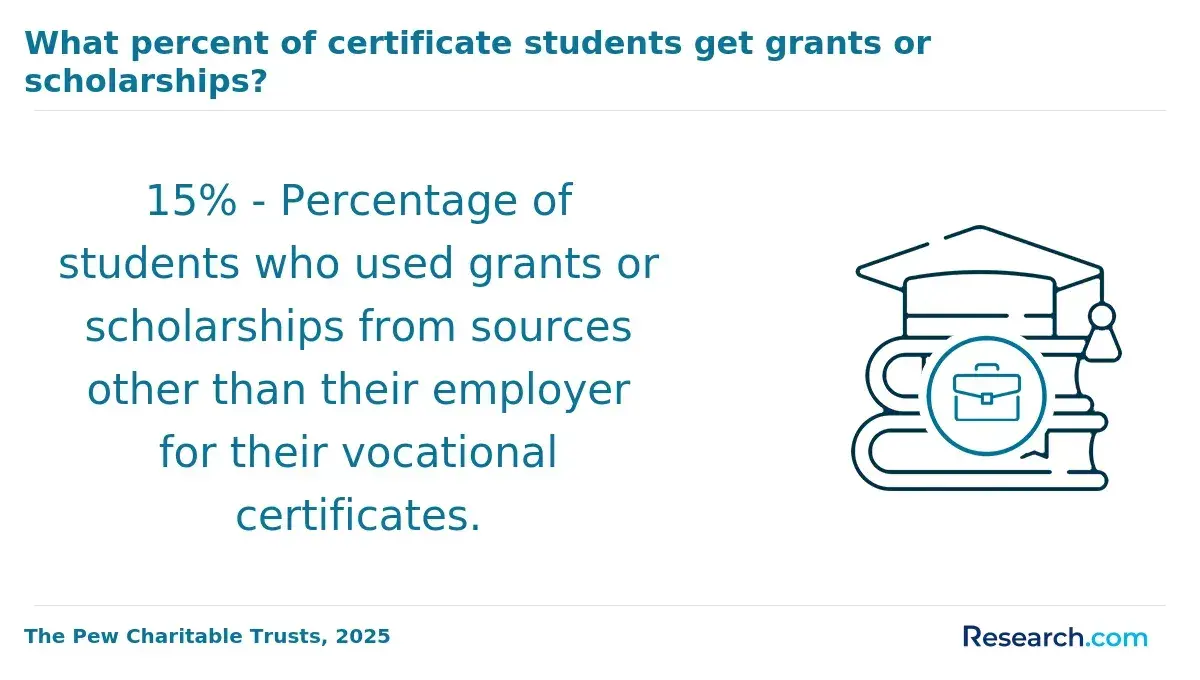
How do online career training programs compare to campus options for adult learners?
Online career training can work well for adults with proven self-management skills, especially in administrative, legal studies, information technology, design, and business-support programs. Recorded lectures and asynchronous assignments can make it easier to fit coursework around shifts, caregiving, or military obligations. Parents comparing flexible formats may also find useful options among best online degrees for stay at home moms, particularly when a longer credential better fits their goal.
Campus or hybrid study is often the stronger choice when hands-on practice is central. Labs, clinical placements, shop equipment, and supervised skill checks may be required for healthcare and skilled-trade credentials regardless of how much theory is online.
This comparison highlights the trade-off adult learners should evaluate beyond convenience.
| Factor | Online or mostly online | Campus or hybrid |
| Schedule | Often flexible for theory courses | Fixed meeting times are more common |
| Hands-on learning | May require local placements or intensives | Usually built into the schedule |
| Prior-learning review | Document sharing can be convenient | May allow in-person demonstrations |
| Best fit | Independent learners in nonclinical fields | Students needing equipment, labs, or direct coaching |
Do not assume an online program is available in every state. Confirm authorization to enroll, local placement support, and whether its credential satisfies your state's licensing requirements before submitting a deposit.
What admission requirements and documentation are needed to receive life experience credit?
Requirements depend on whether the provider offers a college certificate, associate degree, employer training program, or noncredit course. Credit-bearing programs commonly require an application and proof of high school completion or an equivalent credential. Selective healthcare programs may add prerequisite courses, entrance testing, background screening, or health documentation.
For prior-learning review, organize evidence that proves both the learning and its level. A strong submission connects each item to the specific course outcomes for which you seek credit.
- Request official college, military, apprenticeship, and workforce-training transcripts early.
- Gather current licenses, certifications, completion records, job descriptions, and supervisor verification.
- Prepare a portfolio with dated work samples while removing confidential client or employer information.
- Write a concise explanation of what you learned, how you applied it, and how it matches the course competencies.
- Get a written evaluation showing the credits awarded, denied, or available through examination.
A resume alone is rarely enough. Also ask whether there is a portfolio fee, a time limit on older learning, and a cap on the percentage of the credential that can come from prior learning.
How long do these programs take, and what total costs should students expect?
Completion time depends on the credential, course load, required practicum hours, and the number of credits a school accepts. A noncredit workforce course may last weeks, a college certificate often takes months to about a year, and an associate degree commonly takes about two years of full-time study before any approved prior-learning credit is applied. Accelerated marketing claims should be read against required clinical, lab, and apprenticeship hours.
Total cost is broader than tuition. The following categories help compare an apparently low-price program with a more complete option.
| Cost category | Why it matters | What to verify |
| Tuition and mandatory fees | Usually charged per credit, term, or program | Published total for your expected credit load |
| Prior-learning assessment | Portfolio and examination fees may be separate | Fee per course, retake rules, and refund policy |
| Equipment and supplies | Tools, uniforms, software, and kits can be substantial | Required brands and ownership costs |
| Testing and licensing | Many fields require separate exams or applications | Whether these costs are included |
| Travel and unpaid placement time | Clinical and practicum schedules can affect earnings | Location, hours, and transportation support |
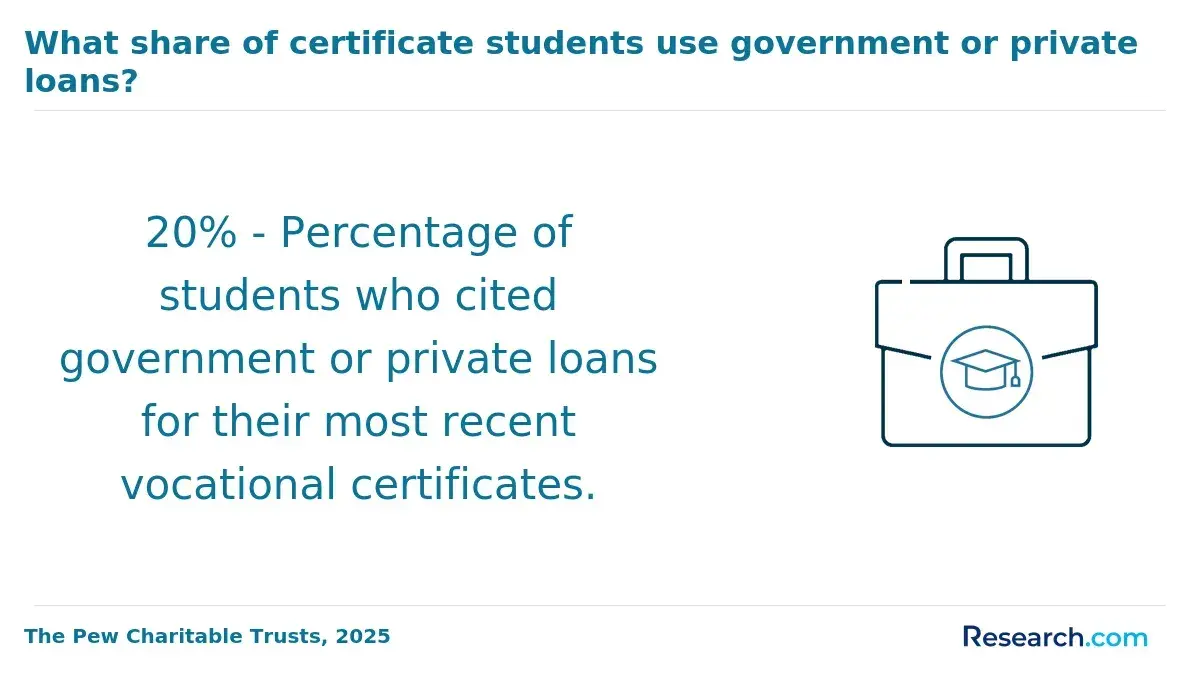
For eligible credit-bearing programs, compare grants, employer tuition assistance, veterans' benefits, and federal aid before borrowing. Students seeking lower-cost aid-eligible options can review online colleges with financial aid. Eligibility depends on the school, program, enrollment status, and individual circumstances; many short noncredit programs do not qualify for federal student aid.
What core courses and skills are typically included in career training curricula?
Curricula should teach both occupation-specific competence and the workplace habits employers expect. Credit for prior learning may replace a demonstrated competency, but it should not leave gaps in safety, ethics, technology, communication, or current regulations.
Across fields, students commonly encounter applied instruction in the following areas:
- Technical procedures, equipment use, troubleshooting, and documentation relevant to the occupation.
- Workplace safety, risk management, privacy, ethics, and applicable regulations.
- Written communication, customer or client interaction, teamwork, and professional conduct.
- Digital tools, data handling, and field-specific software or platforms.
- Career preparation such as portfolio development, interviewing, supervised practice, or certification-exam preparation.
AI tools are changing administrative, design, and technical workflows, but a reputable program teaches verification, confidentiality, and responsible use rather than treating automation as a substitute for foundational judgment. For hands-on careers, prioritize programs with enough supervised practice to demonstrate safe performance.
Which careers and job roles are most accessible through training with life experience credit?
The most accessible roles are those where prior experience can credibly match defined coursework and where employers value a short, recognized credential. Examples include medical assistant, pharmacy technician, HVAC technician, welder, automotive service technician, legal assistant, paralegal support worker, graphic designer, digital production assistant, and correctional or security-related support roles.
Access does not mean automatic qualification. Medical assistants may need employer-preferred certification; HVAC workers may need local licensing or refrigerant-handling credentials; design applicants need portfolios; and law-enforcement roles have agency-specific hiring, fitness, and background standards. If your intended occupation normally requires a bachelor's degree for advancement, compare the short program against best bachelor's degrees before using all available prior-learning credit on a standalone certificate.
Choose a certificate when it fills a defined skill gap or meets a specific entry requirement. Choose an associate degree when you want broader general education, potential transfer options, or a foundation for supervisory and further-study pathways.
What salary ranges and job outlook can graduates reasonably expect in these fields?
Salary depends on occupation, location, experience, industry, shifts, licensing, and employer - not simply on completing a training program. U.S. Bureau of Labor Statistics May 2024 median annual wage data provide useful occupational context: medical assistants had a median of $44,200, HVAC mechanics and installers $59,810, paralegals and legal assistants $61,010, electricians $62,350, and graphic designers $61,300.
These figures help compare fields, but they are not starting-pay promises and include workers with different education and experience levels. BLS projections for 2023-2033 show particularly strong demand in some healthcare support roles, while legal and design employment can be more competitive and sensitive to technology, employer budgets, and regional demand.
Use local job postings to test whether a program's credential matches real hiring language. Count how often employers request the credential, a separate certification, a license, a portfolio, experience, or a degree. That check is more useful than relying on a school's broad salary claim.
How can students evaluate and choose a reputable career training program with life credit?
A reputable program makes the relationship between your prior learning, remaining coursework, total cost, and target job transparent. Start with your destination: identify the job, employer type, state, license or certification requirements, and the minimum credential shown in local postings.
Use this practical review process before enrolling:
- Confirm the institution's accreditation and the program's required approvals with the relevant regulator or certifying body.
- Request the prior-learning policy in writing, including maximum credit, assessment method, fees, residency requirement, and transferability.
- Compare a course-by-course plan showing what you still must complete, including labs, clinicals, apprenticeships, and examination preparation.
- Calculate the total cost of attendance, supplies, testing, transportation, and income lost during required placements.
- Speak with admissions, a program instructor, and at least one local employer or licensing board before committing.
Red flags include vague claims that "life experience equals college credit," pressure to enroll before evaluation, missing state-authorization details, and job guarantees. If your long-term goal is advanced academic study rather than immediate workforce entry, a career certificate may not be the right bridge; compare the distinct expectations of an online PhD no dissertation pathway only after confirming that your earlier degree sequence meets doctoral admissions requirements.
Other Things You Should Know About
No. Schools generally require evidence that your learning matches specific course outcomes. Documentation, examinations, practical demonstrations, official training records, or a faculty-reviewed portfolio may be required.
Not always. Prior-learning credit may be accepted only by the institution that awarded it, particularly when it is recorded as institutional credit. Ask both the current school and any future transfer school for written guidance.
Usually not when clinical hours, supervised practice, or apprenticeships are required by a licensing board, employer, or programmatic standard. Prior learning may reduce other coursework but cannot override external requirements.
Many are not. Federal aid eligibility generally depends on the school and an eligible program, while noncredit training may use employer funding, workforce grants, payment plans, or other assistance instead. Confirm funding eligibility directly with the provider.
References
- CAEL | A Brighter Future Through Credit for Prior Learning (CPL) https://www.cael.org/lp/pla
- Starting College on the Right Foot: Credit for Prior Learning https://mcacs.talentfirst.net/starting-college-on-the-right-foot-credit-for-prior-learning/
- How to Get College Credit for Life Experience 2025 https://www.educationconnection.com/resources/how-to-earn-credit-for-college-with-life-experience/
- College Credit for Your Work and Life Experience | University of Phoenix https://www.phoenix.edu/tuition-financial-aid/prior-learning-assessment.html
- Glossary of Terminology in Prior Learning Recognition https://www.academyone.com/glossary
- The Trump Administration Moves To Tighten Grip on Colleges https://www.americanprogress.org/article/the-trump-administration-moves-to-tighten-grip-on-colleges/