2027 Best Stackable Credentials for Military Spouses

Co-Founder and Chief Data Scientist
Frequent PCS moves can make a conventional degree plan hard to finish, but stackable credentials let military spouses earn a smaller, usable credential now and apply it toward a larger one later. This matters in a labor market where the U.S. Bureau of Labor Statistics projects healthcare occupations to grow faster than the average for all occupations from 2024 to 2034.
This guide compares portable credential paths, online and campus formats, funding questions, licensing risks, and realistic career outcomes so you can choose training that remains valuable after your next move.
Key Things You Should Know
- Choose credit-bearing certificates that explicitly apply to an associate or bachelor's degree when portability and future education matter; noncredit training may build skills but usually does not transfer.
- Healthcare, skilled trades, legal support, IT, and design can offer stackable routes, but state licenses for nursing, cosmetology, teaching, and many trades may not automatically transfer after a PCS.
- For cost context, average published in-district tuition and fees at U.S. public two-year colleges were $4,050 in 2024-25, according to College Board; compare the full program cost, exam fees, supplies, and required clinical or lab expenses.
Top 10 Best Stackable Credentials for Military Spouses
Popular Trade School Programs
Portable trade pathways often begin with a short certificate in HVAC, electrical technology, welding, automotive service, construction management, or logistics. A credit-bearing certificate can lead into an associate degree, while industry credentials such as EPA Section 608 for refrigerant work are separate certifications. Choose hybrid or campus training when labs are essential; fully online trade programs cannot replace required hands-on practice. HVAC is a practical option for spouses seeking demand across regions, though state and local licensing rules can affect electrical and contractor work. Ask whether the school documents clock hours, lab competencies, and exam preparation.
Healthcare Programs
Common healthcare stacks include medical assisting certificate to health sciences associate degree, pharmacy technician training to an associate degree, or practical nursing to registered nursing education. Medical coding, health information, and patient access certificates may be more portable because they generally do not require clinical licensure, although employers may prefer professional certification. Clinical programs require in-person placements and may have immunization, background-check, and drug-screen requirements. A certificate can prepare a learner for an external exam, but passing an exam or receiving a state license depends on the certifier or board, not the school alone.
Criminal Justice / Law Programs
Legal studies, paralegal studies, criminal justice, homeland security, and emergency management certificates can stack into associate or bachelor's degrees. Paralegal certificates are most useful when they include legal research, writing, ethics, and practical software training; some employers favor programs approved by the American Bar Association, though approval is not required for every role. Criminal justice coursework can support civilian security, victim advocacy, dispatch, and administrative roles, but it does not automatically meet police academy, peace-officer, or state background requirements. Confirm whether courses transfer before using them as a first step toward a degree.
Arts & Design Programs
Graphic design, UX design, digital media, web design, photography, and marketing-content certificates can build toward an associate degree or portfolio-based employment. These programs work well online when they provide instructor feedback, current software access, and portfolio projects that travel with you. A credential alone is rarely enough in design: employers commonly evaluate samples, technical skills, and client-facing communication. Select a credit-bearing pathway if you may pursue a degree later; select a focused professional certificate if you need one tool set, such as UX research or Adobe applications, quickly.
What are stackable credentials and why are they valuable for military spouses?
A stackable credential is a sequence of smaller credentials designed to build toward a larger academic award or a higher-level occupational qualification. For example, a college may let a student complete a 12-credit medical billing certificate, apply those credits to a health information certificate, and later apply both toward an associate degree. The key word is designed: credits are stackable only when the institution's catalog or written degree plan says they count.
For military spouses, the value is flexibility. A short certificate can create a milestone before a move, while transferable coursework reduces the chance of restarting after relocation. The best stacks combine a portable entry-level skill, broadly accepted college credit, and an employer-recognized certification where relevant. They are less suitable when your intended occupation requires a state-specific license with extensive in-person hours or when a provider offers noncredit badges without clear employer recognition.
Do not confuse a certificate with a certification. A certificate is awarded by a school after coursework. A certification is awarded by an industry body after meeting its standards, often through an examination. Some programs prepare students for certifications, but completion does not itself award the professional certification.
Which accredited schools offer flexible stackable programs tailored to military spouses?
The strongest options are usually regionally or institutionally accredited community colleges, public universities, and nonprofit universities that publish clear certificate-to-degree maps. A school does not need a military-spouse-only program to be a good fit; what matters is whether it accepts mobile learners, offers frequent starts, provides online student services, and documents transfer policies.
Start by comparing accredited online universities alongside local community colleges in your current duty-station area. Institutional accreditation matters most when you want federal aid eligibility, transferable academic credit, or a future degree. For career training providers, also evaluate whether the relevant employer, licensing board, or certification body recognizes the training.
This comparison separates features that support a portable credential plan from features that should trigger further questions.
| Provider type | Best use | Stackability signal | Watch-out |
| Community college | Low-cost credit certificates and associate degrees | Published program map showing shared courses | In-person labs may not be available after a move |
| Accredited online university | Continuous enrollment across locations | Certificate credits embedded in a degree curriculum | Check tuition, residency, and proctoring policies |
| Industry training provider | Specific software, IT, or job skill | Named certification alignment or college-credit agreement | Badges may not transfer as academic credit |
| Military-affiliated education partner | Military-aware advising and benefits navigation | Written transfer and reentry procedures | Verify accreditation independently |
Before enrolling, ask for the catalog year, the exact courses that apply to the next credential, and what happens if you pause enrollment because of a PCS. Get answers in writing rather than relying on a general statement that a program is "transfer-friendly."
How do online stackable credentials compare to campus-based options for military spouses?
Online study is usually the better choice for theory-heavy fields such as business administration, IT support, medical coding, legal studies, project coordination, and digital design. It supports continuity through relocations and can make part-time pacing easier. Campus or hybrid delivery is usually stronger for clinical healthcare, welding, automotive, electrical, and other programs requiring supervised equipment use or site-based learning.
The meaningful comparison is not online versus campus in the abstract; it is whether the format delivers the competencies your next credential, certification examination, employer, or licensing board requires.
| Decision factor | Online option | Campus or hybrid option |
| PCS continuity | Usually high when courses are fully online | May require a new local site or enrollment change |
| Hands-on skill development | Best for software, theory, and simulations | Best for labs, clinicals, and equipment practice |
| Scheduling | Often asynchronous, but may include live sessions or proctored exams | Set meeting times and local attendance requirements |
| Licensure preparation | May be limited by state placement rules | Can better support required supervised hours |
| Network building | Requires intentional virtual participation | Offers local instructors, classmates, and employers |
A common mistake is assuming "100% online" means no local obligations. Verify clinical placement responsibility, lab intensives, examination proctoring, time-zone expectations, and whether the school can serve students living in your current state.
What admission requirements and prior learning credits apply to military spouse learners?
Requirements depend on the credential type. Credit-bearing undergraduate certificates and associate degrees commonly require an application, identity or residency information, and prior school records; placement testing may be used when transcripts do not show college-ready coursework. Many short noncredit programs have simpler enrollment processes but may not award transferable credit. Selective clinical programs can require prerequisite science courses, minimum grades, immunizations, background checks, and separate program admission.
Prior learning can shorten a stack, but it must be evaluated rather than assumed. Ask whether the institution accepts transfer coursework, standardized exam credit, industry certifications, portfolio review, or credit for prior learning. Competency-based formats can be useful for students who can progress after demonstrating existing knowledge; compare the list of competency-based colleges only after confirming that the degree or certificate fits your occupation and licensure goals.
Military spouses generally cannot receive academic credit merely for being a spouse, but they may benefit from military-connected advising, reduced residency barriers, scholarships, or flexible withdrawal and reenrollment policies. Keep official transcripts, course syllabi, certification records, and any training documentation before a move. Those records make a transfer-credit appeal more practical if equivalencies are unclear.
How long do stackable credential programs take and what do they typically cost?
Completion time depends on credits, course sequencing, transfer credit, and whether labs or clinical placements are available. A focused certificate may take one or two terms, while an associate degree commonly takes about two academic years of full-time study. Part-time enrollment is often more realistic during deployments, childcare changes, or relocation, but it can extend the timeline. Review course availability, not only stated program length: a required class offered once a year can delay completion.
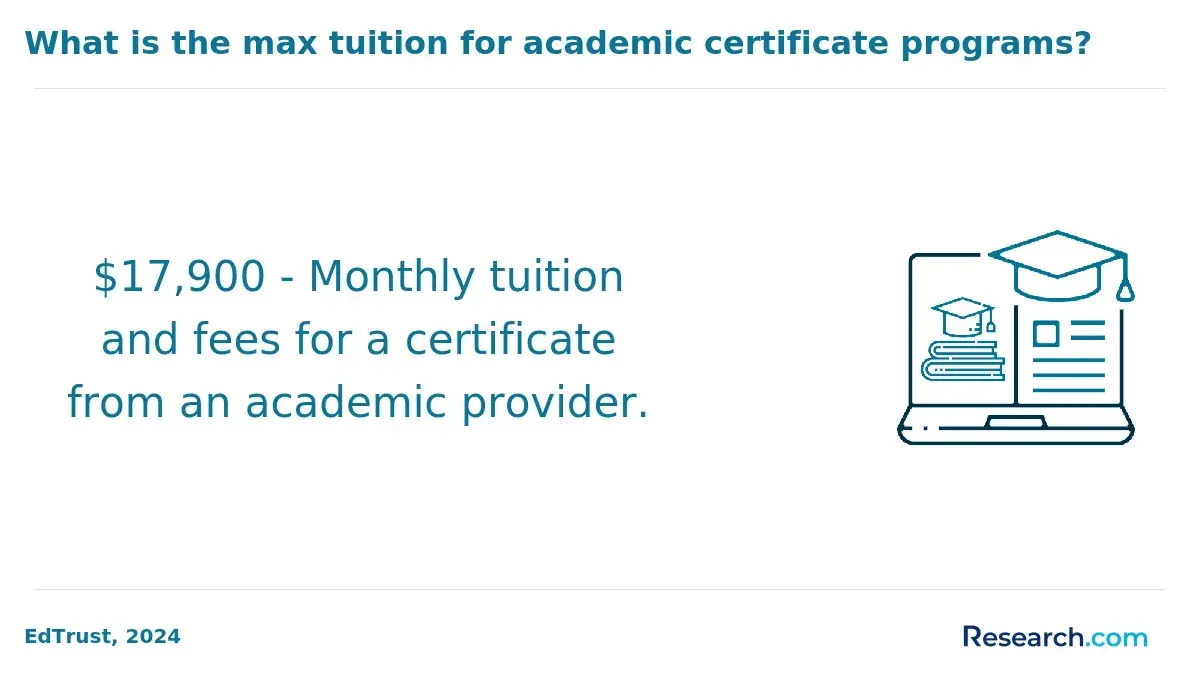
Cost should be evaluated as a total pathway, not simply the first credential's tuition. For reference, College Board reported average published in-district tuition and fees of $4,050 at public two-year colleges in 2024-25. Your actual cost can be lower or higher based on residency, delivery format, books, equipment, clinical expenses, testing, and fees.
- Tuition and mandatory institutional fees: compare per-credit and program-total charges.
- Required materials: include software subscriptions, tools, uniforms, equipment, background checks, and liability coverage where applicable.
- External credential costs: budget for certification examinations, license applications, renewals, and continuing education.
- Transfer risk: confirm in writing that completed certificate courses apply to the intended next credential.
For a degree-oriented path, compare certificate course requirements with associate degrees that may accept them. Federal financial aid generally applies to eligible students in qualifying credit-bearing programs at eligible institutions; it does not automatically cover every short course or third-party certification. Ask the financial-aid office whether the specific certificate, not just the school, is aid eligible.
Which career paths and job roles align best with stackable credentials for military spouses?
The best path depends on how portable you need the work to be, whether you can attend in person, and whether you want an entry-level job quickly or a longer degree ladder. Remote-friendly fields can reduce PCS disruption, while regulated occupations may offer strong local demand but require state-by-state planning. A stack is most useful when each step has value on its own.
The following examples show how an initial credential can connect to a next educational step without suggesting that a credential alone qualifies a person for every listed job.
| Career area | Possible first stack | Potential next step | Typical role direction |
| Health information | Medical billing, coding, or health information certificate | Associate degree in health information technology | Billing specialist, coding support, health records technician |
| IT support | IT support or networking certificate | Associate or bachelor's degree in IT or cybersecurity | Help desk technician, desktop support, systems support |
| Skilled trades | HVAC, welding, or electrical helper certificate | Advanced certificate, apprenticeship, or associate degree | Technician trainee, installer, maintenance support |
| Legal support | Legal studies or paralegal certificate | Associate or bachelor's degree in legal studies | Legal assistant, records specialist, paralegal where employer requirements are met |
| Digital design | Graphic design or UX certificate | Associate or bachelor's degree plus portfolio development | Production artist, junior designer, digital content specialist |
If your long-term goal is executive leadership, teaching, clinical practice, or university faculty work, a short stack may be an early step rather than the endpoint. For advanced academic options, review online doctorate programs only after confirming that your intended profession accepts the degree format and that you can meet any residency, practicum, or licensure requirements.
What salary ranges and advancement opportunities can stackable credentials unlock?
Salary information belongs to occupations, locations, experience levels, and employers - not automatically to a certificate holder. Use occupational data as a market benchmark, then check local postings and credential requirements in the places where you are likely to live. A stack can help demonstrate progression, but experience, professional certification, portfolio quality, and licensure may have equal or greater influence.
U.S. Bureau of Labor Statistics data for May 2024 illustrates the range across fields. Medical assistants had a national median annual wage of $44,200, while heating, air conditioning, and refrigeration mechanics and installers had a median of $59,810. These figures describe workers in those occupations, not guaranteed pay after completing a program. They also do not capture local wage differences, overtime, self-employment, or benefits.
Advancement is clearest when the next credential changes the scope of work you can perform. An IT support certificate may lead to vendor certifications and systems roles; a health information certificate may lead to an associate degree and more specialized records work; a trade certificate may complement an apprenticeship. Be cautious about programs that advertise a salary without identifying the occupation, geographic area, survey period, or employment assumptions.
What licensing or certification requirements affect stackable credentials in regulated fields?
Licensing is the largest portability risk for military spouses. A license is legal permission from a government authority to practice a regulated occupation; requirements vary by state. Nursing, practical nursing, dental hygiene, teaching, cosmetology, real estate, and many contractor trades can involve state licenses, supervised hours, examinations, background checks, or continuing education. Moving may require endorsement, a new application, or additional coursework.
Before choosing a regulated pathway, take these steps to avoid completing a program that does not serve your destination state.
- Identify the state board that regulates the occupation in your current state and likely future states.
- Confirm that the specific program meets educational requirements for the license or examination you seek.
- Ask who arranges clinicals, internships, or supervised hours and whether those placements are available where you live.
- Separate school completion from external examination, background-check, and license-application requirements.
- Keep transcripts, hour logs, syllabi, and certification records for future endorsement applications.
Industry certifications may be more portable because they are generally national, but employers decide which certifications they value. For example, a technology certification can demonstrate a standardized skill, while it does not replace a degree or required work experience for every cybersecurity role. Favor programs that name the specific certification exam they prepare you for and explain any prerequisites.
How can military spouses evaluate and choose reputable stackable credential programs?
Choose backward from the job or next credential you want, not from an appealing course title. First, look at several current job postings in locations or remote markets you could realistically target. Then identify the minimum education, software, license, experience, and certification requirements that recur. This prevents spending on a credential that employers do not recognize.
Use the following questions in a conversation with admissions, financial aid, and program staff. The answers should be specific to the program and documented in the catalog, student handbook, or written correspondence.
- Is the credential credit-bearing, noncredit, or an industry certification preparation program?
- Which exact courses transfer into the next certificate, associate degree, or bachelor's degree, and how many credits will apply?
- What institutional accreditation, programmatic accreditation, or industry recognition is relevant to my target job?
- Can I complete all required labs, clinicals, internships, proctored examinations, and orientations after a PCS?
- What is the total cost beyond tuition, including equipment, examination, background-check, and licensing expenses?
- What outcomes does the school report for this program, and how does it define employment, completion, and the reporting period?
Red flags include pressure to enroll before reviewing the catalog, vague claims that credits "should transfer," salary promises without occupational context, and programs that will not state whether they meet state licensing requirements. A reputable provider can explain the credential type, instructional format, costs, refund policy, and next-step options plainly. If you may move soon, prioritize a program with asynchronous coursework, short terms that fit your timeline, and a written reentry plan.
Other Things You Should Know About
MyCAA may help eligible spouses pay for approved education or training leading to a license, certification, certificate, associate degree, or other portable career credential. Eligibility, funding limits, approved programs, and application procedures can change, so verify the current rules and obtain approval before enrolling or paying.
They can be, if each credential has independent employment value and the completed courses are guaranteed to apply to the next award. A standalone certificate may be better when you only need one specific skill or external certification preparation.
Possibly, but transfer is never automatic. Credit-bearing courses from an appropriately accredited institution have a stronger transfer case than noncredit training, yet the receiving college decides equivalencies. Save official transcripts and confirm transfer policies before enrolling.
Remote-capable paths such as IT support, medical coding, bookkeeping, project coordination, and digital design can be highly portable when paired with demonstrable skills and recognized credentials. Regulated healthcare and trade paths can also be valuable, but require careful state licensing planning.
References
- Military Spouse Education Benefits https://medcertify.com/military-spouse-education-benefits/
- Empowering Military Spouse Education & Employment: Solutions & Resources https://www.learnhowtobecome.org/career-resource-center/military-spouse-education-employment/
- Best Identity-Based Military Transition Program https://leadertransitioninstitute.org/changing-focus/best-military-transition-program/
- How Military Spouses Can Stack MyCAA And The Pell Grant https://militarybenefitsapp.com/blog/how-military-spouses-can-stack-mycaa-and-the-pell-grant
- MyCAA Cybersecurity Training | Free for Military Spouses 2026 https://www.quickstart.com/blog/cyber-security/mycaa-cybersecurity-training/
- Plan Design Can Help Employers Recruit a Valuable Employee Group: Military Spouses https://www.psca.org/news/psca-news/2025/7/plan-design-can-help-employers-recruit-a-valuable-employee-group-military-spouses/
- Military Spouse Scholarships & Grants: Guide - PCS Pay-it-Forward https://pcspayitforward.com/military-spouse-scholarships-and-grants/
- Military Spouses: April Job Market Surge | Operation Family Fund https://www.operationfamilyfund.org/april-job-market-trends-for-transitioning-military-spouses/
- Certifications Under $4,000 Covered by MyCAA: Complete List https://www.militarytransitiontoolkit.com/blog/certifications-mycaa-covered-guide
- Military Spouse Scholarships | Hope For the Warriors https://www.hopeforthewarriors.org/programs-and-services/scholarships/