2027 Best Non-Degree Programs With Academic Advising

Co-Founder and Chief Data Scientist
Choosing a short program is difficult when a low price or fast timeline hides weak career support. Non-degree programs with academic advising pair focused training with help selecting courses, meeting prerequisites, and planning next steps. They can fit career changers, working adults, and students testing a field before pursuing a degree.
For context, the U.S. Bureau of Labor Statistics (BLS) reported a $62,350 median annual wage for electricians in May 2024. This guide explains which programs fit your goal, what advising should include, and how to avoid costly mismatches.
Key Things You Should Know
- Academic advising is the differentiator: look for a named advisor who can verify prerequisites, course sequence, credential value, and licensure eligibility before you enroll.
- Non-degree study ranges from noncredit workforce training to credit-bearing certificates; only some programs transfer into an associate or bachelor's degree, so get stackability terms in writing.
- Career potential varies sharply by field: BLS projects 9% employment growth for electricians and 12% for medical assistants from 2024 to 2034, while entry requirements and state rules still control eligibility.
Top 10 Best Non-Degree Programs With Academic Advising
Popular Trade School Programs
Trade certificates commonly cover electrical work, HVAC, welding, plumbing, diesel technology, and industrial maintenance. The best option combines hands-on labs, safety instruction, employer-recognized preparation, and advising on apprenticeship or state licensing steps. Electrical and HVAC paths often require supervised work experience after classroom training; a certificate alone may not produce a license. Compare shop hours, tool fees, exam preparation, and local employer partnerships.
Healthcare Programs
Common healthcare non-degree options include medical assisting, pharmacy technician, dental assisting, practical nursing prerequisites, phlebotomy, billing and coding, and sterile processing. These programs work best when the advisor confirms clinical-placement availability and the credential required by local employers. Medical assisting may prepare students for a voluntary national certification exam, while nursing and some imaging roles require state-approved education and licensure. Online coursework can be useful, but clinical skills, externships, background checks, immunizations, and drug screening may require in-person participation and add costs.
Criminal Justice / Law Programs
Paralegal studies, legal research, court reporting support, corrections, security, and crime-scene documentation are common non-degree pathways. A paralegal certificate is usually an educational credential, not a license to practice law; attorneys supervise paralegals, and employer expectations vary. Advising matters most for students who already hold a degree, because post-baccalaureate paralegal certificates may be more appropriate than entry-level training. Ask whether courses teach current legal technology, writing, ethics, and jurisdiction-specific procedure. Background standards can affect security and corrections roles.
Arts & Design Programs
Non-degree arts and design options include graphic design, UX/UI foundations, digital photography, animation, web production, interior decorating, and portfolio development. These paths are strongest when they produce reviewed work samples, software fluency, and clear feedback rather than only completion badges. Advising can help students choose a specialization and build a portfolio aligned with local or remote job targets. Because employers often evaluate demonstrated work, compare instructor critique, project ownership, software access, and career services. A short program may support entry-level work but does not replace a robust portfolio.
What are non-degree programs with academic advising and who are they best for?
A non-degree program is structured learning that does not award an associate, bachelor's, master's, or doctoral degree. It may award a college certificate, continuing-education certificate, workforce-training credential, professional certificate, or digital badge. Academic advising means the provider offers individualized guidance on course selection, academic progress, prerequisites, and often next educational steps.
These programs are best for people who need targeted skills, a career test-drive, a license-eligible training pathway, or a faster route into a support role. They are less suitable when the target occupation explicitly requires a degree, extensive supervised practice, or graduate education. If your goal eventually requires broad general education and transfer credit, compare an easiest bachelor degree to get online with a stackable certificate rather than treating short training as a substitute.
The comparison below separates common non-degree models. "Recognition" describes what to verify, not a guarantee of employer acceptance.
| Program type | Usually provided by | Credit status | Best use | Key advising question |
| Academic certificate | College or university | Often credit-bearing | Career entry or degree pathway | Will credits apply to a named degree? |
| Workforce certificate | Community college or training school | Credit or noncredit | Job-specific skills | Does it meet local employer or licensing expectations? |
| Professional certificate | University, company, or training provider | Usually noncredit | Skill development or career change | What portfolio, assessment, or career support is included? |
| Industry certification preparation | Training provider or college | Usually noncredit | Preparation for an outside exam | Is the exam fee included, and are eligibility rules met? |
Do not confuse a certificate with a certification. A certificate shows completion of an educational program. A certification is generally issued by an independent professional body after an exam and, in some fields, verified experience or continuing education.
How do online and campus-based non-degree programs differ for advised students?
Online non-degree programs can reduce commuting and make part-time attendance easier, while campus-based programs are usually better for equipment-intensive, clinical, studio, and lab-based learning. Hybrid programs often offer the most realistic balance: online theory, scheduled hands-on practice, and advisor check-ins. Advising quality should be judged by access and expertise, not by delivery mode alone.
Online study is a sound choice when the field accepts remote instruction and the provider can document how it supports students. A campus or hybrid option is safer when competencies must be observed in person, when a state board specifies classroom or clinical hours, or when you need local employer connections. Professionals considering an eventual graduate pivot can also review an easy online masters degree, but should first confirm that their prior degree and field experience meet admission requirements.
This comparison highlights the practical trade-offs advised students should weigh before choosing a format.
| Factor | Online | Campus-based | Hybrid |
| Scheduling | Often flexible, sometimes asynchronous | Fixed meeting times | Flexible theory with fixed practical sessions |
| Hands-on learning | Limited unless local placement is arranged | Direct access to labs and equipment | Combines remote content and practical training |
| Advising need | Frequent proactive check-ins | Convenient in-person access | Coordination across online and practical components |
| Best fit | Self-directed learners in computer-based fields | Students needing intensive practice | Students needing both flexibility and supervised skills |
A common mistake is assuming "fully online" means eligible everywhere. Ask the advisor whether clinicals, internships, proctored exams, residency sessions, or state-specific requirements apply where you live.
How can you compare accreditation and quality among non-degree certificate programs?
Quality review starts with the credential's purpose. For a credit-bearing college certificate, verify institutional accreditation through the U.S. Department of Education or Council for Higher Education Accreditation databases and ask whether the program itself has relevant specialized approval. For noncredit training, assess the provider's curriculum, instructors, assessment, employer relationships, and documented outcomes. Accreditation can matter, but it is not a universal quality seal for every short course.
Use these steps to compare programs consistently before submitting an application or paying a deposit.
- Write down the exact job, license, certification exam, or next degree you want; reject programs that do not directly support that outcome.
- Ask whether the credential is credit-bearing, whether credits transfer, and whether a receiving institution has confirmed acceptance in writing.
- Verify any required programmatic approval with the relevant licensing board, certifying organization, or employer - not solely with the school.
- Request total charges, including registration, supplies, uniforms, tools, exams, background checks, and clinical or practicum expenses.
- Meet the assigned advisor and ask how often they contact students, how they track progress, and who handles placement or licensing questions.
Red flags include vague claims that a program is "accredited" without naming the accreditor, pressure to enroll before you can review costs, guaranteed job or salary language, and refusal to identify the credential issuer. A legitimate advisor should be able to explain limits as clearly as benefits. Readers exploring broader certificate programs should distinguish school-issued training certificates from third-party professional certifications.
What admission requirements and prerequisites do non-degree programs typically have?
Admission rules depend on the provider and the level of training. A noncredit short course may require only registration and payment. A college certificate may require a high school diploma or equivalent, placement testing, and evidence of prerequisite coursework. Programs involving patient care, public safety, or work placements can add health, background, immunization, drug-screening, CPR, or physical-capacity requirements.
The following requirements are common patterns, not universal rules. Confirm details with the specific school and, where relevant, the licensing authority in your state.
| Program pathway | Typical entry requirement | Possible additional condition |
| Entry-level workforce training | Registration, age requirement, or high school completion | Basic skills assessment or orientation |
| College credit certificate | School application and academic records | English, math, or program prerequisites |
| Healthcare clinical program | Academic prerequisites and health documentation | Background check, drug screening, CPR, clinical clearance |
| Advanced or post-degree certificate | Prior college degree or related coursework | Work experience or portfolio |
Do not assume a stated "no GPA requirement" means every applicant is eligible. It may only mean the provider does not publish a minimum GPA, prerequisites, capacity limits, or clinical-site requirements can still determine admission.
How long do non-degree programs take, and what do they cost on average?
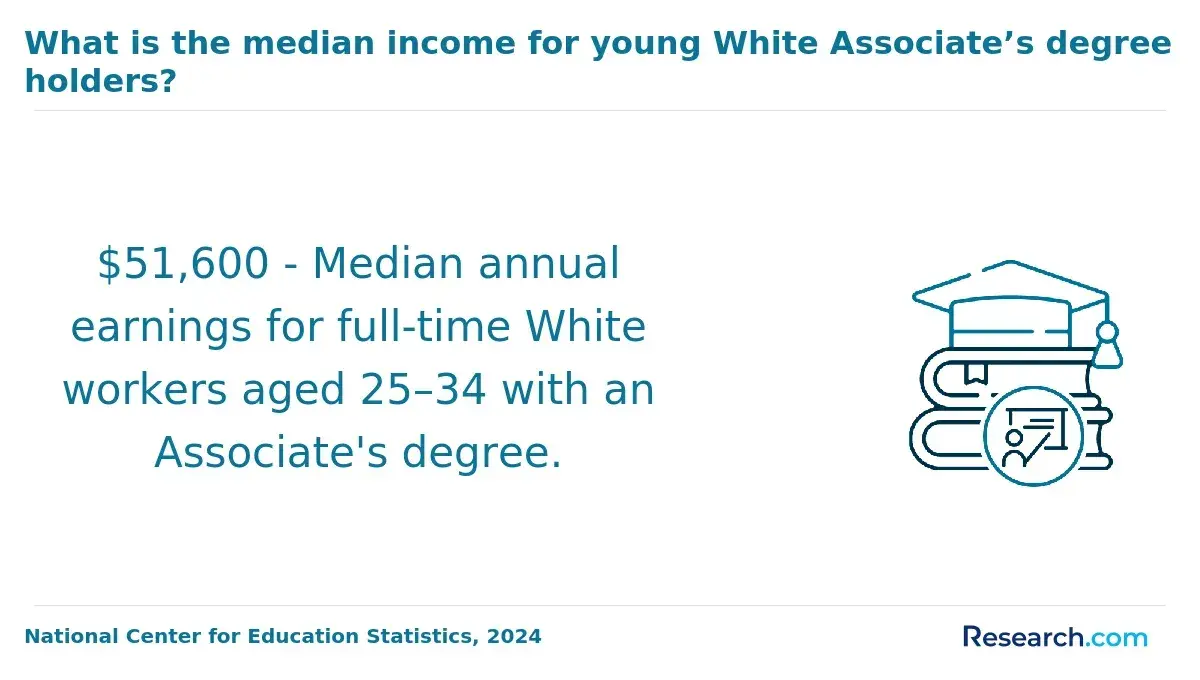
Completion can range from a few weeks for a focused noncredit course to roughly one year for many college certificates; clinical, apprenticeship-linked, and part-time routes can take longer. There is no single reliable national average cost for all non-degree programs because they span subsidized community-college certificates, private career schools, and short online offerings. As a useful benchmark, College Board reported average published in-district tuition and fees of $4,050 for a public two-year college in 2024-25. A certificate may cost less or more depending on its length and required equipment.
Use the total-cost view below instead of comparing tuition alone. It helps expose why a lower advertised price may not be the lower-cost choice.
| Cost component | Why it changes the total | Question for an advisor |
| Tuition and mandatory fees | May be charged by credit, term, clock hour, or course | What is the full charge through completion? |
| Tools, software, books, and uniforms | Especially material in trades, healthcare, and design | Which items are required versus optional? |
| Exam, licensing, and background fees | May be paid to outside organizations | Which fees are excluded from tuition? |
| Travel and lost work time | Can be substantial for labs, clinicals, or externships | When and where are required in-person sessions? |
Credit-bearing certificates at eligible institutions may qualify for federal, state, or institutional aid when the program meets applicable rules; noncredit programs often do not. Employer tuition assistance, workforce grants, payment plans, and apprenticeships may help, but compare repayment terms before borrowing. If you need a degree on a compressed schedule instead, investigate accelerated online bachelor degree programs accredited and compare their total credit cost with a stackable certificate route.
What coursework and advising support do students receive in non-degree certificates?
Coursework is narrow and career-focused. Depending on the field, it may include technical theory, safety, documentation, communication, software, ethics, hands-on labs, simulated practice, portfolio projects, or supervised field experience. Credit-bearing certificates may also include prerequisites; noncredit programs generally concentrate on occupational skills without general-education courses.
Effective academic advising should do more than answer registration questions. Students should expect support in the following areas, especially when a credential has external eligibility rules.
- Mapping the correct course sequence and explaining which courses must be completed before labs, clinicals, or capstones.
- Checking whether prior learning, transfer credit, or work experience can reduce time to completion when the provider permits it.
- Monitoring academic progress and connecting students with tutoring, accessibility services, financial-aid staff, or faculty support when available.
- Explaining whether the program prepares for a certification exam, license application, apprenticeship, degree pathway, or portfolio review.
- Referring students to career services, internship coordinators, or employer partners without promising placement.
Ask for the advising model in writing: assigned advisor, appointment availability, response time, caseload, and whether advising continues after completion. A generic call center is not equivalent to program-specific academic guidance.
What careers and job roles can non-degree programs with advising prepare you for?
Non-degree programs can prepare learners for entry-level, technician, support, or assistant roles, but the precise outcome depends on employer requirements and state regulation. The strongest alignment occurs where the program teaches a clearly defined skill set and includes supervised practice or a recognized examination pathway. In contrast, occupations that require a bachelor's degree, graduate degree, or license will usually need additional education.
These examples show how program choices relate to realistic job targets rather than implying that completion alone secures employment.
| Program area | Possible job target | Important limitation |
| Electrical or HVAC | Helper, installer trainee, maintenance technician, apprentice | Independent work commonly requires apprenticeship hours and state or local licensing. |
| Medical assisting | Medical assistant or clinical support staff | Employer preferences and scope-of-practice rules vary; certification may be preferred. |
| Pharmacy technician | Pharmacy technician | Registration or certification requirements vary by state and employer. |
| Paralegal studies | Paralegal or legal assistant | Work is performed under attorney supervision; credentials and experience affect hiring. |
| Digital design | Production artist, junior designer, content production support | A portfolio and demonstrated software skills often drive hiring decisions. |
AI tools are changing task expectations in design, administrative, and legal-support work. Choose programs that teach judgment, verification, privacy, communication, and current software workflows - not just repetitive tasks that can be automated or accelerated by software.
What salary ranges and job outlook can graduates of these programs expect?
Salary data should be used as labor-market context, not as a promise about what a certificate graduate will earn. Pay varies by location, experience, schedule, union status, specialty, employer, and whether the worker has completed required licensing or apprenticeship steps. BLS occupational figures include workers with different education levels and experience, so they do not measure a program's graduate outcomes.
The May 2024 BLS median annual wages and 2024-2034 projected employment changes below help compare fields, but they do not establish eligibility or starting pay.
| Occupation | Median annual wage, May 2024 | Projected employment change, 2024-2034 | How to interpret it |
| Electricians | $62,350 | 9% | Typically requires apprenticeship and licensing beyond classroom certificate study. |
| Medical assistants | $44,200 | 12% | Certificate training is common, but requirements differ by employer and state. |
| Paralegals and legal assistants | $61,010 | -1% | Demand may be competitive; prior degree, specialization, and experience can matter. |
| Graphic designers | $61,300 | 2% | Portfolio quality, specialization, and freelance versus employee status affect earnings. |
For a practical return-on-investment check, compare the program's complete cost and time away from work with entry-level openings in your area. Ask the school for outcomes by program, reporting period, job title, completion rate, and methodology; do not rely on an occupation-wide wage figure alone.
How do licensing, certification, and professional exams work after non-degree study?
Licensing, certification, and educational certificates are separate systems. A school may issue a certificate after you complete coursework. A certifying organization may award certification after you meet its eligibility standards and pass an exam. A government board may issue a license after required education, examinations, background review, fees, and supervised experience. One program can support all three steps, but it does not automatically replace any of them.
Before enrolling in a regulated pathway, use this sequence to protect your investment.
- Identify the exact job title and the state where you expect to work.
- Find the state board, agency, or certifying body that controls eligibility for that role.
- Confirm that the specific program, not merely the school, meets required curriculum, clock-hour, clinical, or accreditation standards.
- Ask whether the program includes exam preparation, required documentation, and support for the application process.
- Budget separately for examinations, fingerprints, background checks, registration, renewal, and continuing-education requirements.
For example, electrician licensing commonly follows an apprenticeship and examination process, while many healthcare certifications are voluntary but employer-preferred. Requirements change by state and credentialing organization, so written confirmation from the relevant authority is more reliable than marketing claims.
Other Things You Should Know About
They can be worthwhile when the program directly supports a specific job, certification exam, license pathway, or next academic step. Advising adds value when it is individualized and helps you avoid wrong prerequisites, nontransferable credits, or a program that does not meet local rules.
Sometimes. Credit-bearing certificates from colleges may be designed to stack into an associate or bachelor's program, but transfer is never automatic. Obtain written confirmation of which courses transfer, how many credits apply, and any grade or time-limit conditions.
Some do, but services vary widely. Ask whether you receive an assigned advisor, scheduled appointments, progress monitoring, help with prerequisites, and guidance on internships, licensure, or transfer. Do not assume technical support is academic advising.
Possibly, but eligibility depends on the program and institution. Certain credit-bearing programs at eligible schools may qualify for aid, while many noncredit courses do not. Ask the financial-aid office about eligibility, grants, loans, payment plans, and employer assistance before enrolling.
References
- Academic Advising Delivers Success | Edcor https://www.edcor.com/blog/academic-advising-delivers-success/
- Academic Advisor Training & Certificate | DC Education Group https://www.dceducationgroup.com/retention-advisor-certificate
- Academic Advising https://studentsupport.spcollege.edu/hc/en-us/articles/15871143924635-Academic-Advising
- How Academic Advising Impacts the Question: Are You Coming Back Next Semester? https://www.facultyfocus.com/articles/academic-leadership/how-academic-advising-impacts-the-question-are-you-coming-back-next-semester/
- Community College Student Advising | Blue Ridge Community College https://www.blueridge.edu/services-support/academic-advising-registration/
- Advising as a Strategy for Achieving Equitable Student Outcomes | MDRC https://www.mdrc.org/work/publications/advising-strategy-achieving-equitable-student-outcomes
- Best Colleges for Student Support for Mental Health & Academics https://www.collegexpress.com/lists/list/the-best-colleges-and-universities-for-access-to-student-support-services/3124/
- Academic Advising: What it is, why college students need it, and how it can save time and money https://news.shoreline.edu/2018/12/21/academic-advising-what-it-is/