2027 Best Online Career Training Programs With Multiple Start Dates

Co-Founder and Chief Data Scientist
Choosing training that fits around work or family can be harder than choosing a career field. Online career training programs with multiple start dates let learners begin in several terms or monthly cohorts rather than wait for one annual intake. This matters because the U.S. Bureau of Labor Statistics projects about 19.0 million job openings annually, on average, from 2024 to 2034. This guide helps career changers, working adults, and new entrants compare flexible programs, verify requirements, estimate total costs, and avoid training that will not support their intended job or license.
Key Things You Should Know
- Multiple start dates improve enrollment flexibility, but they do not necessarily mean self-paced study; many programs still use fixed weekly deadlines, live labs, externships, or clinical placements.
- For hands-on careers, confirm the required in-person component before paying: online coursework alone usually cannot meet practical training or state licensing requirements for trades and many healthcare roles.
- BLS projects about 19.0 million annual openings across all occupations from 2024 to 2034; use local job postings, required credentials, and total program cost - not that national figure alone - to judge your opportunity.
Top 10 Best Online Career Training Programs With Multiple Start Dates
Popular Trade School Programs
Flexible online trade training commonly covers electrical fundamentals, HVAC theory, welding safety, construction management, plumbing concepts, CDL exam preparation, and industrial maintenance. A noncredit career-training certificate may teach job-ready concepts, while a credit-bearing certificate or associate degree can include general education and may transfer toward further study. Choose online study for theory, codes, estimating, or troubleshooting; choose hybrid or campus training when employers, apprenticeships, or licensing rules require supervised tool use. Before enrolling, ask whether the program arranges labs, prepares students for an industry exam, or merely provides test-prep content.
Healthcare Programs
Common online or hybrid options include medical billing and coding, medical administrative assisting, pharmacy technician coursework, health information technology, dental billing, and medical assisting. Clinical occupations such as practical nursing, radiologic technology, sonography, and many medical assisting pathways require supervised clinical education, even when lectures are online. A school certificate is not the same as professional certification from an outside certifying body. Verify whether coursework meets the eligibility rules for a certification examination and whether your state permits the intended role. Students seeking direct patient care should prioritize approved clinical placements over start-date convenience.
Criminal Justice / Law Programs
Online certificates and associate degrees may cover criminal justice, legal studies, paralegal studies, legal office administration, corrections, cybersecurity foundations, or emergency management. These programs can suit learners seeking entry-level support roles or preparation for later degree study. They generally do not independently qualify someone to practice law, become a police officer, or work as a licensed private investigator; agency hiring, background checks, physical standards, and state rules can apply. For paralegal goals, compare curriculum, employer recognition, and whether the provider offers credit-bearing coursework or a certificate designed for career changers.
Arts & Design Programs
Online career programs in graphic design, digital marketing design, web design, photography, animation, UX foundations, interior design basics, and video production often admit several cohorts yearly. Portfolio quality usually matters more to creative employers than the calendar of entry. A short certificate can build software and project skills quickly, while an associate degree may provide broader design theory, critique, and portfolio development. Review the tools included in tuition, software subscription costs, instructor feedback, portfolio ownership, and whether the program teaches current workflows rather than only isolated software tutorials.
What are online career training programs with multiple start dates and how do they work?
Online career training programs are structured learning options intended to build employable skills in a defined field. They may be offered by community colleges, universities, adult career schools, professional associations, or private training providers. "Multiple start dates" means a provider opens more than one cohort during the year - often every term, several times yearly, or monthly. It does not automatically mean students can start any day.
Programs usually use one of three models: scheduled online classes with weekly due dates, rolling cohorts with frequent entry points, or self-paced training with enrollment windows. The right model depends on how much structure you need. Learners balancing employment may also want to compare quickest online degrees if their target role requires an academic credential beyond short-term training.
Before choosing a start date, distinguish the credential you will receive. A school-issued certificate documents completion of an educational program. A professional certification is awarded by an independent certifying organization after its eligibility, examination, and sometimes experience requirements are met. Some programs prepare students for a certification exam, but passing the course does not guarantee certification.
Multiple intakes can be useful when an employer tuition benefit, layoff, caregiving change, or licensing deadline affects timing. They can also create a rushed decision. Compare each cohort's orientation date, withdrawal deadline, practicum timing, and access to tutoring before selecting the earliest available opening.
How do online career training programs compare to campus-based options for flexibility and outcomes?
Online programs can reduce commuting and make lecture-based career training accessible across a wider area. Campus-based options remain stronger when skill development depends on equipment, supervised practice, employer networking, or immediate access to labs. Outcomes depend more on the program's quality, placement support, local demand, and the learner's completion than on delivery mode alone.
The comparison below separates flexibility from the practical features that can matter most for employment and licensing.
| Decision factor | Online or hybrid career training | Campus-based training |
| Start-date flexibility | Often offers several cohorts, rolling entry, or frequent terms | Often follows a semester, quarter, or limited cohort calendar |
| Lecture access | Recorded or scheduled remote lessons may fit work schedules | Usually requires attendance at set times and locations |
| Hands-on instruction | May require local labs, intensives, externships, or simulations | Usually provides direct access to labs, shops, and equipment |
| Networking | Can require deliberate use of virtual career services and local outreach | May offer more face-to-face contact with instructors and employers |
| Best fit | Administrative, technology, business, coding, and theory-heavy pathways | Clinical, technical, and equipment-intensive pathways |
If flexibility is your primary need, compare course pacing rather than assuming online means easy. Programs with asynchronous lectures can still require proctored exams, group work, daytime clinical shifts, or fixed live sessions. Adults returning to school may find that best degrees for older adults offer a broader degree pathway when a short career program would not meet their long-term goal.
A common mistake is selecting a fully online option for a role that legally or practically requires supervised fieldwork. Ask for a written list of every in-person requirement and whether the school secures placements or expects students to find them independently.
What accreditation and industry standards should these online career training programs meet?
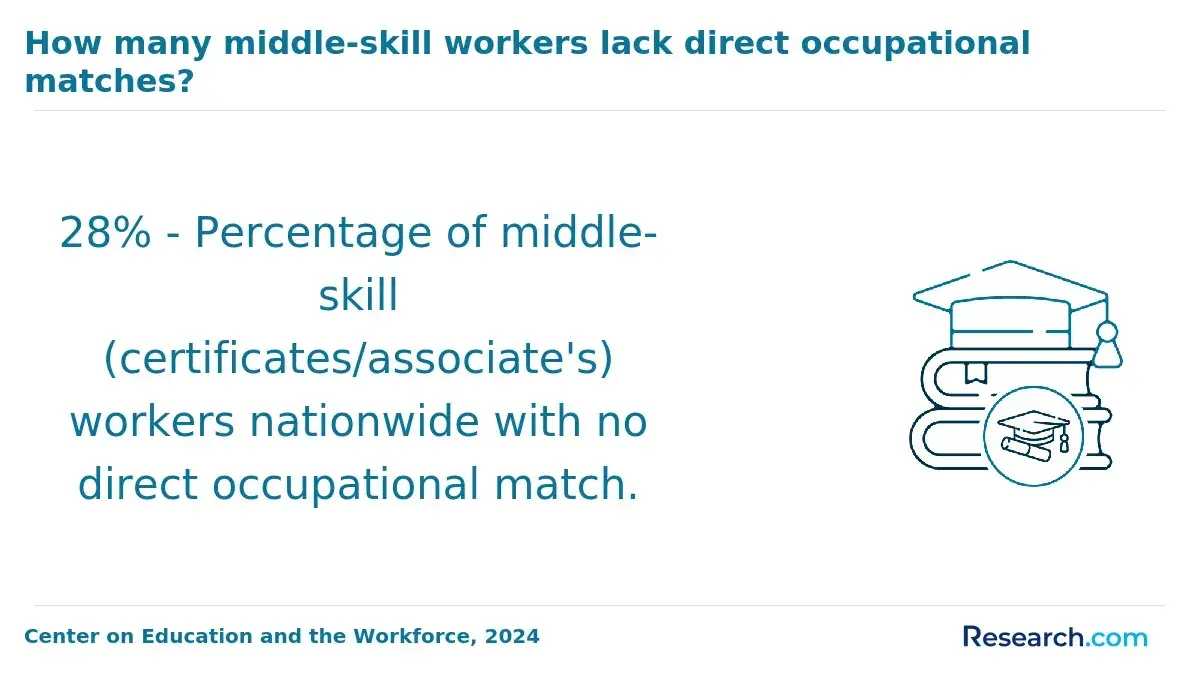
Quality review should match the type of provider and the occupation. For credit-bearing college certificates and associate degrees, institutional accreditation is an important signal that affects academic quality review, transfer policies, and federal aid eligibility. For nondegree career schools, state authorization, consumer disclosures, instructor qualifications, and alignment with recognized industry standards may be more relevant than college accreditation alone.
Use this checklist before enrolling, especially when a program claims it is "certification ready" or "license eligible."
- Confirm that the provider is authorized to enroll students in your state and identify whether the credential is credit-bearing or noncredit.
- For a college program, verify institutional accreditation and ask whether credits can transfer to the specific school you may attend later.
- For a regulated occupation, check your state licensing board's education, clinical-hour, examination, and background-check rules directly.
- For certification preparation, review the certifying organization's eligibility rules rather than relying only on a school's marketing language.
- Request outcome disclosures, refund terms, required equipment costs, and the written policy for externships or clinical placements.
Accreditation does not by itself make a program appropriate for every career. A paralegal course, for example, may be educationally sound but still not match local employer preferences. Learners who want degree-level oversight can compare non profit colleges alongside private career-training providers.
Red flags include vague claims about licensing, no clear provider identity, pressure to enroll immediately, unexplained "exam fees," and promises of guaranteed jobs. A legitimate provider should clearly state what its program does and does not qualify a student to do.
What admission requirements and prior experience are needed for most online career training programs?
Admission requirements vary sharply by credential type. Many noncredit online training programs require only an application, identity verification, payment arrangement, and basic computer access. College certificates and associate degrees may require a high school diploma or equivalent, transcripts, placement measures, and prerequisites. Selective healthcare programs may also require immunizations, background checks, drug screening, CPR training, or prerequisite science courses.
Prior experience is often unnecessary for entry-level billing, design, IT support, administrative, or introductory trade-theory programs. Advanced certificates may expect previous coursework, work experience, an existing license, or an associate or bachelor's degree. Do not interpret "beginner friendly" as proof that a program leads directly to a regulated job.
Ask admissions staff to answer these questions in writing before you apply.
- What is required to enroll, begin fieldwork, graduate, and sit for any related certification examination?
- Is the credential academic credit, continuing education, or a noncredit completion certificate?
- Are prior learning, military training, or transfer credits accepted, and will they shorten the program?
- Can students in my state participate, including required placements and licensing preparation?
A low-barrier program can be a sensible first step for career exploration. If your goal ultimately requires a degree, compare prerequisites and progression options with easy degrees rather than paying for unrelated training that cannot stack toward your next credential.
How long do online career training programs take and how are schedules structured?
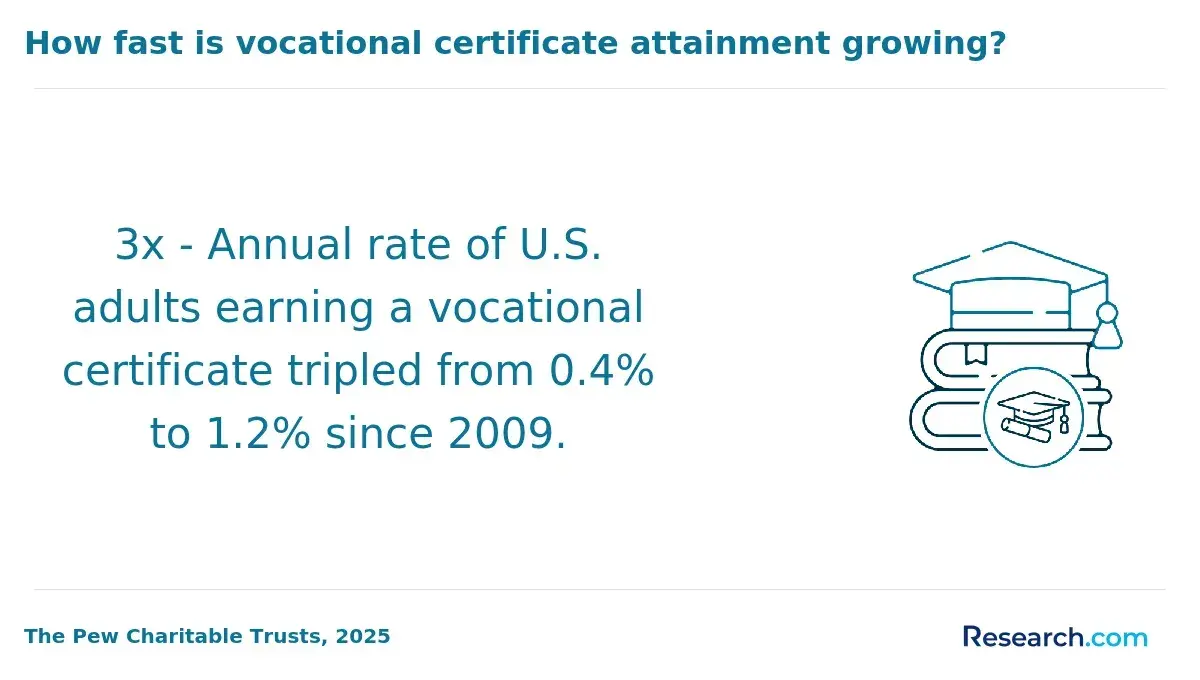
Completion time ranges from a few weeks for narrow noncredit training to roughly one to two years for many associate degree pathways. The advertised length assumes the stated pace, successful course completion, and timely access to required labs or clinical placements. Multiple start dates shorten the wait to begin; they do not necessarily shorten academic or practical requirements.
This timeline shows how pacing and delivery commonly affect planning.
| Program format | Typical scheduling pattern | Planning consideration |
| Short noncredit training | Self-paced or instructor-led sessions over weeks or months | Check whether instructor support and exam preparation are included |
| College certificate | Term-based courses, often part time | Verify course rotation; a required class may not run every start date |
| Associate degree | Quarter or semester sequence over multiple terms | General education and prerequisites can extend completion time |
| Hybrid clinical or technical program | Online theory plus fixed labs, clinicals, or externships | Practical placements may control the actual completion date |
Working students should calculate weekly workload before committing. A compressed course may cover the same material in fewer weeks and require more study time per week than a traditional term. Protect time for technology setup, reading, projects, exam preparation, and travel to any required site.
Choose a frequent-start program when delaying enrollment would create a real setback. Choose a program with fewer starts when it provides superior labs, employer relationships, clinical coordination, or a clearer pathway to the credential your occupation requires.
What do students typically study in online career training curricula and course sequences?
Career-training curricula usually combine foundational knowledge, applied tasks, professional communication, and career preparation. The exact sequence should build toward a defined competency, not simply assemble unrelated courses. For example, an IT-support pathway may move from computer hardware and operating systems to networking, security basics, troubleshooting, and certification preparation; a medical billing pathway may move from terminology and anatomy to coding systems, claims, compliance, and practice cases.
Reviewing the course sequence reveals whether the curriculum matches your goal.
| Curriculum element | What it should demonstrate | Why it matters |
| Foundational courses | Vocabulary, regulations, tools, and core concepts | Supports safe and accurate applied work |
| Applied assignments | Case studies, projects, simulations, or supervised practice | Provides evidence of usable skills |
| Career preparation | Portfolio, résumé, interview, or exam-prep activities | Helps translate learning into a job search or next credential |
| Capstone or field experience | Integrated work under realistic conditions | Is especially important in employer-facing and regulated fields |
AI tools are increasingly used in offices, design workflows, coding, and customer support, so ask how the curriculum addresses responsible use, verification, privacy, and field-specific software. Training that teaches only a single tool can become dated quickly; training that builds problem solving, communication, and documented workflow skills is more durable.
Do not assume a curriculum prepares you for every employer's software or process. Compare course outcomes with several local job postings and identify any missing requirement before enrollment.
What tuition costs, fees, and financial aid options exist for online career training programs?
Total cost is more than tuition. Depending on the program, students may pay application charges, technology fees, textbooks, software, tools, examination fees, background checks, uniforms, liability insurance, travel, and fees for repeat attempts. Request a written total-cost estimate for your specific start date and study pace.
Federal Student Aid reported that the average undergraduate tuition and fees at public two-year institutions was $4,050 for the 2024-25 award year. That benchmark applies to public two-year colleges, not to every online certificate, bootcamp, or private career provider; use it as context rather than a price expectation for a particular program.
Funding options depend on the provider and credential. Eligible students in qualifying programs at accredited institutions may have access to federal aid, while noncredit training may rely on workforce grants, state programs, employer tuition assistance, military education benefits, scholarships, payment plans, or private financing. Eligibility and available aid can change by school, program length, enrollment level, and student circumstances.
Compare costs in this order before signing an agreement.
- Get the complete program price, including required supplies, examinations, and any in-person travel.
- Subtract grants, employer support, approved workforce funding, and scholarships that do not require repayment.
- Read withdrawal, cancellation, and refund policies for your selected cohort.
- Estimate whether likely entry-level opportunities in your area justify the remaining out-of-pocket cost and borrowing.
The cheapest option is not always the best value if it lacks required practical training or recognized exam preparation. Conversely, expensive private training deserves close scrutiny when a community college offers comparable coursework, transferable credit, or stronger local employer connections.
What careers, certifications, and licensing pathways do these programs prepare students for?
Career training can prepare learners for entry-level work, advancement in a current job, a portfolio, or eligibility to pursue a separate professional certification. It may not be sufficient for occupations that require a degree, license, apprenticeship, supervised hours, or employer-specific training. Match the program to the entry point you actually need.
The following distinctions prevent a common and costly misunderstanding.
| Pathway | What the program may provide | What may still be required |
| Administrative or support role | Job-focused certificate, software skills, and portfolio or résumé support | Employer screening, interviews, and role-specific onboarding |
| Industry certification pathway | Coursework or exam preparation | Independent exam, fees, eligibility criteria, and continuing requirements |
| Licensed occupation | Required education or part of the required education | State approval, examination, supervised hours, and background review where applicable |
| Skilled trade pathway | Theory, safety instruction, and possible lab experience | Apprenticeship, employer training, licensing, or documented work hours |
Ask a provider to name the exact credential awarded at completion and the exact external examination, license, or job role it is designed to support. Then verify that information with the certifying body, licensing board, or prospective employer. Avoid programs that use "certified" in marketing without identifying who awards the certification.
For career changers, a short program is most useful when it closes a clearly identified skills gap. If job postings consistently require an associate or bachelor's degree, plan for a stackable academic route rather than assuming a brief certificate will substitute for that degree.
What starting salaries and job outlook can graduates expect from online career training fields?
Salary and outlook vary by occupation, location, experience, union coverage, licensing, and employer - not simply by the type of online training completed. Use occupational data to understand the market, then confirm the education level employers actually request for entry-level openings.
U.S. Bureau of Labor Statistics May 2024 wage data and 2024-34 projections provide useful examples of the range across common career-training fields.
| Occupation | May 2024 median annual wage | 2024-34 projected growth | Credential caution |
| Medical records specialists | $50,250 | 7% | Employers may prefer coding knowledge or a related certification; requirements vary. |
| Paralegals and legal assistants | $61,010 | 0% | A certificate or associate degree may help, but hiring standards vary by employer. |
| HVAC mechanics and installers | $59,810 | 8% | Hands-on training, licensing, and EPA-related requirements may apply. |
| Web developers and digital designers | $95,380 | 7% | Some roles require a portfolio and stronger technical preparation than a short course provides. |
These figures describe median pay for the occupations, not expected pay for certificate graduates or new entrants. National projections also do not guarantee local openings. Check regional wage data, several current job ads, commute radius, shift requirements, and licensing barriers before estimating return on investment.
High projected growth can still involve intense competition, while a slower-growth field can offer viable openings through replacement needs. Favor programs that show how their curriculum maps to local employers and that give transparent information about placement support without guaranteeing employment.
Other Things You Should Know About
Many do, but the schedule differs by provider. Some admit students every term, others monthly, and some use rolling enrollment. Confirm the exact start date, orientation date, course deadlines, and any required in-person dates before enrolling.
Theory-heavy coursework may be online, but many trades and healthcare occupations require in-person labs, clinicals, externships, or supervised practice. State licensing rules and employer expectations may require more than online coursework.
Some credit-bearing programs at eligible institutions may qualify for federal aid, while many noncredit programs do not. Ask the school's financial aid office about eligibility for the specific program and explore employer, workforce, and scholarship funding.
Identify the outside certifying organization or state licensing board, then review its current eligibility rules directly. Confirm that the curriculum, practical hours, and provider approval meet those rules; completing a school certificate alone may not be enough.
References
- ReviewPlatform.ai https://reviewplatform.ai/EducationTrainingIndustry
- Online career training is growing - does it work? https://hechingerreport.org/online-career-training-is-growing-does-it-work/
- The Most Popular Accredited Online Colleges https://www.onlineu.com/online-schools/most-popular
- Online Career Training | Certificate Programs | CareerStep https://www.careerstep.com/
- CourseCareers https://coursecareers.com/blog-posts/7-best-online-career-training-programs-for-beginners
- Vocational Training Programs for New Careers - Commonpoint https://www.commonpoint.org/program/vocational-training-programs-for-new-careers
- Best Online Courses to Take to Get a Job https://quickcv.io/blog/best-online-courses-to-get-a-job
- Climb Credit Payment Plans for Certificate Programs | DWC https://digitalworkshopcenter.com/about/financial-aid/payment-plan/
- Sessions College Again Ranked Among the Best Online Colleges | Sessions College https://www.sessions.edu/press-release/sessions-ranked-among-best-online-colleges/
- Best Online Colleges for Working Adults [2026] https://www.straighterline.com/blog/degree-completion-best-online-colleges-for-working-adults