2027 Best Microcredentials for Transfer Students

Co-Founder and Chief Data Scientist
Transfer students need credentials that add value without creating dead-end credits. Microcredentials can document focused skills while helping students progress toward an associate or bachelor's degree, but only some carry academic credit or have clear transfer pathways. The U.S. Bureau of Labor Statistics projects about 356,700 annual openings in computer and information technology occupations from 2023 to 2033, illustrating why short, job-relevant learning can matter.
This guide explains how to compare transferable microcredentials, costs, formats, recognition, and realistic career uses before enrolling.
Key Things You Should Know
- Choose a credit-bearing, transcripted microcredential when transfer is the priority; noncredit badges may show skills but usually do not convert into college credit.
- Get the receiving college's decision in writing before paying: transfer policies vary by course equivalency, grade earned, residency rules, and program requirements.
- Technology, business, healthcare support, and skilled-trades coursework can be practical options, but a short credential alone does not replace degree, certification, or licensure requirements.
Top 10 Best Microcredentials for Transfer Students
Popular Trade School Programs
Transfer-minded learners can consider credit certificates or associate pathways in welding technology, HVAC/R, electrical technology, industrial maintenance, automotive service, construction management, and computer-aided design. A certificate can build hands-on skills quickly; an Associate of Applied Science may include more general education credits that can transfer, although applied credits often transfer only into related programs.
Choose campus or hybrid training when labs are essential. Before enrolling, confirm equipment fees, required tools, apprenticeship alignment, and whether coursework meets an employer, union, or state licensing prerequisite.
Healthcare Programs
Common options include medical assisting, pharmacy technician, practical nursing, health information technology, medical billing and coding, emergency medical services, and nursing associate degrees. Healthcare transfer planning requires extra care because clinical hours, prerequisite science courses, background checks, and state rules may apply.
Credit-bearing anatomy, physiology, psychology, and medical terminology courses often have clearer academic value than a standalone vendor badge. A program certificate may prepare a student for an external certification examination, but it is not itself professional certification and does not automatically authorize practice or guarantee eligibility in every state.
Criminal Justice / Law Programs
Relevant certificates and associate degree options include criminal justice, paralegal studies, legal studies, corrections, cybersecurity investigations, and emergency management. Transfer students seeking a bachelor's degree should prioritize general education, criminal justice foundations, writing, ethics, and legal research courses with published equivalencies.
Paralegal training can improve job readiness, but rules for using the title and working under attorney supervision vary by employer and jurisdiction. A short legal-studies credential is not a law degree and does not qualify a learner to practice law, become an attorney, or bypass required licensing examinations.
Arts & Design Programs
Transfer-friendly choices include graphic design, digital media, UX/UI foundations, web design, photography, animation, interior design, and visual communications certificates or associate degrees. Portfolio quality often matters as much as the credential for creative roles, so students should retain project files, briefs, and instructor feedback.
Studio and software courses may transfer as electives rather than major requirements, particularly when course content changes quickly. Compare access to Adobe or other software, lab facilities, portfolio reviews, and intellectual-property policies. For regulated design fields, verify whether a specific degree level is required before relying on a microcredential.
What Are Microcredentials for Transfer Students?
A microcredential is a focused, verifiable learning credential that recognizes a defined set of competencies. Colleges, universities, professional associations, employers, and online learning providers may issue them. For transfer students, the central distinction is whether the microcredential is made up of credit-bearing college courses that appear on an official transcript or noncredit courses that produce a digital badge, completion record, or provider certificate.
Credit-bearing microcredentials are usually the stronger choice when the goal is to apply learning toward a degree. They may be called embedded certificates, skills certificates, course clusters, or stackable credentials. "Stackable" means a group of completed courses can potentially count toward a larger credential, such as a certificate or degree, subject to the institution's rules.
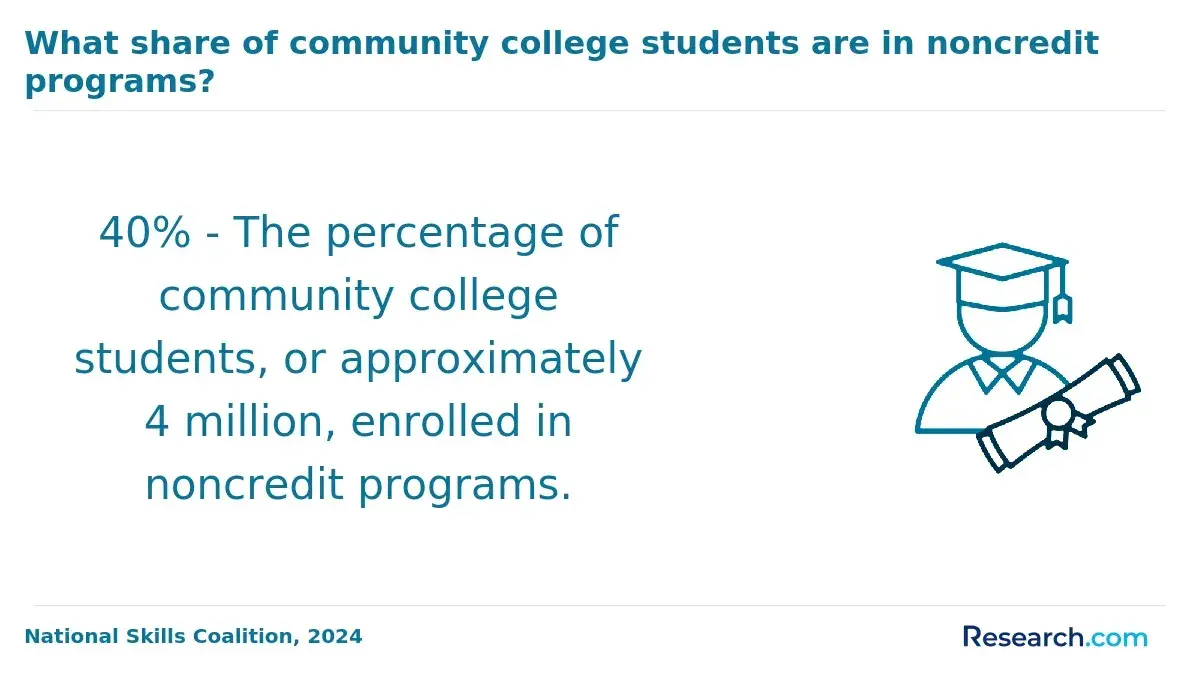
Noncredit microcredentials can still be worthwhile for learning a software platform, building a portfolio, or signaling a current skill to an employer. However, they should not be purchased on the assumption that a college will award academic credit later. Some institutions review prior learning, but that review is separate from ordinary transfer credit and is never automatic.
Which Microcredentials Transfer Well to Degrees?
The most transferable microcredentials usually contain lower-division college courses with recognizable academic subjects, clear learning outcomes, credit hours, grades, and syllabi. General education and introductory major courses tend to be easier to evaluate than highly proprietary training.
For students comparing options, the following categories generally offer different levels of transfer potential:
- High potential: College composition, statistics, psychology, economics, biology, introductory programming, accounting, and other transcripted lower-division courses.
- Moderate potential: Career-technical certificates from regionally accredited colleges that align with a receiving program's major or elective requirements.
- Limited or uncertain potential: Vendor certificates, bootcamps, continuing-education badges, and employer training without semester or quarter credit.
Students aiming for a bachelor's degree should compare a microcredential against the target school's degree map first. If affordability is the main concern, reviewing a cheapest accredited online college option may also reveal degree pathways with clearer published transfer policies.
A transfer-friendly credential is not necessarily the fastest one. The best fit is a sequence that satisfies a known degree requirement, supports a career interest, and does not consume financial aid or time on credits that will only apply as electives.
How Do You Compare Accredited Online and Campus Programs?
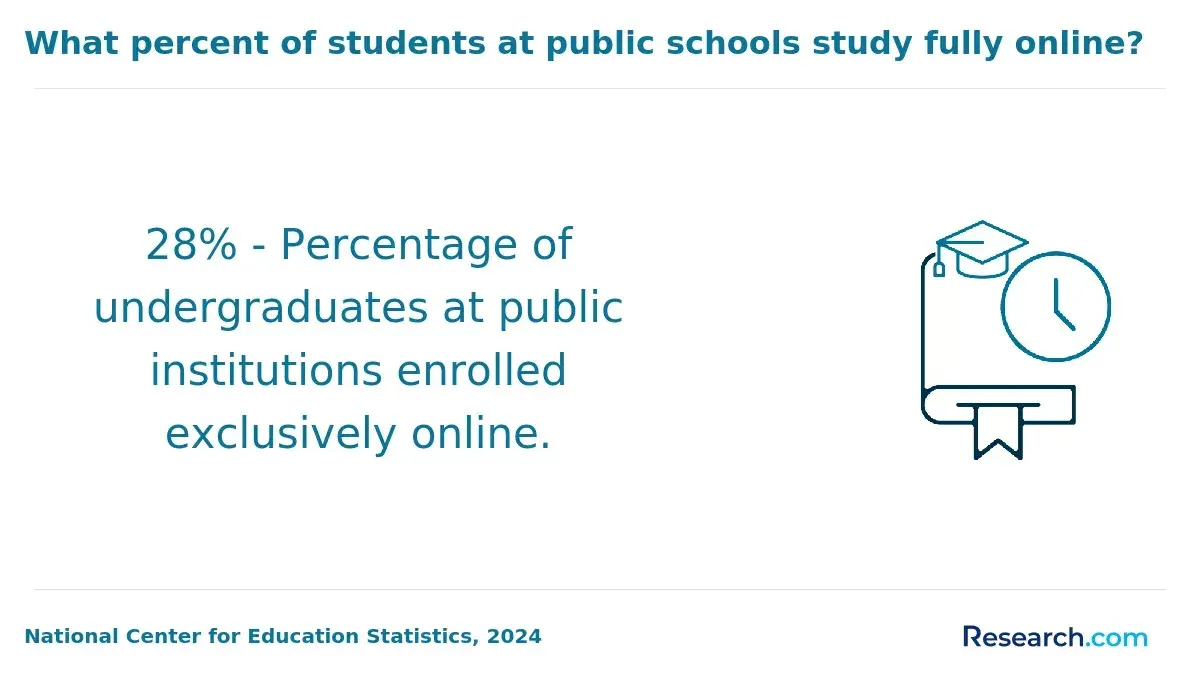
Accreditation and delivery format answer different questions. Institutional accreditation indicates that a college meets standards reviewed by a recognized accreditor; it does not guarantee every course will transfer.
Online and campus courses can transfer similarly when they carry the same institutional credit, course number, outcomes, and transcript treatment. Programmatic accreditation becomes especially important in fields such as nursing, allied health, and some technical disciplines where graduates may need eligibility for licensure or certification.
Use this comparison to identify what to verify before selecting an online, hybrid, or campus-based program:
- Online: Best for transferable general education or theory courses when the institution confirms online sections have the same credit and transcript status as campus sections.
- Hybrid: Useful when a field needs both flexible coursework and scheduled labs, simulations, or clinical practice.
- Campus: Often necessary for equipment-intensive trade training, studio instruction, supervised clinical experiences, and programs with in-person assessments.
Ask the receiving institution whether it accepts credits from the sending institution, not merely whether the sending institution is accredited. Also ask whether the course applies to your intended major, fulfills a general education category, or transfers only as elective credit. For online healthcare and public-safety programs, confirm that required placements can be completed where you live.
What Admission Requirements Do These Programs Usually Have?
Admission requirements depend on the provider and whether the microcredential carries college credit. A noncredit employer or vendor microcredential may require only registration and payment. A college-based certificate may require a general application, placement information, proof of prior coursework, or prerequisites for specific classes. Competitive healthcare cohorts can have additional screening requirements.
Before applying, separate basic enrollment requirements from course and program requirements:
- Confirm whether you are applying as a degree-seeking student, nondegree student, visiting student, or continuing-education learner.
- Check prerequisites in the course catalog, particularly math, writing, science, or prior technical coursework.
- Request an official evaluation of previous college credit and ask how current courses will be recorded.
- For clinical, fieldwork, or safety-sensitive programs, budget time for immunizations, drug screening, background checks, physical examinations, or equipment requirements when applicable.
A high school GPA or standardized test score may not be relevant for an open-enrollment short credential, but a receiving college can still require a minimum grade for transferred coursework. A common mistake is assuming admission into a certificate sequence also means admission into a limited-enrollment degree program. Those are often separate decisions.
How Long Do Microcredential Programs Take?
Most microcredentials take from a few weeks to several months, but duration should be measured by actual instructional workload, not marketing labels. A credit-bearing microcredential built from two or three college courses may take one term part time or longer if courses have prerequisites. A noncredit digital badge can be shorter, but its speed does not establish transfer value.
Short programs make sense when they deliver a specific, immediate skill or complete a known degree requirement. Learners exploring rapid workforce options can compare 6-month certificate programs that pay well, while still checking whether each program is credit-bearing, recognized by local employers, or appropriate for a regulated occupation.
Accelerated scheduling has trade-offs. Compressed courses demand more weekly study time and leave less room to recover from a poor grade. Students who need strong transfer grades, work full time, or are returning after a long break may benefit more from a standard-length course sequence. For lab, clinical, and trade programs, required in-person hours can prevent acceleration regardless of the online lecture schedule.
How Much Do Microcredential Programs Cost?
Microcredential cost varies more by provider and credit status than by the label "microcredential." Tuition may be charged per credit, per course, or as a flat program fee. Students should calculate total cost rather than relying on a low advertised tuition figure, especially where software subscriptions, examination fees, tools, uniforms, books, lab charges, or travel are required.
The National Center for Education Statistics reported that the average annual tuition, fees, room, and board at public two-year institutions was $13,440 in the 2022-23 academic year. That figure is not the cost of a microcredential, but it provides useful context: a short credit sequence can be less expensive than a full year of attendance, while campus-based living costs can overwhelm tuition savings.
Use the following cost questions to compare programs fairly:
- Is the stated price tuition only, or does it include technology, materials, assessment, and required practical-training charges?
- Will the courses count toward a credential you are likely to complete, or could they become unused elective credits?
- Can federal aid, state aid, employer tuition assistance, workforce funding, veterans' education benefits, or a payment plan apply to this exact program?
- What is the financial consequence if you withdraw, repeat a course, or need an additional prerequisite?
Military-connected students should confirm benefit eligibility with the school's certifying official and compare scheduling support through an online military college resource. Benefits and transfer practices remain institution-specific.
Which Careers Use Microcredentials After Transfer?
After transfer, microcredentials can support internships, entry-level work, and more focused degree pathways, particularly when paired with college coursework and evidence of practical ability. They are most useful when they show a skill employers can understand: data analysis, project coordination, cybersecurity fundamentals, CAD, medical coding foundations, digital design, or customer relationship management tools.
Career use depends on the field and credential level:
- Business and technology: A data, cloud, project-management, or programming microcredential can complement a business, information systems, or computer science degree.
- Healthcare support: A coding, billing, or patient-care credential may support entry-level preparation, but many roles require external certification, supervised training, or state authorization.
- Trades and technical work: Safety, equipment, or manufacturing coursework can support apprenticeship and technician pathways, especially when linked to lab-based college training.
- Creative work: Design microcredentials can strengthen a portfolio, but employers may prioritize demonstrated work, software proficiency, and degree-level preparation for some positions.
A microcredential is generally not the right stand-alone plan for careers that legally require a degree, accredited professional preparation, clinical hours, or a license. Students whose long-term objective includes research leadership or university teaching should view short credentials as a stepping stone rather than a replacement for online PhD programs or other advanced-degree routes.
What Salaries Do Microcredential Careers Offer?
Salary data should be used as labor-market context, not as a promise that a microcredential produces a particular income. Pay depends on occupation, location, experience, degree level, employer, licensure, shift differentials, and the work performed. Many occupations listed in federal wage data require substantially more than a short credential.
Recent U.S. Bureau of Labor Statistics occupational data illustrate why students should connect a credential to a specific pathway:
- Computer support specialists had a median annual wage of $60,810 in May 2024; employers may value technical coursework and certifications, but requirements vary by role.
- Medical records specialists had a median annual wage of $50,250 in May 2024; coding-related credentials can be relevant, though employers may prefer or require recognized certification.
- Paralegals and legal assistants had a median annual wage of $61,010 in May 2024; an associate or bachelor's degree plus paralegal education is commonly expected.
- Web developers and digital designers had a median annual wage of $95,380 in May 2024; portfolio strength and technical capabilities can be as important as the credential title.
Compare these occupation-level figures with local job postings and required qualifications. If most target postings ask for a degree, license, or external certification, treat the microcredential as supplemental preparation rather than the complete qualification.
How Do You Choose a Reputable Microcredential Program?
A reputable microcredential program makes its academic status, costs, learning outcomes, and recognition easy to verify. The strongest choice for a transfer student is usually one that has a documented connection to a target degree, not simply a persuasive promise of rapid employment.
Take these steps before enrolling:
- Choose a target degree, job direction, or skill gap before comparing providers.
- Obtain the course number, credit hours, syllabus, grading method, and official transcript policy.
- Ask the receiving college's registrar or transfer office how each course will apply to your intended program.
- Verify institutional accreditation and, where relevant, programmatic accreditation or state approval.
- Compare total cost, schedule, required in-person work, refund terms, and the support available to online learners.
- Review local job advertisements to confirm that the named skills, software, or external certifications appear in real employer requirements.
Red flags include vague claims that credits are "widely accepted," pressure to enroll before costs are disclosed, no identifiable faculty or curriculum, unclear transcript access, and promises of guaranteed jobs or salaries. Another common mistake is choosing a fashionable badge that does not fit the eventual major. Save catalogs, syllabi, assignment descriptions, and emails confirming transfer decisions; these records can help if a future evaluator needs more detail.
Other Things You Should Know About
Some do, but transfer is most likely when the microcredential consists of credit-bearing courses from an accredited college and the receiving institution accepts those courses. Digital badges and noncredit certificates usually do not transfer as standard academic credit.
They can be worthwhile when they fulfill known degree requirements, build a relevant skill, or help a student test a field at a manageable cost. They are less valuable when transfer status, employer recognition, or total costs are unclear.
Usually not. A microcredential is narrower and shorter than an associate degree. It may support entry-level skill development, but many occupations and advancement paths require broader education, supervised experience, professional certification, or licensure.
Ask whether it is credit-bearing, how many credits it includes, whether credits appear on an official transcript, how they apply to your intended degree, whether there are residency limits, and what additional fees or in-person requirements apply.
References
- Microcredentials: Empowering Modern Learners & Employers https://evolllution.com/microcredentials-empowering-modern-learners-employers
- Microcredentials: What They Are and Why They Matter https://www.citizensbank.com/student/articles/what-are-microcredentials.aspx
- From Degrees to Microcredentials: Higher Education Must Evolve to Embrace the Modern Economy - UPCEA https://upcea.edu/from-degrees-to-microcredentials-higher-education-must-evolve-to-embrace-the-modern-economy/
- What Are Microcredentials? How Colleges Are Adapting to the Modern Workforce - Collegis Education https://collegiseducation.com/insights/what-are-microcredentials-how-colleges-are-adapting-to-the-modern-workforce/
- Microcredentials and Higher Education: Your Questions, Answered | Blog https://www.ellucian.com/blog/microcredentials-and-higher-education-your-questions-answered
- Microcredentialing and the role it will play in the future of work https://standtogether.org/stories/future-of-work/microcredentialing-and-the-role-it-will-play-in-the-future-of-work
- Transcripts and Transferring MCC Credits to Other Institutions https://catalog.morgancc.edu/transcripts-and-transferring-mcc-credits-to-other-institutions
- Microcredentials Impact Report 2025: Insights from Students and Employers https://www.luminafoundation.org/resource/microcredentials-impact-report-2025-insights-from-students-and-employers/
- Top Online Schools That Accept Transfer Credits https://www.edvisorly.com/student-guides/online-schools-that-accept-transfer-credits
- The Growing Importance of Micro-Credentials in Higher Education https://www.keg.com/news/the-rising-significance-of-micro-credentials-in-higher-education