
2027 Best Online Non-Degree Programs With 8-Week Courses

Co-Founder and Chief Data Scientist
Choosing a fast online program can be difficult when "certificate," "career training," and "certification" are used interchangeably. Eight-week courses can help working adults build job-relevant skills sooner, but the right option depends on whether a field requires academic credit, a license, or an industry exam.
The U.S. Bureau of Labor Statistics projects medical assistant employment to grow 15% from 2023 to 2033, illustrating why focused healthcare training attracts career changers. This guide compares practical non-degree pathways, realistic outcomes, costs, and red flags so you can enroll with a clear goal.
Key Things You Should Know
- Eight-week online courses are accelerated, one 3-credit class commonly requires a workload comparable to a traditional full-semester course, so choose fewer classes if you work full time.
- Non-degree programs range from credit-bearing college certificates to noncredit career training; completion does not automatically equal professional certification, state licensure, or job eligibility.
- Career fit matters more than speed: BLS projects 15% growth for medical assistants from 2023 to 2033, while regulated occupations may require supervised clinical hours, an exam, or state approval beyond online coursework.
Top 10 Best Online Non-Degree Programs With 8-Week Courses
Popular Trade School Programs
Online trade programs commonly cover electrical theory, HVAC fundamentals, construction estimating, welding safety, plumbing concepts, and industrial maintenance. A short certificate can suit learners seeking entry-level knowledge or preparation for an employer test, while an associate degree may provide broader technical coursework and general education. Hands-on trades still require lab work, tools, apprenticeships, or supervised practice; fully online training rarely replaces these requirements. HVAC and electrical learners should confirm whether local employers, unions, or licensing boards require approved classroom hours and documented field experience.
Healthcare Programs
Online healthcare non-degree options include medical billing and coding, medical assisting coursework, pharmacy technician preparation, health information technology, and patient-care certificates. Billing, coding, and administrative programs can be largely online, but clinical roles such as medical assisting usually require an in-person practicum. A school certificate documents education; credentials such as Certified Professional Coder or Certified Medical Assistant require separate eligibility rules and examinations. Before enrolling, verify clinical placement support, employer recognition, certification-exam preparation, and whether your state regulates the intended role.
Criminal Justice / Law Programs
Online legal studies, paralegal, criminal justice, legal transcription, and court-reporting-related programs can introduce legal research, procedure, ethics, and documentation. A certificate may help professionals build legal-office skills, but it does not authorize someone to practice law or guarantee paralegal employment. Students targeting paralegal work should check local employer preferences and whether a program meets standards associated with recognized paralegal education. Court reporting and public-safety roles may have separate state, agency, physical-fitness, background-check, or examination requirements that online coursework alone cannot satisfy.
Arts & Design Programs
Common online options include graphic design, digital illustration, UX design foundations, web design, photography, animation, and digital marketing content creation. These programs are most useful when they produce a portfolio demonstrating software skills, visual problem-solving, and completed projects. A non-degree certificate can help beginners test a creative field or help experienced workers update tools, but it may not replace a degree where employers expect broad design training. Compare instructor feedback, portfolio reviews, software costs, project ownership, and whether the curriculum reflects current AI-assisted creative workflows.
What Are Online Non-Degree Programs?
Online non-degree programs are organized learning experiences that award a completion credential other than an associate, bachelor's, or graduate degree. They may be college certificates, workforce certificates, professional certificates, microcredentials, bootcamps, or noncredit career-training programs. Providers include community colleges, universities, workforce organizations, professional associations, and private training companies.
The credential's label alone does not establish its value. Credit-bearing academic certificates may be stackable toward a degree if the receiving institution accepts the credits. Noncredit programs may be faster and more focused but generally do not transfer as college credit. Learners exploring employer-oriented online courses should distinguish a course-completion certificate from an industry certification earned through an independent certifying body.
The comparison below shows when each pathway tends to fit a particular goal.
| Program type | Usually awarded by | Best for | Key limitation |
| Credit-bearing certificate | College or university | Building academic credit or a possible degree pathway | May take longer and cost more than noncredit training |
| Noncredit career program | College continuing education unit or training provider | Focused, short-term skill development | Usually does not transfer as college credit |
| Professional certificate | University, company, or training provider | Structured training in a defined professional skill | Employer recognition varies by field |
| Industry certification | Independent certifying organization | Proving competency against an external standard | May require an exam, renewal, or work experience |
Which Online Non-Degree Programs Need Accreditation?
Accreditation matters most when a program awards academic credit, is connected to federal aid, prepares students for a regulated profession, or claims to meet a specialized industry standard. Institutional accreditation evaluates a college as a whole. Programmatic accreditation evaluates a particular discipline and can be especially important in healthcare and other licensure-track fields.
A noncredit provider may not be institutionally accredited, and that fact alone does not make its training poor. It does mean you should evaluate it differently: review employer recognition, instructor qualifications, curriculum, refund terms, hands-on requirements, and certification-exam eligibility. Do not assume an online program qualifies you for a state license just because it is offered by a college.
Before paying a deposit, take these verification steps:
- Identify the exact role, certification, or license you want after training.
- Check the relevant state board, certifying organization, or employer requirements directly.
- Ask the school whether its curriculum meets those requirements in your state and request the answer in writing.
- Confirm whether clinicals, labs, internships, background checks, or proctored exams are additional requirements.
How Do 8-Week Online Courses Work?
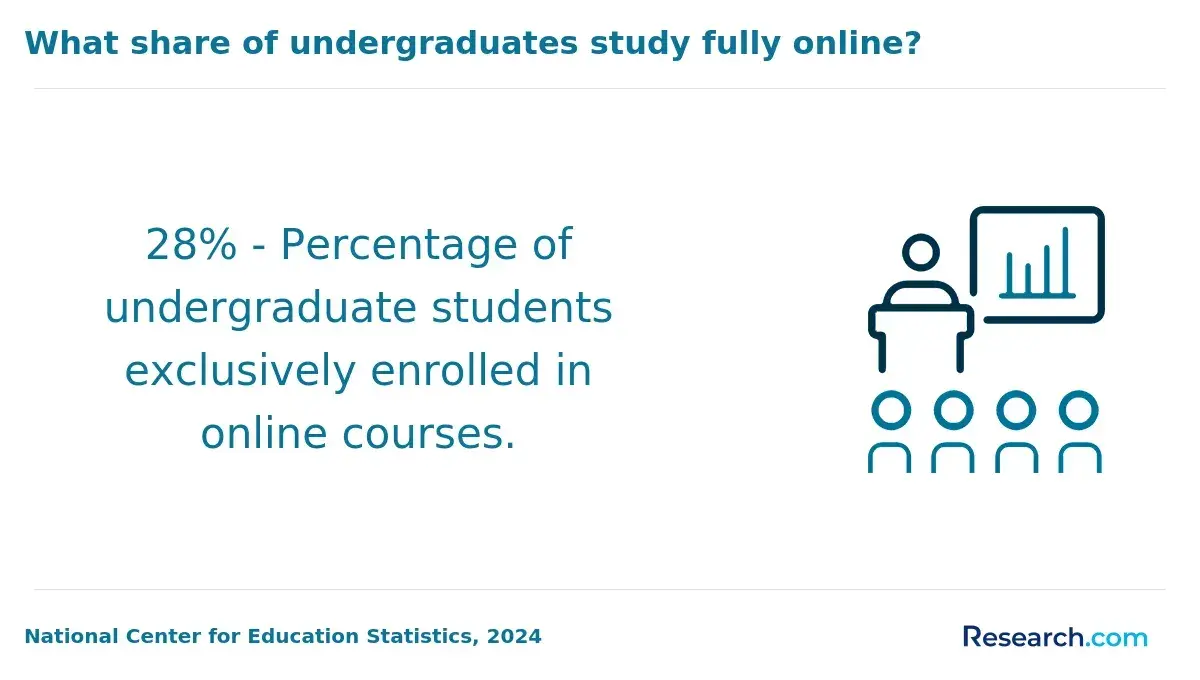
An 8-week online course covers the same learning objectives that a school might otherwise teach over 15 or 16 weeks, but deadlines arrive about twice as quickly. Courses commonly use a learning platform for readings, recorded lectures, quizzes, discussion posts, projects, and timed assessments. Some are asynchronous, allowing students to complete work at flexible times; others add live sessions, virtual labs, or scheduled exams.
The accelerated format is a strong fit for self-directed learners who can protect regular study blocks. It is less suitable when you need extensive remediation, travel frequently, have unpredictable caregiving duties, or must complete a hands-on clinical component. Taking one demanding course at a time may be more realistic than stacking several compressed classes.
This comparison can help you decide whether speed or pacing should drive your choice.
| Factor | 8-week course | Traditional-term course |
| Pace | Frequent deadlines and rapid topic changes | More time between assignments and exams |
| Best for | Focused learners needing faster completion | Learners balancing complex work or family demands |
| Schedule risk | Missing one week can create a major backlog | More recovery time after an interruption |
| Course load strategy | Often better with a lighter concurrent load | May support several simultaneous courses |
What Are the Admission Requirements for These Programs?
Admission requirements depend on the provider and credential type. Noncredit workforce programs may require only an application, payment arrangement, minimum age, and basic technology access. Credit-bearing college certificates can require a high school diploma or equivalent, placement testing, transcripts, prerequisite courses, immunizations for clinical programs, or background checks. Programs preparing learners for advanced technical work may expect prior coursework or professional experience.
A low prior GPA does not necessarily close every pathway, particularly for open-admission community colleges and noncredit providers. If academic admission is a concern, compare low GPA colleges while confirming that the specific certificate has additional entry requirements.
Ask admissions staff these practical questions before applying:
- Is the credential credit-bearing, noncredit, or eligible to stack into a degree?
- Are prerequisites required before the first 8-week course begins?
- Can students complete required labs, clinicals, or internships near home?
- What technology, software, equipment, exam, and background-check costs are separate from tuition?
- What happens if a student must withdraw after the accelerated term starts?
Which Careers Can These Programs Support?
These programs can support entry-level employment, skill upgrades, career exploration, and preparation for a separate certification exam. Their strongest value comes when the curriculum maps directly to job tasks and the learner can show evidence of skill through a portfolio, supervised experience, credential exam, or employer-recognized assessment. They are not interchangeable with degrees for occupations that legally require a degree, license, or extensive clinical preparation.
For some technical and office careers, an associate degree can offer wider advancement options because it combines occupational courses with general education. Readers weighing that route can compare easiest associate degrees and then prioritize programs aligned with their target occupation rather than choosing only by perceived difficulty.
The following examples separate realistic support roles from occupations that usually need more than a short online program.
| Training focus | Potential supporting roles | Important qualification check |
| Medical billing and coding | Billing specialist, coding support, patient accounts representative | Employers may prefer an external coding certification |
| HVAC fundamentals | Installer helper, maintenance trainee, dispatch or parts support | Field training and local licensing rules may apply |
| Paralegal studies | Legal assistant, document specialist, litigation support | Employer education preferences vary by market |
| Graphic or digital design | Junior designer, production artist, content-design support | Portfolio quality often matters more than course completion alone |
How Much Do Online Non-Degree Programs Cost?
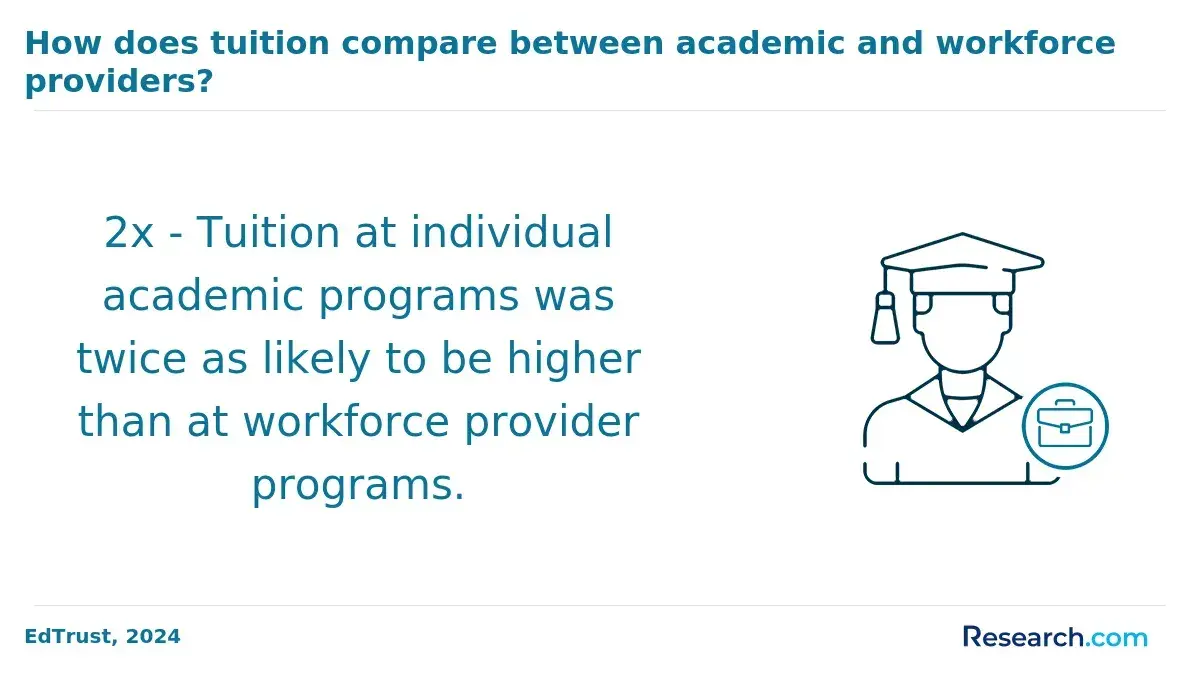
Online non-degree program costs vary more by provider, credit status, equipment, and required practical training than by the eight-week calendar alone. A short course may have a lower upfront price but can be a poor value if it does not meet employer, certification, or licensing requirements. Compare the total cost through completion, not just the advertised tuition per course.
For credit-bearing programs, tuition may be charged per credit; noncredit programs may charge a flat program fee. Books, software subscriptions, tools, exam vouchers, proctoring, uniforms, liability insurance, clinical compliance, and travel to hands-on sites can raise the final amount. Federal aid eligibility is generally more common for eligible students in qualifying credit-bearing programs, while employer tuition assistance, workforce grants, scholarships, and payment plans may be available for either type.
A bachelor's degree can cost more and take longer but may be the better investment when a desired occupation requires one. Compare the program outcome with easiest bachelor degree options before paying for several disconnected short credentials.
Use this cost checklist to compare quotes consistently.
| Cost category | Why it matters |
| Tuition and mandatory fees | Shows the base price and whether payment is per course, credit, or program |
| Materials and technology | May include textbooks, software, tools, cameras, or specialized equipment |
| Required practical training | Can involve travel, clinical compliance, lab fees, or lost work time |
| Credential examination | May be separate from program tuition and can include retake fees |
| Opportunity cost | Reflects whether the accelerated workload reduces available work hours |
What Are the Salary and Job Outlook Prospects?
Salary and job outlook data describe occupations, not the earnings of every certificate completer. Actual opportunities depend on location, prior experience, licensure, employer requirements, specialization, and whether the role accepts non-degree preparation. Use labor data to test whether a target occupation has enough demand to justify the time and total cost of training.
Recent BLS occupational data provide useful context for several fields commonly associated with non-degree training. Medical assistants had a $44,200 median annual wage in May 2024 and are projected to see 15% employment growth from 2023 to 2033. That outlook can make an approved medical-assisting pathway attractive, but learners still need to account for clinical training and employer credential preferences.
The occupations below have different entry standards, so the figures are comparison points rather than promises.
| Occupation | May 2024 median annual wage | 2023-2033 projected growth | Training caution |
| Medical assistants | $44,200 | 15% | Clinical preparation and certification preferences vary by employer |
| Heating, air conditioning, and refrigeration mechanics and installers | $59,810 | 9% | Apprenticeship, EPA credentials, and local licensing may be needed |
| Paralegals and legal assistants | $61,010 | 0% | Certificate alone may not meet all employer preferences |
| Graphic designers | $61,300 | 2% | Portfolio, software proficiency, and competition influence hiring |
Do These Programs Lead to Licensure or Certification?
Some programs prepare learners for a separate certification or licensure process; others only provide education. Completing a certificate means you finished the provider's curriculum. Earning a certification generally means you met an outside organization's standards, often through an exam. Licensure is legal permission from a state to practice a regulated occupation.
For example, an online medical billing course may prepare you for a coding certification exam, but the school certificate itself is not the certification. An HVAC course can teach theory, but technicians may still need employer training, Environmental Protection Agency refrigerant credentials, or state and local approvals. Nursing, dental hygiene, counseling, and many allied-health roles have particularly strict state-specific educational and clinical requirements.
Avoid the common mistake of enrolling based on phrases such as "certification included." Confirm exactly what is included: instruction, an exam voucher, exam eligibility, supervised hours, and any post-completion renewal requirements. If a provider cannot identify the issuing body and eligibility rules, treat that as a red flag.
How Do You Choose a Reputable Online Program?
A reputable accelerated program is transparent about what students earn, what they must complete, and what the credential can realistically support. The best choice is not always the fastest or cheapest program; it is the one that matches your intended role, schedule, budget, and required qualifications.
Use this sequence to compare programs before committing:
- Start with a target job title and identify whether it requires a degree, license, apprenticeship, certification, or portfolio.
- Decide whether you need college credit, rapid noncredit training, or preparation for an industry exam.
- Verify accreditation or program approval when your field, employer, aid source, or licensing board requires it.
- Compare total completion costs, including materials, examinations, travel, and required practical experiences.
- Review the eight-week schedule, attendance rules, withdrawal policy, tutoring, career services, and instructor access.
- Ask how online learners complete labs, clinicals, internships, or portfolio reviews and whether placement is guaranteed or merely suggested.
- Read the exact credential wording on the completion document and confirm whether credits transfer or stack.
Red flags include vague job-placement claims, pressure to enroll immediately, missing refund policies, unverified accreditation language, and statements that a course "qualifies" you for licensure without naming the governing board. A trustworthy provider will give direct answers and acknowledge requirements that vary by state or employer.
Other Things You Should Know About
You may finish a single accelerated course in eight weeks, but an entire certificate often includes multiple courses and can take several eight-week terms. Completion time also depends on prerequisites, course sequencing, clinical requirements, and your course load.
They are not necessarily academically harder, but they move faster. Readings, assignments, exams, and feedback occur on compressed deadlines, so consistent weekly study time is essential.
Yes, many 8-week online non-degree programs integrate real-world projects to enhance learning. These projects simulate industry challenges and can be a significant part of the curriculum, enabling students to apply theoretical concepts to practical scenarios, which is valuable for career advancement.
It depends on the program and institution. Eligible students in qualifying credit-bearing programs may have access to federal aid, while noncredit programs often rely on employer assistance, payment plans, workforce funding, or private scholarships. Confirm eligibility with the school before enrolling.
References
- Financial Aid For Online College Students | LearnHowToBecome.org https://www.learnhowtobecome.org/career-resource-center/financial-aid-for-online-colleges/
- 26 High-Earning Remote Job Certifications for 2026 https://www.tealhq.com/post/remote-job-certifications
- Best Student Loans for Certificate Programs - Credible https://www.credible.com/student-loans/student-loans-for-certificate-programs
- 7 in-demand certifications in 2025 | edX https://www.edx.org/resources/in-demand-professional-certifications
- Beyond Financial Aid - Finaid https://finaid.org/beyond/
- Online Colleges and Universities: Are They Delivering on Diversity and Inclusion? A Recent Analysis from IPEDS Data https://www.airweb.org/article/2023/03/30/online-colleges-and-universities-are-they-delivering-on-diversity-and-inclusion-a-recent-analysis-from-ipeds-data
- Top 7 Best Self-Paced Online Degrees for Busy Professionals - Lakewood University https://lakewood.edu/top-7-best-self-paced-online-degrees-for-busy-professionals/
- Best Online Colleges for Working Adults [2026] https://www.straighterline.com/blog/degree-completion-best-online-colleges-for-working-adults
- Online College Degree Programs & Courses | DeVry University https://www.devry.edu/online-programs.html
- Financial Aid Guide for Students at Online Colleges - OnlineColleges.net https://www.onlinecolleges.net/for-students/financial-aid-online-students/


