2027 Best Certifications With Credit for Military Experience

Co-Founder and Chief Data Scientist
Military training can shorten a civilian credential, but only when a school evaluates it against the exact courses in its program. This matters because the U.S. Bureau of Labor Statistics projects about 81,000 openings per year for registered nurses from 2024 to 2034, while skilled-trade and technical employers continue to value demonstrable competencies. This guide helps service members, veterans, and military spouses compare credit-bearing certificates, associate degrees, and industry certifications; verify military credit; control costs; and select a program that fits a specific civilian job goal.
Key Things You Should Know
- Military experience does not automatically become college credit: schools usually review a Joint Services Transcript, Community College of the Air Force transcript, course objectives, and the program's residency rules.
- Credit-bearing certificates and associate degrees can be faster when prior learning applies, while industry certifications such as CompTIA or EMT credentials usually require separate exams, eligibility steps, or state approval.
- For career context, BLS reports a 2024 median annual wage of $62,350 for electricians and $93,600 for registered nurses; neither figure is a promised outcome from military credit or a certificate alone.
Top 10 Best Certifications With Credit for Military Experience
Popular Trade School Programs
Electrical, HVAC/R, welding, automotive technology, industrial maintenance, construction management, and diesel technology are common military-credit pathways. A credit-bearing certificate can build entry-level technical knowledge; an associate degree usually adds general education and may support later transfer. Veterans with maintenance, power-production, vehicle, engineering, or logistics specialties should request a course-by-course evaluation before enrolling. Apprenticeship hours, state licensing rules, tools, uniforms, and lab fees may still apply. Choose a program with hands-on equipment and employer-recognized training, not one that merely awards broad elective credit.
Healthcare Programs
Practical nursing, medical assisting, emergency medical services, health information technology, pharmacy technology, and nursing associate degrees may recognize relevant military medical training. Academic credit can reduce coursework, but it rarely replaces clinical hours, background checks, immunizations, admissions testing, or state-required licensure. A certificate in medical assisting is not the same as a professional certification; employers may prefer or require a separate exam credential. Former medics and corpsmen should confirm whether the school accepts their training and whether its curriculum qualifies graduates for the required state license or national examination.
Criminal Justice / Law Programs
Criminal justice, homeland security, emergency management, paralegal studies, legal support, and cybersecurity programs can align with military police, intelligence, security, investigations, and administrative experience. Schools may award academic credit for documented learning, but law-enforcement agencies retain their own hiring standards, academy requirements, fitness tests, and background investigations. Paralegal certificates can strengthen legal-support skills, yet they do not authorize independent legal practice. Look for programs that clearly distinguish academic credit from occupational eligibility and that explain whether courses transfer into an associate or bachelor's degree.
Arts & Design Programs
Digital media, graphic design, photography, web design, UX design, technical writing, and video-production certificates may fit veterans with public affairs, audiovisual, mapping, communications, or instructional-design experience. Portfolio quality often matters more to employers than credit totals, so select a program that produces usable work samples and teaches current software workflows. Military credit may apply to communications, leadership, or electives, but it will not normally replace studio courses needed to build a portfolio. A short certificate suits targeted skills; an associate degree offers broader design foundations and more transfer potential.
What types of certifications most commonly accept military training for academic credit?
The credentials most likely to accept military learning for academic credit are college-issued certificates and associate degrees in applied fields. Schools commonly evaluate technical coursework, occupational specialties, leadership training, and formal military schools documented on a Joint Services Transcript or Community College of the Air Force transcript.
The comparison below separates pathways that may award college credit from credentials that generally do not. This distinction prevents a frequent mistake: assuming an industry certification provider must accept military training as transcripted academic credit.
| Credential type | Military-credit potential | Best use | Important limitation |
| Credit-bearing college certificate | Often evaluated course by course | Focused technical or career preparation | Credit may be limited to electives or require a minimum number of courses at the school |
| Associate degree | Often evaluated for technical and elective requirements | Broader education, transfer, or licensure preparation | General education and residency requirements may remain |
| Industry certification | Usually no academic credit award by the certifier | Employer-recognized validation of a skill | May require an exam, experience, renewal, or approved training |
| Noncredit workforce certificate | Varies; often no transferable academic credit | Short job-skill training | Federal student aid and transfer options can be limited |
Technology, logistics, aviation maintenance, emergency services, cybersecurity, and health-support training are particularly practical areas to investigate. However, a recommendation from the American Council on Education is not a guarantee of institutional credit. Each college decides whether, where, and how much credit it will award.
How do you verify that a certification program correctly awards military credit?
Verify military credit before paying an enrollment deposit. Ask for a written, program-specific evaluation rather than relying on a recruiter's general statement that the institution is "military friendly." This is especially important when a certificate leads toward regulated work or when you expect credit to reduce both time and tuition.
- Request your official Joint Services Transcript or Community College of the Air Force transcript and review the listed training, dates, and recommendations.
- Identify the exact credential, campus or online format, catalog year, and career outcome you want.
- Submit official transcripts through the school's prior-learning or registrar process and request a written transfer-credit decision.
- Compare each awarded credit with the degree audit to see whether it fulfills required courses, electives, or neither.
- Confirm the school's residency requirement, expiration rules for technical training, and appeal process before committing.
Red flags include promises of "maximum credit" without a transcript review, vague claims about licensure eligibility, and an inability to show the credential's total remaining courses. If speed matters, compare the evaluated completion plan with options such as an associate degree in 6 months online free resource, while recognizing that accelerated timelines depend on transfer credit, course availability, and the school's rules.
Which accredited schools and training providers specialize in military-friendly certificate programs?
Military-friendly providers are not a single category. A strong choice is an institution that is appropriately accredited for its credential type, has a transparent military-credit policy, supports VA education benefits, and offers the format your program requires. For academic certificates and associate degrees, institutional accreditation matters because it affects transferability, quality review, and often federal aid eligibility.
Start with public community colleges, state university systems, and regionally or institutionally accredited nonprofit institutions that publish transfer and prior-learning policies. Community colleges can be especially cost-conscious for technical programs, while universities may offer clearer progression from a certificate to a bachelor's degree. A non profit online university may be worth comparing when you need nationwide online scheduling, but confirm that any labs, clinicals, or proctored assessments are available where you live.
Specialized providers can also be legitimate when they issue an industry credential rather than college credit. In that case, evaluate the certifying body's employer recognition, exam requirements, renewal rules, and whether the training provider is authorized to prepare learners for the exam. Do not assume a school's military discount proves its curriculum transfers or meets a licensing board's standards.
What admission requirements apply when using military service and training toward a certificate?
Admission requirements depend on whether the program is an academic credential, a workforce course, or preparation for an external certification. Many open-admission community-college certificates require an application, identity and residency information, official transcripts, and placement or prerequisite review. Selective healthcare programs may add entrance exams, minimum prerequisite grades, health screenings, and clinical eligibility checks.
Military experience can support a prior-learning review, but it does not routinely waive every admission requirement. A school may accept transfer credit yet still require applicants to meet program prerequisites or demonstrate current competency in math, writing, anatomy, or technical subjects.
- Ask whether your military transcript must arrive before admission, after admission, or before registering for advanced courses.
- Confirm whether credits have an age limit, particularly for information technology, healthcare, and rapidly changing technical subjects.
- Check whether a background check, drug screen, physical exam, immunizations, security clearance, or driving record is required for clinicals, internships, or field placements.
- Request the published policy for credit by evaluation, portfolio review, challenge exams, and appeals.
Applicants whose service occurred years ago should not assume they are too late to study. Flexible pacing and support services may matter more than a compressed schedule; programs designed around adult learners can be compared through resources on degrees for older adults.
How do online and campus-based certification programs compare for military students?
Online study is often the better fit for active-duty learners, Guard and Reserve members, and veterans balancing work or family obligations. Campus or hybrid training is usually the stronger choice when competence must be observed in a lab, shop, clinical setting, or simulated workplace. The right format depends on the credential's required learning experiences, not simply personal convenience.
This comparison highlights practical trade-offs that affect completion and job readiness.
| Factor | Online or mostly online | Campus or hybrid |
| Schedule | Often more flexible for lectures and theory | Fixed meetings may improve structure and access to instructors |
| Hands-on learning | May require local placements or short residencies | Direct access to labs, shops, equipment, and clinical partners |
| Military mobility | Can reduce disruption from relocation when authorized across locations | May be difficult after a permanent change of station |
| Licensure preparation | Must be checked state by state | May be simpler when the program is designed for local requirements |
| Networking | Requires deliberate use of virtual career services and placements | Often easier to build local employer relationships |
Before choosing online delivery, verify where the institution is authorized to enroll you and whether it can place you in required practicum sites. If your goal is a longer academic progression rather than a short credential, a 1 year masters option may be relevant only after you meet its bachelor's-level admission requirements; it is not a substitute for entry-level technical or licensure training.
What are typical program length, tuition costs, and funding options for these certifications?
Program length can range from a few weeks for a noncredit exam-preparation course to about one year for many academic certificates and roughly two years for a traditional associate degree. Military credit may reduce the remaining curriculum, but it usually cannot eliminate required labs, clinical hours, capstones, or institutional-residency credits.
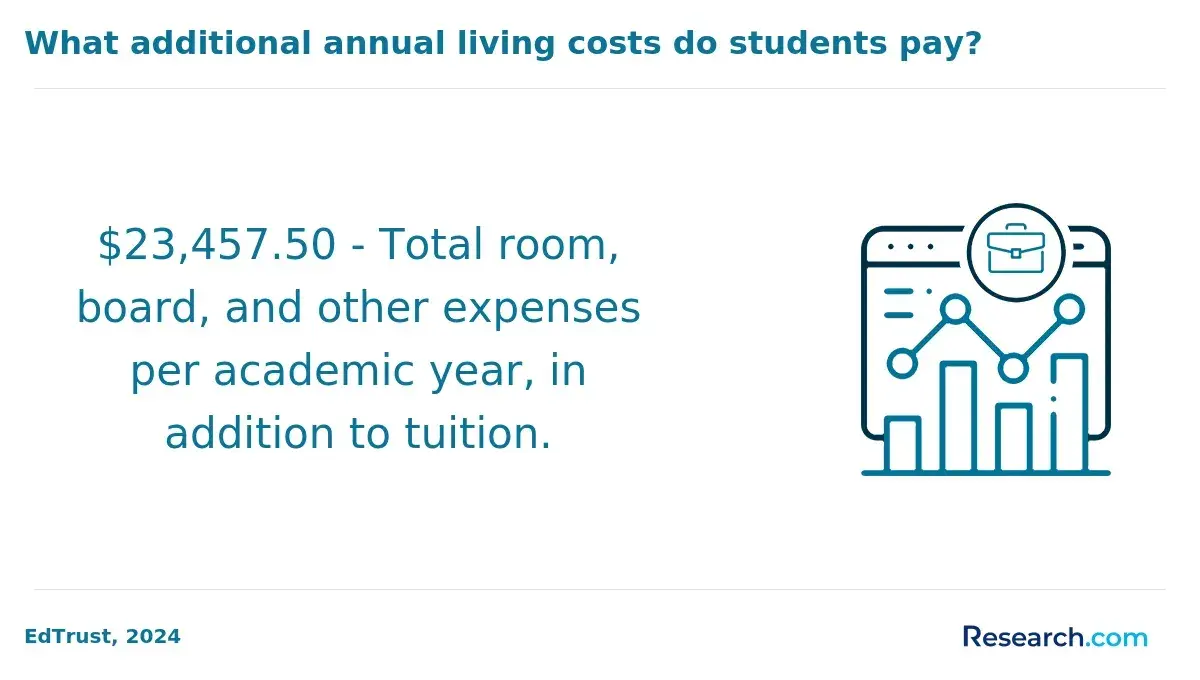
Total cost is broader than tuition. Use a written net-cost estimate that includes the expenses below, then compare it with the number of courses left after the official evaluation.
- Tuition and mandatory institutional fees for the remaining credits, not the program's published maximum length.
- Books, software, tools, uniforms, testing fees, background checks, immunizations, and required travel to labs or clinicals.
- Licensing, certification examination, renewal, and continuing-education costs where applicable.
- Lost work time or childcare costs associated with fixed campus, clinical, or apprenticeship schedules.
Eligible students may use GI Bill benefits, Veteran Readiness and Employment services when approved, Federal Student Aid for qualifying academic programs, state veteran benefits, employer tuition assistance, scholarships, and payment plans. Benefit eligibility, payment amounts, and covered training vary by program and individual circumstances. Obtain a school's VA certifying official's estimate before enrollment, and do not borrow based on assumed credit awards.
Which careers and civilian job roles align best with military-credit certifications?
The best civilian role is the one where your documented service skills, remaining education, and any legal credential requirements intersect. Translate military duties into civilian competencies - equipment troubleshooting, incident response, patient care, records management, project coordination, or communications - rather than relying on a military occupational title alone.
The roles below show common alignments, but hiring requirements vary by employer, state, and job level.
| Military experience area | Useful credential direction | Potential civilian roles | Key check |
| Mechanical, electrical, aviation, or vehicle maintenance | Electrical, HVAC/R, industrial maintenance, diesel, aviation programs | Technician, mechanic, maintenance specialist | Apprenticeship hours, FAA rules, or state licensing may apply |
| Medical, corpsman, or emergency-response work | EMS, nursing, health information, medical assisting | EMT, medical assistant, health-support specialist | Clinical and state credential rules can limit direct credit use |
| Security, intelligence, or military police | Cybersecurity, criminal justice, emergency management | Security analyst, investigator, emergency-management coordinator | Employers may require separate screening or certifications |
| Public affairs, audiovisual, or communications | Digital media, design, web, technical writing | Content specialist, designer, communications coordinator | Portfolio quality and current software skills are central |
For learners who want a longer pathway after an initial credential, select a certificate that is explicitly stackable into an associate or bachelor's program. That approach is generally safer than assuming every short course will transfer later.
What salary ranges and advancement opportunities can military-credit certifications lead to?
Salary evidence should be used as labor-market context, not as a return-on-investment promise. Pay varies by location, shift, union status, employer, experience, licensure, clearance requirements, and education level. The credential may help demonstrate readiness, but it does not by itself establish a wage.
Recent BLS occupational data illustrate why readers should match the credential to a specific target role before enrolling.
| Occupation | 2024 median annual wage | 2024-2034 projected employment change | Credential caution |
| Electricians | $62,350 | 9% | Most workers learn through an apprenticeship; licensing is common |
| Registered nurses | $93,600 | 5% | Requires an approved nursing program and licensure, not a short general certificate |
| Paralegals and legal assistants | $61,010 | 0% | Employers may prefer an associate degree or a qualifying paralegal certificate |
| Graphic designers | $61,300 | 2% | Portfolio, software skills, and experience strongly influence hiring |
Advancement is most credible when a short credential builds toward the next requirement: an apprenticeship level, an industry certification, an associate degree, a license, supervisory experience, or a bachelor's degree. Ask employers in your target area which of those signals they actually use in hiring and promotion.
How do licensing, industry standards, and professional exams affect military-credit certifications?
Military credit and professional authorization are separate issues. A college may award academic credit for prior training, while a state licensing board, employer, or certifying organization still requires a specific curriculum, supervised hours, examination, background review, or continuing education. This distinction is crucial in nursing, EMS, electrical work, aviation, law enforcement, and cybersecurity roles involving regulated systems.
Before enrolling, use this checklist to avoid investing in a credential that does not meet the next gatekeeper's requirements.
- Identify the exact job title and the state where you expect to work.
- Determine whether the role requires a license, registration, certification, apprenticeship, or employer-specific credential.
- Confirm directly with the relevant board or certifying organization that the school's program meets education requirements.
- Ask whether military training can count toward required clinical, field, flight, or supervised work hours.
- Budget for the external exam and renewal requirements separately from the academic program.
Be cautious of programs advertising "certification" when they only provide a certificate of completion. A legitimate industry certification normally identifies the issuing organization, eligibility criteria, exam or assessment, expiration date, and renewal standard. For regulated professions, obtain confirmation in writing before relying on a school representative's verbal assurance.
Other Things You Should Know About
Usually not. A school may award credit for equivalent documented learning, but most programs retain residency, capstone, lab, clinical, or program-specific requirements. The official degree audit shows what remains.
It is the main record many colleges use, but it is not automatic approval. The institution decides whether training matches its courses and whether the credit applies to your selected credential.
Some approved certification tests, training programs, and academic programs may be eligible, but approval and reimbursement rules vary. Confirm eligibility with the VA and the school or test provider before paying.
Choose a certificate for targeted skills and a faster route when the occupation does not require a degree. Choose an associate degree when you need general education, licensure preparation, broader career options, or a clear path to a bachelor's degree.
References
- Military Training and Education https://veteransenergypipeline.com/military-training-and-education.htm
- How Military Career Experience Helps with Employment https://www.aafmaa.com/resource-center/translating-your-skills-how-to-make-the-most-of-your-military-career-experience-for-civilian-employment
- Army Credentialing from New Horizons https://www.newhorizons.com/government-military/military-credentialing
- Unlock Your Potential with Professional Career Certification Courses with AUSA Military Discounts https://protrain.edu/unlock-your-potential-with-professional-career-certification-courses-with-ausa-military-discounts/
- Top Careers Suited for VeteransU.S. Veterans Magazine https://usveteransmagazine.com/usvm/top-careers-suited-for-veterans-turning-military-experience-into-civilian-success/
- 16 Top Jobs for Ex-Military Without a Degree! | Hire Veterans - The #1 Veteran Jobs Marketplace https://hireveterans.com/blog/jobs-after-military-no-degree/
- What Are Benefits of Going to College After Military Service? https://www.trident.edu/articles/what-are-the-benefits-of-college-after-military-service
- From Military Service to Civilian Employment: Translating Veterans' Skills and Experience Into Manufacturing Careers https://www.jff.org/blog/military-service-civilian-employment-translating-veterans-skills-experience-into-manufacturing-careers/
- Army COOL | U.S. Army https://www.goarmy.com/benefits/while-you-serve/education-training/certifications-and-credentials
- Best Careers After Military Service https://www.navyfederal.org/makingcents/military-life/2019-best-careers-after-service.html